Understanding number relationships Normal Math Worksheets for Ages 6-9
3 filtered results
-
From - To
Explore our "Understanding Number Relationships" math worksheets designed specifically for children aged 6-9. These engaging, printable activities focus on essential math concepts, helping young learners identify patterns, comparisons, and connections between numbers. Each worksheet promotes critical thinking through fun exercises, ensuring kids grasp foundational skills necessary for mathematical success. Ideal for both classroom and home learning, our resources offer clear instructions and colorful visuals to enhance student interest and understanding. Encourage your child's mathematical journey and boost their confidence with our expertly crafted worksheets that lay the groundwork for future learning and problem-solving. Start mastering number relationships today!
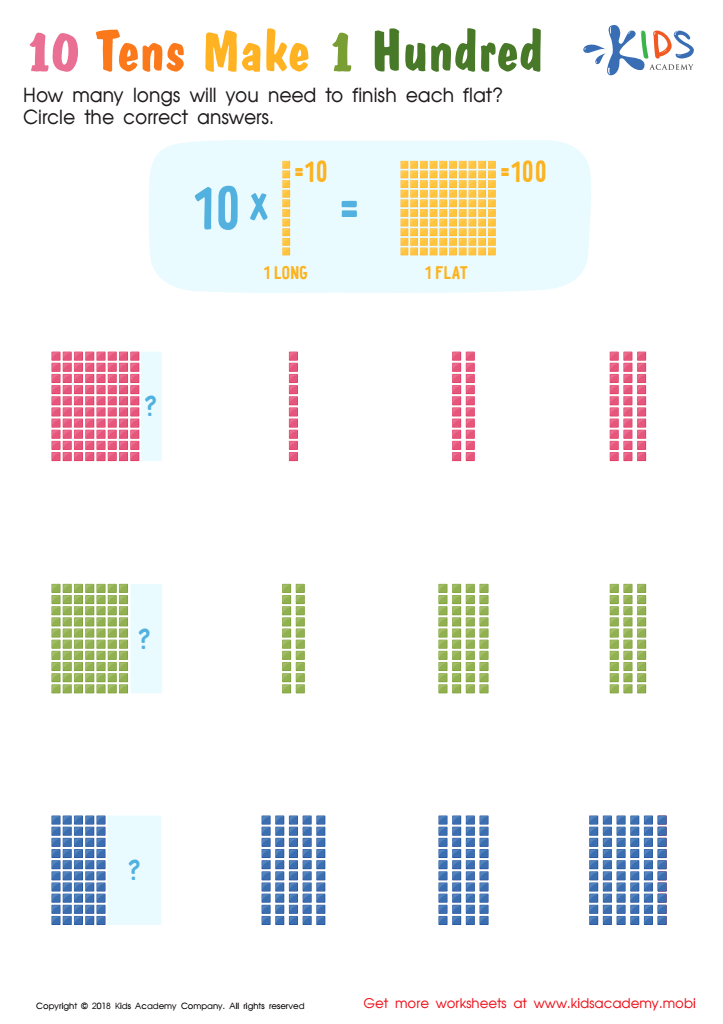
10 Tens Make 1 Hundred Worksheet
 Assign to My Students
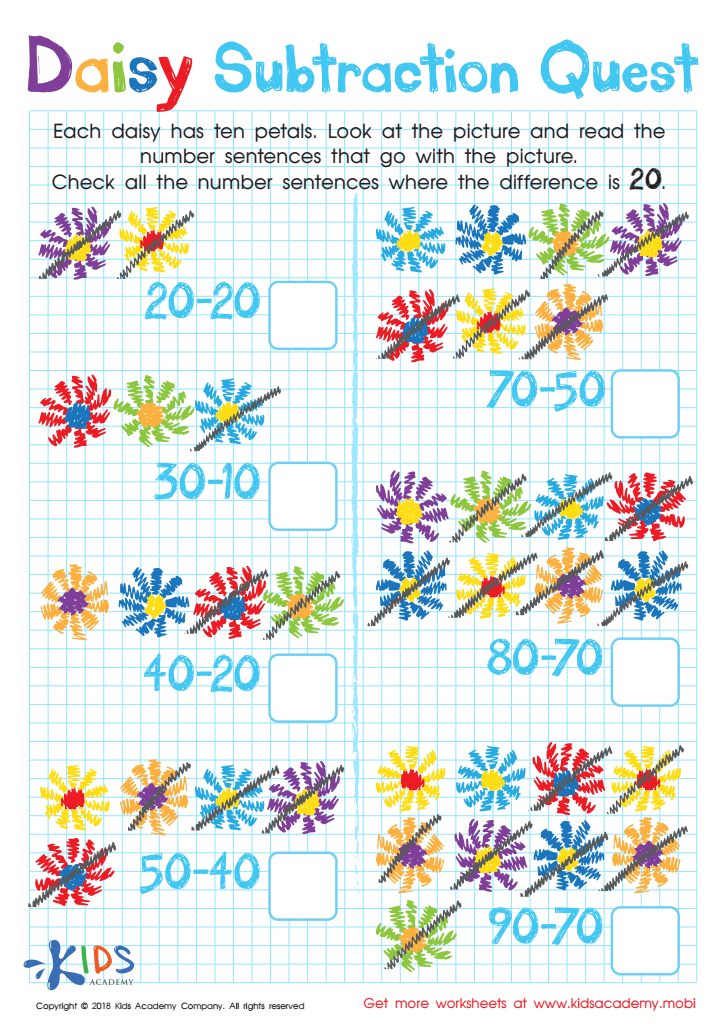
Daisy Subtraction Quest Worksheet
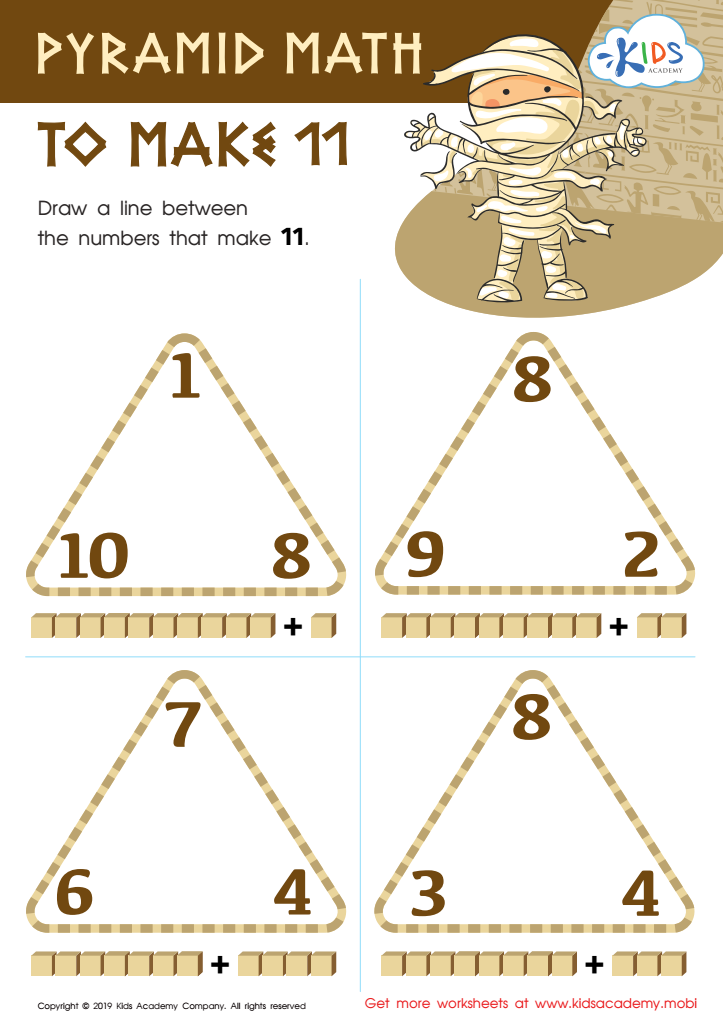
Pyramid Math to Make 11 Worksheet


%20(1).jpg)


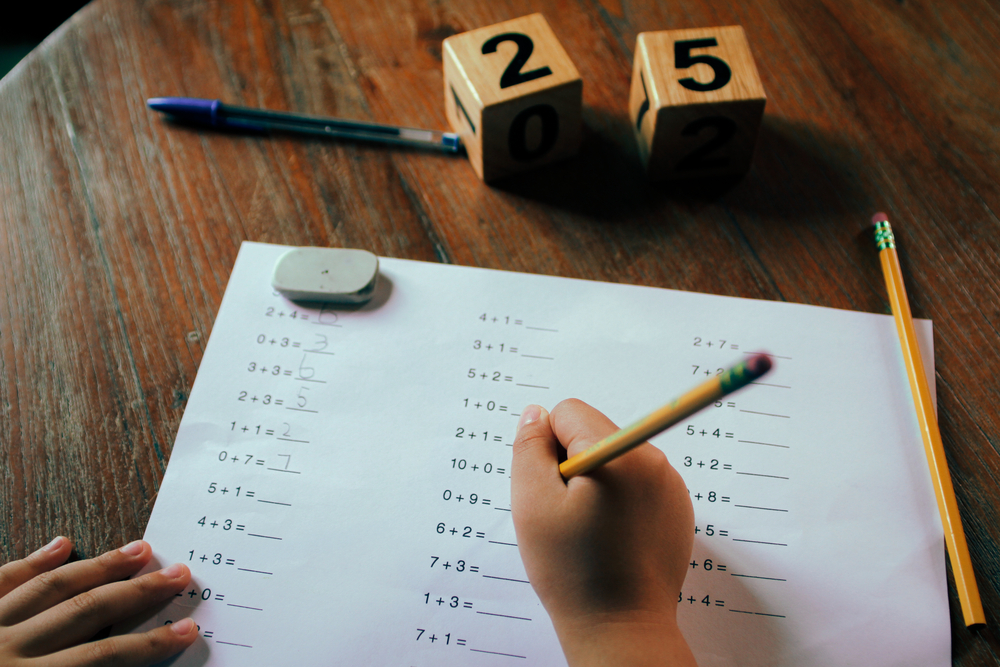


Understanding number relationships is crucial for children aged 6-9 as it lays the foundation for their mathematical abilities. At this developmental stage, children are transitioning from concrete counting to more abstract numerical concepts. When parents and teachers focus on fostering a deep understanding of how numbers interact, they help children grasp essential concepts like addition, subtraction, multiplication, and division more effectively.
Kids learn to recognize patterns, understand place value, and see relationships between numbers, which enhances their critical thinking skills. Instead of rote memorization, they develop problem-solving strategies that can be applied to real-life situations. For example, understanding that adding two numbers can be visualized as combining groups helps solidify their understanding of basic operations.
Additionally, a solid grasp of number relationships builds confidence in math, reducing anxiety associated with the subject. This positive attitude motivates children to engage with math more fully, encouraging lifelong learning.
Parents and teachers can work together to incorporate engaging activities, such as games and hands-on experiences, to make learning fun. Ultimately, by emphasizing number relationships, they provide children with the tools necessary for success not only in math but also in developing a positive mindset toward learning.








