Understanding place values Normal Math Worksheets for Ages 6-9
9 filtered results
-
From - To
Unlock the world of numbers for your child with our "Understanding Place Values" math worksheets designed for ages 6-9. These engaging and educational worksheets help young learners grasp the fundamentals of place values, enhancing their mathematical skills step-by-step. Through a variety of fun activities and exercises, children will learn how to differentiate between units, tens, and hundreds, developing a solid foundation for future math success. Our carefully crafted, easy-to-follow worksheets make learning enjoyable and accessible, ensuring children build confidence and mastery in their math abilities. Perfect for complementing school lessons or extra practice at home!
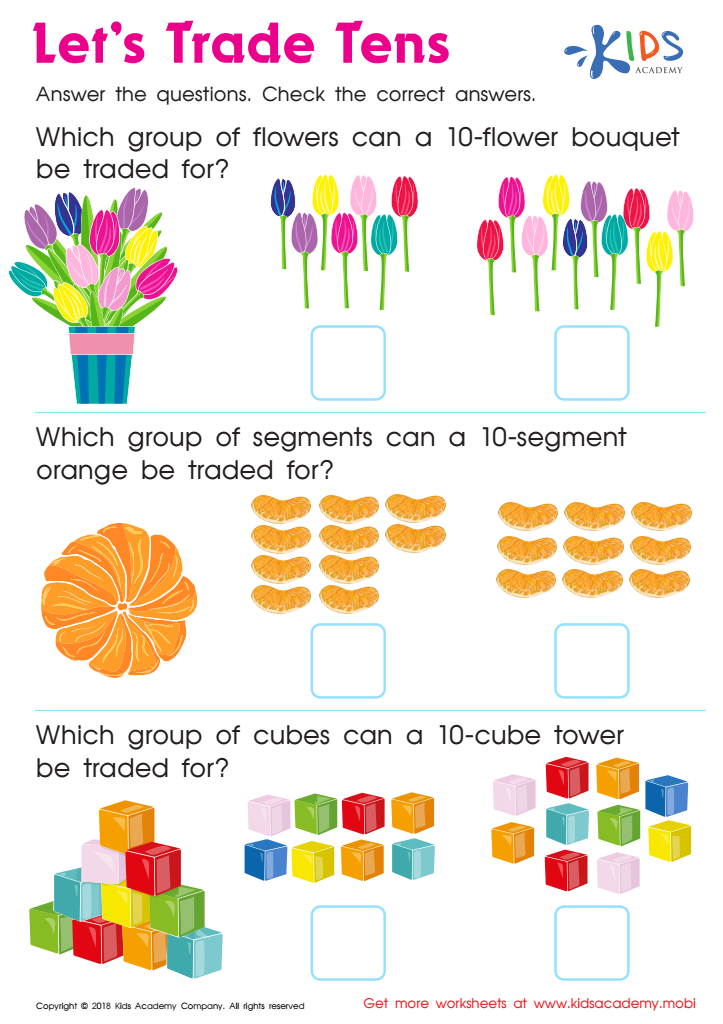
Lets Trade Tens Worksheet
 Assign to My Students
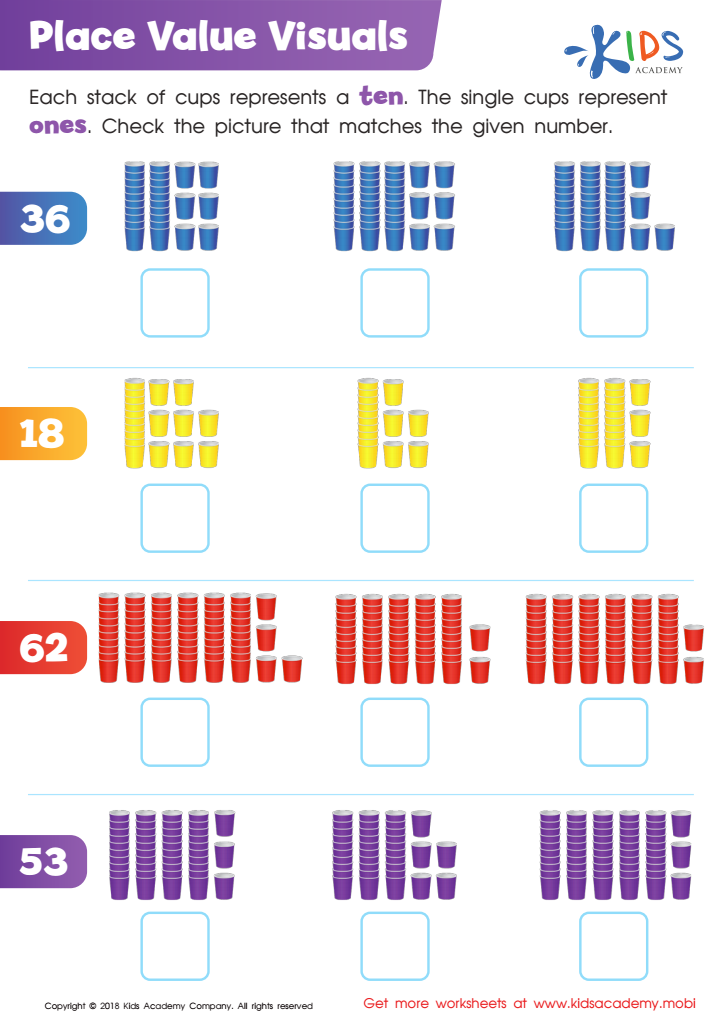
Place Value Visuals Worksheet
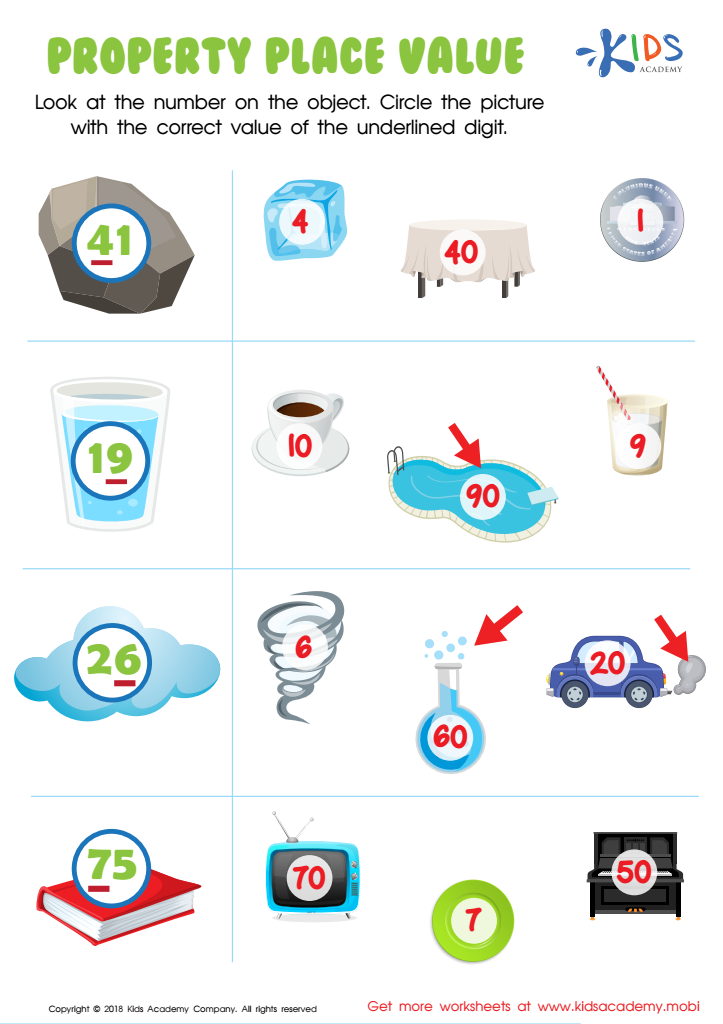
Property Place Value Worksheet
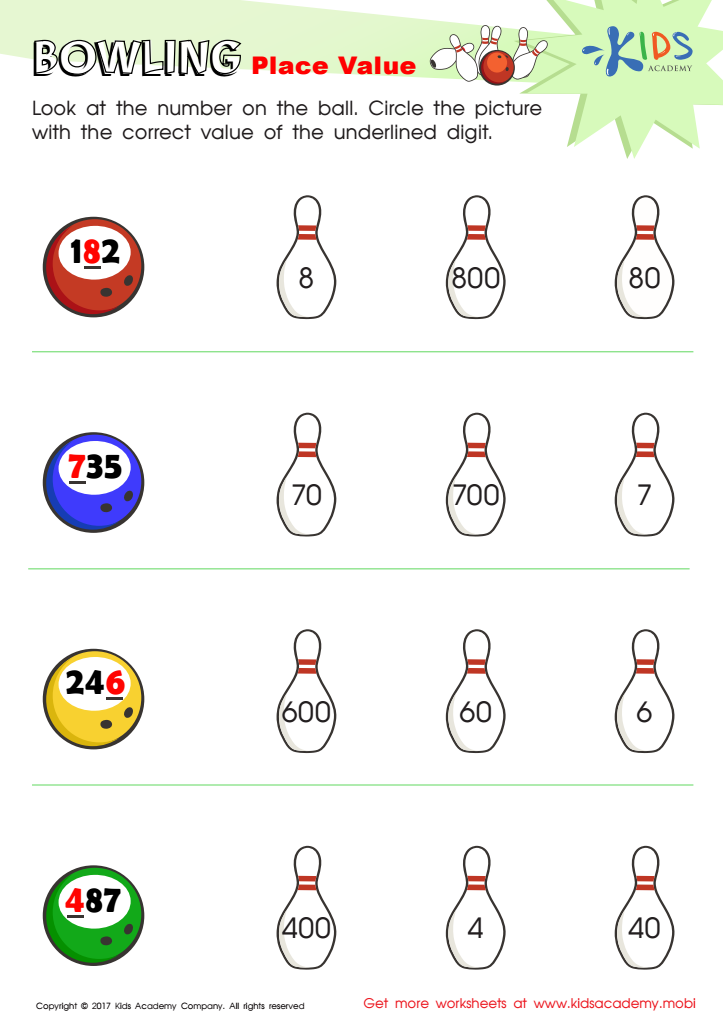
Place Value Worksheet
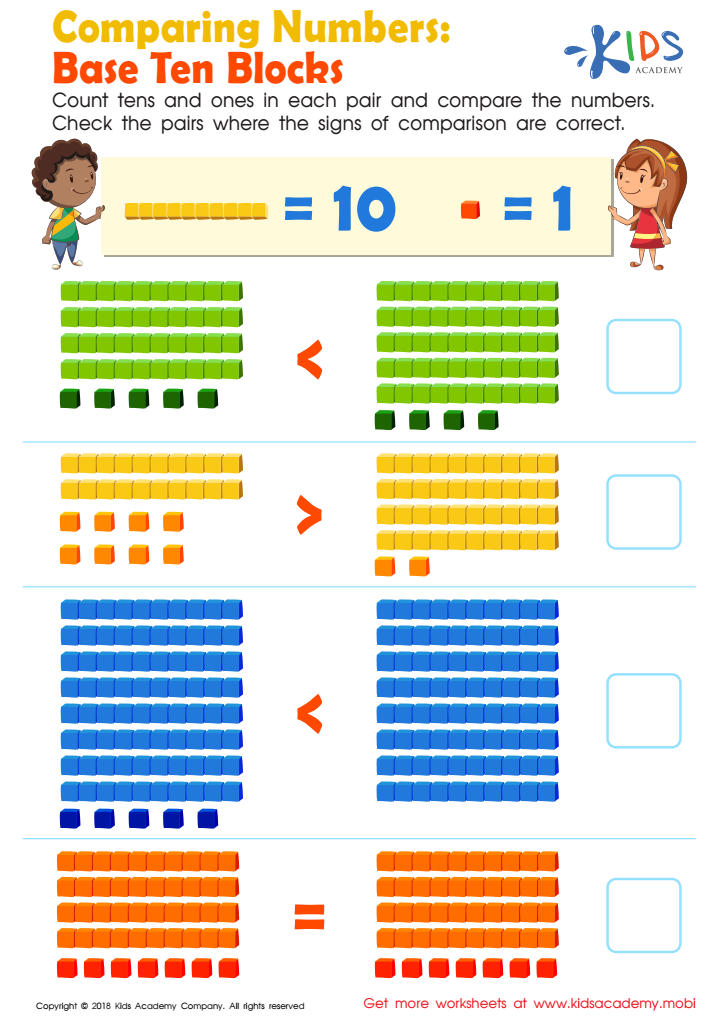
Comparing Numbers: Base Ten Blocks Worksheet
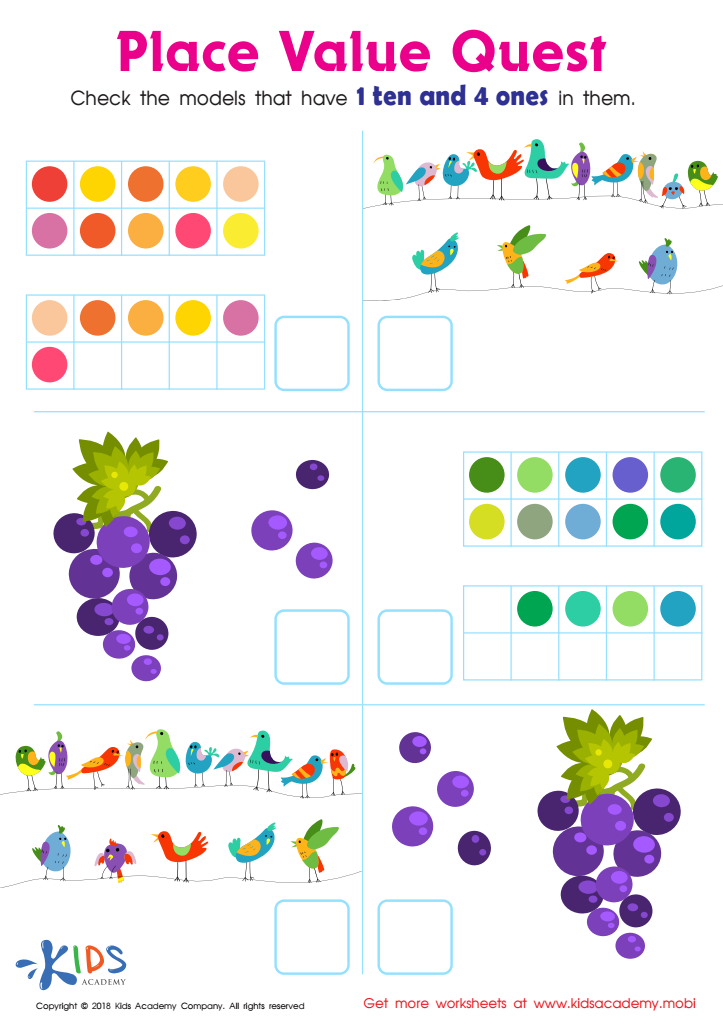
Place Value Quest Worksheet
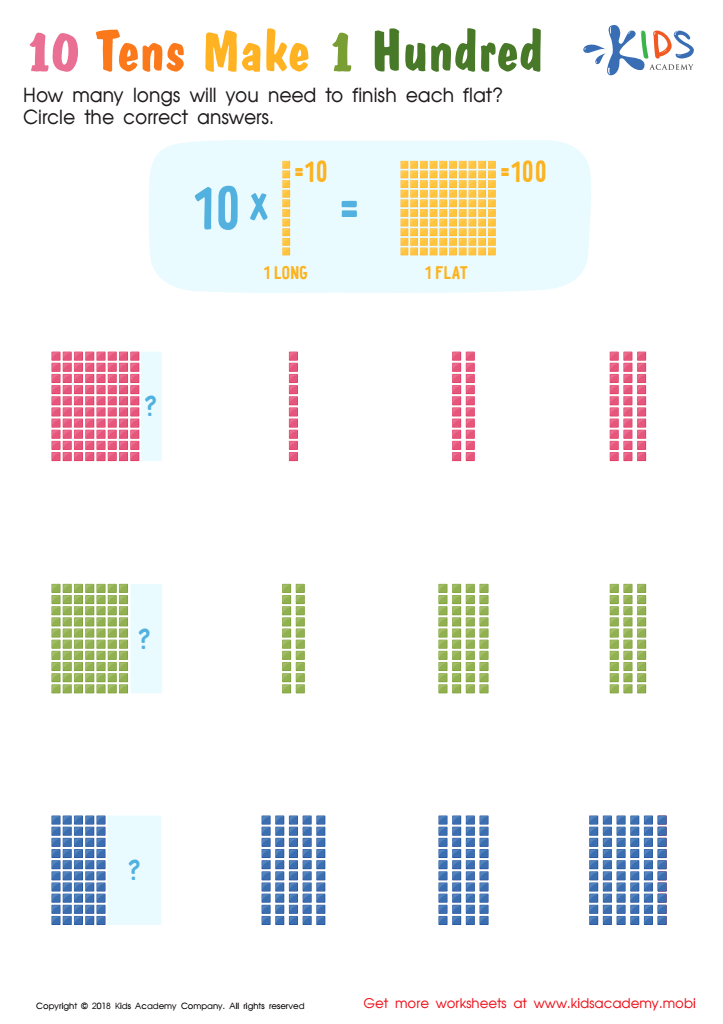
10 Tens Make 1 Hundred Worksheet
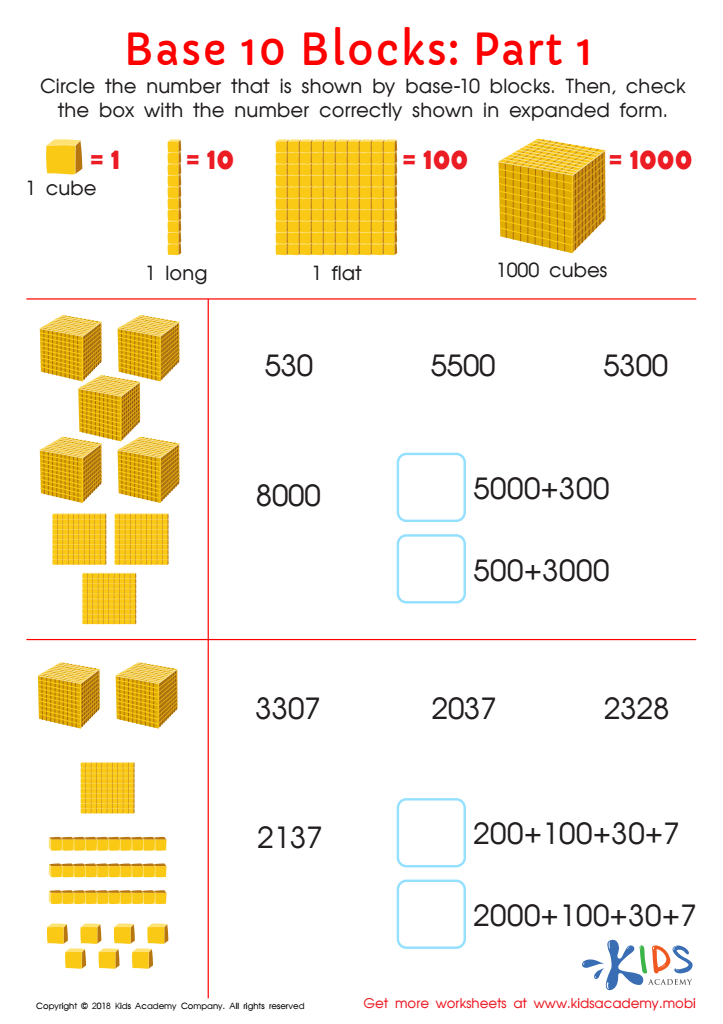
Base 10 Blocks Worksheet: Part 1
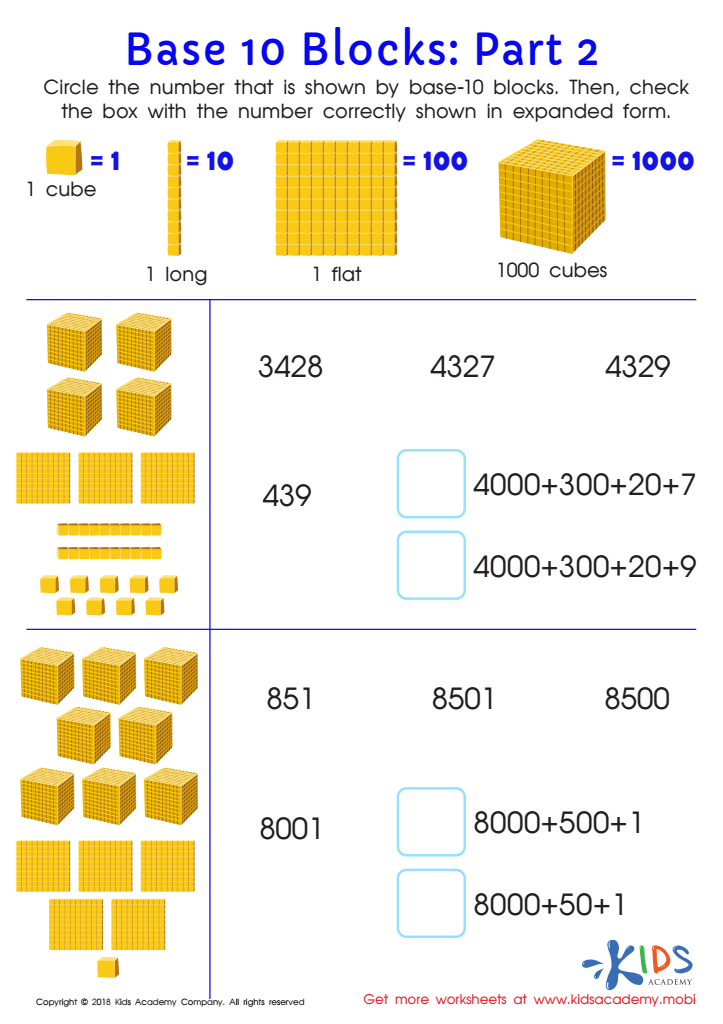
Base 10 Blocks Worksheet: Part 2







Understanding place values is crucial for children ages 6-9 as it forms the foundation of their math skills. Place value helps young learners grasp the concept that the position of a digit in a number determines its value. For instance, in the number 132, the digit '1' represents one hundred, '3' represents thirty, and '2' represents two. Without a firm understanding of this, students may struggle with more advanced math concepts such as addition, subtraction, and beyond.
Place value comprehension aids in problem-solving and enables students to perform arithmetic operations more efficiently. For example, knowing place values can help children break down complex problems into simpler, more manageable parts — adding hundreds, tens, and ones separately before combining them for the final result.
Additionally, a strong grasp of place value boosts children’s number sense, making it easier for them to estimate, compare, and understand large numbers. This early mathematical competence leads to increased confidence, which is essential for tackling more challenging areas of math.
Teachers and parents should care about place values because it lays the groundwork for a child's future success in math and fosters a positive attitude toward learning. By ensuring that children understand this fundamental concept, we set them up for continuous academic achievement and lifelong problem-solving skills.








