
Understanding Quantities Normal Math Worksheets for Ages 6-9
3 filtered results
Difficulty Level
Grade
Age
-
From - To
Subject
Activity
Standards
Discover engaging "Understanding Quantities" math worksheets designed specifically for children aged 6 to 9. These resources aim to strengthen foundational math skills by helping young learners grasp the concept of numbers and quantities through fun and interactive activities. Our worksheets cover essential topics such as counting, comparing quantities, and recognizing numerical patterns, ensuring a comprehensive learning experience. Each worksheet is crafted to promote critical thinking while catering to different learning styles. Perfect for classroom use or at-home practice, these materials are a valuable addition to any educational toolkit, making math both enjoyable and accessible for early learners. Explore and empower young minds today!
Favorites
With answer key
Interactive
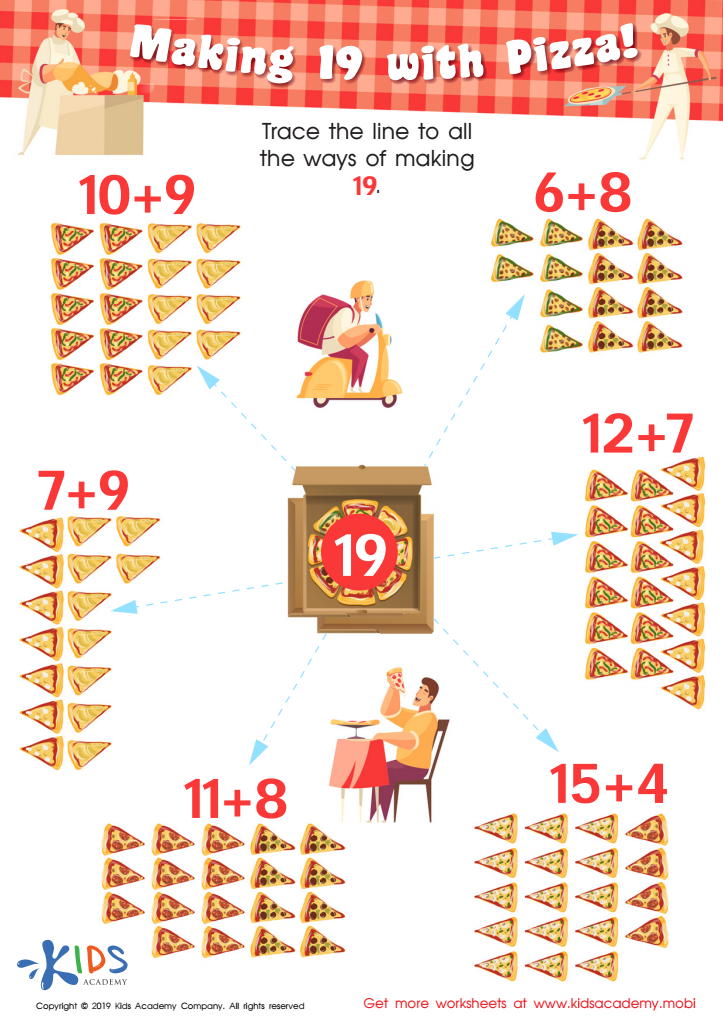
Making 19 with Pizza! Worksheet
Who loves pizza? Your kids do! Next time you need to teach them math, make it fun by combining it with something they enjoy. This worksheet uses a pizza-themed problem to help them practice solving equations. Have them trace the line to figure out how to make 19. It's a great way to make learning math fun!
 Assign to My Students
Making 19 with Pizza! Worksheet
Worksheet
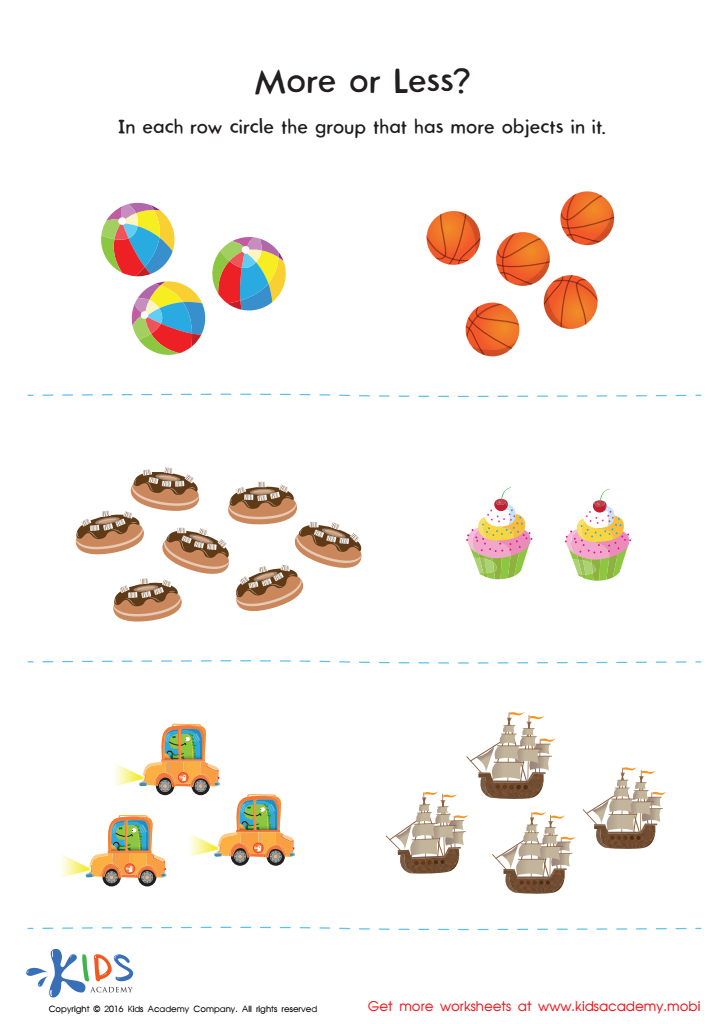
More or Less Size Worksheet
Worksheet
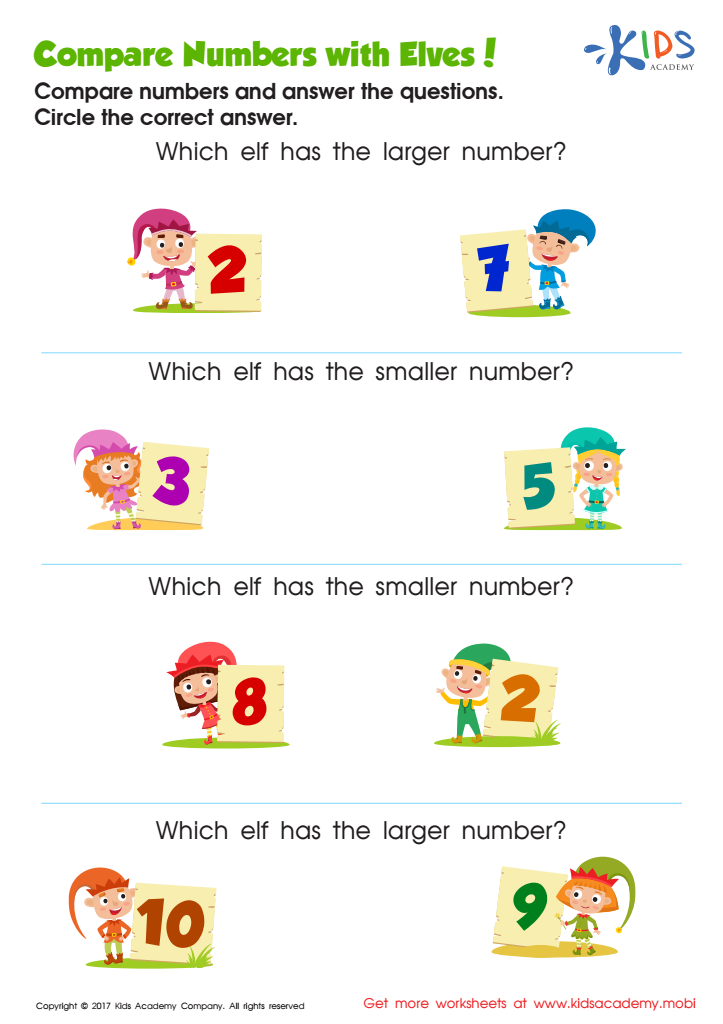
Comparing Numbers Worksheet for Kindergarten
Your child will love helping Santa's elves compare numbers with this fun worksheet for kindergarten! They must determine which number is bigger or smaller then circle the answer. It's a great activity for Christmas or any time!
Comparing Numbers Worksheet for Kindergarten
Worksheet
Join Kids Academy for Free
Who is primarily going to use this learning content?







Understanding quantitative reasoning is crucial for children aged 6-9 as it lays the foundation for their future mathematical proficiency and overall cognitive development. At this age, children's brains are highly adaptable, making it the ideal time to cultivate a strong understanding of numbers and their relationships. Parents and teachers should care about this concept as it fosters critical thinking and problem-solving skills that are essential in everyday life.
Moreover, a solid grasp of quantities helps children compare, estimate, and measure effectively, skills applicable beyond mathematics. Engaging students with hands-on activities and real-life contexts, such as cooking or shopping, can make these concepts relatable and enjoyable. Additionally, ensuring that children comprehend these fundamental ideas can boost their confidence in math, reducing anxiety and resistance toward the subject later in their academic careers.
Furthermore, early mastery of quantitative reasoning enables children to tackle more complex mathematical concepts as they progress. Essentially, nurturing this understanding not only supports academic success but also equips children with vital life skills, preparing them for future challenges. In sum, fostering a deep understanding of quantities in young learners is an investment in their overall educational journey and lifelong success.








