Understanding times tables Normal Math Worksheets for Ages 6-9
3 filtered results
-
From - To
Discover our "Understanding Times Tables" normal math worksheets designed specifically for children aged 6-9! These engaging and interactive resources help young learners grasp multiplication concepts through visual aids, fun exercises, and step-by-step guidance. Our worksheets cater to various learning styles, ensuring that every child can improve their math skills while building confidence. Ideal for home practice or classroom use, these materials promote a solid foundation in multiplication, paving the way for future mathematical success. Let your child explore the world of times tables with ease and enjoyment, setting the stage for lifelong learning and academic achievement!
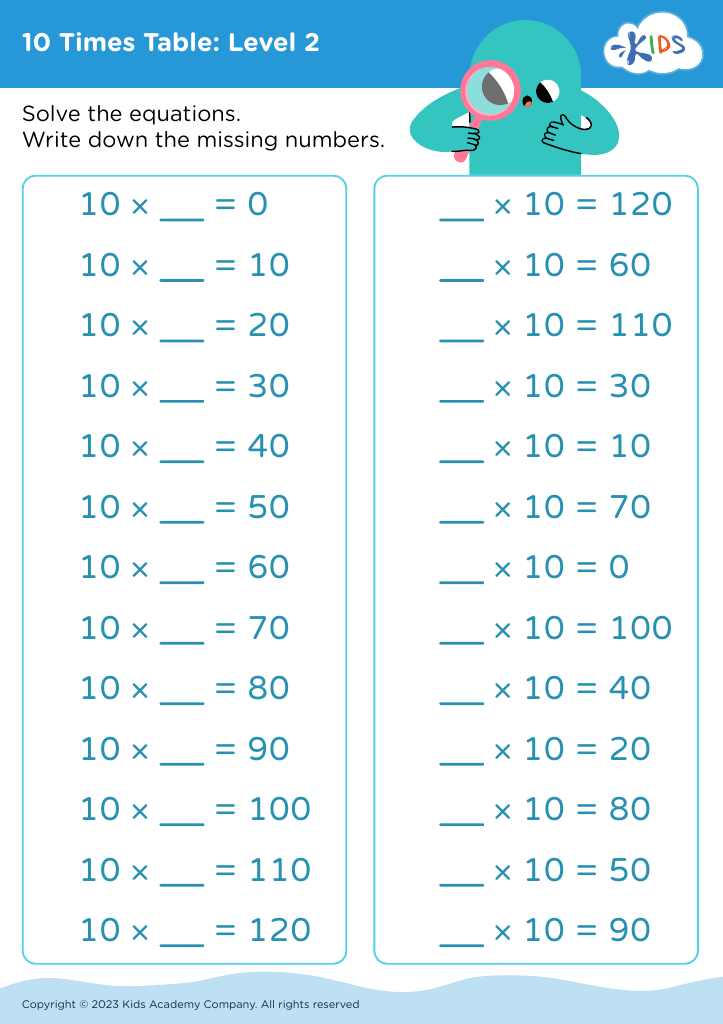
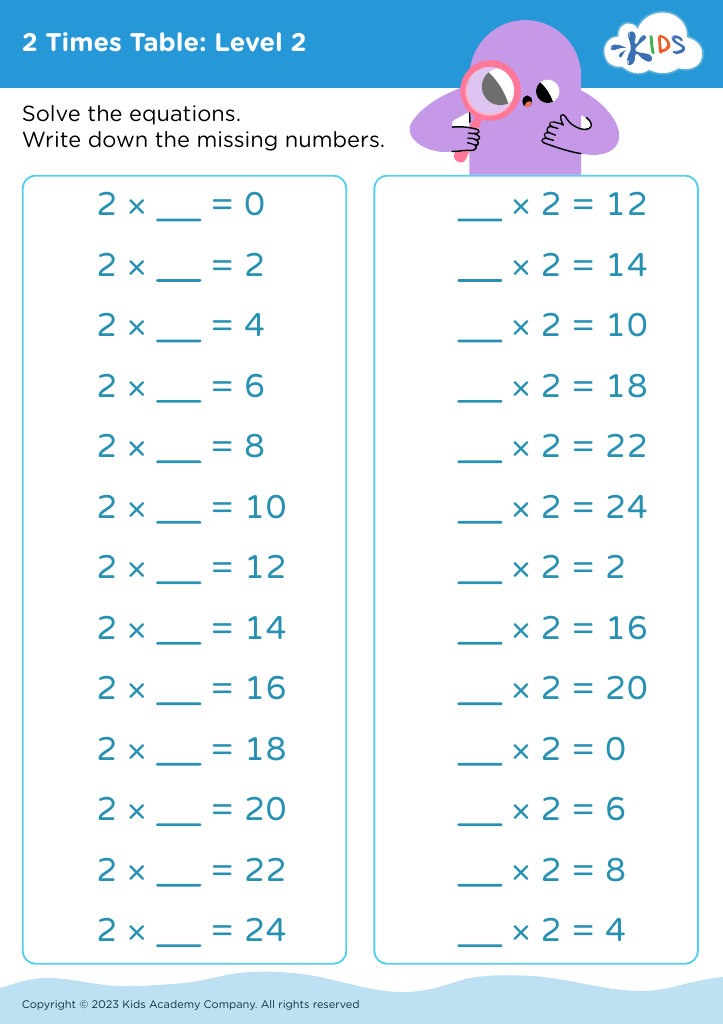
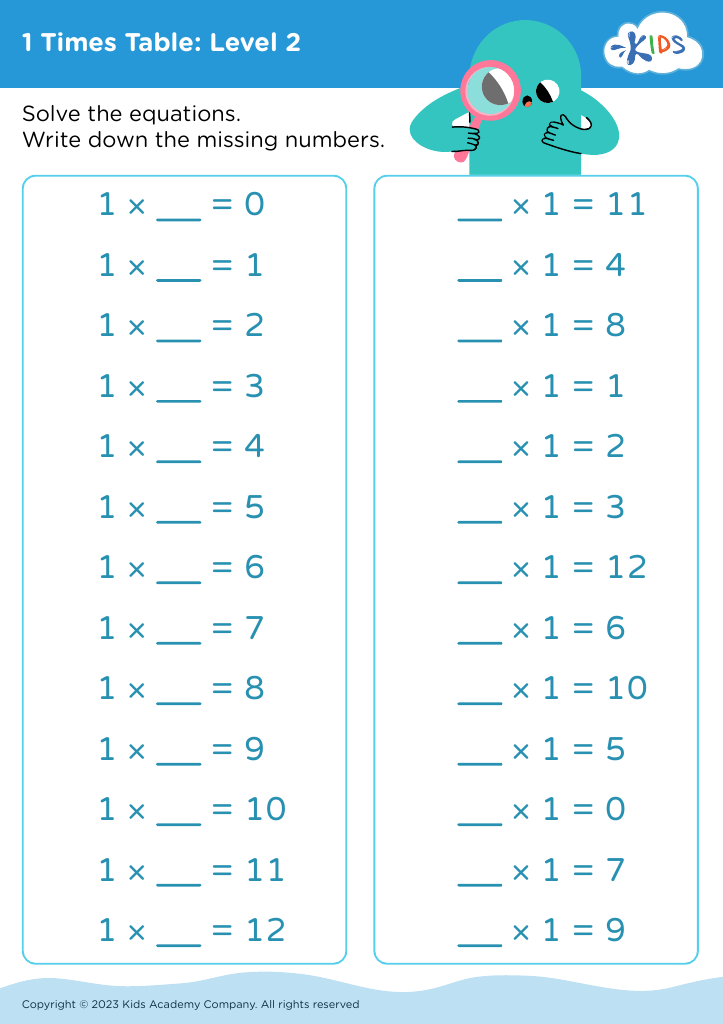








Understanding times tables is crucial for children ages 6-9 as it forms the foundation for their mathematical development. From a young age, being proficient in multiplication helps children make sense of more complex math concepts, such as division, fractions, and even algebra later on. Mastering times tables enhances their problem-solving skills, allowing them to approach word problems and real-life situations with confidence.
Moreover, a solid grasp of multiplication aids in building mental math skills. Children who can quickly recall their times tables can perform calculations efficiently, which is essential for daily activities like budgeting or measuring ingredients in recipes.
For parents and teachers, fostering a love for math at an early age can create a positive attitude toward learning. Engaging children in fun and interactive practices, such as games and songs, helps reinforce these skills and makes math enjoyable. By focusing on times tables, educators and caregivers provide children with the tools they need not only to succeed in school but also to navigate everyday life. Ultimately, prioritizing understanding in this area helps ensure that children develop a strong mathematical foundation that empowers them for future academic challenges.








