Understanding rounding Normal Rounding Worksheets for Ages 6-9
5 filtered results
-
From - To
Unleash the power of numbers with our "Understanding Rounding" worksheets, designed specifically for ages 6-9. These engaging activities make mastering the concept of rounding simple and fun. Through clearly outlined steps, colorful graphics, and interactive problems, young learners will confidently tackle rounding tasks, whether rounding to the nearest ten or hundred. Crafted by seasoned educators, our worksheets develop essential math skills and align with school standards. Visit Kids Academy to empower your child with the clear, practical understanding of rounding they need to succeed in more complex math concepts. Start their journey to math proficiency today!
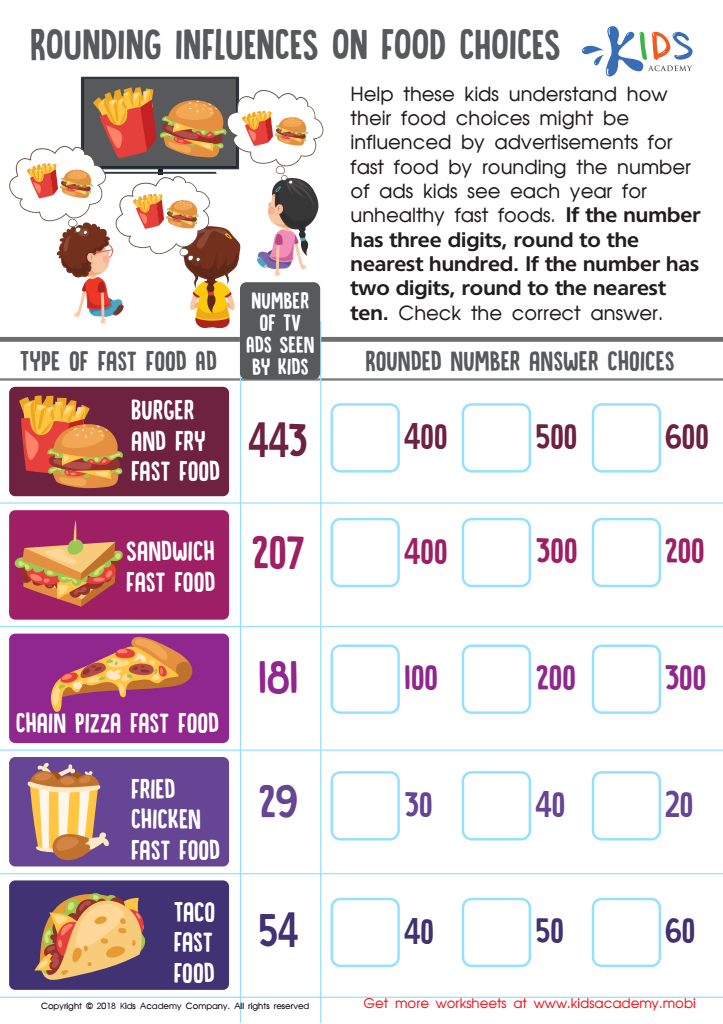
Rounding Influences Food Choices Worksheet
 Assign to My Students
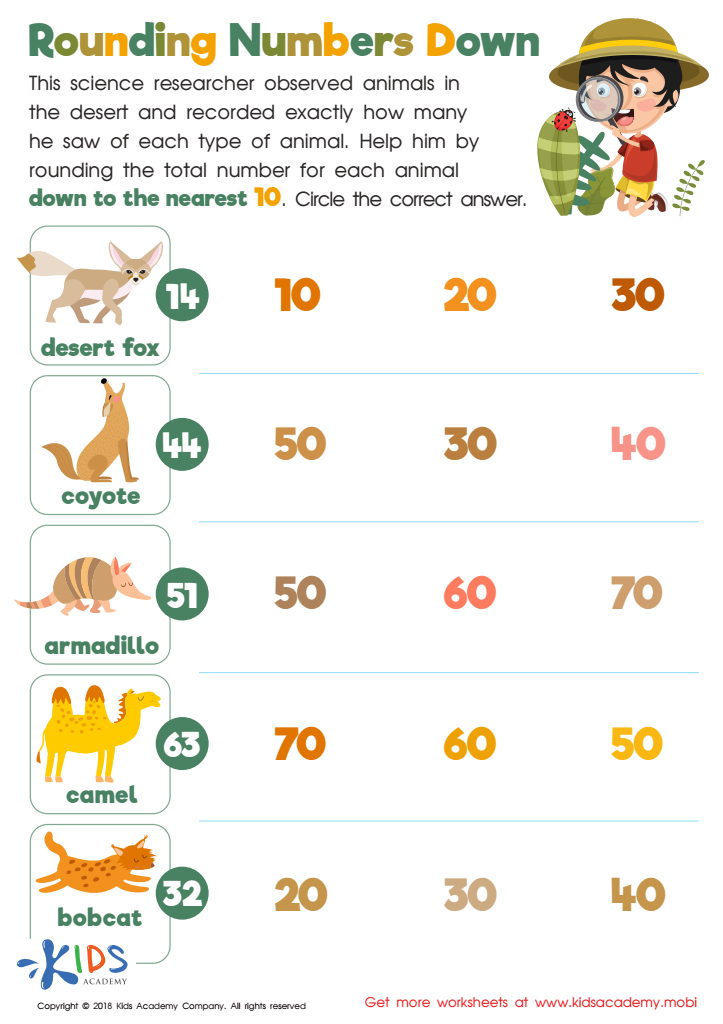
Rounding Numbers Down Worksheet
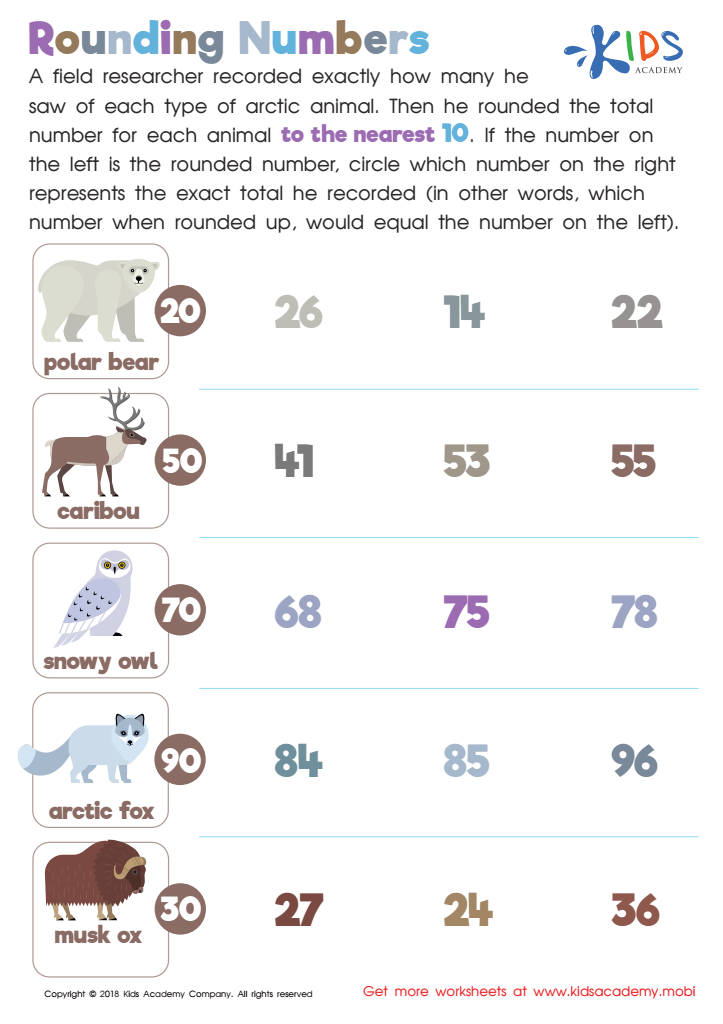
Rounding Numbers Worksheet
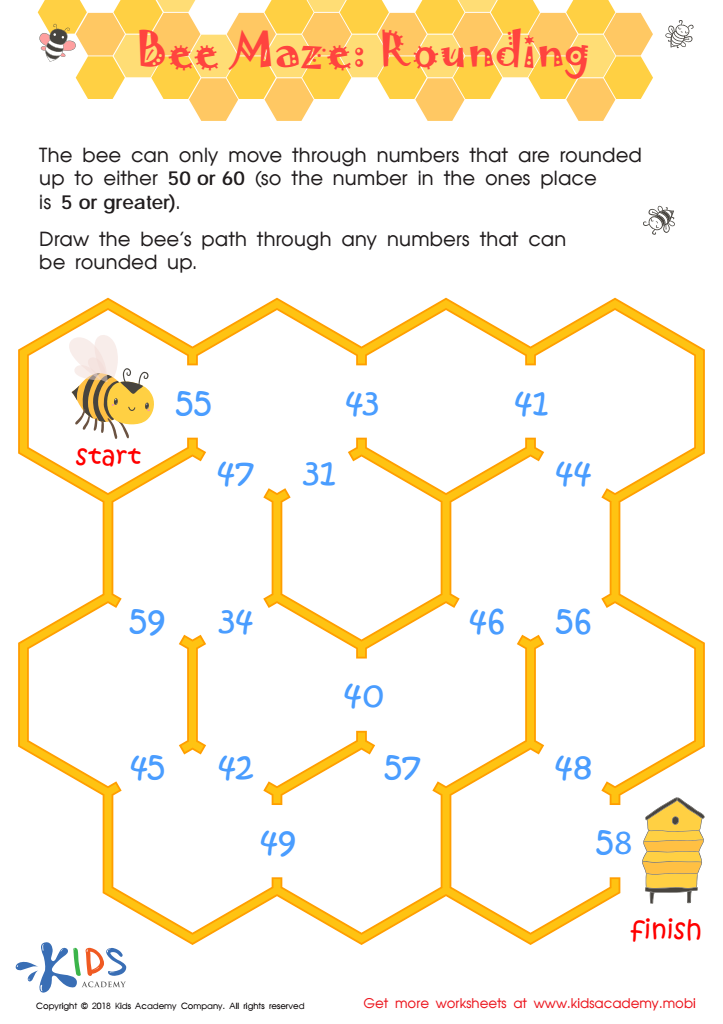
Bee Maze Rounding Worksheet
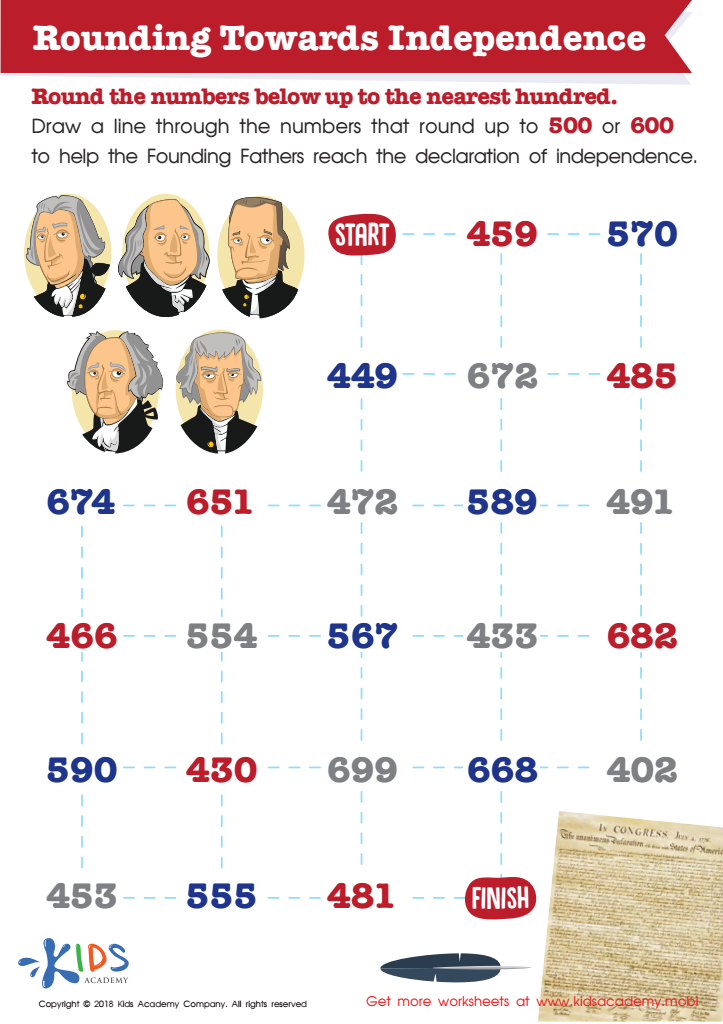
Rounding Towards Independence Worksheet






Understanding rounding and normal rounding is vital for children aged 6-9 for several reasons. First, it strengthens their number sense, helping them to see numbers as flexible and manageable, which is essential for future mathematical learning. This foundational skill allows them to estimate sums, differences, and measurements more easily, which is valuable in everyday situations, such as when shopping or measuring ingredients for a recipe.
Moreover, rounding helps children develop problem-solving skills. By learning how to round numbers to the nearest ten or hundred, they can simplify complex problems, making them more approachable. This also boosts their confidence as they recognize that they can handle larger numbers by breaking them down.
Rounding is also a time-saver. In real-world scenarios, precise calculations are not always necessary. For instance, when budgeting, one often estimates expenses rather than calculating exact amounts. Hence, understanding rounding equips children with practical skills for both academic tasks and daily life.
Furthermore, an early mastery of rounding prepares students for more advanced mathematical concepts they will encounter later, such as decimals and fractions. Consistent practice and understanding at an early age set a strong foundation for their continued education, making them more proficient and confident mathematicians overall.