Contextual understanding Normal Building Vocabulary Worksheets for Ages 6-9
4 filtered results
-
From - To
Explore our Contextual Understanding Normal Building Vocabulary Worksheets designed for children ages 6-9. These engaging worksheets help enhance vocabulary skills by placing new words within meaningful contexts. Each activity encourages young learners to read passages and answer questions that promote comprehension and retention. Ideal for classroom or at-home practice, these worksheets foster a love for reading and empower students to make connections between words and their meanings. Tailored to align with educational standards, our resources ensure that kids develop crucial language skills in a fun and interactive way. Start building a stronger vocabulary foundation today!
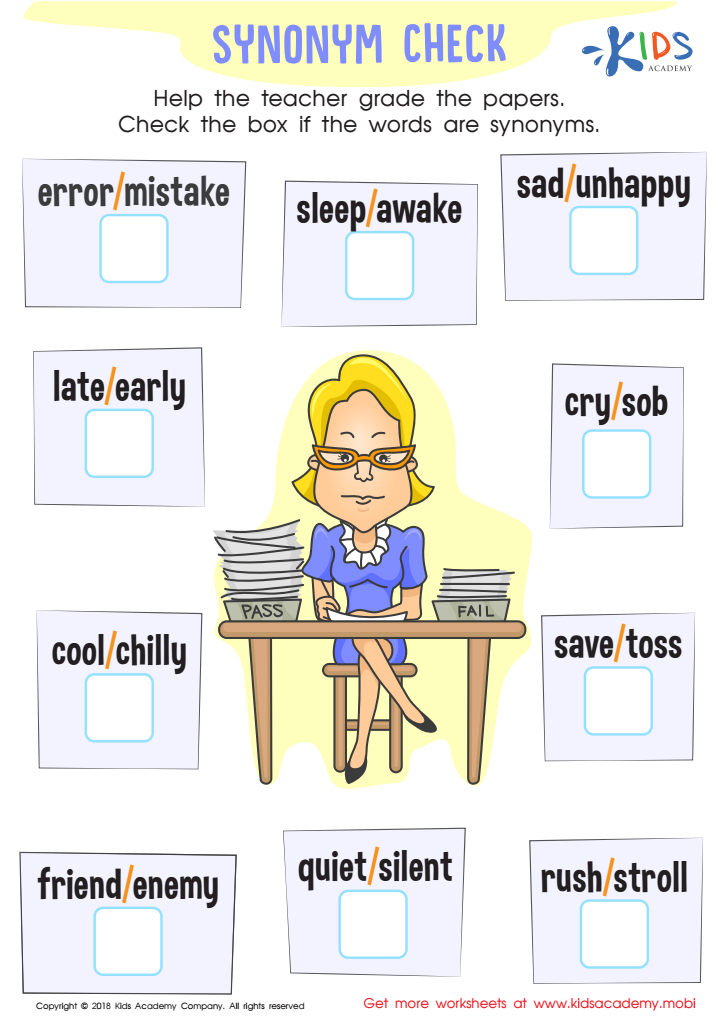
Synonym Check Worksheet
 Assign to My Students











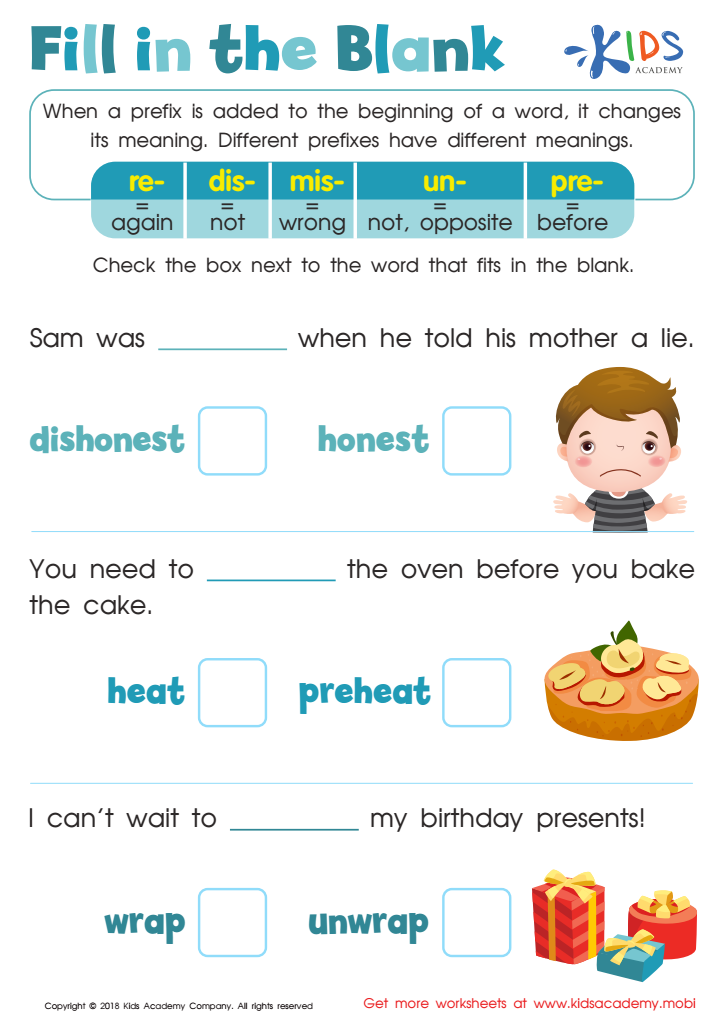
Reading: Fill in the Blank Worksheet
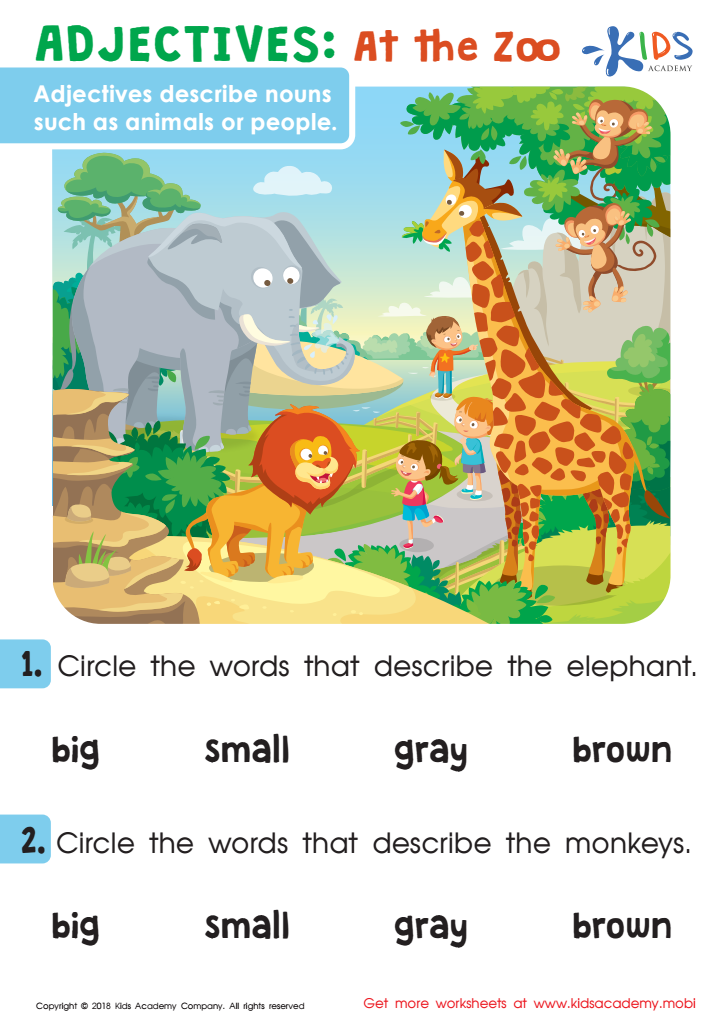
Adjectives: At The Zoo Worksheet
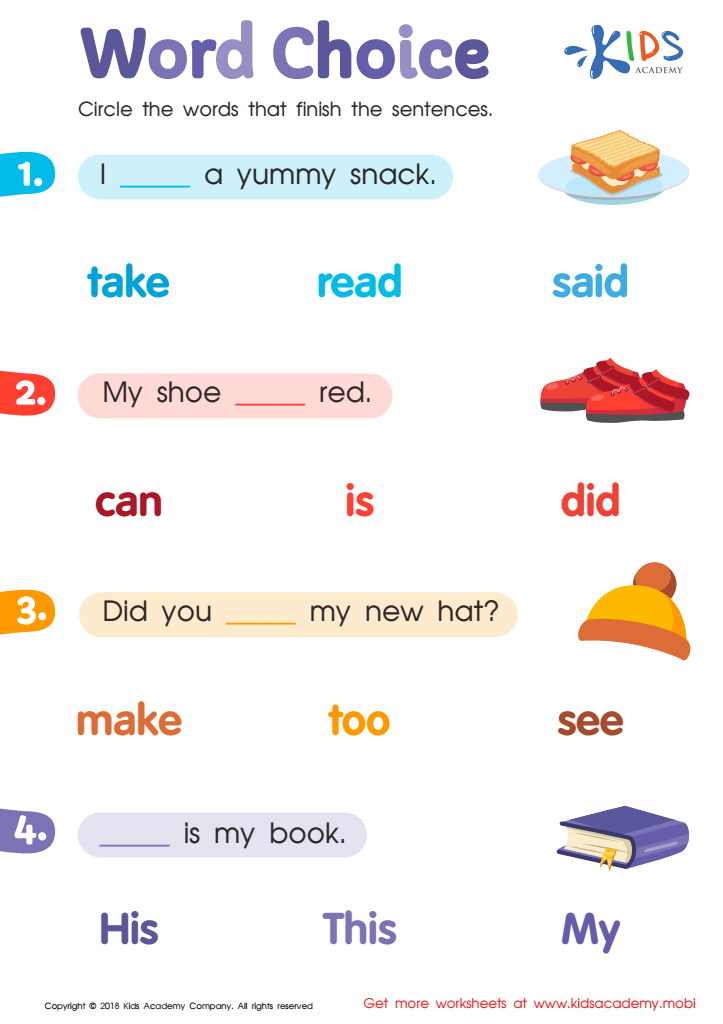
Word Choice Worksheet








Contextual understanding and vocabulary building are crucial for children aged 6-9, as these skills lay the foundation for effective communication and comprehension. At this age, children are transitioning from learning to read to reading to learn. Ensuring they grasp words within context helps them not only to decode text, but also to understand meanings, nuances, and the intent behind the words they read.
Parents and teachers should care because a robust vocabulary enables children to express themselves more clearly and engage in deeper conversations, both in and out of the classroom. When students encounter new words, understanding their context — including the surrounding sentences or situations — helps them internalize meanings and draw connections to their own experiences.
Moreover, strong contextual understanding aids in subject comprehension, significantly enhancing performance in subjects like reading, science, and social studies. It encourages critical thinking, as children learn to interpret and analyze information rather than just memorizing it.
Ultimately, investing in vocabulary and contextual understanding nurtures a child's overall academic development and emotional intelligence, empowering them with skills that will benefit them throughout their lives. Parents and teachers play a key role in this growth, making it imperative to prioritize these areas in early education.








