Understanding perspectives Normal Reading Worksheets for Ages 6-9
3 filtered results
-
From - To
Unlock the world of understanding perspectives with our engaging Normal Reading Worksheets for children ages 6-9! These carefully crafted resources aim to enhance reading comprehension by encouraging young learners to consider different viewpoints within texts. Each worksheet features age-appropriate passages and interactive activities that stimulate critical thinking and help children develop empathy and deeper connections to stories. Ideal for both classroom and home use, these worksheets foster discussion, creativity, and analytical skills. Empower your child’s reading journey and enrich their literary experiences with our understanding perspectives worksheets, designed to make learning fun and effective! Download now and inspire a love for reading!
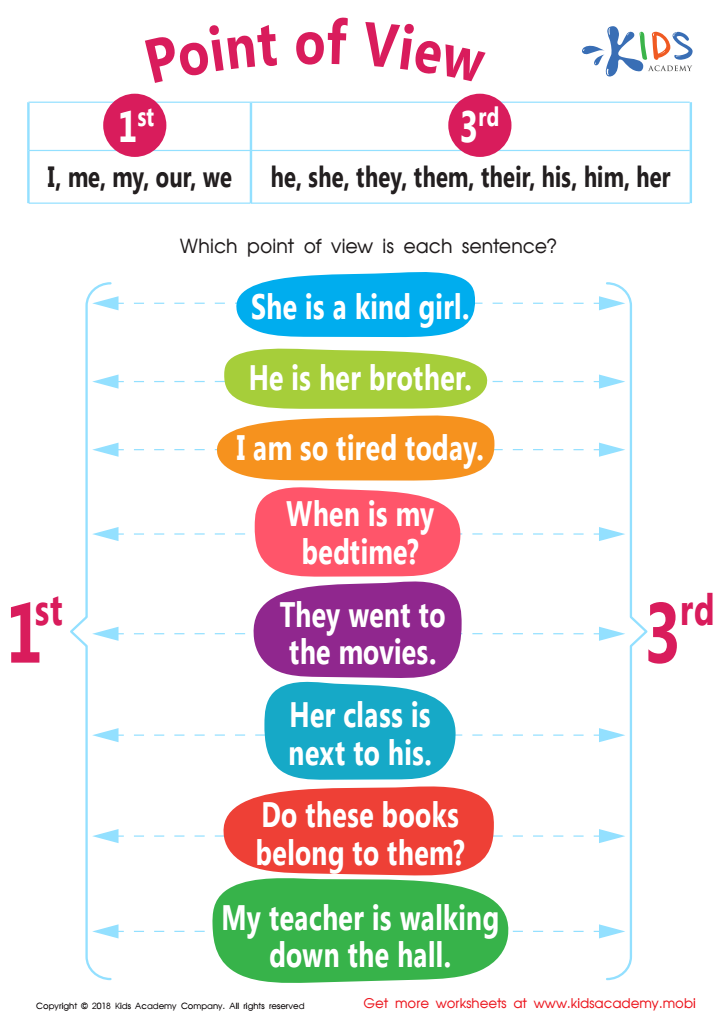
Point of View Worksheet
 Assign to My Students
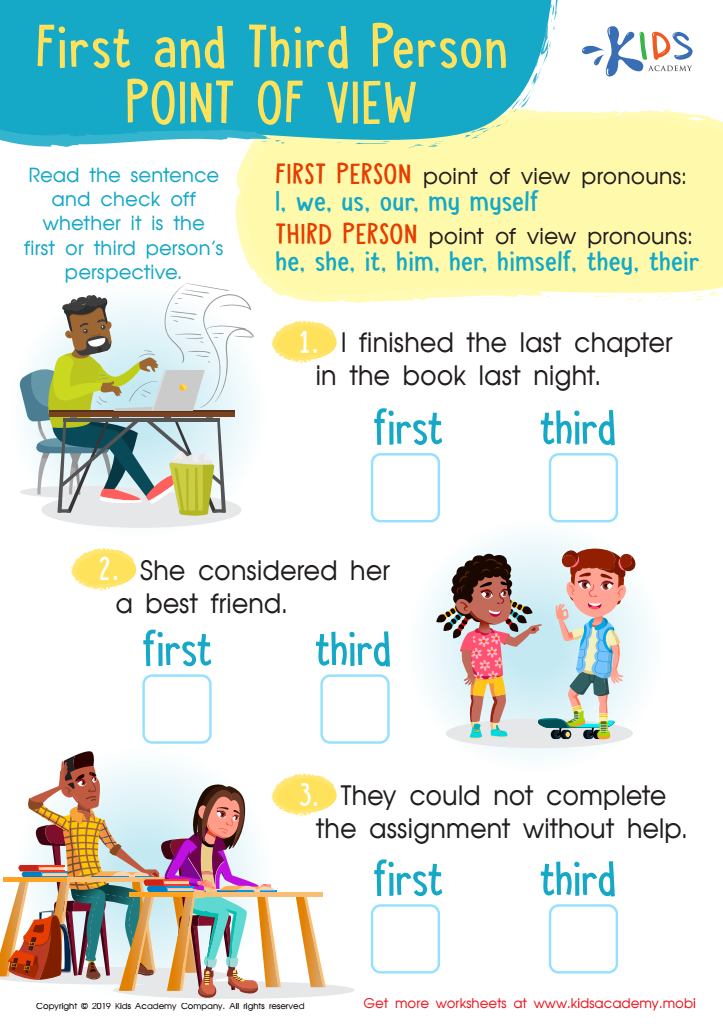
First and Third Person Point of View Worksheet
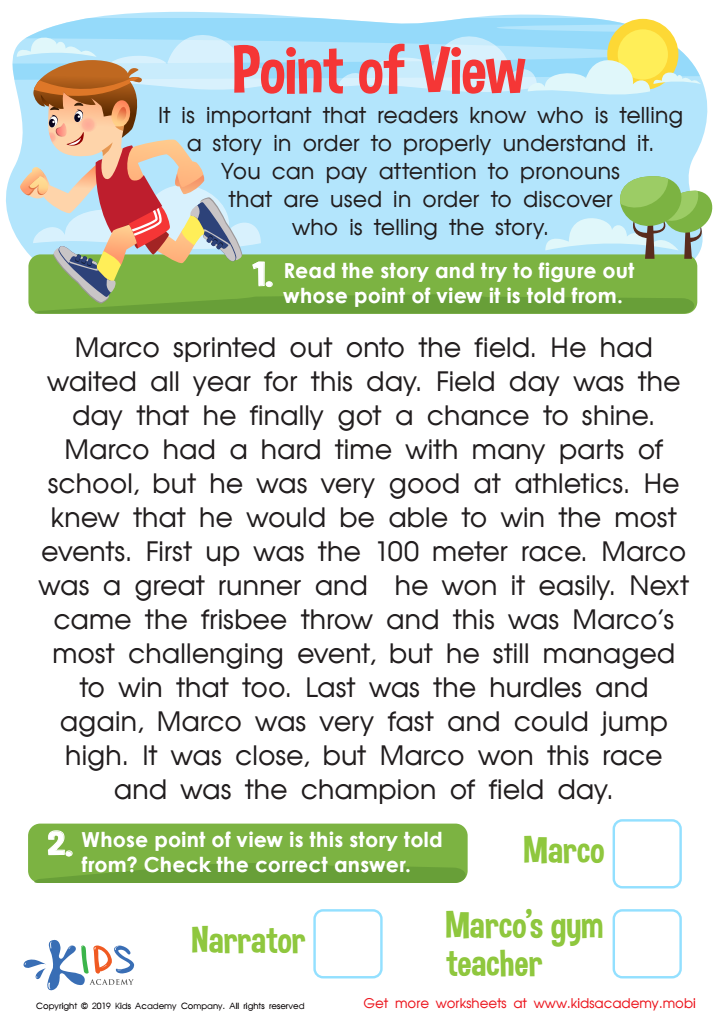
Point of View Worksheet





.jpg)


Understanding perspectives is crucial for children aged 6-9, as it lays the foundation for empathy, social skills, and critical thinking. Parents and teachers should care about this developmental aspect because children are at a stage where they are beginning to navigate their relationships with peers and adults. By comprehending different viewpoints, children learn to appreciate the variety of experiences and feelings that shape individual behaviors and responses.
For instance, discussing story characters’ motivations helps students relate to diverse backgrounds and emotions. This skill fosters emotional intelligence, enabling kids to engage more thoughtfully with others, both in and out of the classroom. Furthermore, it aids problem-solving by allowing children to consider multiple solutions to a challenge and understand the reasoning behind various opinions.
Additionally, nurturing an understanding of perspectives encourages cooperation and acceptance, reducing the potential for bullying or conflict. It sets the tone for respectful dialogues and valuing differences—complementary competencies in an increasingly diverse society. Therefore, parents and teachers wield significant influence in embedding these vital skills daily, ultimately preparing children to thrive as not only competent learners but compassionate individuals in their communities.








