
Logical Reasoning Normal Reading Comprehension Worksheets for Ages 6-9
7 filtered results
Difficulty Level
Grade
Age
-
From - To
Subject
Activity
Standards
Unlock your child's potential with our Logical Reasoning Normal Reading Comprehension Worksheets designed specifically for ages 6-9. These engaging worksheets combine critical thinking exercises with reading comprehension activities, helping young learners develop essential reasoning skills. Each worksheet features age-appropriate texts followed by thought-provoking questions that challenge students to analyze information and draw conclusions. By fostering these skills early, we aim to cultivate confident readers who can understand and interpret text effectively. Perfect for classroom use or at-home learning, our worksheets provide a fun and educational way to enhance your child's cognitive abilities while enjoying the wonders of reading.
Favorites
With answer key
Interactive
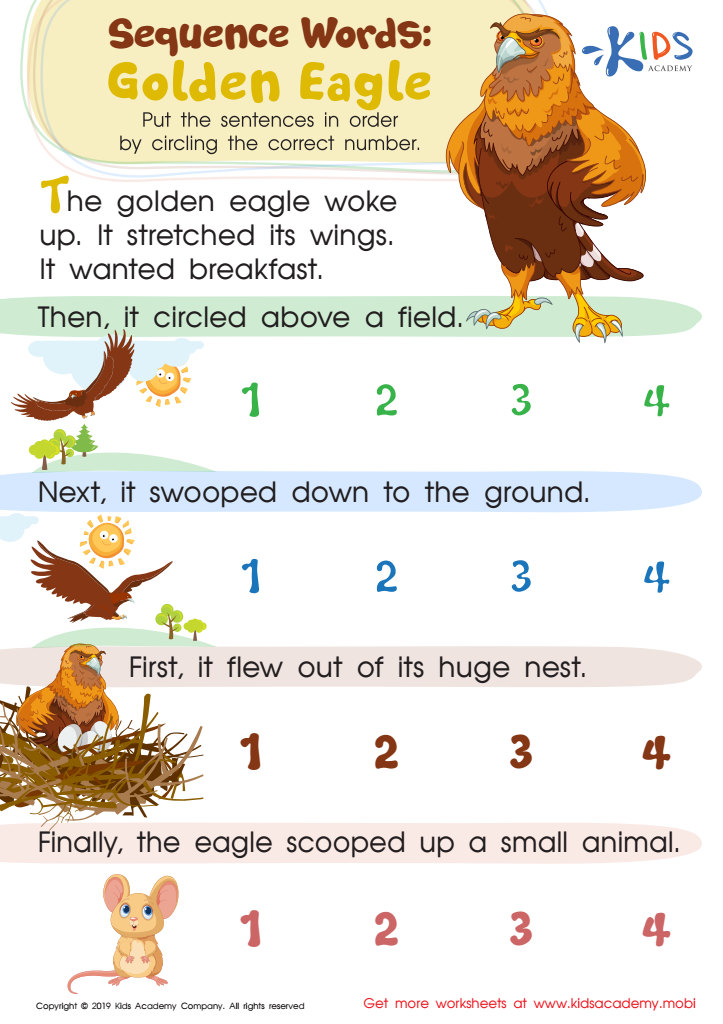
Sequence Word Eagle Worksheet
Help your child brush up on reading and writing with this fun worksheet. Read the story of the golden eagle's day, then have the child circle the numbers in the right order. Point out the sequence words that tell the order of events. This helps learners understand how to make their writing clear and understandable to others.
 Assign to My Students
Sequence Word Eagle Worksheet
Worksheet
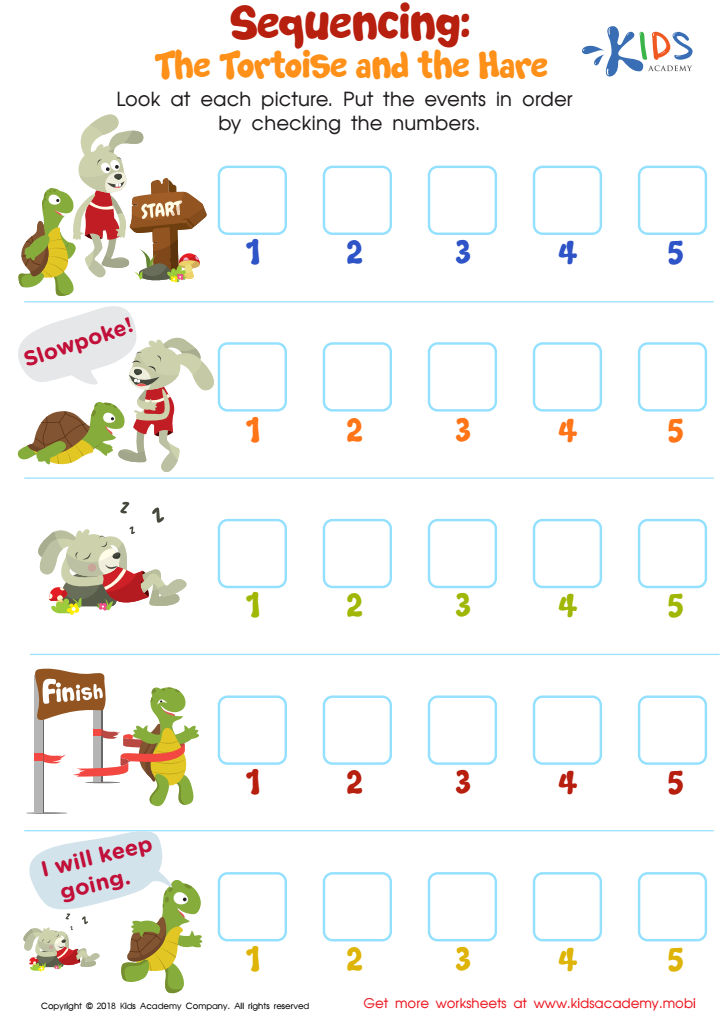
Sequencing: The Tortoise and the Hare Worksheet
Help your child become an independent reader and critical thinker with a sequencing worksheet from Kids Academy! Have them read the classic tale of the tortoise and the hare and use the accompanying worksheet to check their understanding of the story's sequence of events. Have kids identify the correct order of events by selecting the box next to the correct number for each image!
Sequencing: The Tortoise and the Hare Worksheet
Worksheet
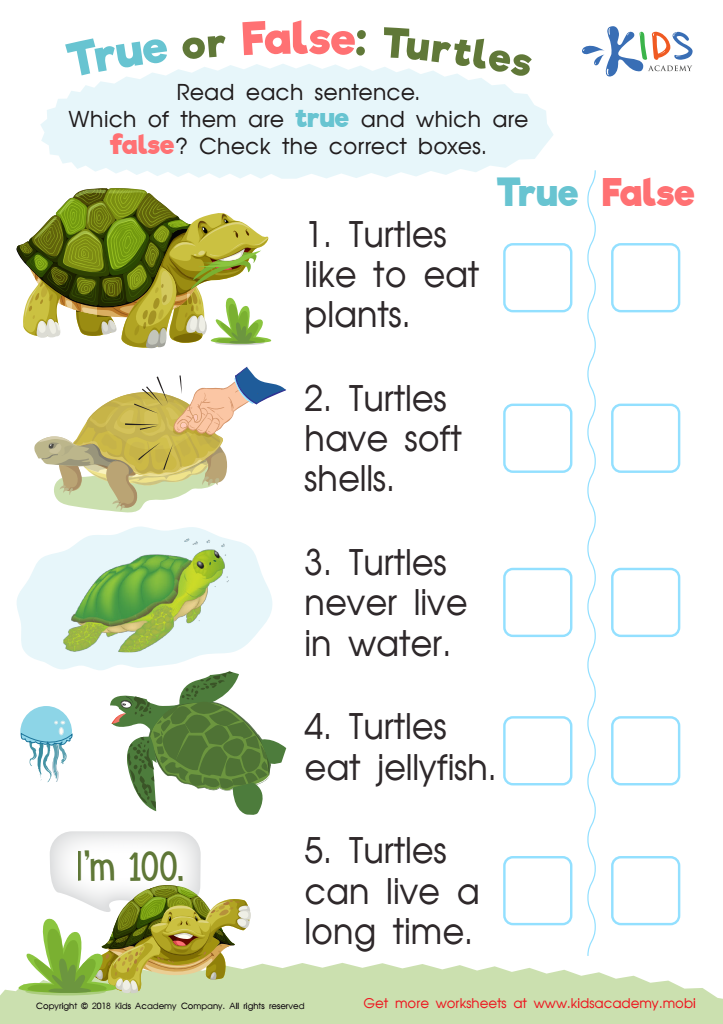
True or False: Turtles Worksheet
Print this free downloadable worksheet to strengthen your child's reading comprehension. Assist them to read each sentence and recall facts about turtles. Check true or false for each statement to verify their knowledge. Perfect for early learners!
True or False: Turtles Worksheet
Worksheet
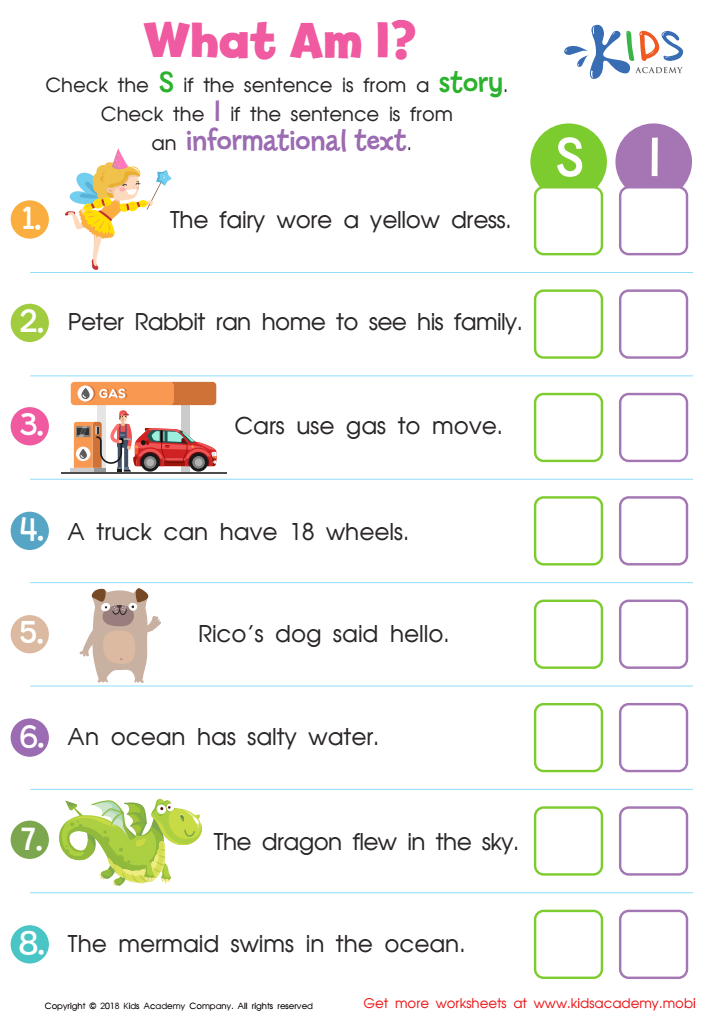
What Am I? Worksheet
This worksheet assesses students' ability to differentiate between stories and texts they read for facts. Students learn to distinguish between reading for pleasure and reading for information. It includes statements from both a story and an informational text, and students must decide what type of text it is.
What Am I? Worksheet
Worksheet
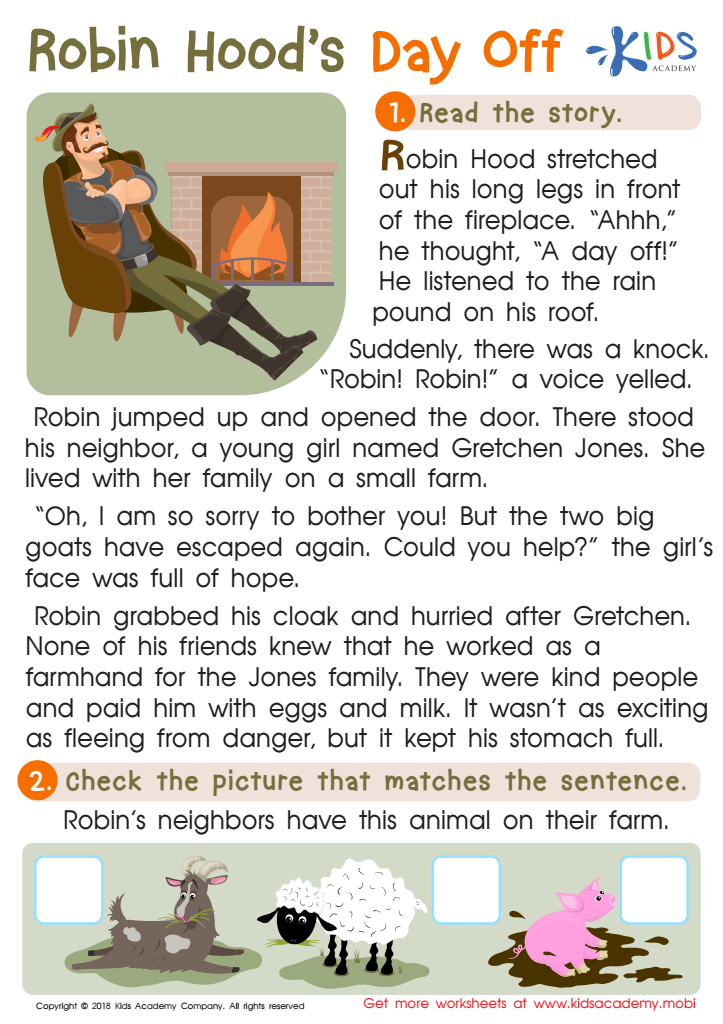
Robin Hood's Day Off Worksheet
Encourage your child to express their personality by writing stories. Show them this worksheet's short story about Robin Hood and read it slowly and carefully. Read it again if needed and ask the question below the story. This will help your child use their knowledge to answer it.
Robin Hood's Day Off Worksheet
Worksheet
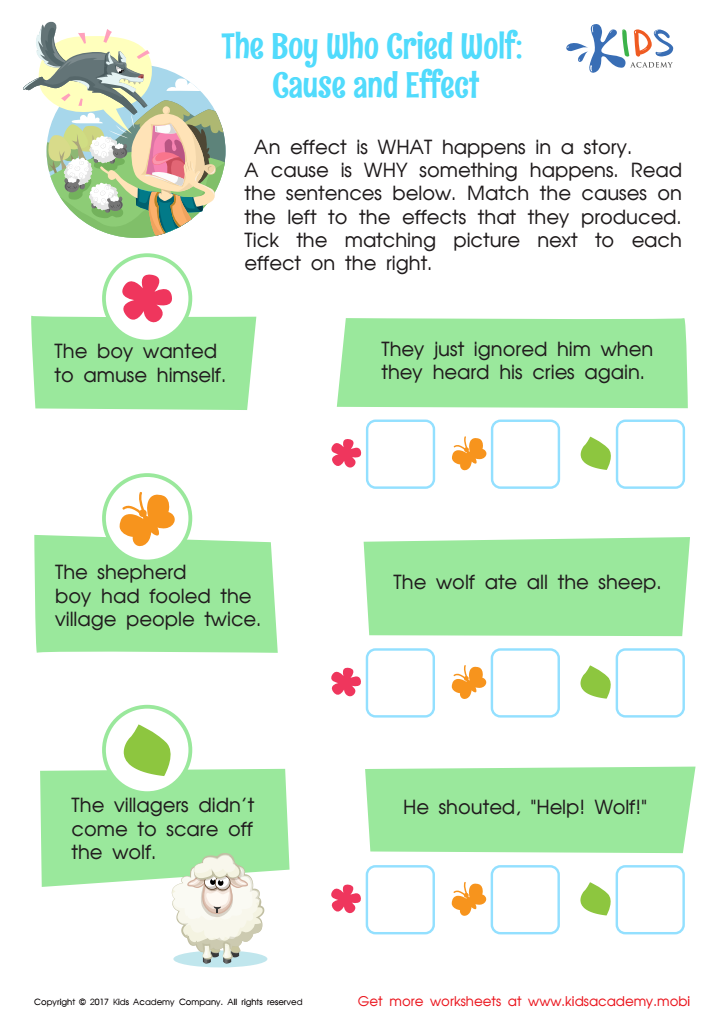
The Boy Who Cried Wolf: Cause and Effect Worksheet
With classic stories and fables, learning reading comprehension is easy - and fun!
The Boy Who Cried Wolf: Cause and Effect Worksheet
Worksheet
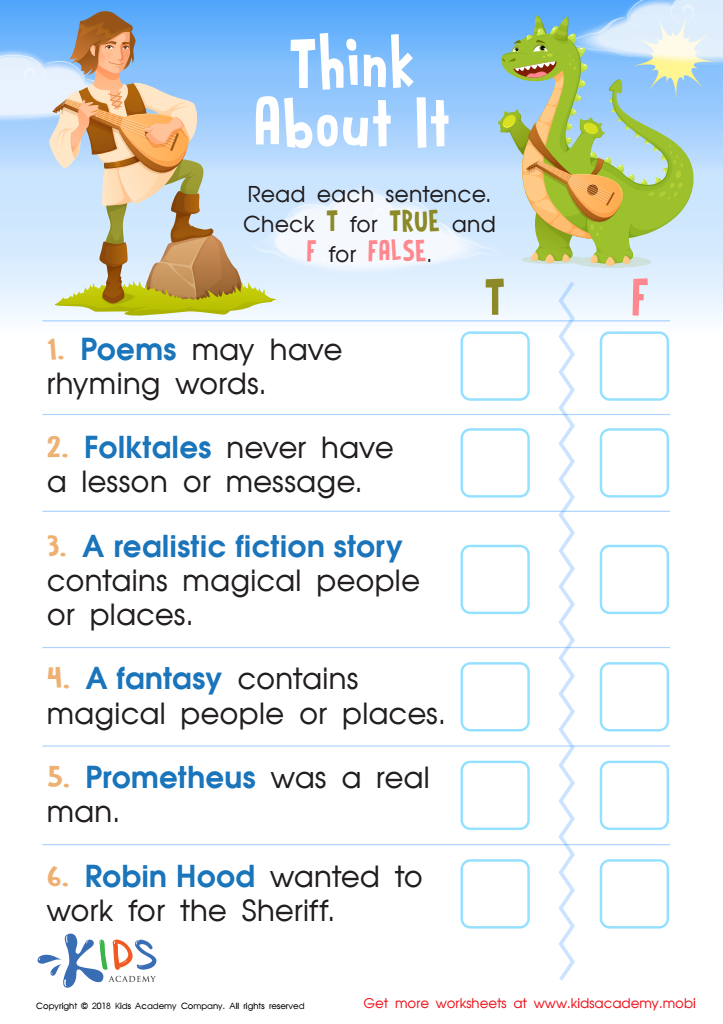
Think About It: Assessment Worksheet
Reading is a fun and important way to learn. Help your students become better readers with this simple yet colorful worksheet. Read each sentence aloud, then have them read it by themselves. Ask them to check T for True and F for False. It's a great way to practice their reading skills!
Think About It: Assessment Worksheet
Worksheet
Join Kids Academy for Free
Who is primarily going to use this learning content?







.jpg)
Logical reasoning and reading comprehension are essential skills for children aged 6-9, profoundly impacting their academic and personal growth. Parents and teachers should prioritize these skills because they form the foundation for critical thinking, effective communication, and problem-solving abilities that children will carry throughout their lives.
Logical reasoning helps children analyze information, make connections, and draw conclusions based on evidence, which is vital not only in school but also in daily decision-making. As children learn to evaluate various viewpoints and scenarios, they develop a more profound understanding of the world around them, fostering independence and confidence in their thought processes.
On the other hand, reading comprehension is crucial for understanding and engaging with texts effectively. At this age, children are introduced to more complex narratives and informational texts. A strong grasp of reading comprehension allows children to extract meaning, infer details, and appreciate nuances, thus enhancing their overall learning experience.
In essence, fostering logical reasoning and reading comprehension bolsters children's ability to navigate challenges, excel academically, and thrive in interactions with peers and adults. By emphasizing these skills, parents and teachers actively contribute to shaping well-rounded individuals equipped to succeed in an increasingly complex world.








