Moral understanding Normal Reading Comprehension Worksheets for Ages 6-9
5 filtered results
-
From - To
Discover engaging Moral Understanding Normal Reading Comprehension Worksheets designed for ages 6-9. Our carefully crafted worksheets are aimed at helping young readers enhance their comprehension skills while gaining valuable moral lessons. Each activity is tailored to be age-appropriate, making learning both fun and meaningful. Students can explore various scenarios and stories that teach honesty, kindness, responsibility, and other essential values. With these worksheets, children not only improve their reading abilities but also develop a strong foundation in moral reasoning. Perfect for parents and teachers seeking enriching educational resources, these worksheets offer a blend of literacy and character-building exercises.
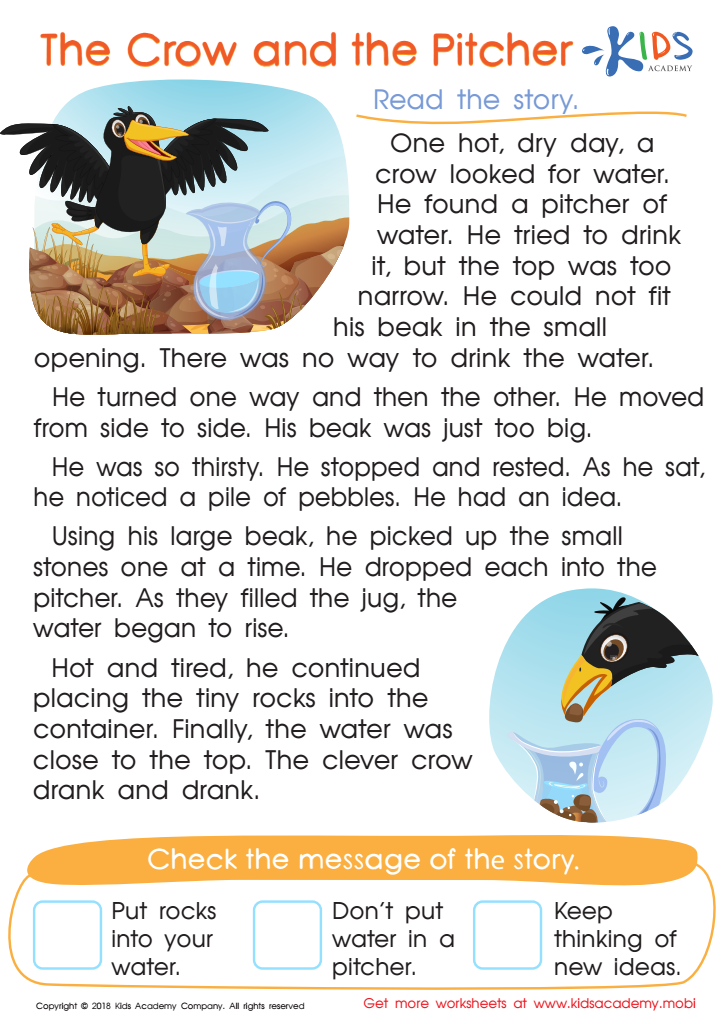
The Crow and the Pitcher Worksheet
 Assign to My Students
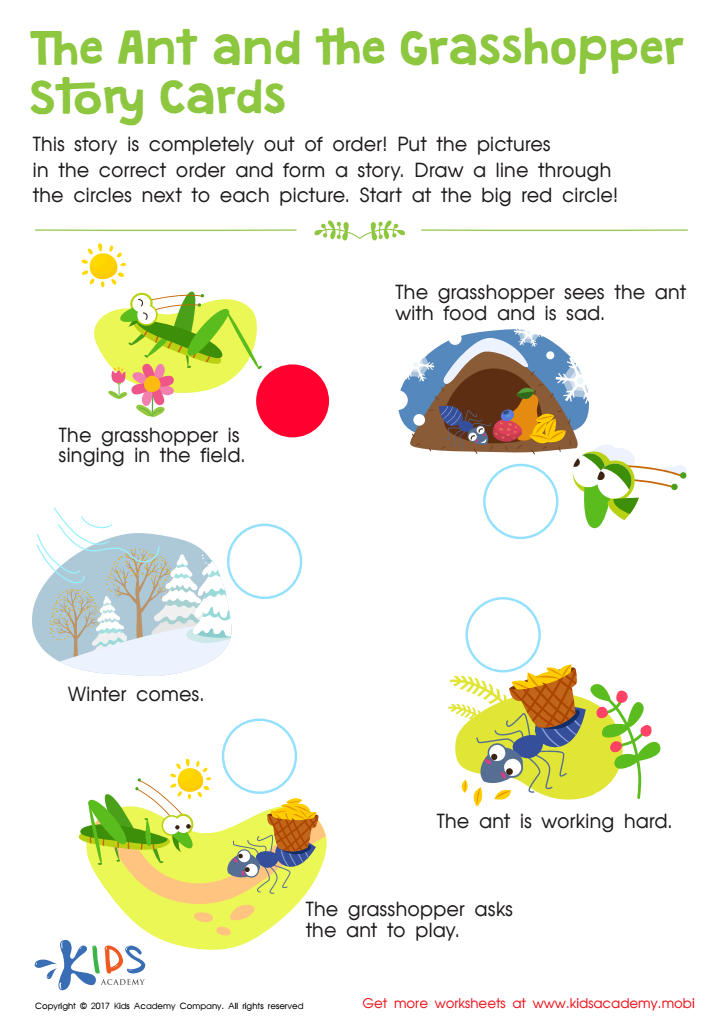
The Ant and The Grasshopper Worksheet
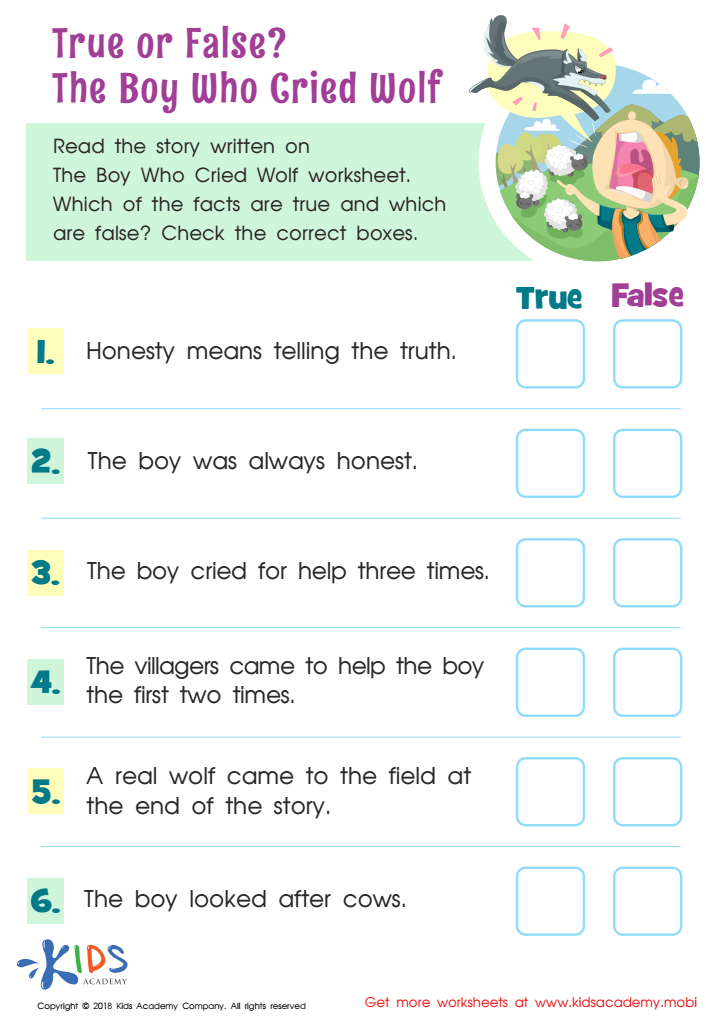
True or False? The Boy Who Cried Wolf Worksheet
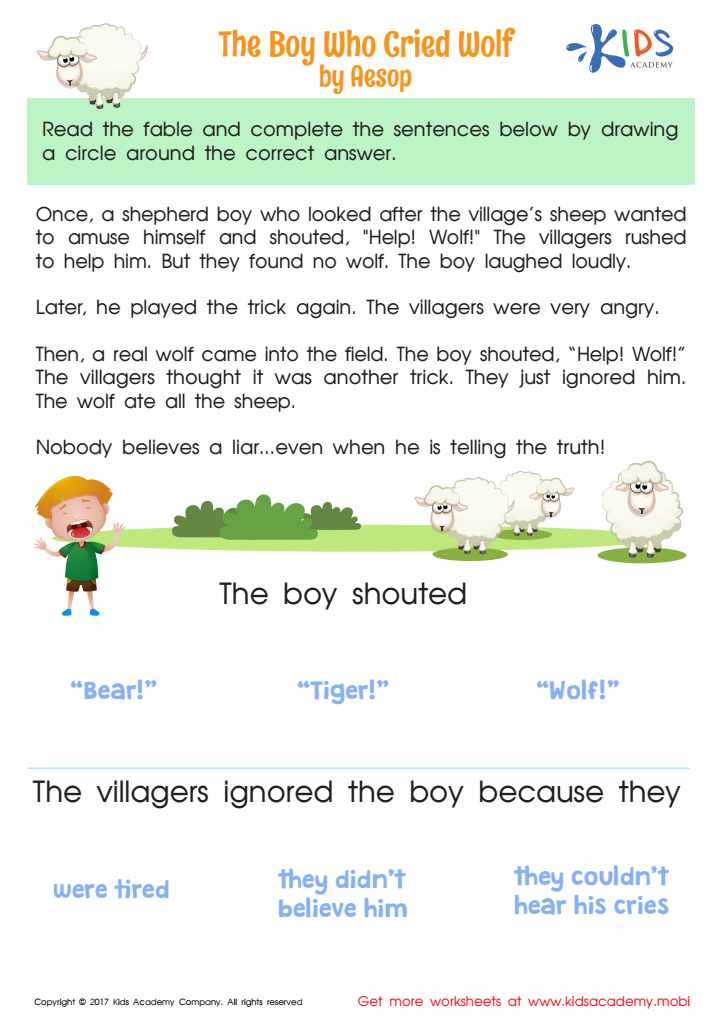
The Boy Who Cried Wolf Worksheet
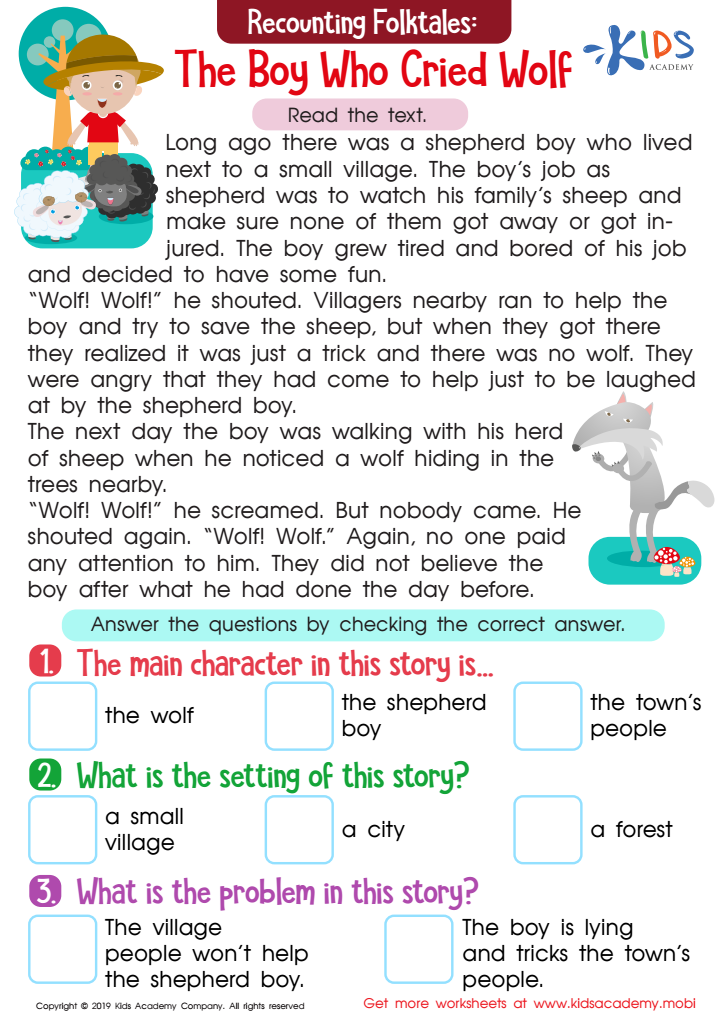
The Boy Who Cried Wolf Part 1 Worksheet




.jpg)


Moral understanding and reading comprehension are critical components of a child's early development and educational journey, especially between ages 6 and 9. During these formative years, children are not just learning to read but also beginning to grasp complex social concepts and moral values.
Parents and teachers play a pivotal role in this process. Teaching moral values helps children differentiate between right and wrong, fostering empathy, respect, and a sense of justice. This early moral foundation is crucial for forming responsible, compassionate adults who can positively contribute to society.
Simultaneously, reading comprehension is fundamental for academic success. Improved reading skills enhance a child's ability to understand and engage with various subjects, building a strong educational base that supports lifelong learning. Comprehension is not just about deciphering words; it involves critical thinking, analyzing texts, and understanding underlying concepts.
By integrating moral lessons into reading activities, educators can strengthen both moral development and literacy. Stories and books often contain moral dilemmas and life lessons, providing relatable contexts for children to learn and apply their understanding of values and ethics. Thus, focusing on both these areas prepares children for the academic challenges ahead and equips them with the social tools needed for personal and communal well-being.








