Identifying story elements Normal Reading Fiction Worksheets for Ages 6-9
3 filtered results
-
From - To
Discover our engaging "Identifying Story Elements Normal Reading Fiction Worksheets" designed specifically for children ages 6-9. These interactive worksheets help young learners grasp essential story components, including characters, settings, events, and plot. Crafted to foster reading comprehension and critical thinking, each worksheet presents colorful illustrations and age-appropriate texts, making learning fun and accessible. Perfect for classroom use or at-home practice, these resources encourage children to connect with stories and express their understanding. Enhance your child’s reading skills today with our thoughtfully developed worksheets that spark imagination and promote a love for reading! Explore the world of fiction and storytelling together.
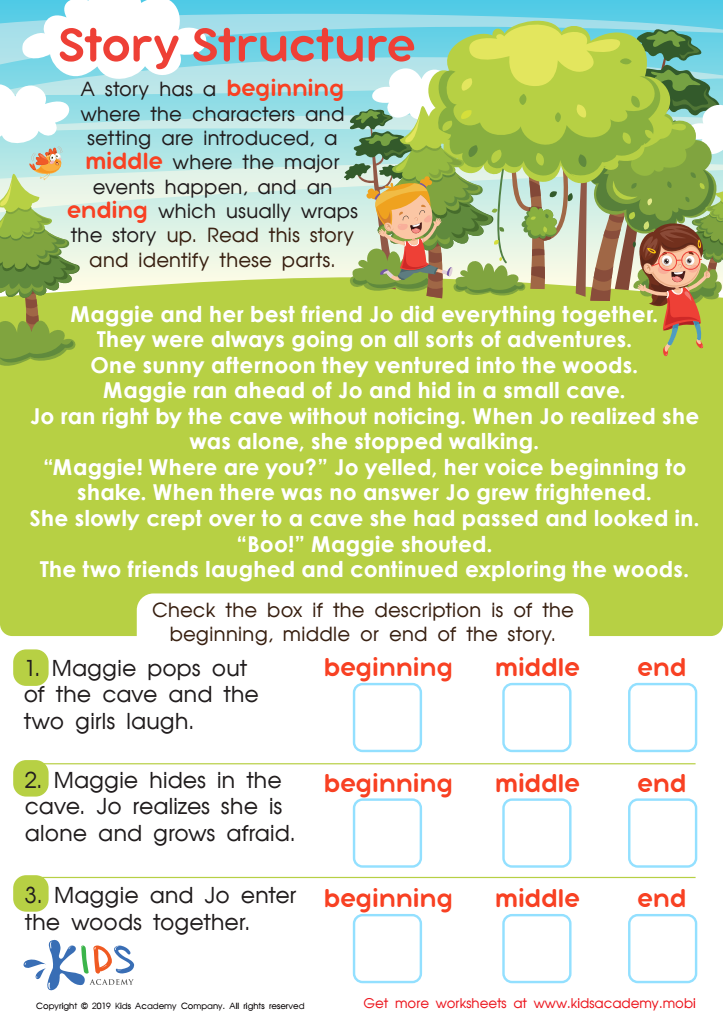
Story Structure Worksheet
 Assign to My Students
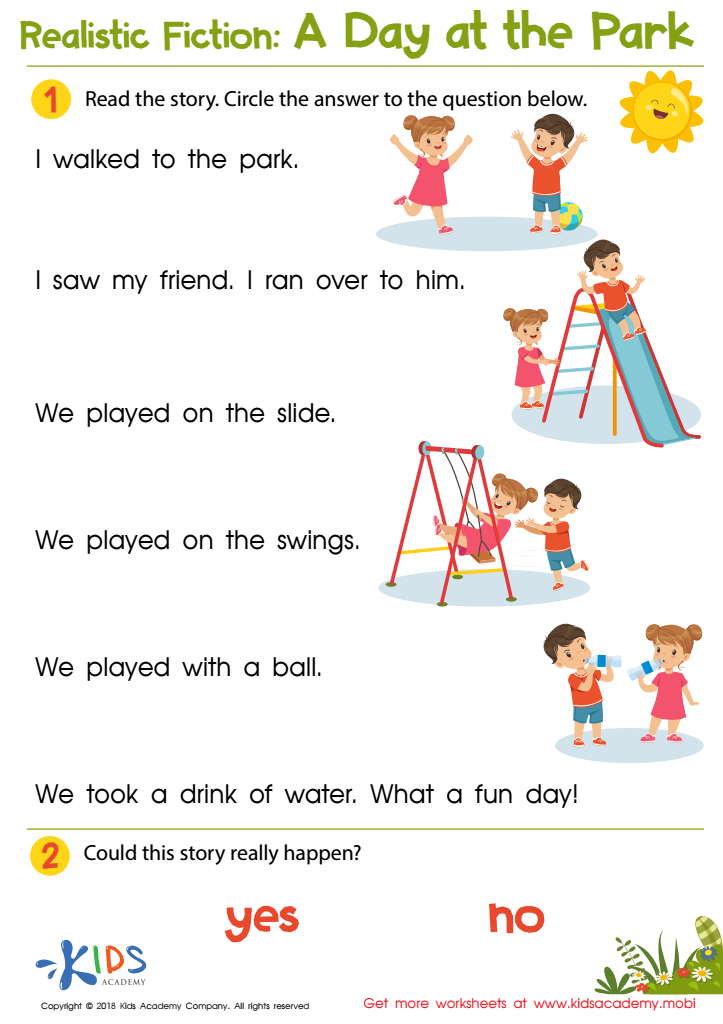
A Day at the Park Worksheet
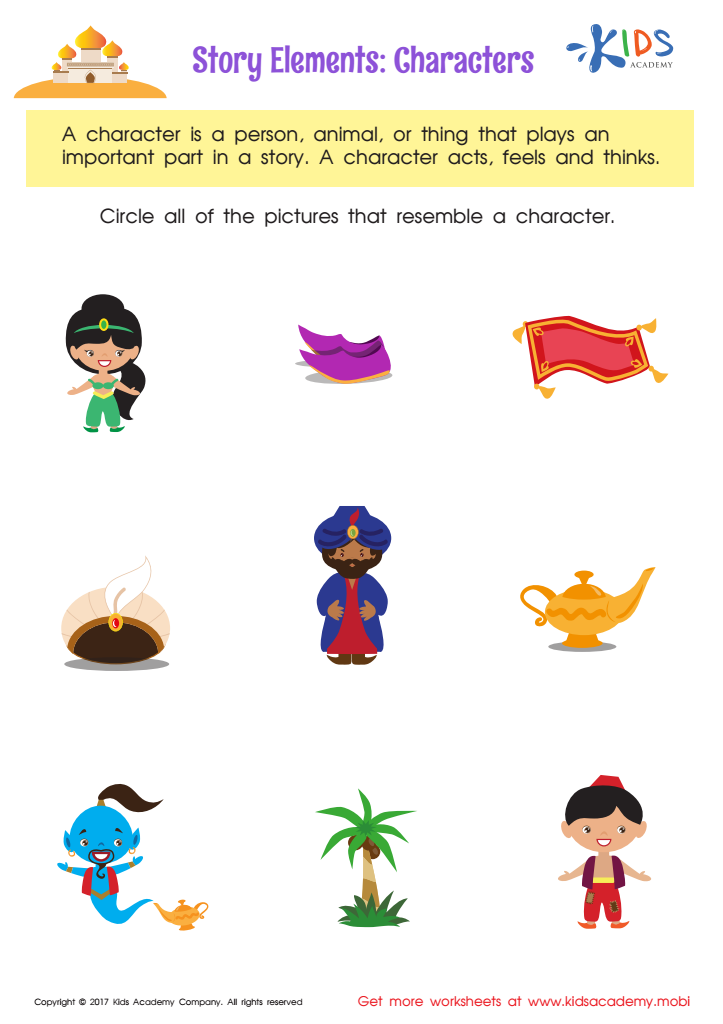
Story Elements Printable


.jpg)
.jpg)




Identifying story elements is crucial for children aged 6-9, as it lays the foundation for effective reading comprehension and critical thinking skills. For parents and teachers, understanding these elements—such as characters, setting, plot, conflict, and theme—enables them to guide young readers in making connections between the narrative and their own lives.
By recognizing characters, children learn to empathize, imagining how others think and feel. Understanding setting provides context, allowing them to visualize and immerse themselves in different worlds. Plot awareness helps them track events and discern cause and effect, enhancing their problem-solving skills. Conflict introduces thematic elements, fostering discussions about values and morals, which are essential for personal development.
Moreover, through guided discussions about these elements, parents and teachers can enhance vocabulary and promote language development, ultimately contributing to reading fluency. Encouraging children to relate story elements to their own experiences also boosts engagement and enjoyment in reading. This early investment fosters not just literacy skills but a lifelong love of literature, preparing children for more complex texts as they grow. In short, recognizing story elements is a vital step in nurturing competent, confident readers and thoughtful, empathetic individuals.







