Visual interpretation Normal Reading Fiction Worksheets for Ages 6-9
5 filtered results
-
From - To
Enhance your child's reading skills with our engaging Visual Interpretation Normal Reading Fiction Worksheets, designed specifically for ages 6-9. These interactive worksheets encourage young learners to analyze illustrations and make connections to the story, fostering critical thinking and comprehension. Through fun exercises, students will practice interpreting visual elements, developing their ability to draw conclusions and enhance their storytelling skills. Our thoughtfully crafted resources make learning enjoyable, combining imaginative storytelling with important cognitive skills. Help your child build a strong foundation in reading while sparking their creativity and imagination. Explore our worksheets today and watch your child's love for reading grow!
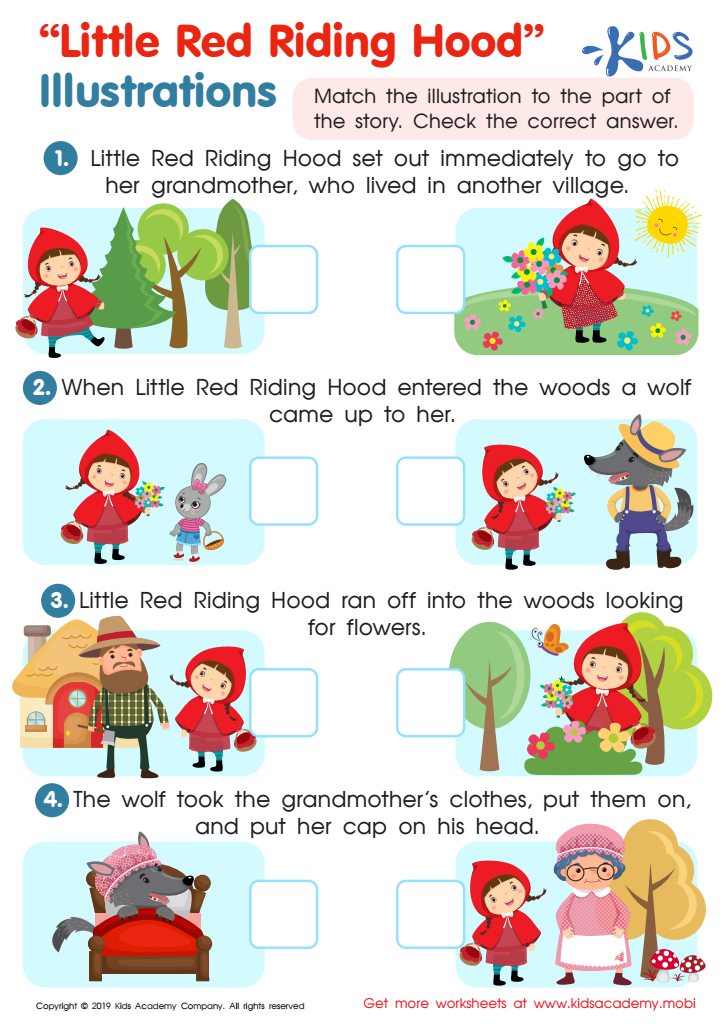
Little Red Riding Hood: Illustrations Worksheet
 Assign to My Students
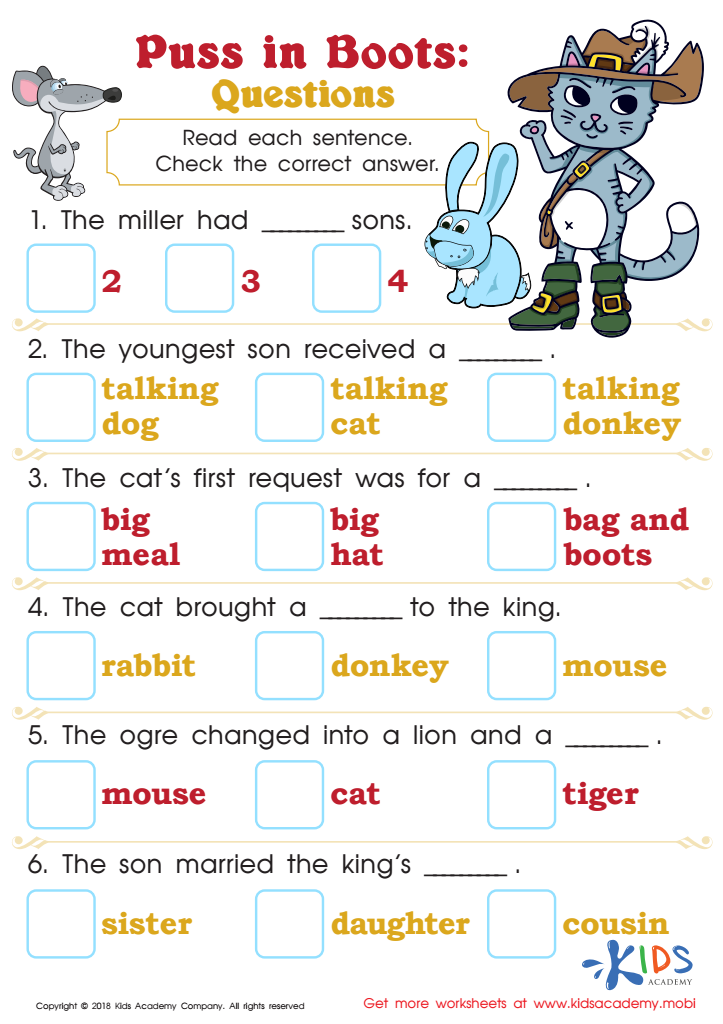
Puss in Boots: Questions Worksheet
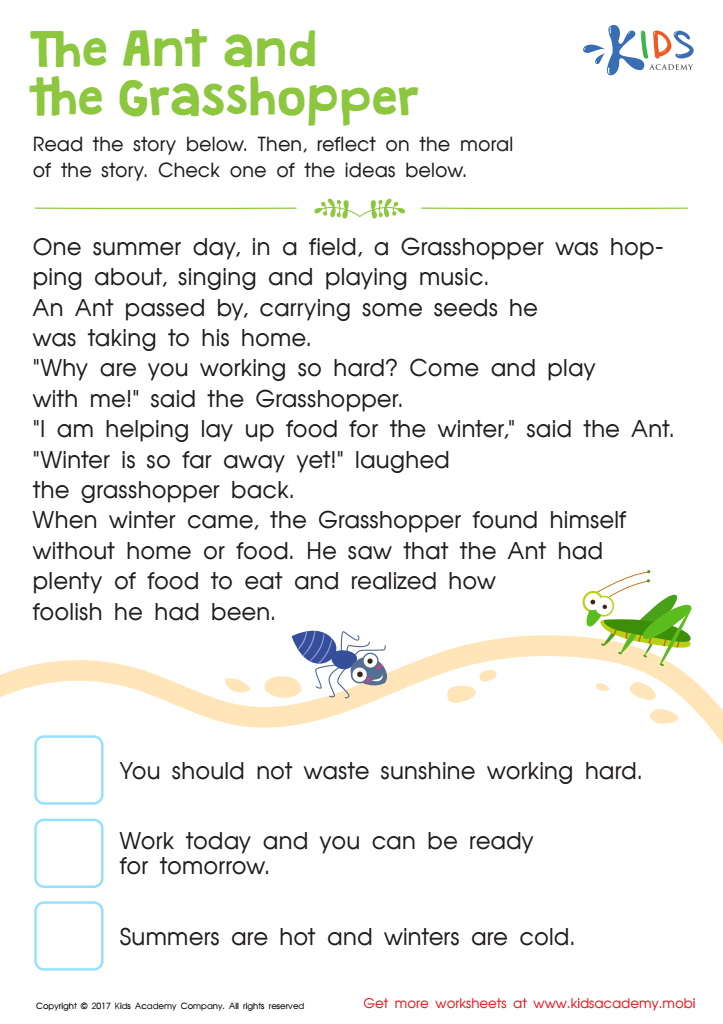
The Ant and The Grasshopper Printable
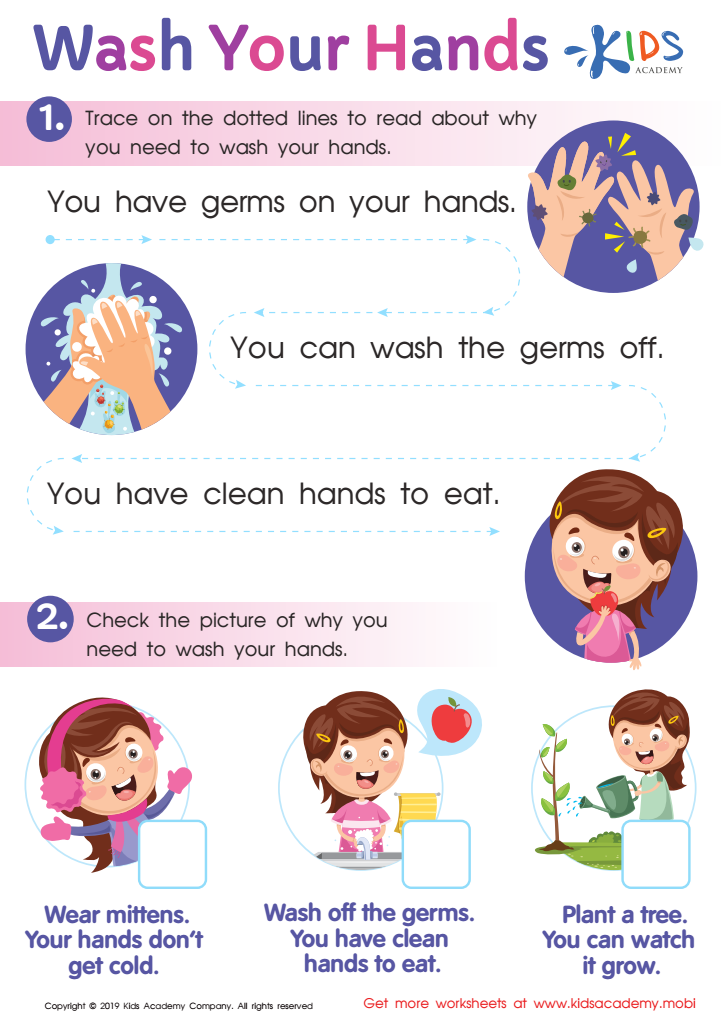
Wash Your Hands Worksheet
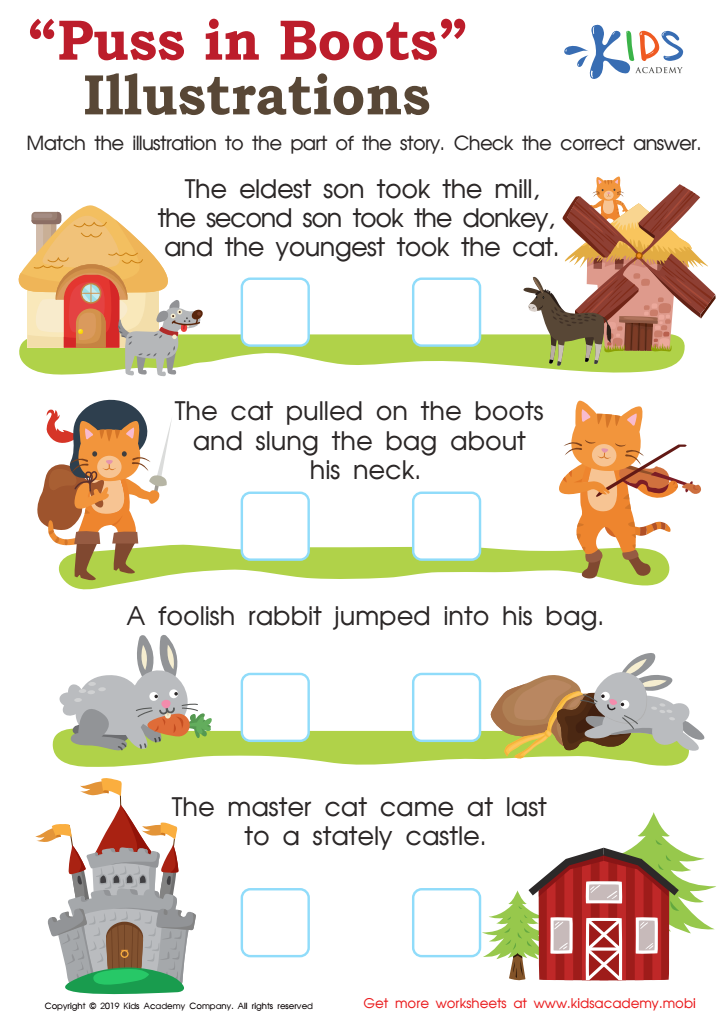
Puss in Boots Illustrations Worksheet






.jpg)

Visual interpretation in reading, particularly in fiction for ages 6-9, is a crucial aspect of literacy development that parents and teachers should prioritize. At this age, children are drawing connections between illustrations and text, enhancing their comprehension and engagement with stories. Visuals help children decode meanings in narratives, making reading more relatable and enjoyable. This connection aids in developing critical thinking skills as children learn to infer and predict outcomes based on the visuals present.
Moreover, fostering visual interpretation lays the groundwork for a range of literacy skills. It nurtures creativity, encouraging children to imagine scenarios beyond the text and make personal connections. When children discuss illustrations alongside storytelling elements, they practice effective communication skills. These discussions not only support vocabulary growth but also enhance their ability to articulate thoughts and feelings.
Additionally, reinforcing visual interpretation can built a lifelong love for reading. Engaging narratives enriched with illustrations can captivate young minds, fostering a desire to explore books as they grow. By focusing on visual literacy, parents and teachers are investing in the broader educational success of children, as these skills translate into academic achievement and a deeper appreciation for literature throughout their lives.







