
Vocabulary development Normal Reading Fiction Worksheets for Ages 6-9
4 filtered results
Difficulty Level
Grade
Age
-
From - To
Subject
Activity
Standards
Enhance your child's vocabulary skills with our engaging "Vocabulary Development Normal Reading Fiction Worksheets" designed for ages 6-9. These worksheets are crafted to support young readers in expanding their word knowledge while enjoying captivating stories. Each activity fosters comprehension and encourages critical thinking, making learning fun and interactive. Perfect for classroom or at-home use, our resources cater to different learning abilities, ensuring every child can thrive. Download these effective worksheets and watch as your child's vocabulary enriches, laying a solid foundation for their reading journey. Equip your little ones with the tools they need to excel in their literary adventures!
Favorites
With answer key
Interactive
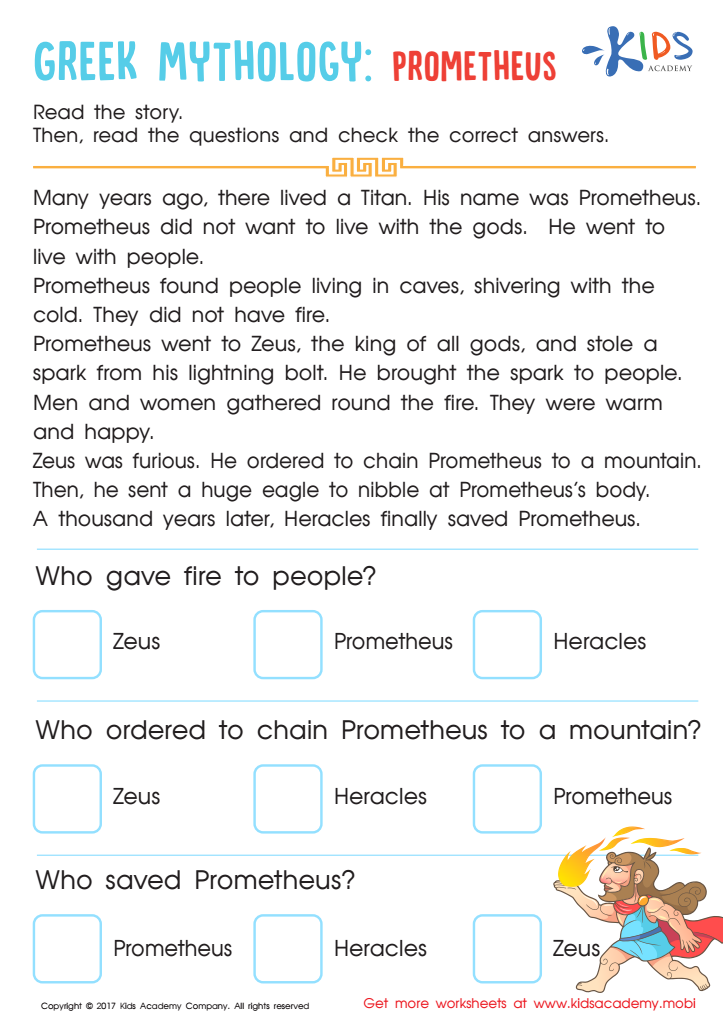
Prometheus Story Worksheet
Help kids improve reading comprehension with this Prometheus story worksheet! Learn about this classic mythological tale and break down the plot into understandable parts. By doing so, children will understand the story each step of the way.
 Assign to My Students
Prometheus Story Worksheet
Worksheet
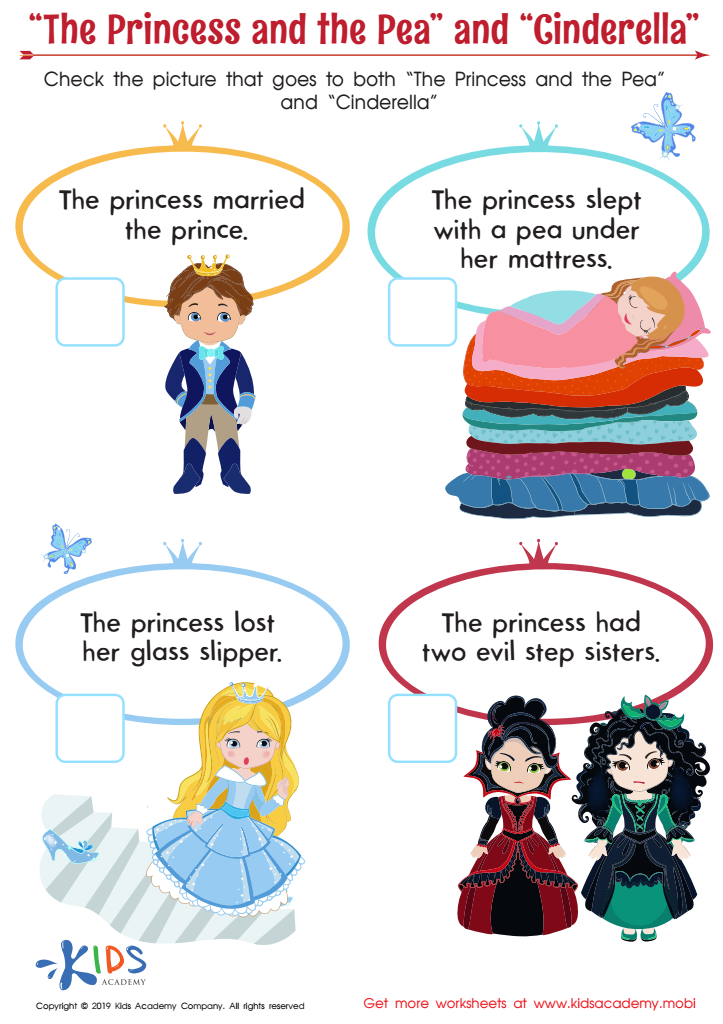
“The Princess and the Pea” and “Cinderella” Worksheet
Read "Cinderella" and "The Princess and the Pea" to your little ones. Ask them what their favorite parts were and what similarities they found in the princesses. This worksheet has four pictures of scenes from the stories. Ask your kids which picture goes with both tales.
“The Princess and the Pea” and “Cinderella” Worksheet
Worksheet
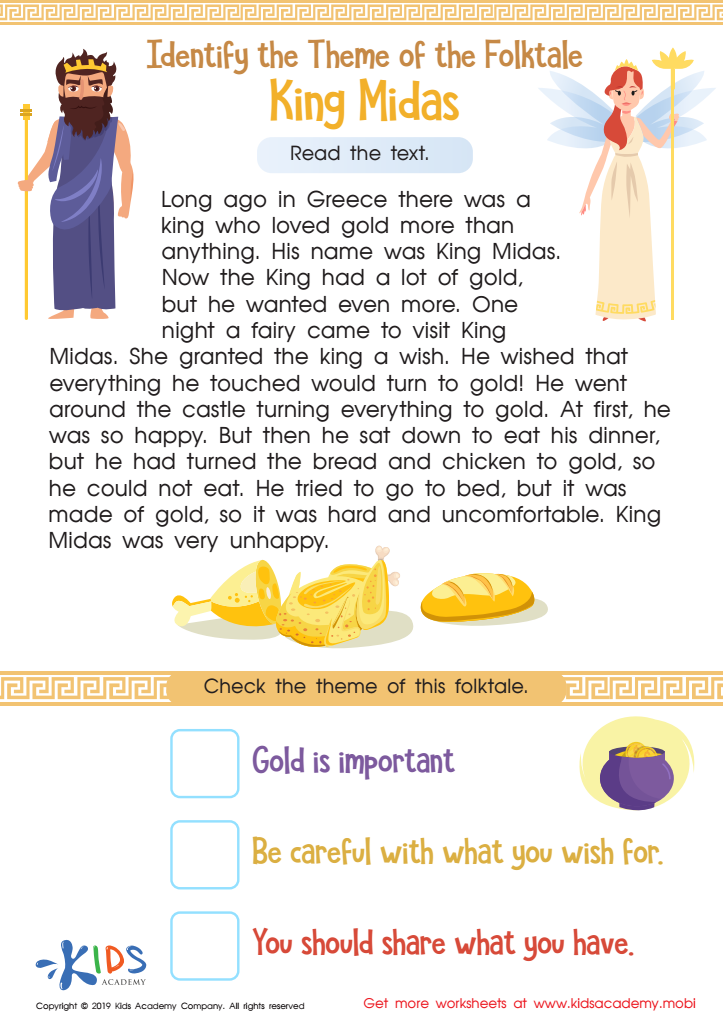
King Midas Worksheet
Read the ancient Greek history of King Midas to your kids. If they're into Greek gods and mythology, they'll be excited to complete the exercise. Read the text carefully, and if needed, twice. Help your kids locate the story's theme at the bottom of the page. 80 words.
King Midas Worksheet
Worksheet
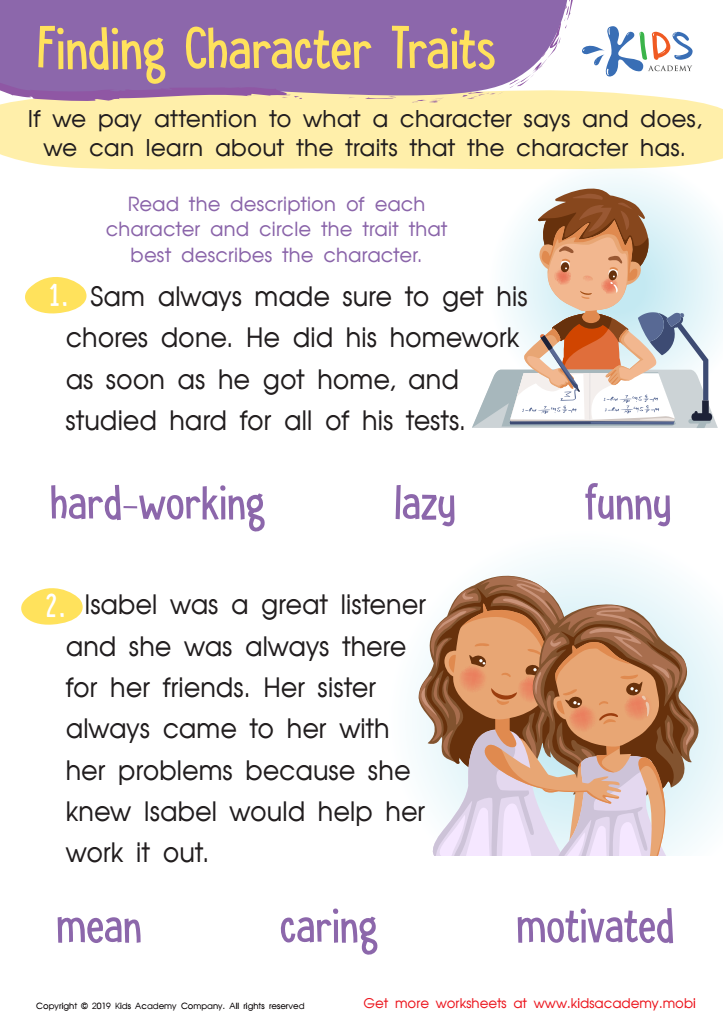
Finding Character Traits Worksheet
Before you start, make sure your kids know the difference between a character trait and a feeling. Traits are part of a character's entire personality and can be inferred from what they say and do in a story. Read the character descriptions on the worksheet and help your kids circle the best trait for each.
Finding Character Traits Worksheet
Worksheet
Join Kids Academy for Free
Who is primarily going to use this learning content?








Vocabulary development during the critical reading years of ages 6-9 is essential for a child’s academic success and overall communication skills. During this developmental stage, children are transitioning from learning to read to reading to learn. Exposure to rich vocabulary through normal reading fiction helps children gain proficiency in language, enabling them to express their thoughts and feelings more effectively.
Fiction often introduces unfamiliar words within engaging contexts, making it easier for children to grasp meanings and nuances. By encountering diverse themes, characters, and settings, children expand not only their vocabulary but also their comprehension skills, which are vital for processing information across subjects. Moreover, strong vocabulary skills are linked to improved reading fluency, enhancing a child's overall learning experience.
Parents and teachers play a critical role in this process by choosing age-appropriate, compelling fiction that sparks interest and curiosity. Interactive reading sessions, discussions about the story, and encouraging the use of new words in conversation can reinforce vocabulary learning. Ultimately, investing in vocabulary development through reading fuels children's academic growth, boosts their confidence, and prepares them for future educational challenges, ensuring they become articulate and informed individuals.







