
Enhancing critical thinking Normal Science Worksheets for Ages 6-9
3 filtered results
Difficulty Level
Grade
Age
-
From - To
Subject
Activity
Standards
Unlock the power of critical thinking in young learners with our "Enhancing Critical Thinking Normal Science Worksheets" designed specifically for ages 6-9. These engaging and interactive worksheets encourage children to observe, analyze, and think creatively about scientific concepts. Through fun activities and thought-provoking questions, students will develop essential skills such as problem-solving, inference making, and logical reasoning. Our carefully curated content aligns with educational standards to foster a strong foundation in science while nurturing curiosity and exploration. Perfect for classroom settings or home learning, these worksheets provide an exciting way for children to enhance their critical thinking abilities while enjoying the wonders of science!
Favorites
With answer key
Interactive
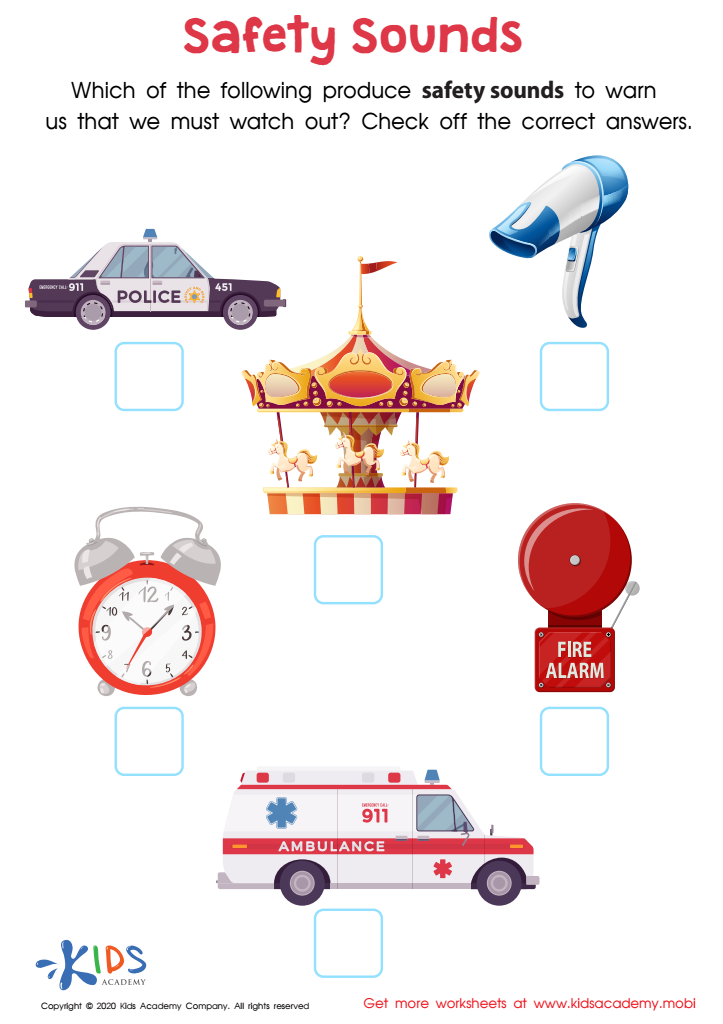
Safety Sounds Worksheet
Teach your kids about safety. Explain the rules and let them know what sounds to be aware of. Review the worksheet with pictures of objects and ask them to recognize which ones produce safety sounds. Have them check their answers. Doing this will help ensure their safety and that of others.
 Assign to My Students
Safety Sounds Worksheet
Worksheet
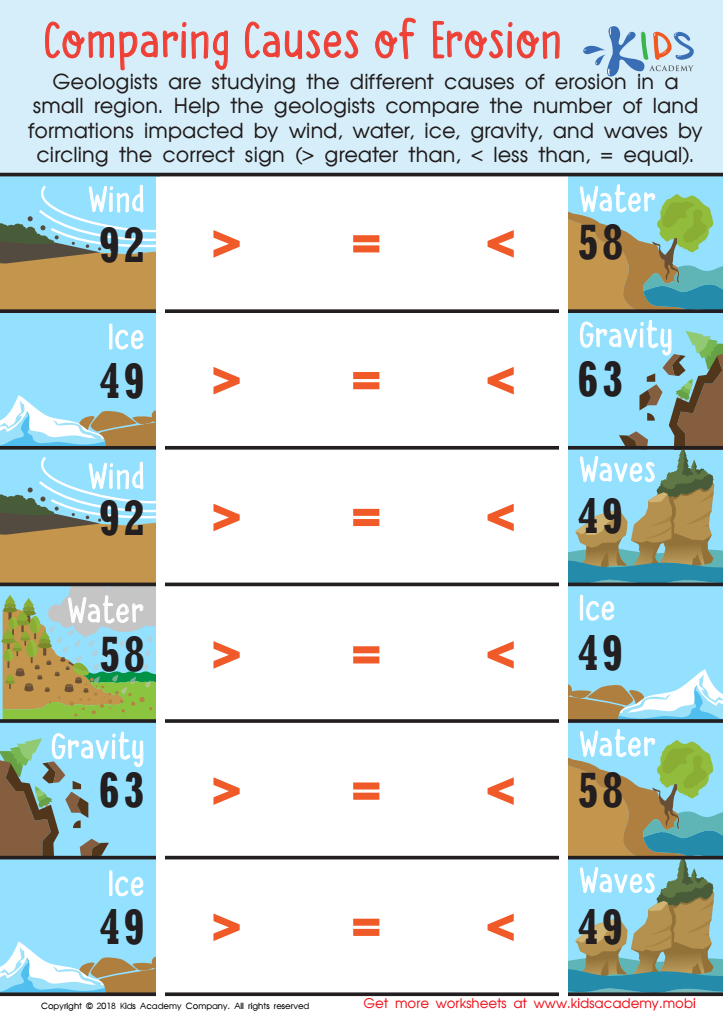
Comparing Causes of Erosion Worksheet
This free PDF worksheet combines science, number sense and comparing numbers to teach kids about the causes of erosion. They'll compare numbers related to ice, wind, water, gravity and waves and decide if each cause is greater, less than or equal to another. It's an interdisciplinary and meaningful way to learn that kids will enjoy.
Comparing Causes of Erosion Worksheet
Worksheet
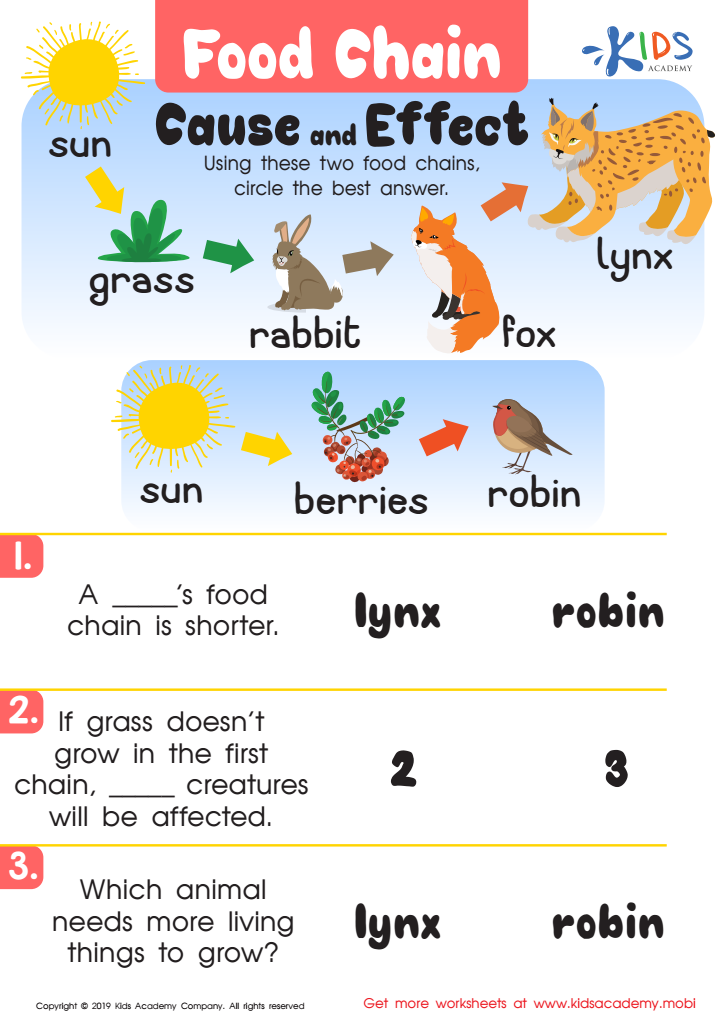
Food Chain Cause Worksheet
Help your little learner analyze ecosystems and compare food chains with this Kids Academy worksheet! Kids will compare a carnivore's and herbivore's food chain; which is longer and why? Questions at the bottom of the page will help them compare and circle the best answers. A great way to understand animal food chains!
Food Chain Cause Worksheet
Worksheet
Learning Skills
Join Kids Academy for Free
Who is primarily going to use this learning content?








Enhancing critical thinking in young students, especially in the context of normal science, is crucial for several reasons. First, children aged 6-9 are naturally curious and eager to understand the world around them. Encouraging critical thinking nurtures this intrinsic curiosity, enabling them to ask questions, make observations, and explore concepts deeply. Developing these skills at an early age equips them with the ability to analyze information, assess evidence, and draw reasoned conclusions, which are foundational skills for lifelong learning.
Furthermore, fostering critical thinking in science helps children learn the scientific method, teaching them how to form hypotheses and conduct experiments. This not only deepens their understanding of scientific concepts but also promotes persistence, creativity, and problem-solving skills as they navigate the challenges of discovery.
Additionally, critical thinking prepares children to navigate a complex world full of information, enabling them to differentiate between credible sources and misinformation. As parents and teachers, investing in activities that enhance critical thinking aligns with educational goals and enhances children's cognitive development, thus providing them with the tools needed to thrive in their academic and personal lives. Ultimately, nurturing critical thinkers today shapes innovative leaders and informed citizens of tomorrow.







