
Geography knowledge Normal Science Worksheets for Ages 6-9
3 filtered results
Difficulty Level
Grade
Age
-
From - To
Subject
Activity
Standards
Explore our engaging Geography Knowledge worksheets designed specifically for children aged 6-9! These creative resources aim to enhance your child's understanding of their world through fun and interactive activities. Each worksheet is tailored to develop essential geography skills, including map reading, identifying continents, and recognizing landforms. Ideal for home or classroom use, these worksheets inspire curiosity and support STEM learning in an enjoyable way. Teachers and parents can seamlessly integrate these materials into their lessons, ensuring children grasp key geographical concepts while having fun. Start your child's geography journey today with our thoughtfully crafted worksheets!
Favorites
With answer key
Interactive
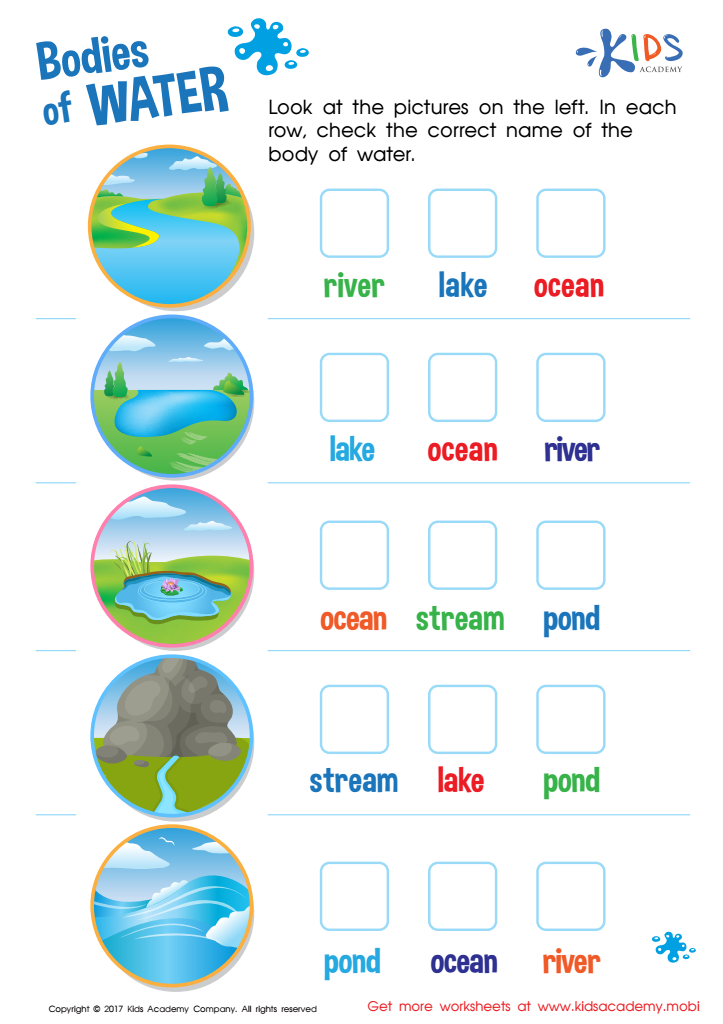
Bodies of Water Worksheet
From oceans to streams, our planet is filled with different types of waterways. Show your child how to recognize them using this bodies of water worksheet PDF. It has vivid illustrations to help your kid learn without leaving home.
 Assign to My Students
Bodies of Water Worksheet
Worksheet
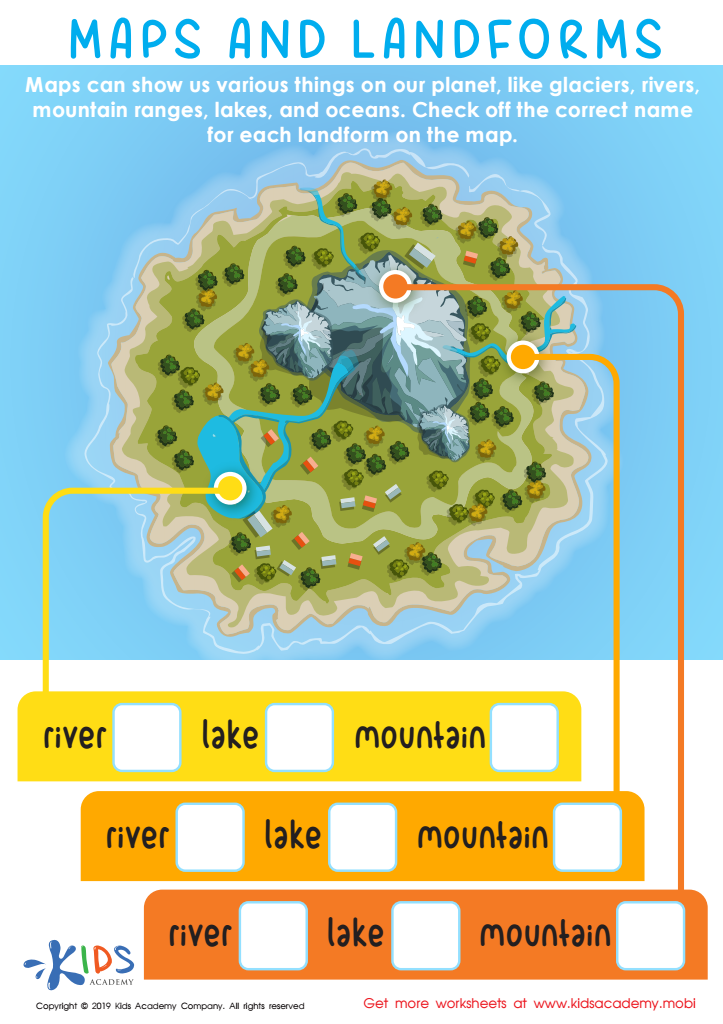
Maps and Landforms Worksheet
We can educate our kids on the world and its landforms by showing them a map. Point out mountains, rivers, and oceans, and help them identify each correctly. With this knowledge, they will better understand our planet.
Maps and Landforms Worksheet
Worksheet
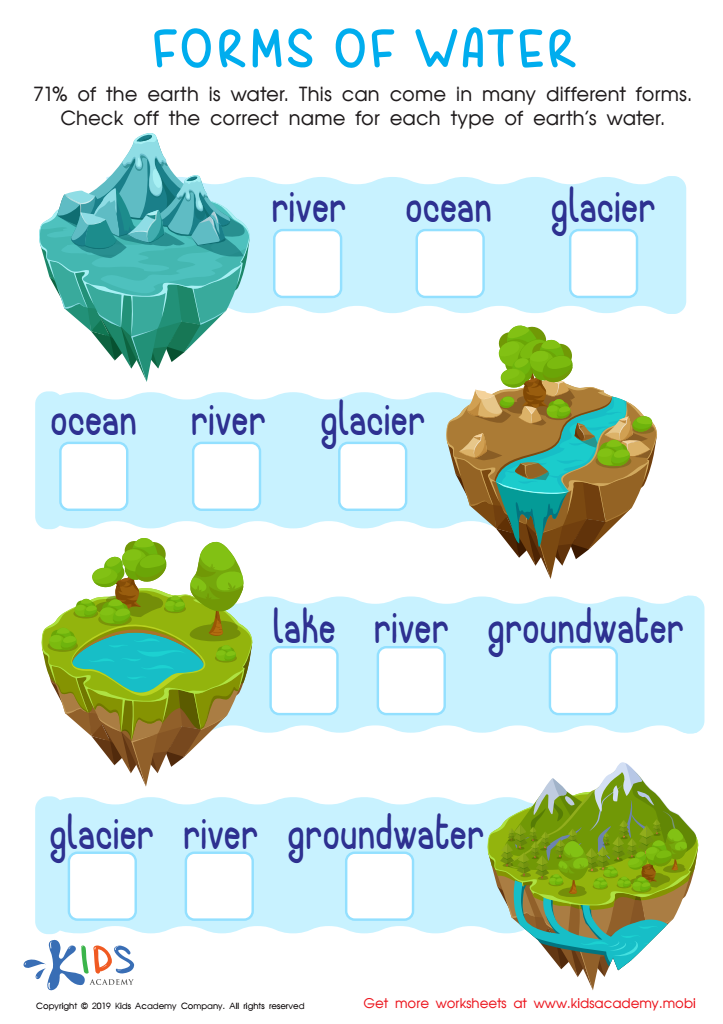
Forms of Water Worksheet
Life on Earth needs water to survive. Luckily, water makes up 75% of the Earth's surface and comes in various forms such as rivers, oceans and lakes. Ask your kids to name other forms and use this worksheet to help them identify each type.
Forms of Water Worksheet
Worksheet
Join Kids Academy for Free
Who is primarily going to use this learning content?





.jpg)
Geography knowledge is crucial for children aged 6 to 9, as it lays a foundation for their understanding of the world around them. At this age, children are naturally curious and eager to learn about different people, places, and cultures. By teaching geography, parents and teachers can cultivate this curiosity and promote critical thinking skills.
Understanding geography helps children develop a sense of place and identity. It connects them to their community and the larger world, fostering empathy and respect for diverse cultures. As children learn about maps, landscapes, and climates, they become more aware of environmental issues and human interactions with the planet, encouraging responsible citizenship.
Moreover, geography integrates well with other subjects such as science, history, and economics, enhancing cross-disciplinary learning. By engaging in hands-on activities, such as creating maps or exploring local geography, children enhance their spatial awareness and problem-solving abilities.
In essence, geography knowledge enriches children's education, helping them to navigate and appreciate their world. By prioritizing geography during these formative years, parents and teachers enable children to grow into informed, socially conscious individuals who understand their place in an interconnected global community.







