
Mathematical reasoning Normal Science Worksheets for Ages 6-9
3 filtered results
Difficulty Level
Grade
Age
-
From - To
Subject
Activity
Standards
Explore our Mathematical Reasoning Normal Science Worksheets for Ages 6-9, designed to promote critical thinking and problem-solving skills in young learners. Kids Academy offers diverse activities that blend math with fundamental science concepts, ensuring engaging and educational experiences. These worksheets focus on developing logical reasoning and quantitative analysis, crucial for budding scientists and mathematicians. With vivid visuals and age-appropriate challenges, children can build a strong foundation in both math and science. Perfect for classroom use or supplemental home study, our worksheets support and enrich your child’s learning journey. Download today and pave the way for academic success!
Favorites
With answer key
Interactive
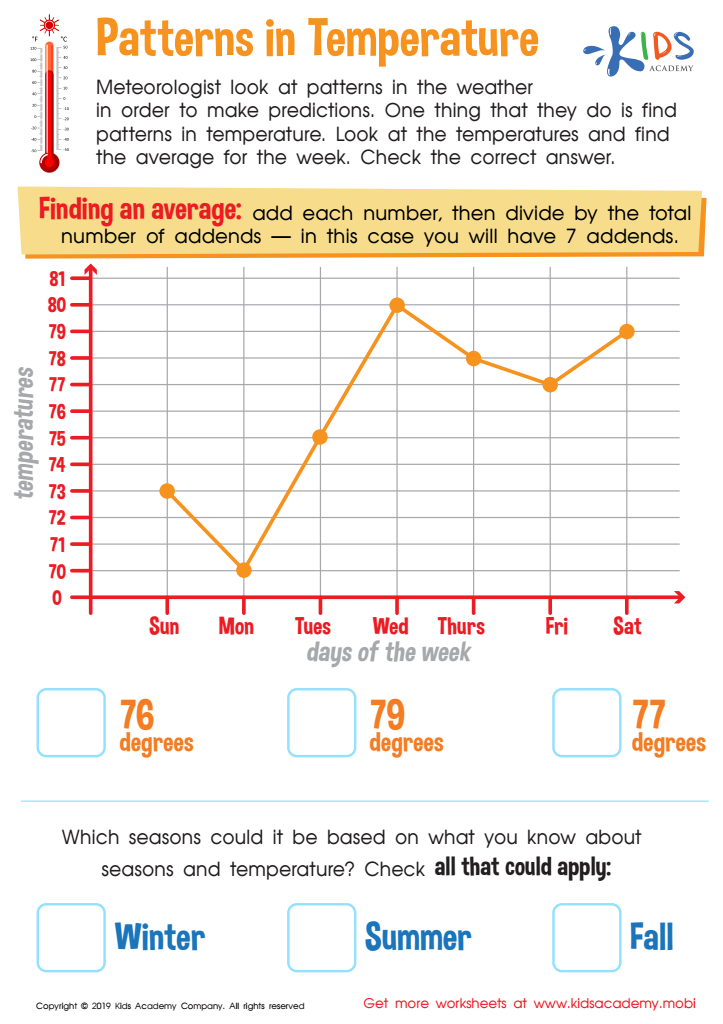
Patterns in Temperature Worksheet
Kids need to learn how to read and interpret data from graphs and charts. This free worksheet on temperature patterns helps them to do just that. They'll practice finding averages and answer questions in multiple-choice format. Plus, it provides a great learning experience!
 Assign to My Students
Patterns in Temperature Worksheet
Worksheet
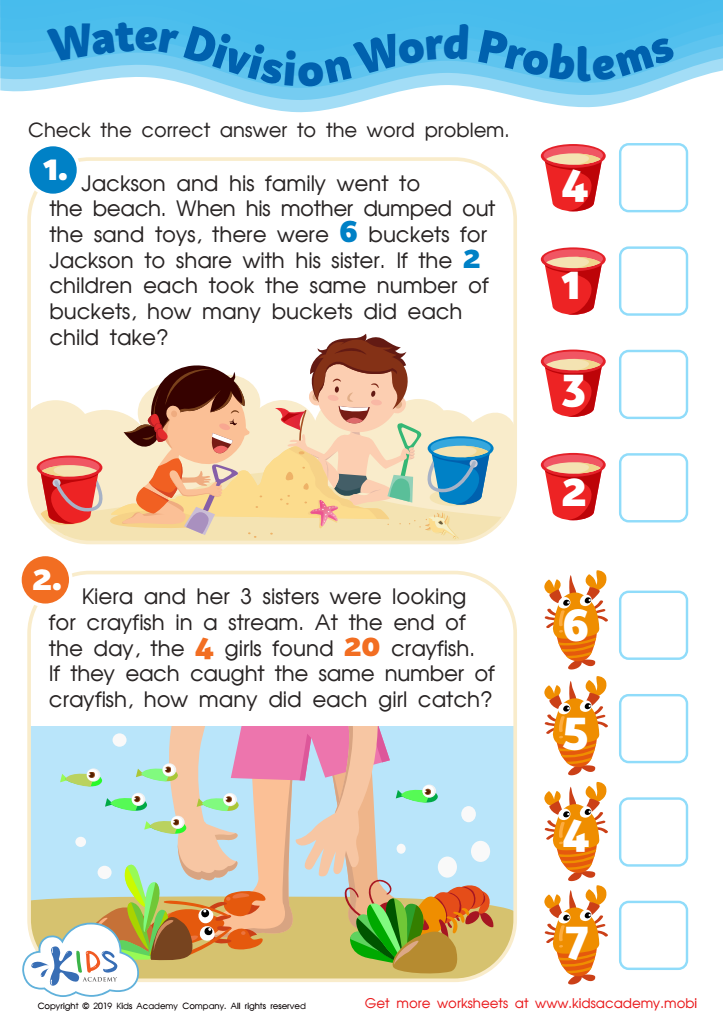
Water Division Word Problems Worksheet
Kids can sharpen their math skills with this fun PDF! They'll see pictures of friends at the beach, plus bold numbers and colorful pictures. All they need to do is read and understand the problem to find the answer - without even realizing they're doing division. A great way to make math enjoyable!
Water Division Word Problems Worksheet
Worksheet
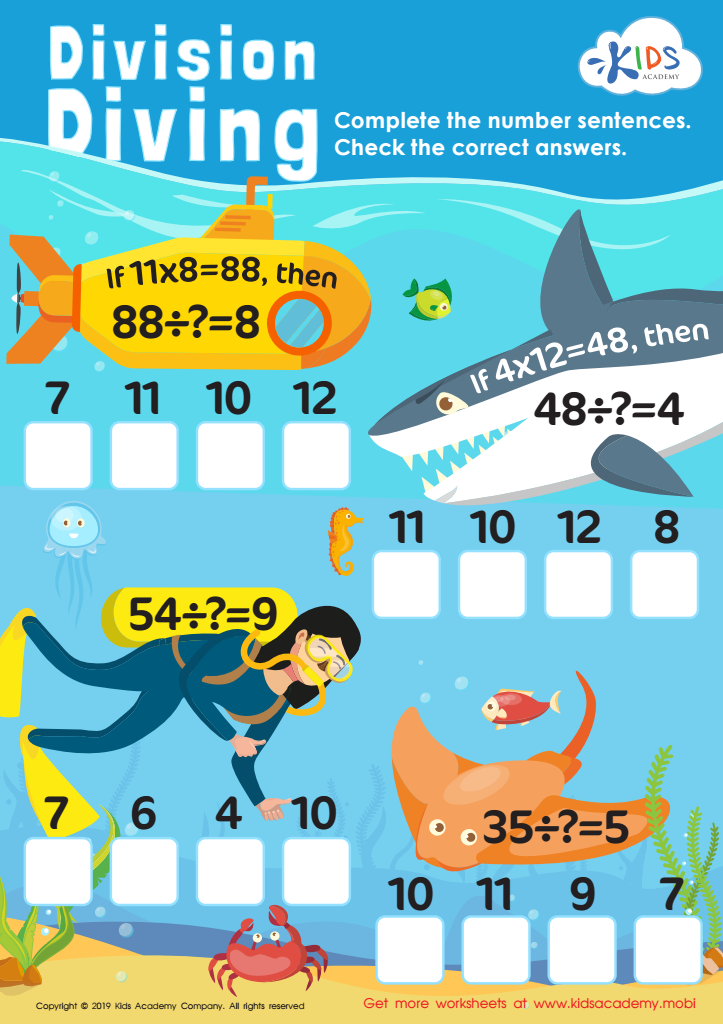
Division Diving Worksheet
Kids love exploring water and this free PDF worksheet is a great way to bring the fun and math together! Kids can help the underwater friends with number sentences, and use their fact family knowledge to solve for the missing number, then choose the correct answer. This worksheet is an enjoyable way for them to practice division!
Division Diving Worksheet
Worksheet
Join Kids Academy for Free
Who is primarily going to use this learning content?





.jpg)

Mathematical reasoning is a crucial building block for children's overall cognitive development, particularly in the early ages of 6-9. At this developmental stage, children undergo cognitive milestones where they start to grasp more abstract concepts and problem-solving techniques. Introducing mathematical reasoning as part of normal science in this age bracket benefits them in multiple ways.
First and foremost, mathematical reasoning encourages critical thinking and problem-solving skills. It teaches children to analyze situations, identify patterns, and make logical conclusions. These skills are not just limited to mathematics but are transferable to other subjects and real-world situations.
Second, early exposure to mathematical reasoning boosts confidence and reduces math anxiety. Creating a positive early experience with math can shape children’s attitudes towards the subject, making it less daunting in later educational stages.
Moreover, mathematical reasoning supports the understanding of scientific concepts. Sciences like physics and chemistry heavily rely on math; hence, building a strong mathematical foundation early helps children grasp more complex scientific ideas later on.
Lastly, embedding mathematical reasoning in early education cultivates a curious and inquisitive mindset. Children learn to ask questions, experiment with solutions, and understand how things work, laying the groundwork for lifelong learning and curiosity.
In summary, focusing on mathematical reasoning from a young age equips children with essential skills for academic success and practical life applications.







