Recognizing Patterns Normal Science Worksheets for Ages 6-9
3 filtered results
-
From - To
Unlock your child's potential with our "Recognizing Patterns Normal Science Worksheets" designed specifically for ages 6-9! These engaging worksheets help young learners identify and understand patterns in nature and science, fostering critical thinking and observational skills. Each worksheet is filled with age-appropriate exercises that encourage children to recognize trends, sequences, and relationships, making abstract concepts accessible and fun. Perfect for both classroom and home use, these resources align with educational standards and promote a hands-on learning experience. Nurture a love for science and pattern recognition with our vibrant, interactive materials that inspire curiosity and confident exploration of the natural world!
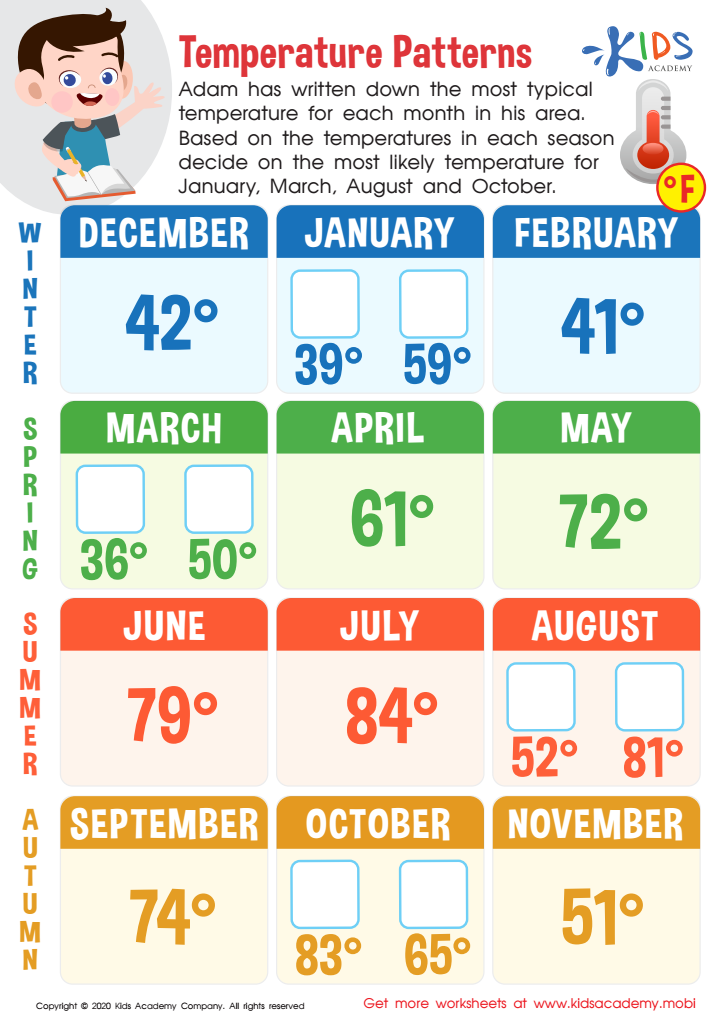
Temperature Patterns Worksheet
 Assign to My Students
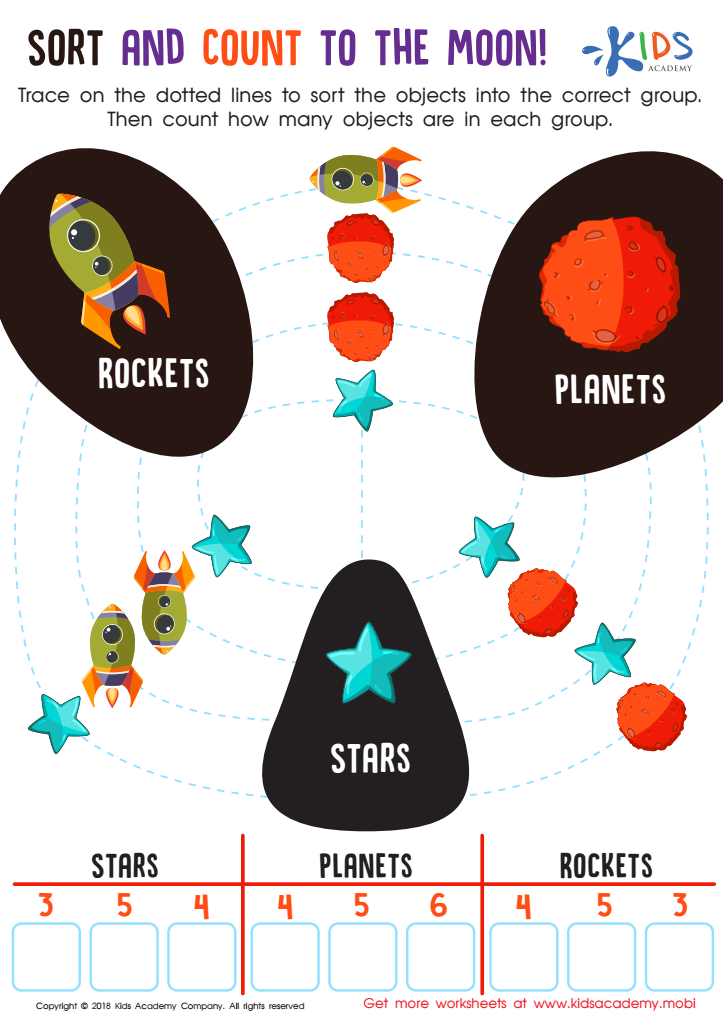
Sort and Count to the Moon Worksheet
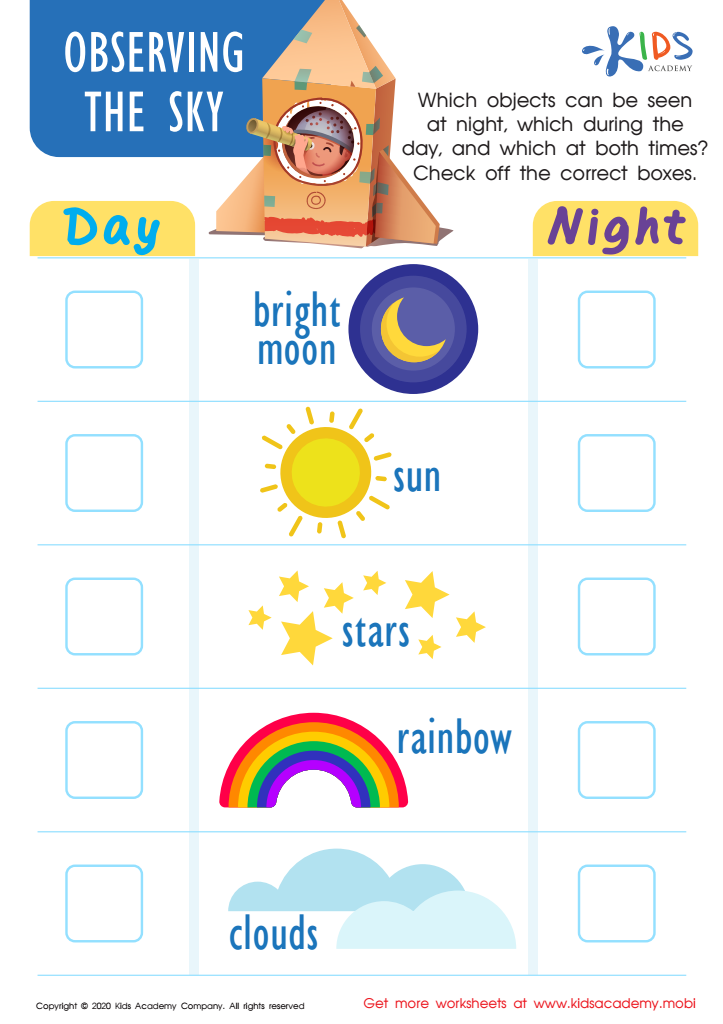
Observing the Sky Worksheet






Recognizing patterns is foundational in fostering critical thinking and problem-solving skills in children aged 6 to 9. In this developmental stage, kids are naturally curious and eager to understand the world around them. By emphasizing the importance of identifying patterns—whether in numbers, shapes, behaviors, or scientific concepts—teachers and parents can help children develop essential cognitive abilities that underpin future learning.
Understanding patterns allows children to make connections between concepts, improving their ability to categorize information and predict outcomes. This skill is vital not only in math and science but also in reading comprehension and social interactions. Recognizing trends in data can prime students for higher-level scientific inquiry and enhance their observational skills.
Moreover, instilling pattern recognition in early education nurtures a child's innate curiosity and enthusiasm for learning, positioning them to approach challenges with confidence. As they become adept at seeing similarities and differences, they also learn resilience by exploring trial-and-error approaches in problem-solving.
Engaging with patterns can make learning thematic and integrated, paving the way for a more comprehensive understanding of science and creating a strong foundation for lifelong learning. Therefore, parents and teachers play a critical role in highlighting this essential skill in young learners.







