Understanding forces Normal Science Worksheets for Ages 6-9
6 filtered results
-
From - To
Explore the exciting world of physics with our “Understanding Forces” Normal Science Worksheets, perfect for kids aged 6-9! Crafted specifically for young learners, these engaging worksheets help children easily grasp fundamental concepts like push, pull, gravity, and friction. Through diverse activities and colorful illustrations, students will experiment, hypothesize, and observe various forces at play in everyday life. Encourage hands-on learning and critical thinking with exercises designed to ignite curiosity and foster a love for science. Ideal for both classroom and home use, these worksheets are a fantastic way to boost your child's understanding and enthusiasm for physics.
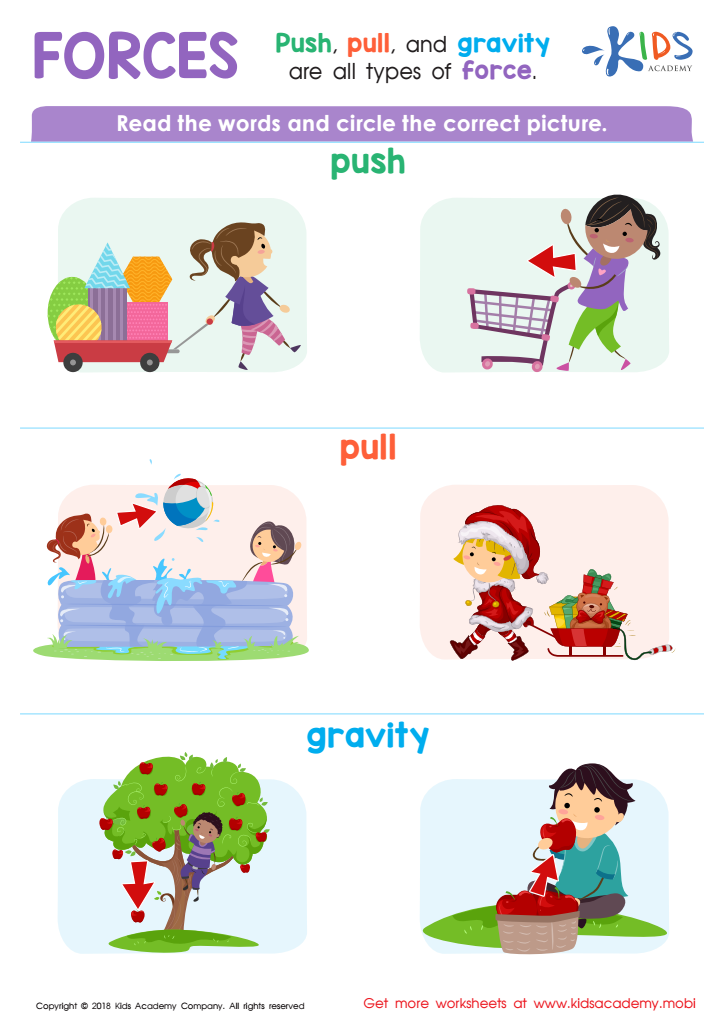
Forces Worksheet
 Assign to My Students
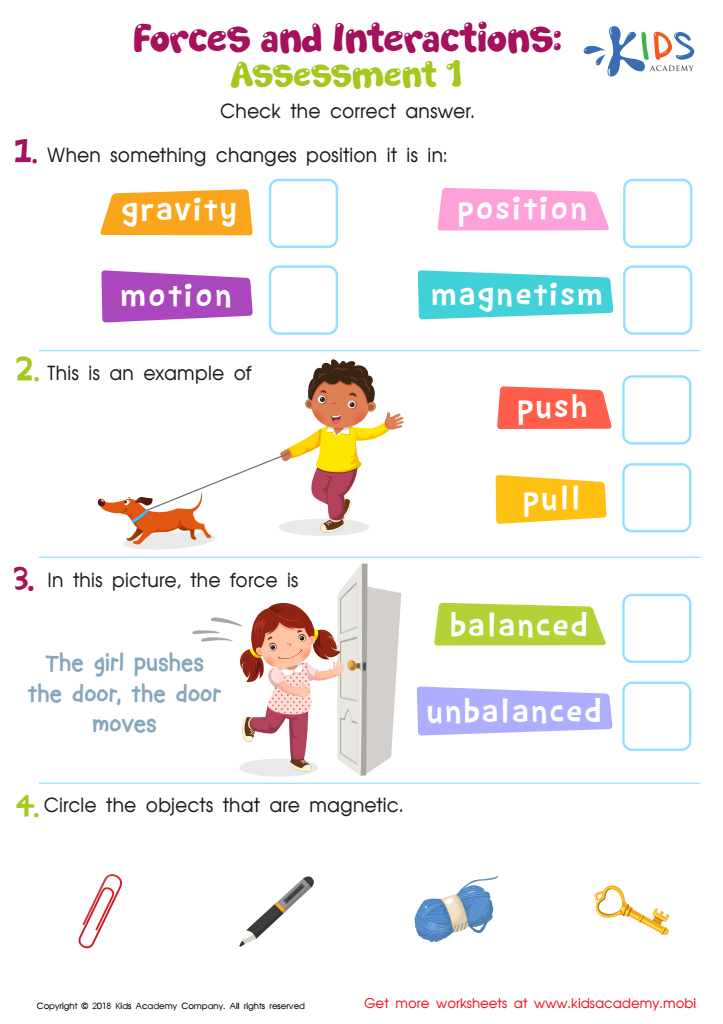
Forces and Interactions Printable
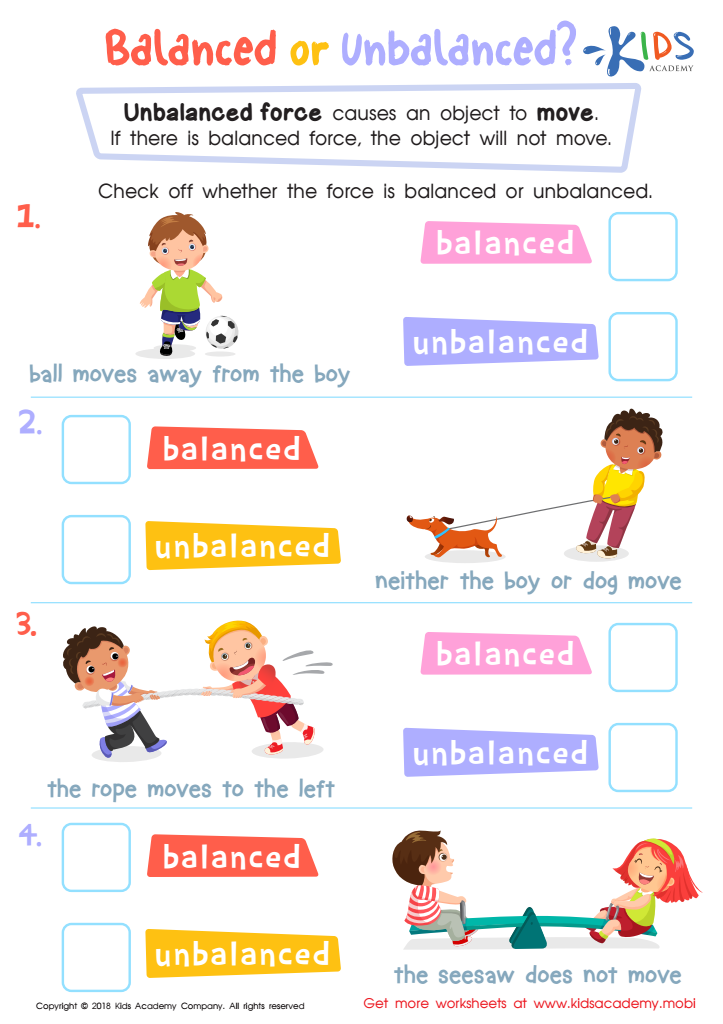
Balanced or Unbalanced Science Worksheet
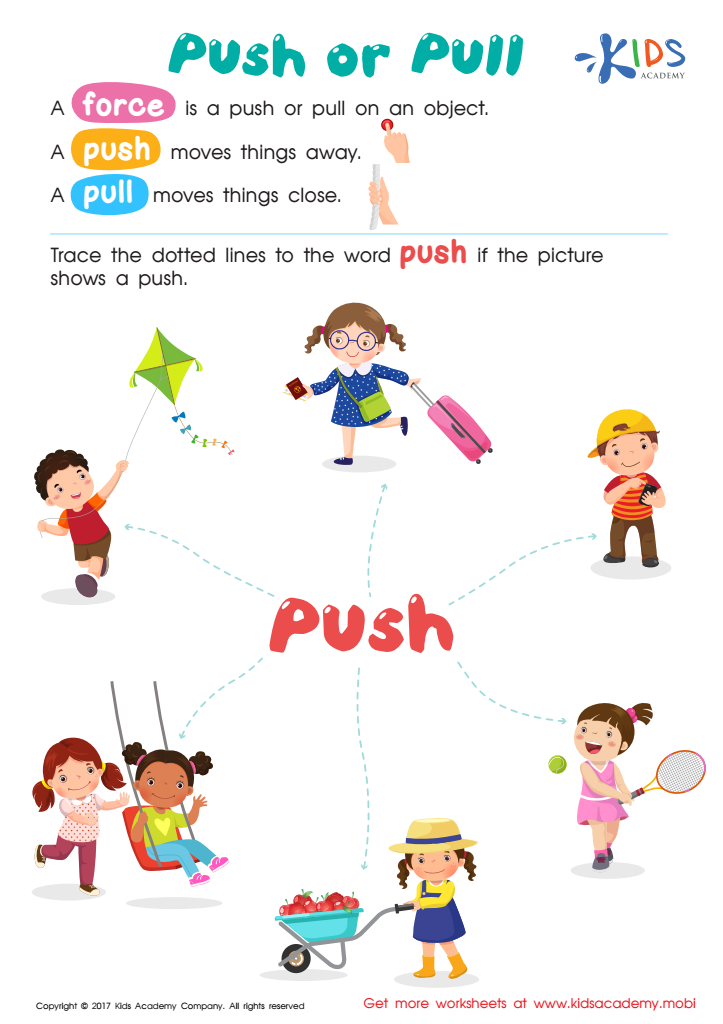
Push or Pull Worksheet
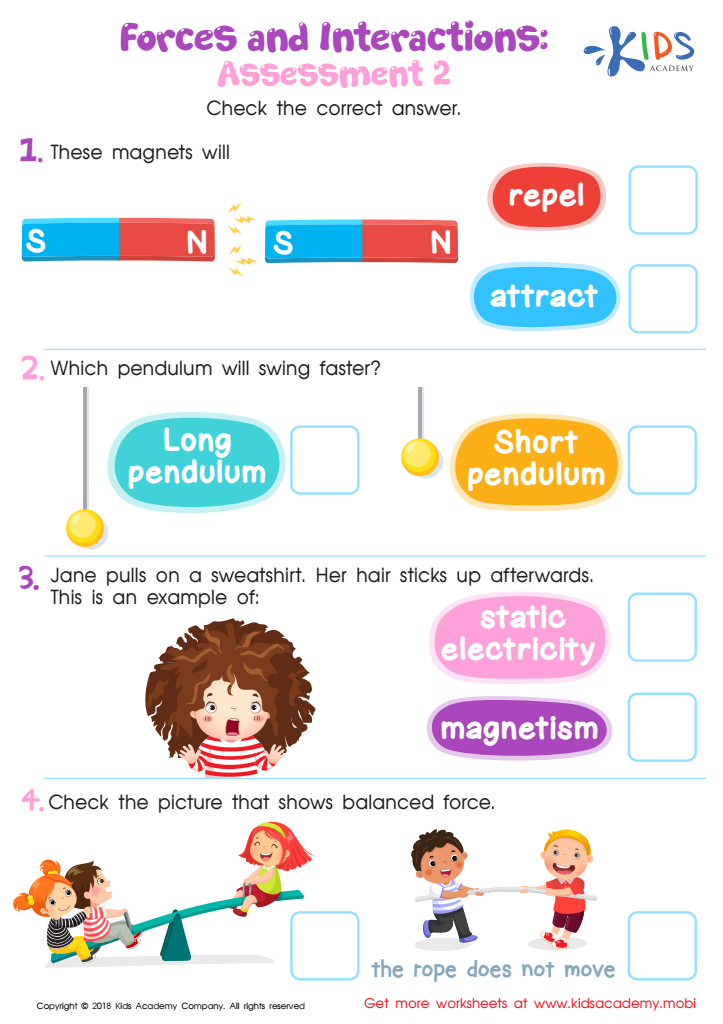
Forces and Interactions Worksheet For 3rd Grade
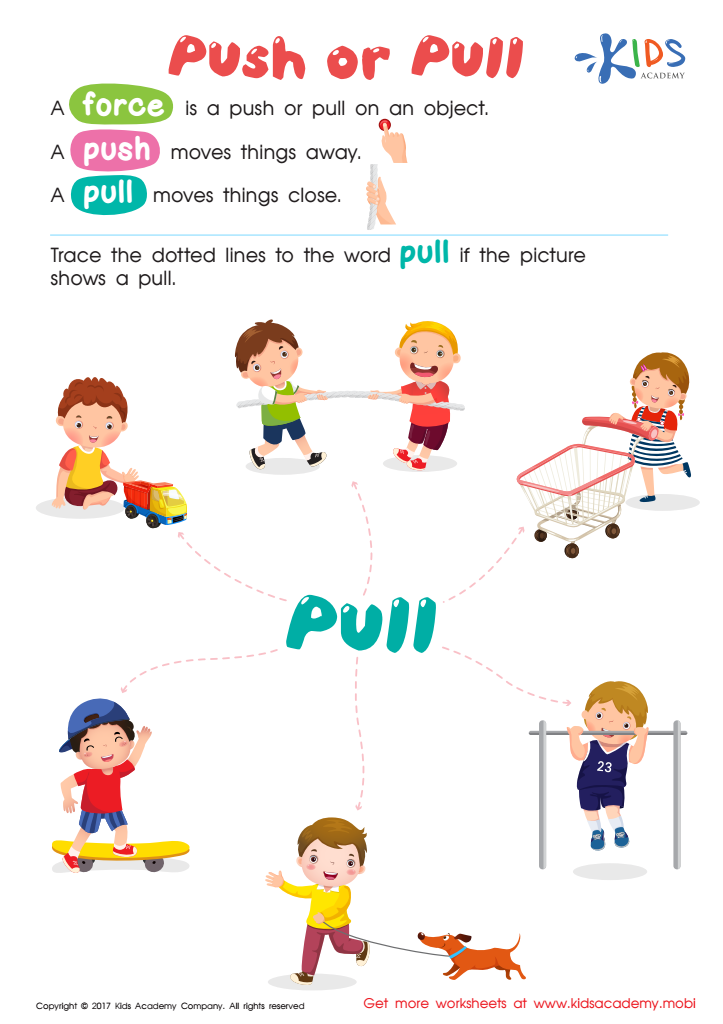
Pull or Push Worksheet




.jpg)

Understanding forces within the domain of "normal science" is essential for children ages 6-9 as it lays the foundation for scientific thinking and fosters curiosity about the world around them. Parents and teachers play a pivotal role in nurturing this curiosity. During these early–formative years, children are naturally inquisitive, always asking "why" and "how," and these questions often lead to fundamental concepts of forces.
Teaching about forces helps children grasp that invisible forces are part of their everyday lives. Simple activities—such as pushing a toy car, swinging on a playground, or even jumping—can be explained using basic principles of forces like push, pull, gravity, and friction. When children understand why their bike stops when they stop pedaling, or why objects fall to the ground, they gain practical knowledge and problem-solving skills.
Conceptualizing normal forces also reinforces analytical thinking. It encourages kids to make observations, ask questions, hypothesize outcomes, and test ideas—activities that are cornerstones of scientific inquiry. Keeping them engaged with hands-on experiments builds a disciplined yet creative approach to learning, critical in their education journey.
Moreover, early engagement with science prepares children for more complex subjects in the future, cultivates a sense of wonder, and ignites a love for learning that can influence their overall academic success. Therefore, investing time in teaching these fundamental concepts is worthwhile, supporting children in becoming knowledgeable, inquisitive, and responsible individuals.







