Weather identification Normal Science Worksheets for Ages 6-9
3 filtered results
-
From - To
Discover the joy of learning with our Weather Identification Normal Science Worksheets, designed specifically for children aged 6-9! These engaging and interactive worksheets help young learners recognize and understand different weather types, enhancing their observational skills and scientific curiosity. Each activity is filled with vibrant illustrations and age-appropriate tasks, making environmental education fun and accessible. From identifying sunny, rainy, and snowy days to introducing basic concepts of climate, these worksheets encourage hands-on learning and critical thinking. Ideal for home or classroom use, our resources support early science education, ignite interest in nature, and empower your child to explore the wonders of the weather!
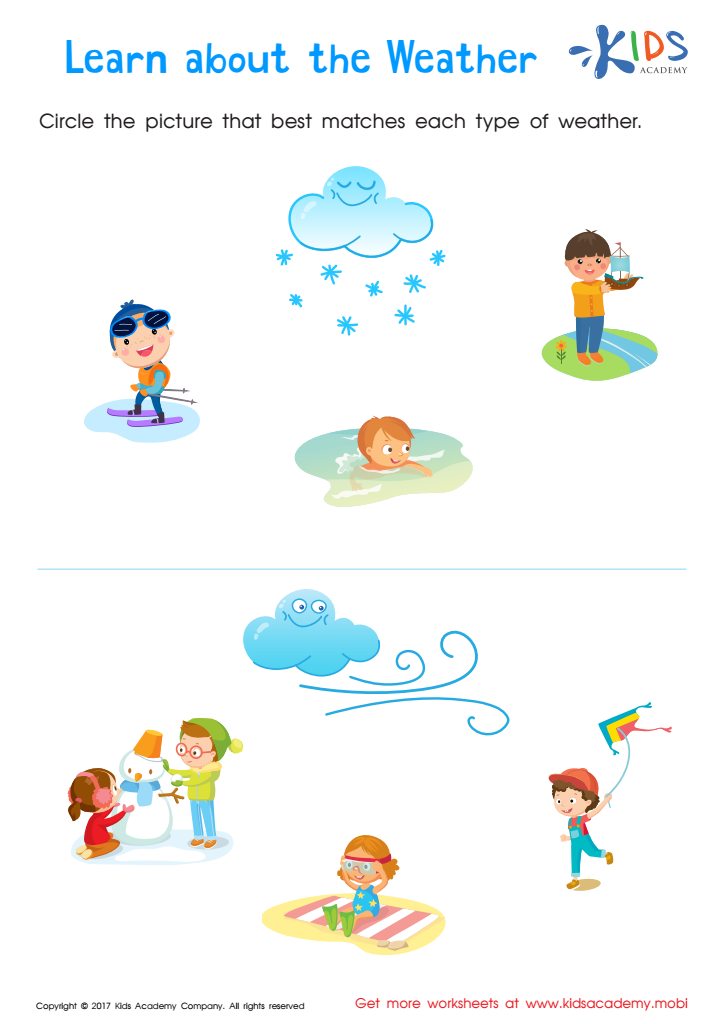
About the Weather Printable
 Assign to My Students
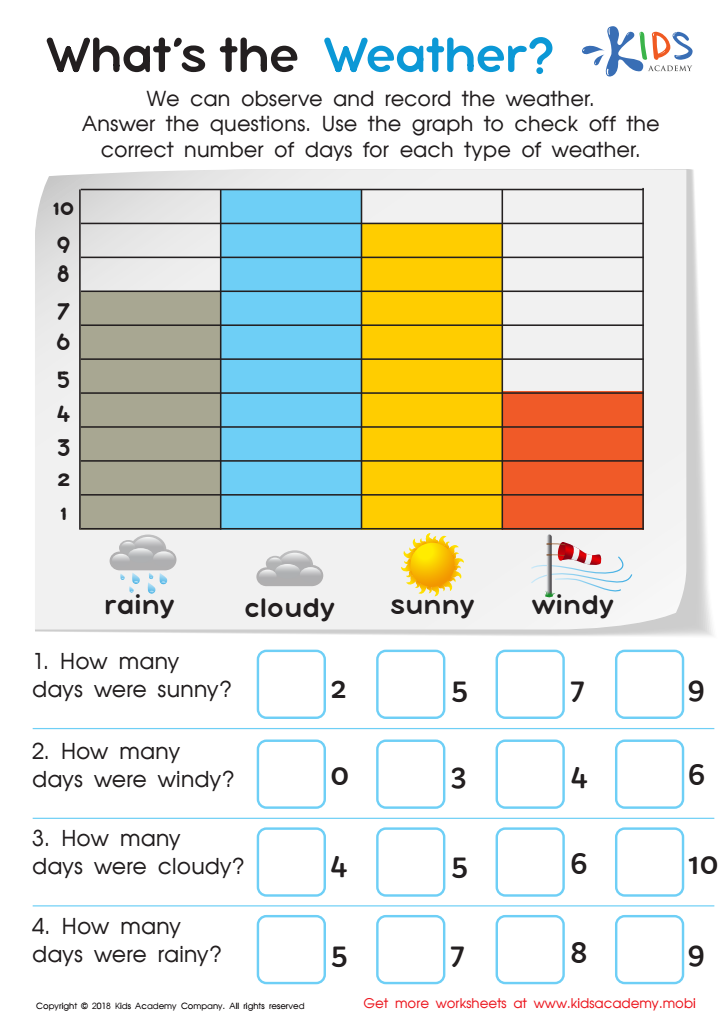
What's the Weather? Worksheet
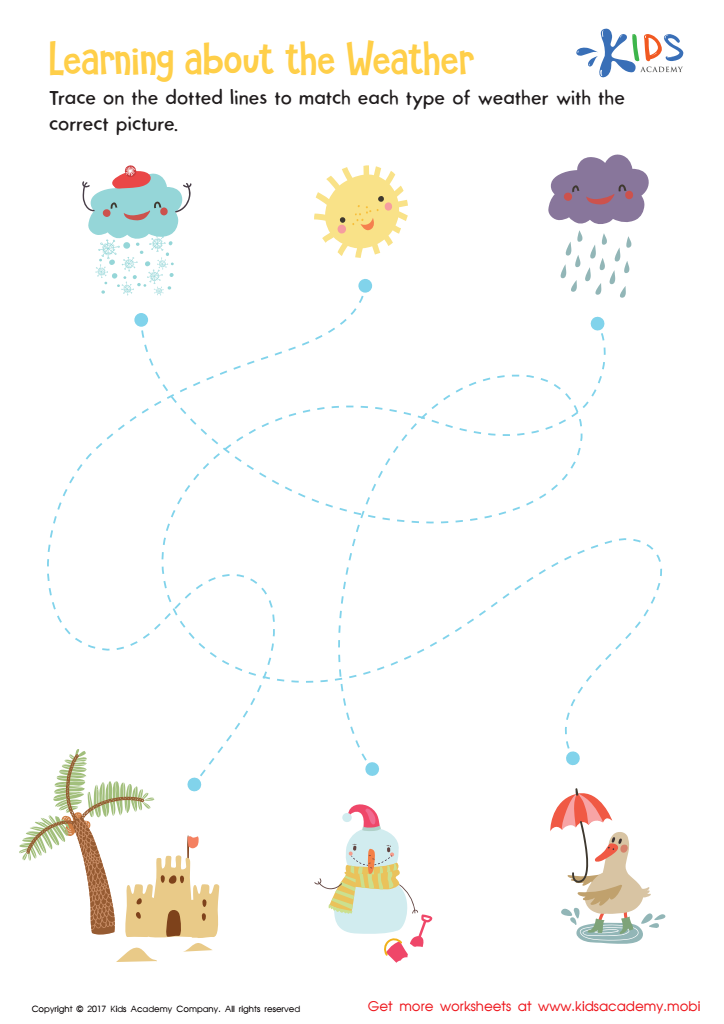




%20(1).jpg)



Parents and teachers should care about weather identification in young children for several important reasons. First, understanding weather helps children develop scientific inquiry skills. Engaging with the natural world fosters curiosity, encouraging students to ask questions and seek answers. This foundational skill is vital for developing critical thinking.
Second, early weather education promotes literacy and communication. Children learn to describe and discuss different weather types—sunny, rainy, snowy—which boosts vocabulary and sentence structure. This linguistic development is essential at a stage when language skills are rapidly expanding.
Furthermore, weather identification allows children to connect with their environment, fostering observation skills and enhancing their ability to interpret visual data. As kids learn to recognize patterns in weather, they cultivate an early sense of responsibility towards nature and understand that weather influences our daily lives, from what to wear to how we play outside.
Finally, in discussions about climate change and environmental stewardship, a solid understanding of weather prepares children to comprehend larger issues and encourages empathy for the planet. Overall, combining weather identification with various learning activities enriches the educational experience and can have lasting benefits.







