Observational skills Normal Our Planet and Environment Worksheets for Ages 6-9
6 filtered results
-
From - To
Enhance your child's observational skills with our engaging "Our Planet and Environment" worksheets designed for ages 6-9. These printable activities encourage young learners to explore their surroundings while fostering a deeper understanding of the natural world. Through fun exercises, children will observe various environmental elements, identify patterns, and develop critical thinking skills. Our worksheets are aligned with educational standards, making them a valuable resource for teachers and parents alike. Inspire curiosity and a love for nature as children discover the wonders of our planet, one worksheet at a time. Perfect for at-home learning or classroom activities!
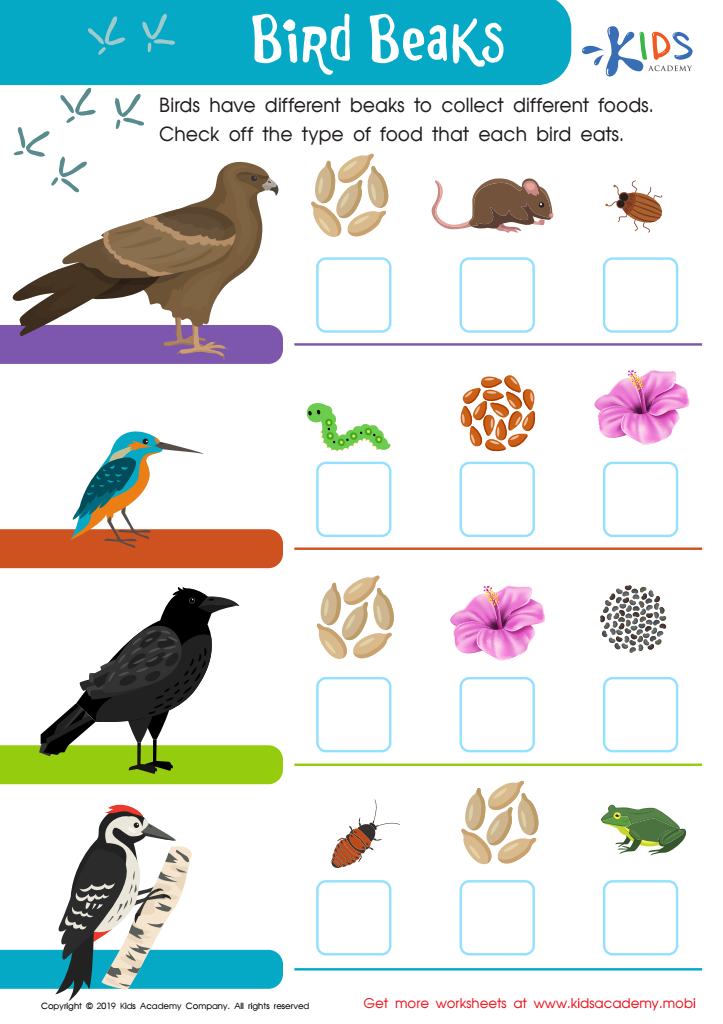
Bird Beaks Worksheet
 Assign to My Students
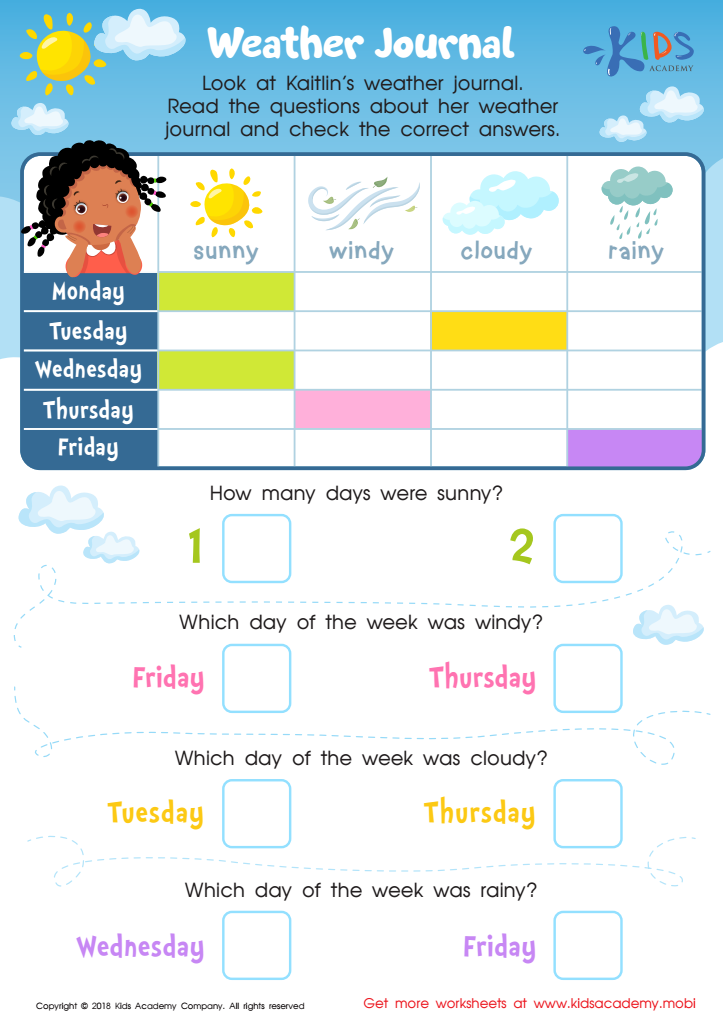
Weather Journal Worksheet
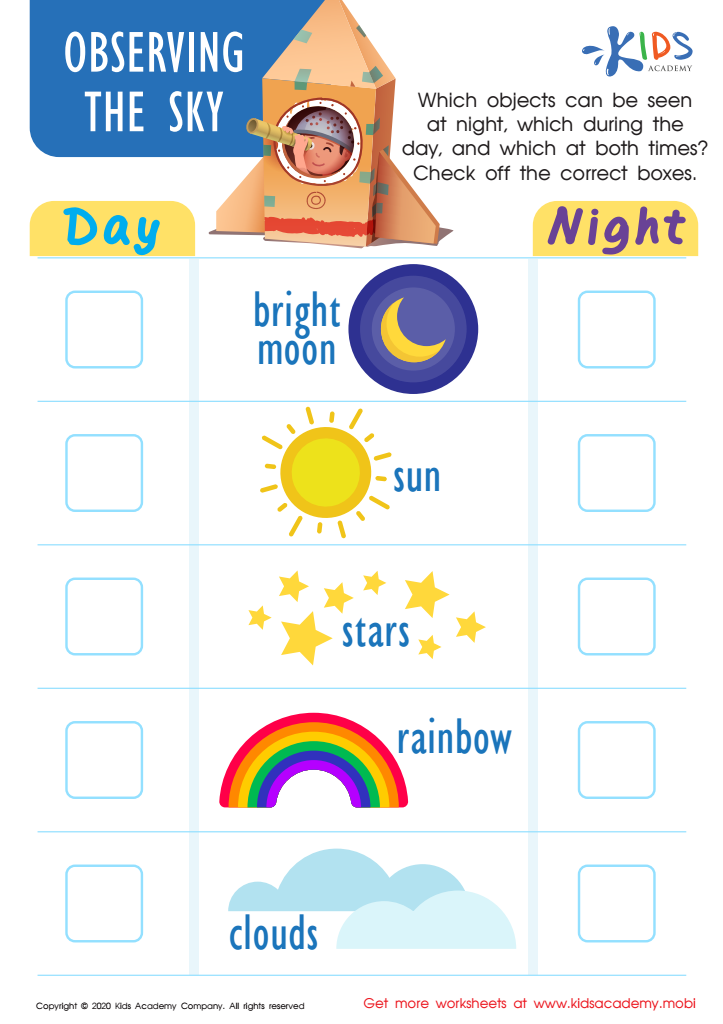
Observing the Sky Worksheet
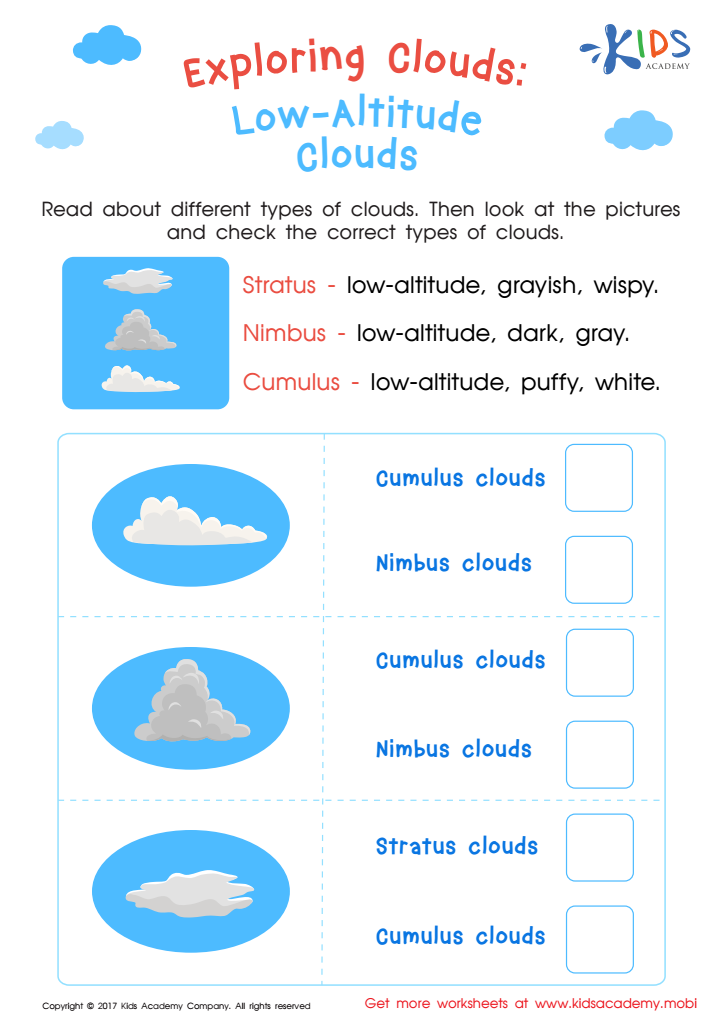
Exploring Clouds: Low Altitude Clouds Printable
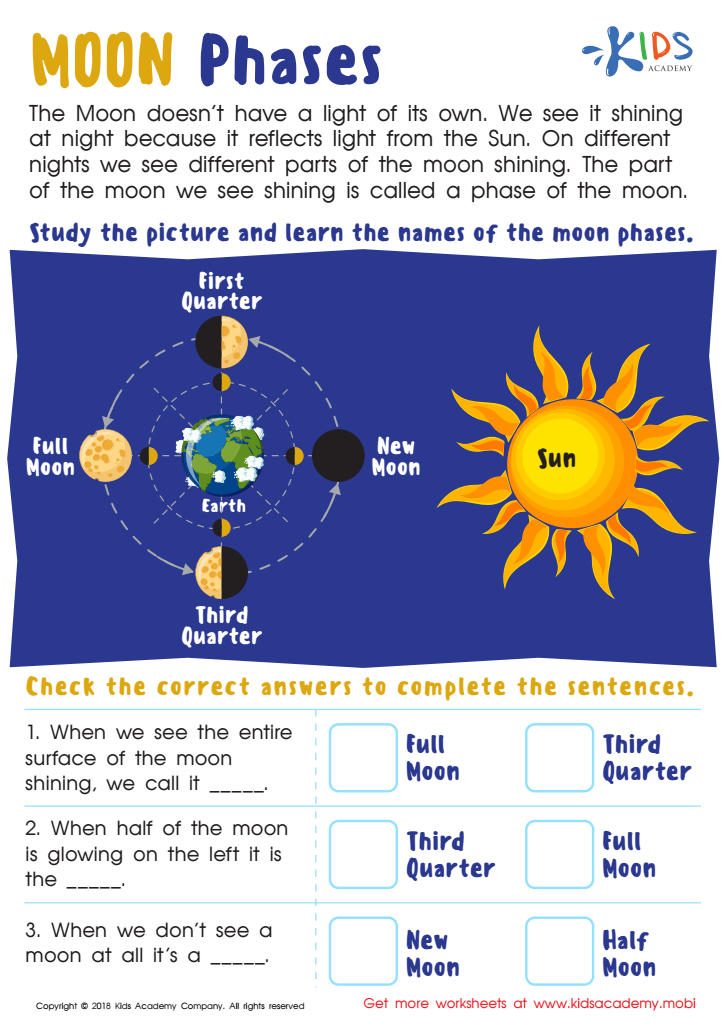
Moon Phases Worksheet
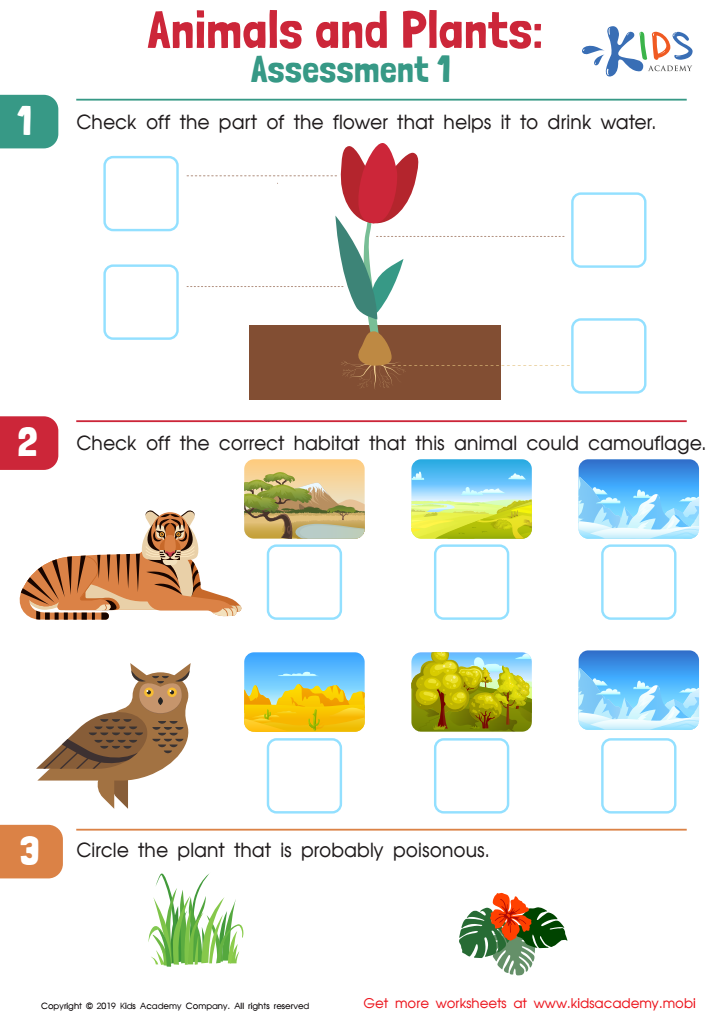
Animals and Plants: Assessment 1 Worksheet




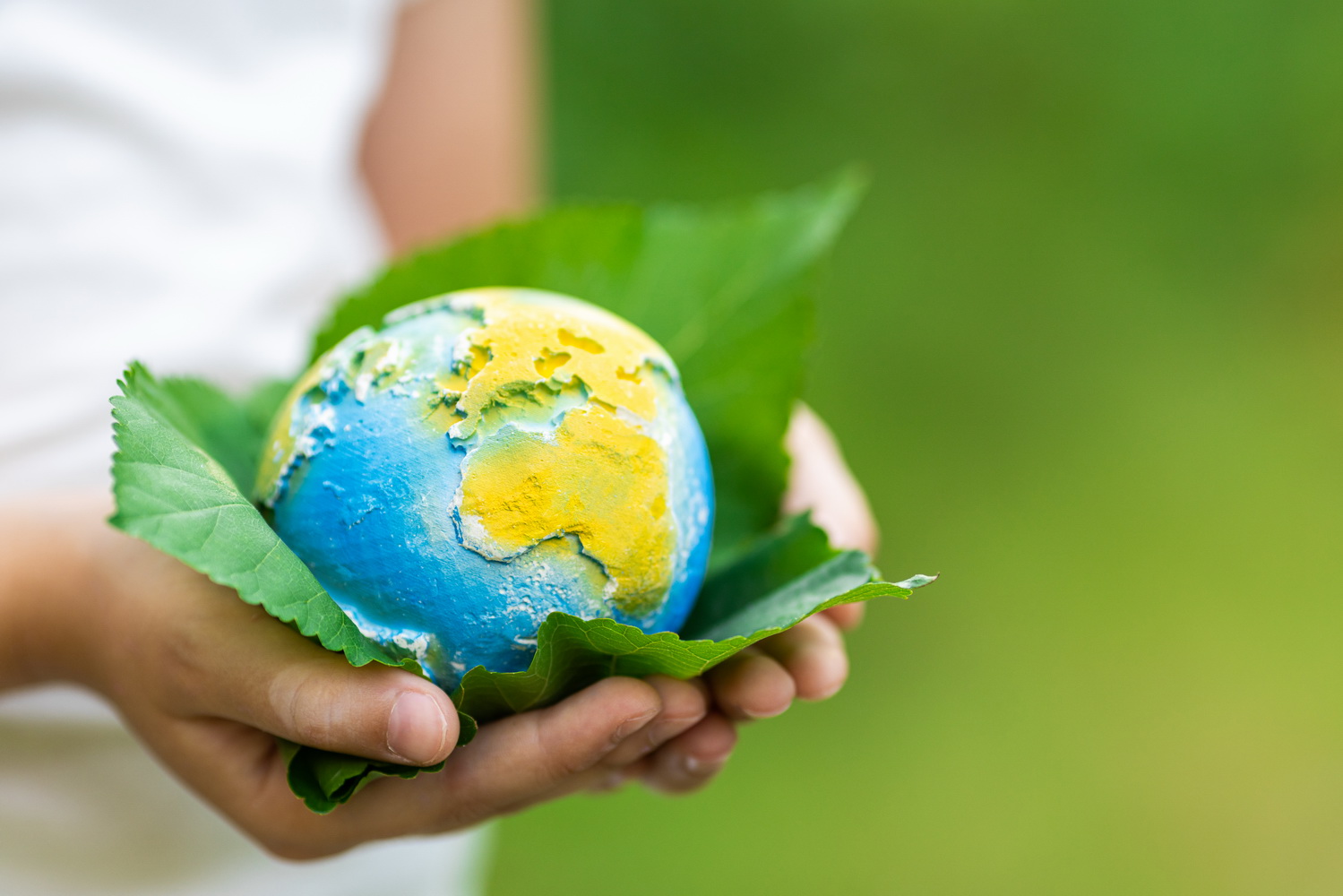

Observational skills are crucial for young learners, particularly when exploring the planet and environment. For children ages 6-9, developing these skills fosters curiosity and engagement with the natural world. Parents and teachers should emphasize observation as a key component of education for several reasons.
Firstly, observational skills enhance critical thinking and analytical abilities. By encouraging children to carefully observe their surroundings, they learn to ask questions, make predictions, and draw conclusions based on evidence. This foundational skill not only supports scientific inquiry but also promotes a habit of mindful awareness.
Secondly, connecting with nature through observation nurtures a sense of responsibility and stewardship towards the environment. As children learn about ecosystems, biodiversity, and environmental challenges, they develop empathy for the planet, fostering an appreciation for conservation efforts.
Lastly, observational skills can significantly improve communication. Children learn to articulate their thoughts, ideas, and discoveries, which contributes to language development and confidence in speaking.
Incorporating observational activities, such as nature walks, outdoor experiments, and community gardening, enhances experiential learning. Parents and teachers play a vital role in guiding these experiences, ensuring that children develop a lifelong love for nature and a proactive mindset towards environmental issues.







