Categorizing objects Normal Physical Science Worksheets for Ages 6-9
3 filtered results
-
From - To
Explore our engaging Normal Physical Science Worksheets designed for children aged 6-9, focusing on the essential skill of categorizing objects. These worksheets provide interactive and fun activities that help young learners identify, group, and classify various materials and items based on different attributes such as color, shape, and type. Each activity promotes critical thinking and observation skills while making science enjoyable. Perfect for classroom use or at-home learning, our printable resources ensure that your child develops a solid foundation in physical science through practical experience. Elevate your child’s learning journey with our thoughtfully crafted worksheets today!
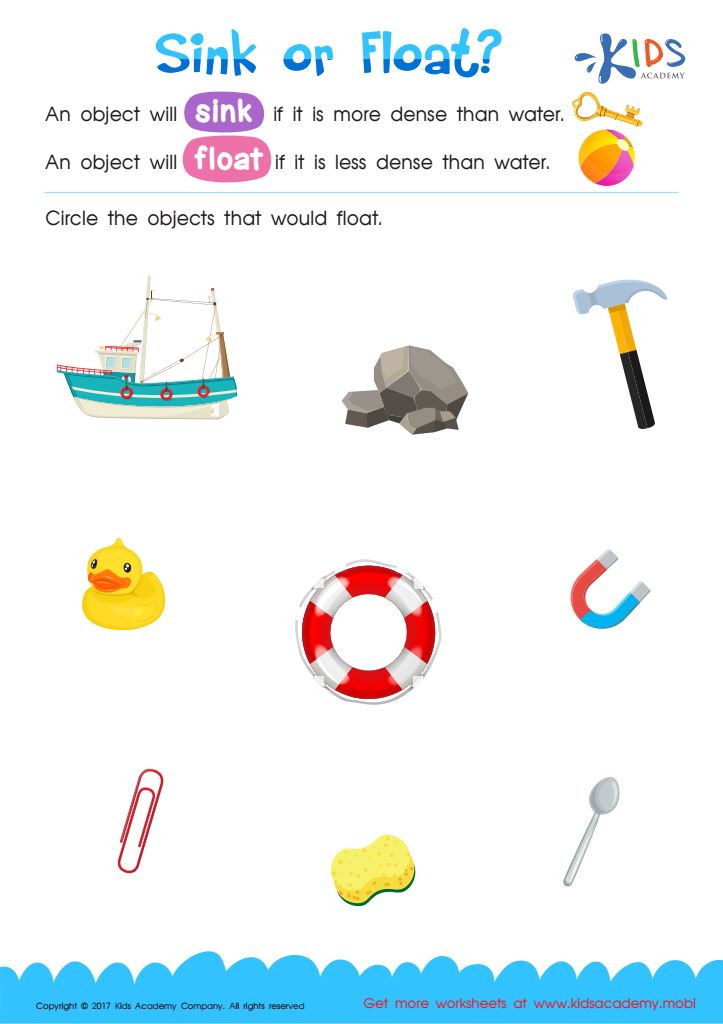
Sink or Float Printable
 Assign to My Students
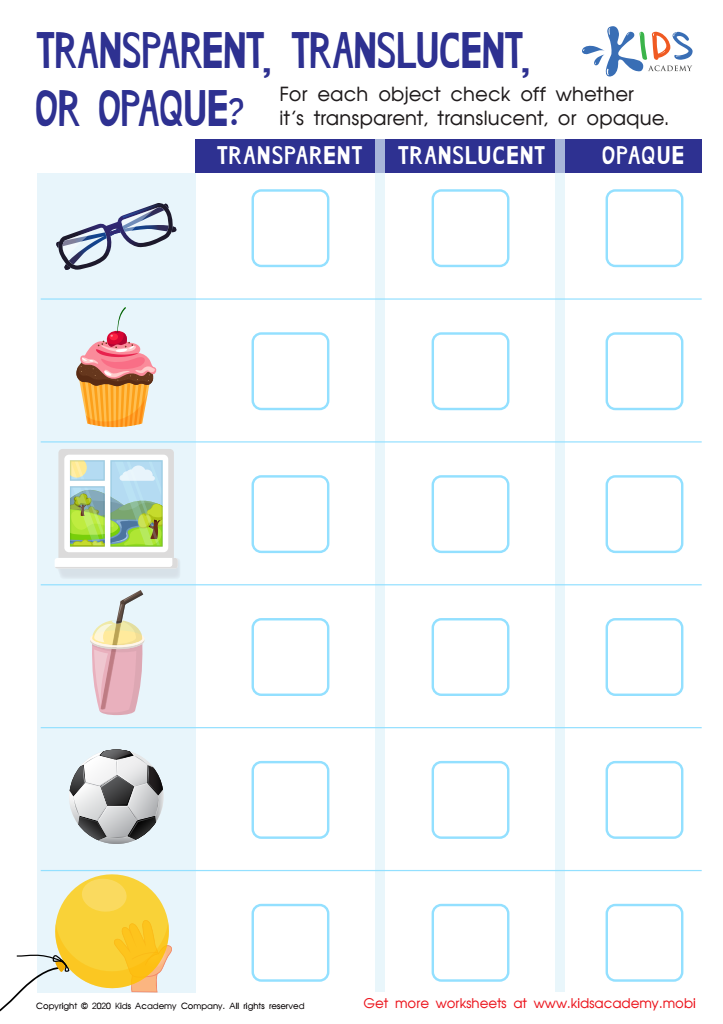
Transparent, Translucent, or Opaque Worksheet
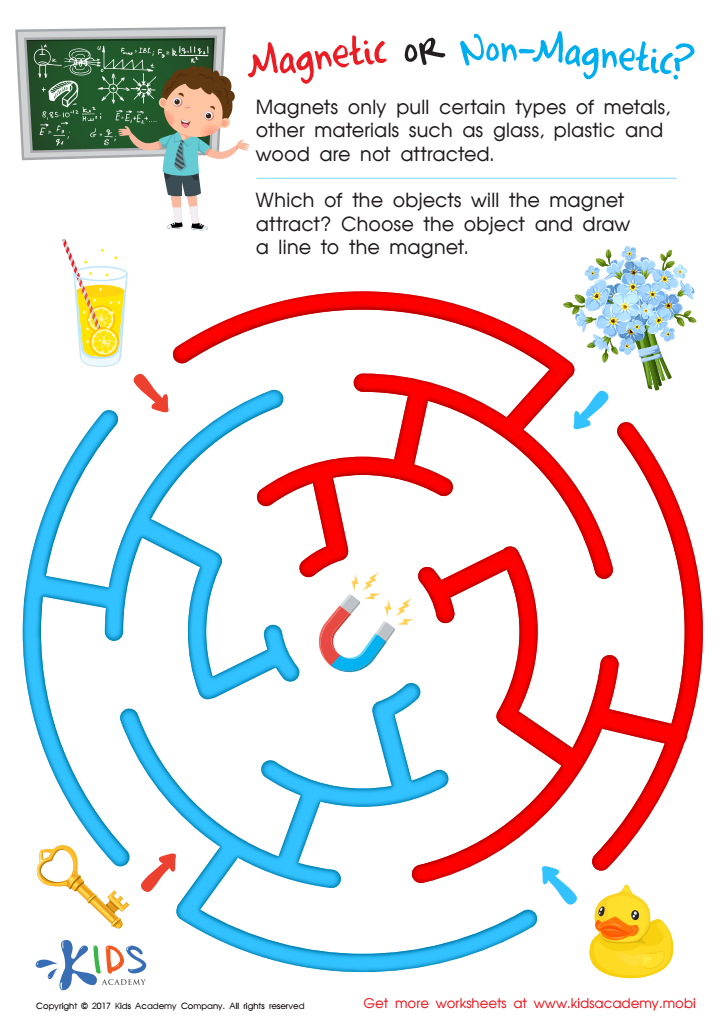
Magnetic or Non–Magnetic Worksheet





Categorizing objects is essential in normal physical science for children aged 6-9 as it lays the groundwork for critical thinking and scientific understanding. At this developmental stage, children's cognitive skills are rapidly evolving, and they learn best through hands-on experiences. By categorizing objects based on attributes such as size, shape, color, and density, children develop important skills like observation, comparison, and classification.
This process enables young learners to make sense of their world. For example, sorting animals into categories like mammals, reptiles, and birds can aid their comprehension of biodiversity and ecosystems. It fosters curiosity about how different objects behave under various conditions, teaching them basic principles of science such as properties of matter and the physical characteristics that distinguish different categories.
Moreover, engaging in categorization exercises encourages teamwork and communication, as children often work together to discuss and classify objects. Parents and teachers play a crucial role in facilitating these learning experiences through guided activities and open-ended questions, paving the way for a future love of science and exploration. Ultimately, categorizing objects not only nurtures analytical skills but also reflects a deeper understanding of the interconnectedness of the physical world.







