Critical Thinking Normal Physical Science Worksheets for Ages 6-9
3 filtered results
-
From - To
Boost your child's critical thinking skills with our engaging Physical Science worksheets designed for ages 6-9. These printable activities, available on Kids Academy, delve into fundamental concepts of physics through interactive exercises and thought-provoking questions. Your young learner will explore forces, energy, and matter while developing problem-solving abilities and scientific reasoning. Perfect for both classroom and at-home learning, our worksheets encourage curiosity and analytical thinking, enhancing their understanding of everyday scientific phenomena. Make science fun and educational with vibrant, user-friendly materials that inspire a lifelong love for discovery and inquiry. Start exploring today!
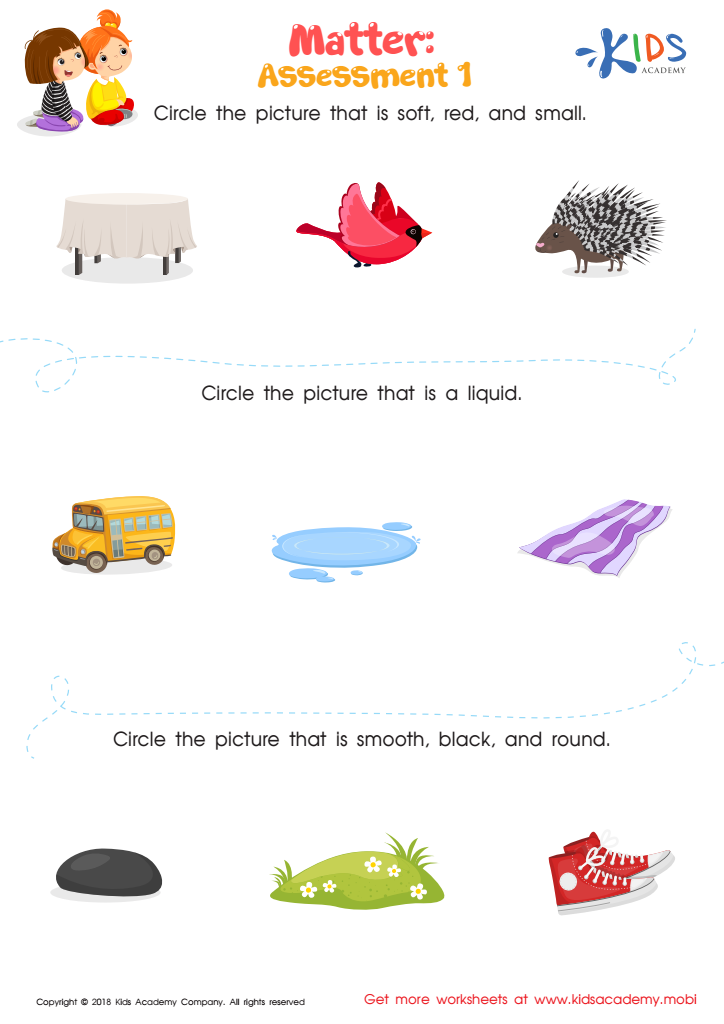
Matter: Assessment 1 Worksheet
 Assign to My Students
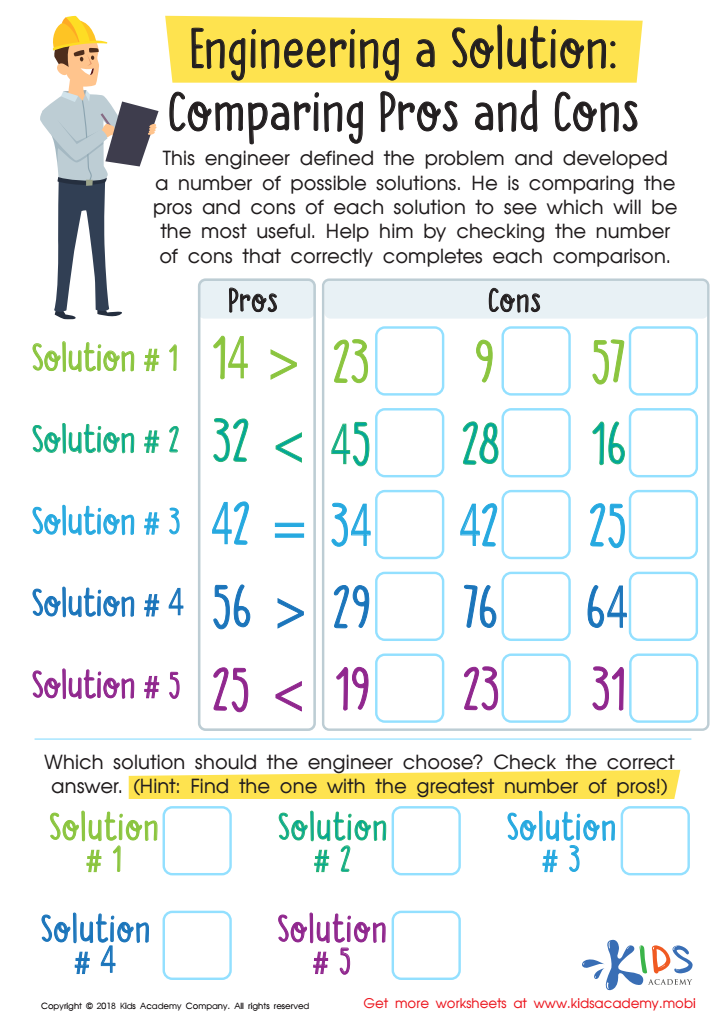
Engineering a Solution: Comparing Pros and Cons Worksheet
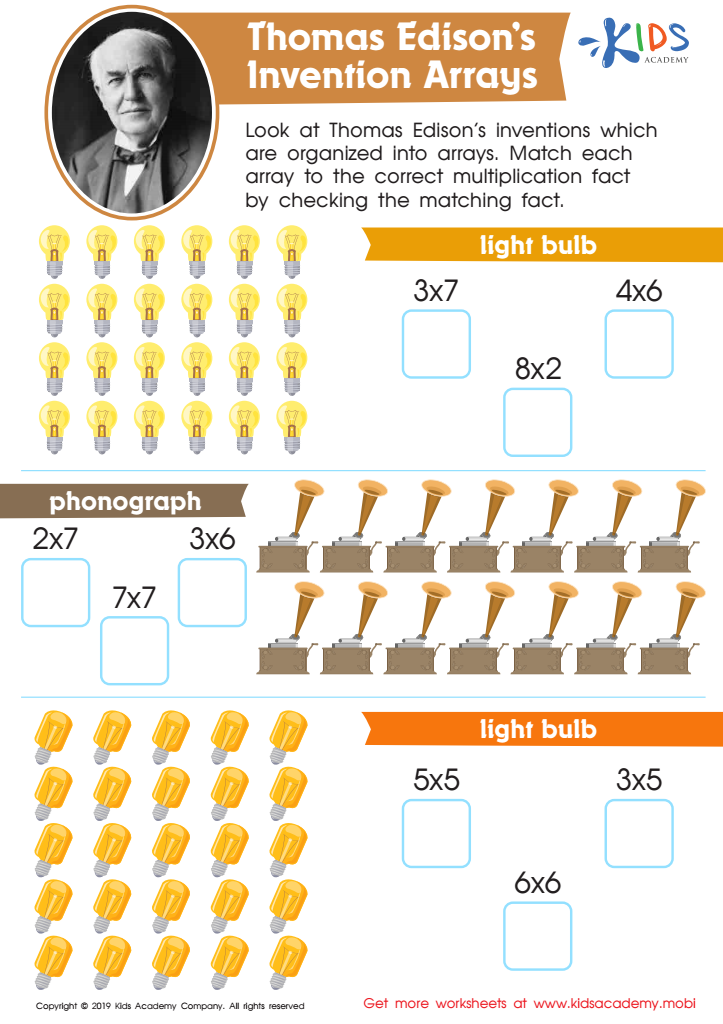
Thomas Edison’s Invention Arrays Worksheet








Critical thinking in the realm of physical science for children ages 6-9 lays the invaluable foundation for logical reasoning and inquiry-based learning that is pivotal throughout their educational journey and beyond. During these formative years, children's brains are remarkably receptive and eager for exploration. Engaging in critical thinking fosters curiosity, enhances problem-solving skills, and allows young learners to grasp foundational scientific principles through hands-on experiments and observations.
Empirical evidence suggests that when children ask questions, formulate hypotheses, and conduct simple tests, they develop a deeper understanding of cause-effect relationships and build resilience through trial and error. This scientific exploration nurtures a passion for learning and encourages cognitive development, which is directly tied to improved academic performance across all subjects. By nurturing these skills early on, parents and teachers equip children with the ability to think independently, reason logically, and become resilient problem solvers.
Moreover, fostering critical thinking in young children supports emotional development by promoting patience, collaboration, and empathy, as children often work in groups and discuss their ideas and findings. Creating a supportive environment where children feel confident to express their thoughts and hypotheses instills a lifelong love of learning and equips them with the tools to face complex challenges in an increasingly scientific and technological world.







