
Animal identification Normal Plants and Animals Worksheets for Ages 6-9
3 filtered results
Difficulty Level
Grade
Age
-
From - To
Subject
Activity
Standards
Our engaging "Animal Identification Normal Plants and Animals Worksheets" are specifically designed for children ages 6-9, aiming to spark their curiosity about nature. These dynamic, easy-to-understand worksheets introduce young learners to the wonderful world of plants and animals. Through fun activities and vibrant illustrations, kids will develop essential observation and classification skills. Ideal for both classroom and homeschooling environments, these resources promote interactive learning and foster a deep appreciation for the natural world. Discover a wide range of printable worksheets that make learning about flora and fauna both exciting and educational. Visit our website to explore today!
Favorites
With answer key
Interactive
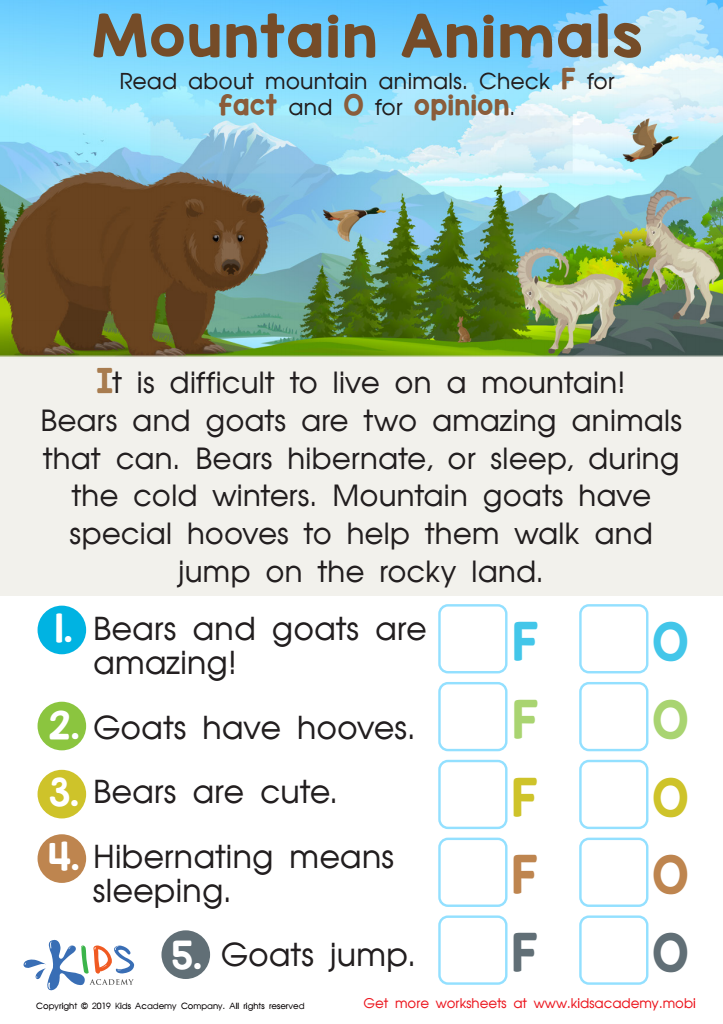
Mountain Animals Worksheet
Is mountain wildlife amazing? Fact or fiction? Help your child sharpen critical-thinking skills with this engaging worksheet. Featuring a fun nonfiction passage about animals like bears and goats, your child will read through the text and identify each statement as fact or fiction. Perfect for boosting reading comprehension and analytical abilities!
 Assign to My Students
Mountain Animals Worksheet
Worksheet











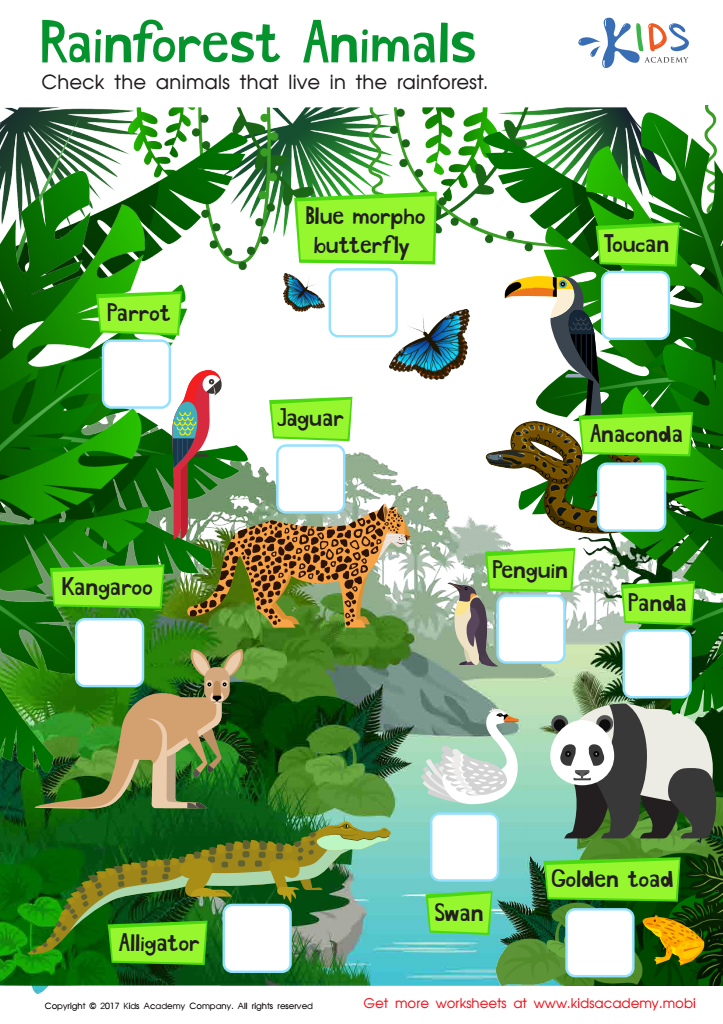
Rainforest Animals Worksheet
Kids love the bright, vivid pics of rainforest animals in this worksheet. It fuels their interest in life science and brings joy to their learning. It encourages them to study these animals in detail.
Rainforest Animals Worksheet
Worksheet
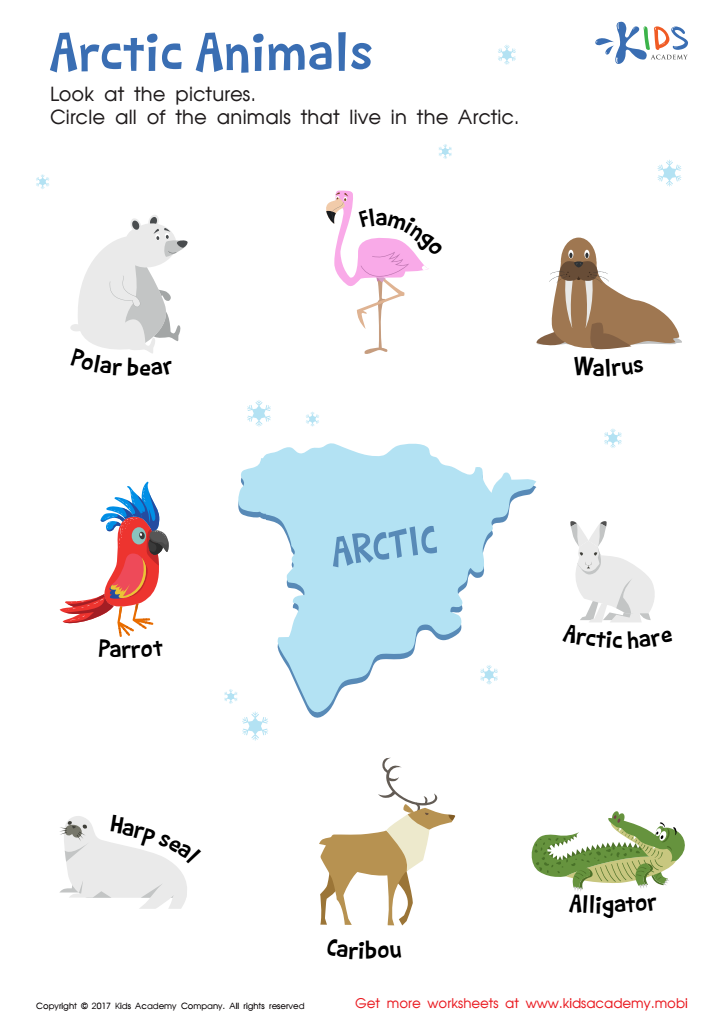
Arctic Animals Worksheet
Kids love animals and this worksheet is a great way to teach them where they live. It reinforces classification skills and introduces new animals, like the Arctic hare. Use it to discuss the Arctic climate and how these animals live, then ask your child where other animals live to keep the conversation going.
Arctic Animals Worksheet
Worksheet
Join Kids Academy for Free
Who is primarily going to use this learning content?








Understanding animal identification and plant recognition is crucial for children aged 6-9 as it fosters empathy, boosts intellectual growth, and enhances their interaction with the natural world. Teaching children about animals and plants around them helps them appreciate biodiversity and develop a sense of stewardship for the Earth. This early interaction with nature instills a sense of wonder and curiosity, which is vital for lifelong learning.
Also, children in this age group are in a key developmental stage where they are naturally inquisitive and begin forming ideas about how the world works. Knowing how to identify common animals and plants can build their observational skills and improve attention to detail. This knowledge is often linked to broader educational concepts such as life cycles, ecosystems, and environmental science, establishing a foundation for more advanced topics later on.
Furthermore, learning about animals and plants promotes active learning and critical thinking skills. Kids learn to compare, categorize, and remember distinctive traits, enhancing cognitive abilities. Socially, it offers opportunities for collaborative learning experiences, discussions, and group activities, which can build teamwork and communication skills.
Overall, being capable of identifying local animals and plants not only broadens children’s knowledge and respect for nature but also supports their academic and social development, aligning with holistic educational goals.







