
Animal recognition Normal Plants and Animals Worksheets for Ages 6-9
4 filtered results
Difficulty Level
Grade
Age
-
From - To
Subject
Activity
Standards
Discover our engaging Animal Recognition Worksheets designed specifically for kids aged 6-9! These resources provide a fun and educational way for young learners to explore and identify various animals, enhancing their understanding of the natural world. Our colorful, interactive worksheets make it easy to recognize animal characteristics, habitats, and behaviors, promoting critical thinking and observation skills. Perfect for home or classroom use, these worksheets align with educational standards and help cultivate a lifelong love for science and nature. Download your free Animal Recognition Worksheets today and inspire your child's curiosity about the animal kingdom! Ideal for early grade teachers and parents alike!
Favorites
With answer key
Interactive
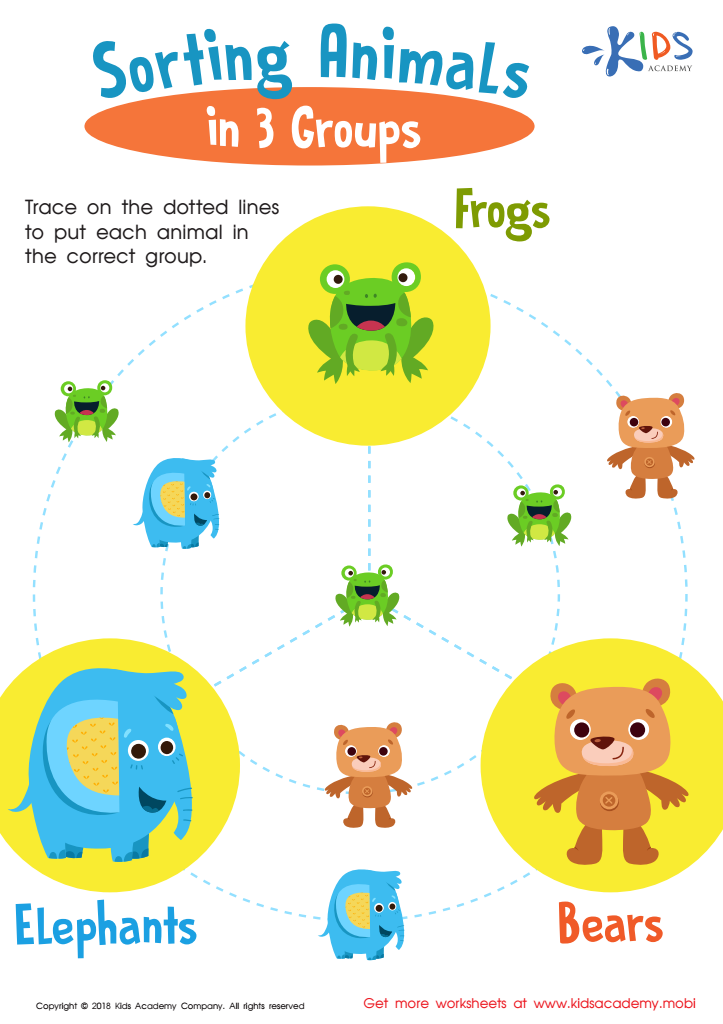
Sorting Animals in 3 Groups Worksheet
Let your kids practice and build skills for future Venn Diagrams with this PDF worksheet. They'll trace lines to match and group animals, and learn the differences and similarities of animals by categorizing with pictures and words. Plus, it's a great way to develop fine motor skills.
 Assign to My Students
Sorting Animals in 3 Groups Worksheet
Worksheet

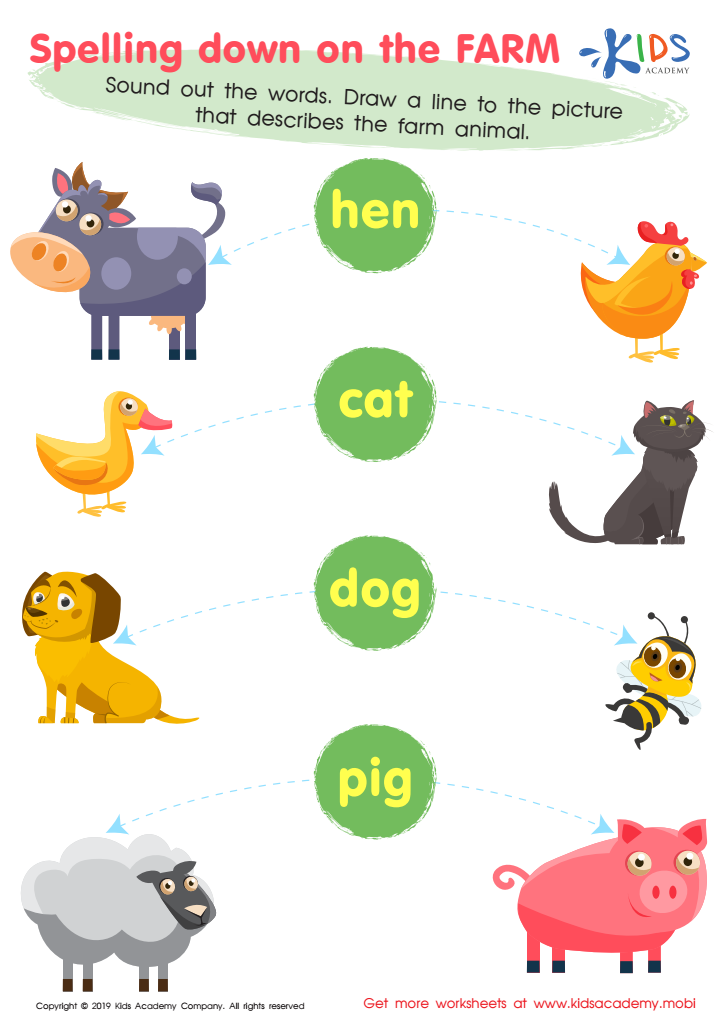
Spelling Down on the Farm Worksheet
Want to help your kids nail their spelling? Introduce them to this farm animal worksheet! Get them to look at the animals in the tracing sheet, name them and then sound out the words. Have them draw a line to the picture that describes it. You'll be surprised at how quickly their skills improve.
Spelling Down on the Farm Worksheet
Worksheet
Animals and Their Young Worksheet
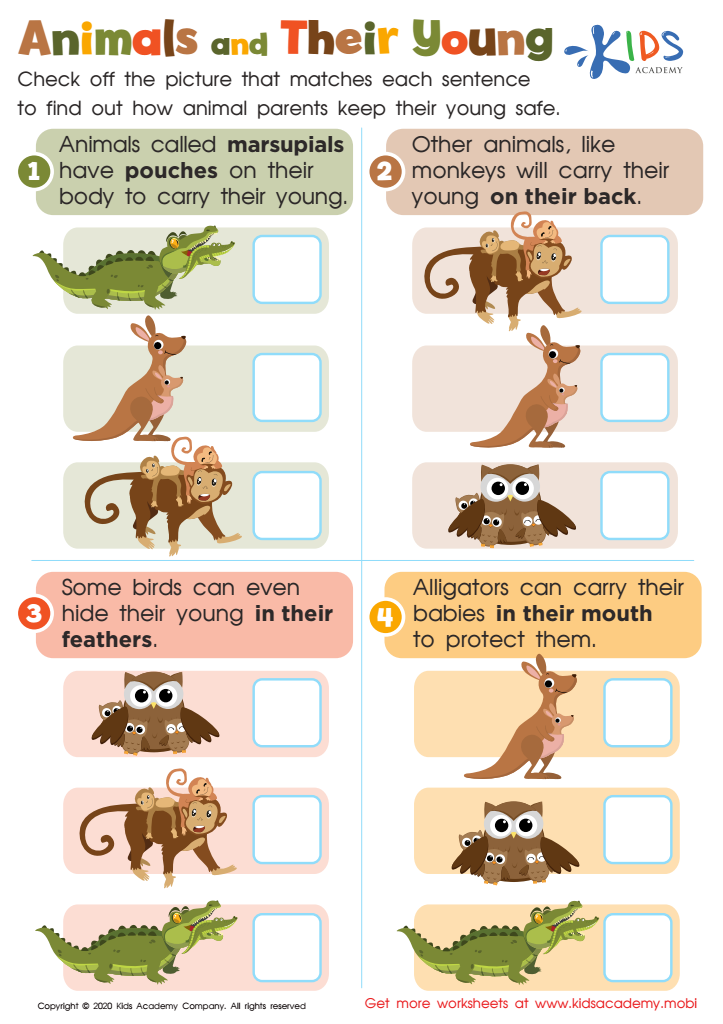
Help your child learn more about the animal kingdom with this cute science worksheet! They'll find out how animals protect and keep their babies close. From pouches to hitching a ride on mama’s back, they'll read the sentence above each illustration and select the description that fits. Check off the correct description as they go - a fun and educational activity!
Animals and Their Young Worksheet
Worksheet
Join Kids Academy for Free
Who is primarily going to use this learning content?








Parents and teachers should prioritize animal recognition and understanding of normal plants and animals for children aged 6-9 because it fosters essential skills that benefit their overall development. This foundation encourages curiosity and exploration, engendering a lifelong love of learning. Familiarity with local wildlife and plants builds environmental awareness and respect for nature, leading to responsible stewardship of the earth.
Introducing young learners to various species and their habitats promotes critical thinking and observation skills. Recognizing differences among plants and animals enhances cognitive development and enhances vocabulary as children describe features, behaviors, and roles within ecosystems. Moreover, understanding the connection between flora and fauna aids in grasping complex scientific concepts later in life.
Furthermore, outdoor exploration related to animal and plant identification can significantly improve physical health and emotional well-being. Engaging with nature has calming effects, reduces stress, and often encourages physical activity. Collaboration in activities like gardening or wildlife watching nurtures social skills and teamwork.
Inculcating a sense of wonder about the natural world equips children with knowledge and empathy, making them not just informed individuals, but also compassionate stewards of nature in an increasingly urbanized and technology-driven society. Thus, fostering this knowledge is vital for future generations.







