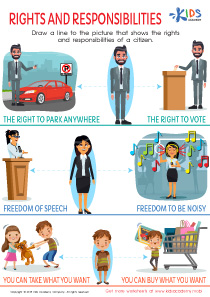
Critical Thinking Normal Governance and Civics Worksheets for Ages 6-9
6 filtered results
-
From - To
Boost your child's understanding of governance and civics with our specialized worksheets designed for ages 6-9. Incorporating fun yet challenging exercises, these printables aim to develop critical thinking skills, helping young learners navigate complex social concepts with ease. Engage your children in age-appropriate activities that foster a deep comprehension of citizenship, community roles, and government functions. Ideal for elementary educators and parents alike, these resources provide an excellent foundation for growing informed and thoughtful future citizens. Enhance your child's learning journey with these expertly crafted, educationally enriching worksheets from Kids Academy.
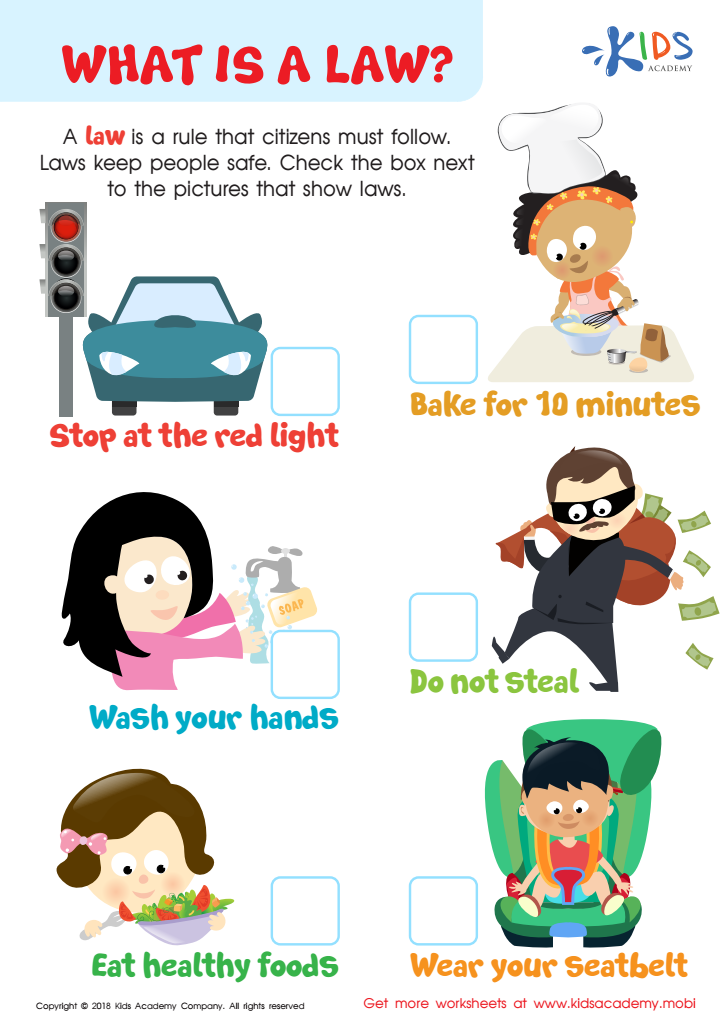
What is a Law? Worksheet
 Assign to My Students
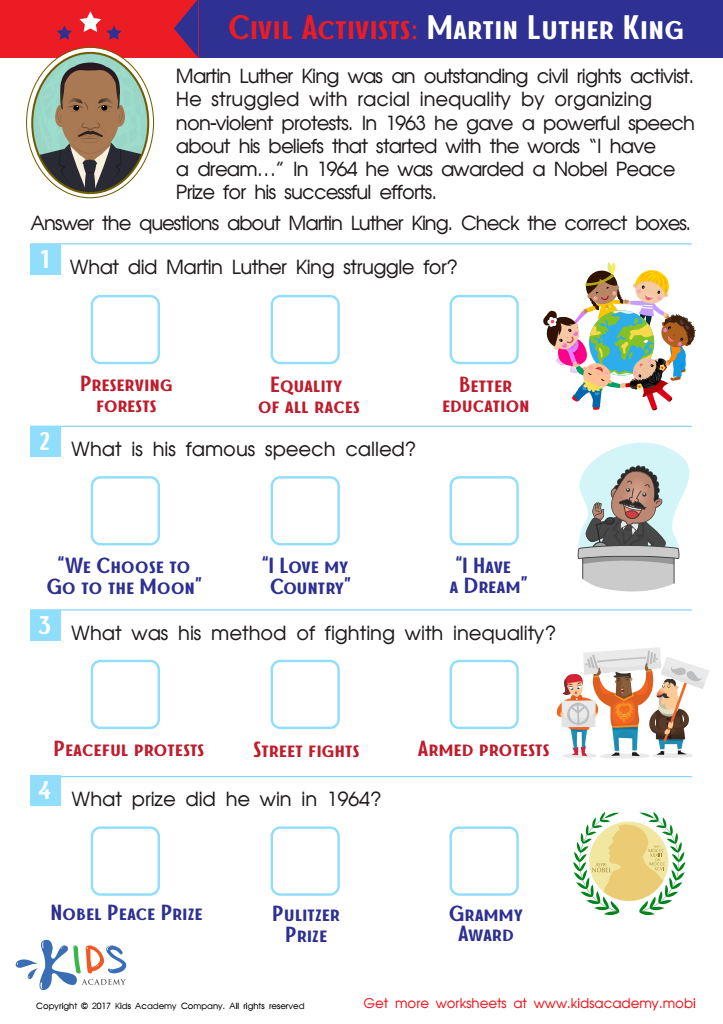
Martin Luther King Worksheet
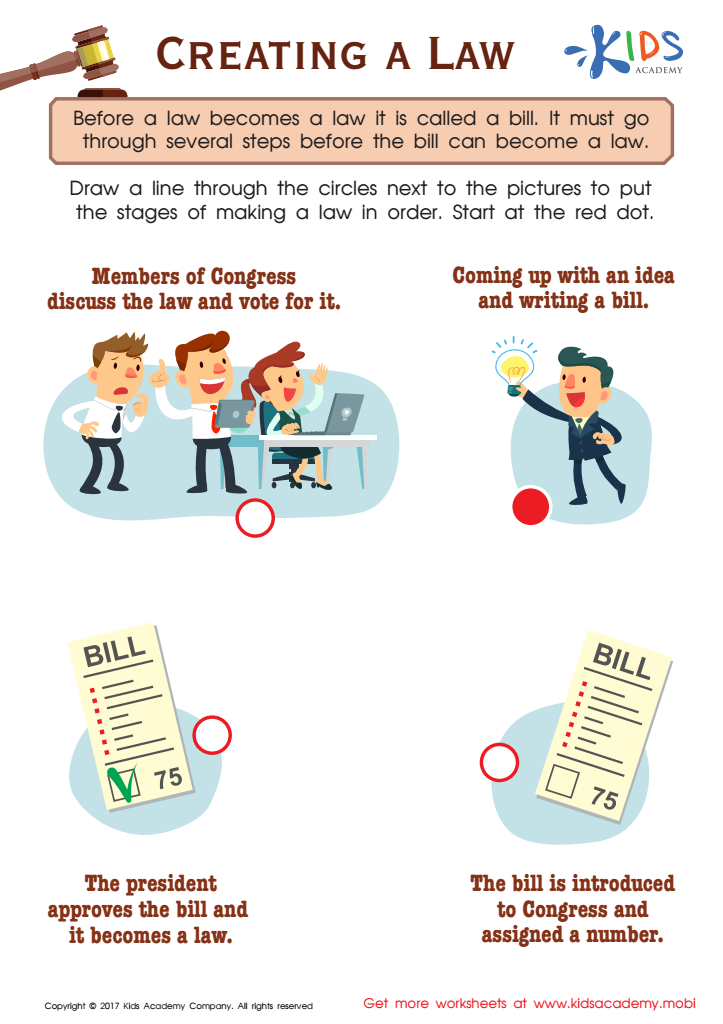
Creating a Law Worksheet
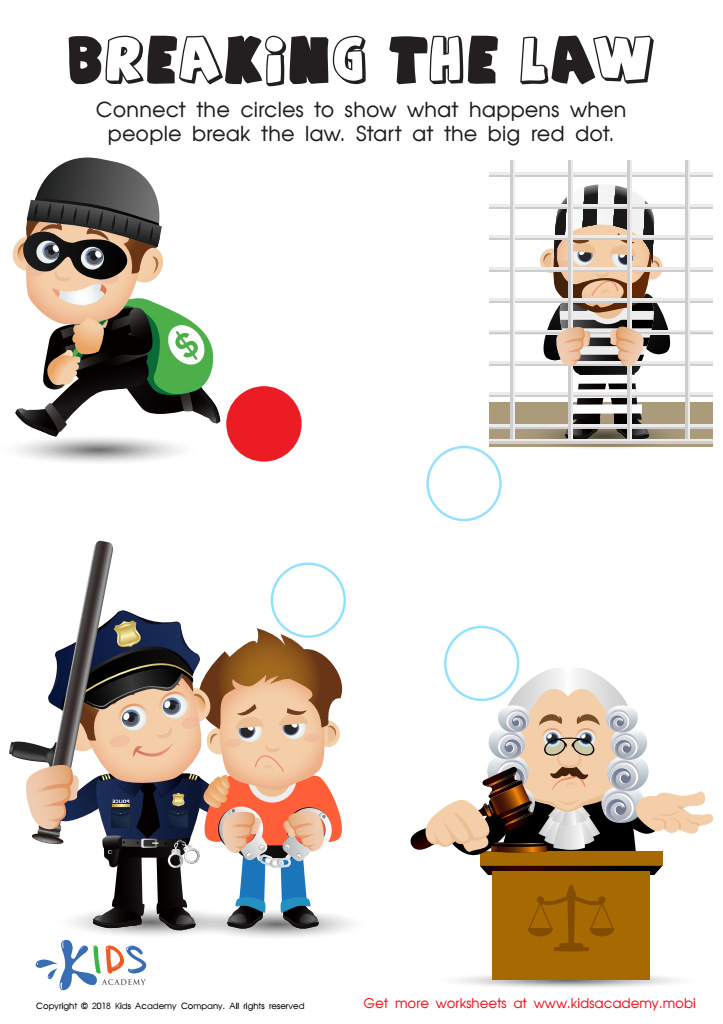
Breaking the Law Worksheet
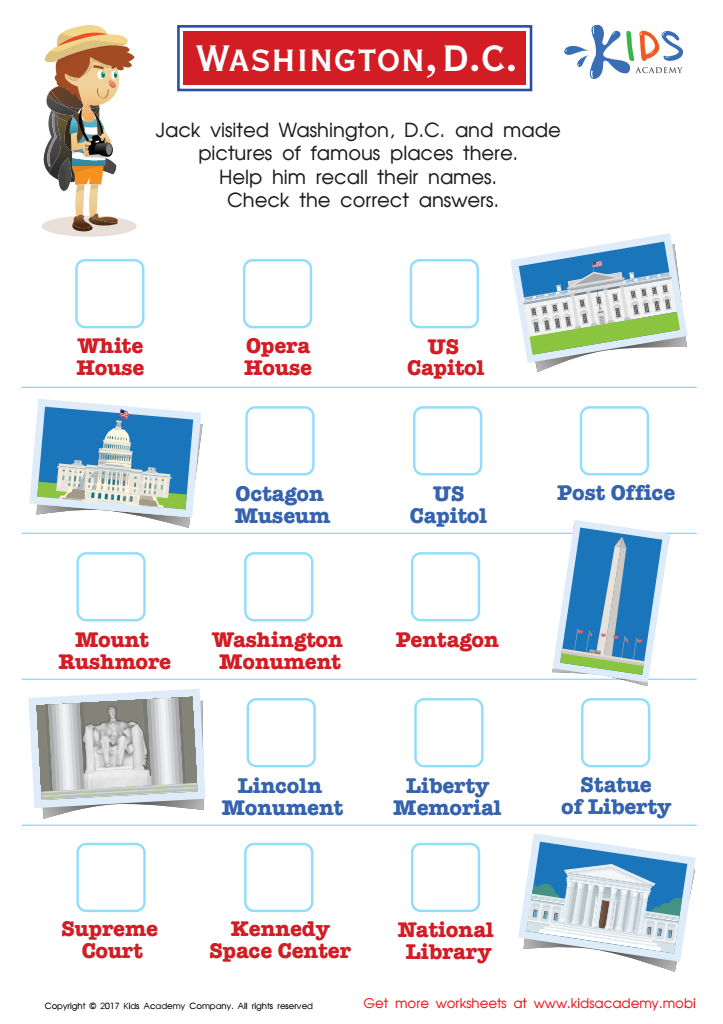
Washington D.C. Printable Worksheet
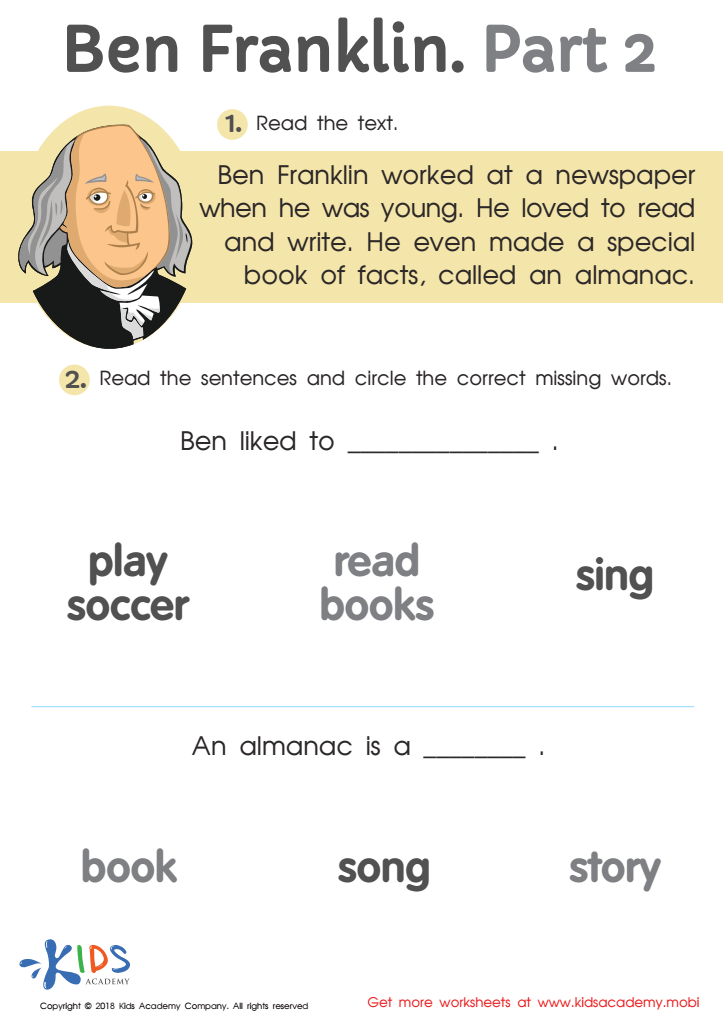
Ben Franklin Part 2 Worksheet


Parents and teachers should prioritize teaching critical thinking, normal governance, and civics to children aged 6-9 because these foundational skills nurture well-rounded, responsible future citizens. At this pivotal developmental stage, young minds are highly inquisitive and capable of absorbing complex ideas in simple forms, setting a bedrock for lifelong learning and ethical decision-making.
Critical thinking cultivates problem-solvers who can analyze situations, question assumptions, and develop informed opinions. It fosters curiosity and empowers children to ask "why" and "how" questions, driving deeper understanding across all subjects. Introducing governance concepts, such as understanding rules, fairness, and responsibility, helps children appreciate the importance of structured systems in maintaining order and justice in daily life, whether in the household or the classroom.
Civics education imparts essential knowledge about community roles, the importance of participation, and basic democratic principles. It primes children for engaged citizenship, emphasizing respect for diversity, tolerance, and the collective good. By learning about voting, local laws, and civic duties early on, children start valuing their contribution to society and carry these civic virtues into adulthood.
Overall, embedding these lessons ensures that children grow up equipped to think independently, understand the impact of governance, and actively participate in their communities, fostering a more informed, empathetic, and competent society.