Historical Knowledge Normal Governance and Civics Worksheets for Ages 6-9
4 filtered results
-
From - To
Explore our "Historical Knowledge Normal Governance and Civics Worksheets for Ages 6-9" designed to inspire young learners with engaging, age-appropriate activities in social studies. These worksheets help children understand basic concepts of governance, civics, and historical events. Through interactive exercises, puzzles, and facts, kids develop critical thinking and a deeper appreciation for historical events and their impact on modern society. Perfect for classroom support or home learning, our resources make learning about history and governance fun and accessible. Help your child build a solid foundation in social studies with our expertly crafted worksheets.
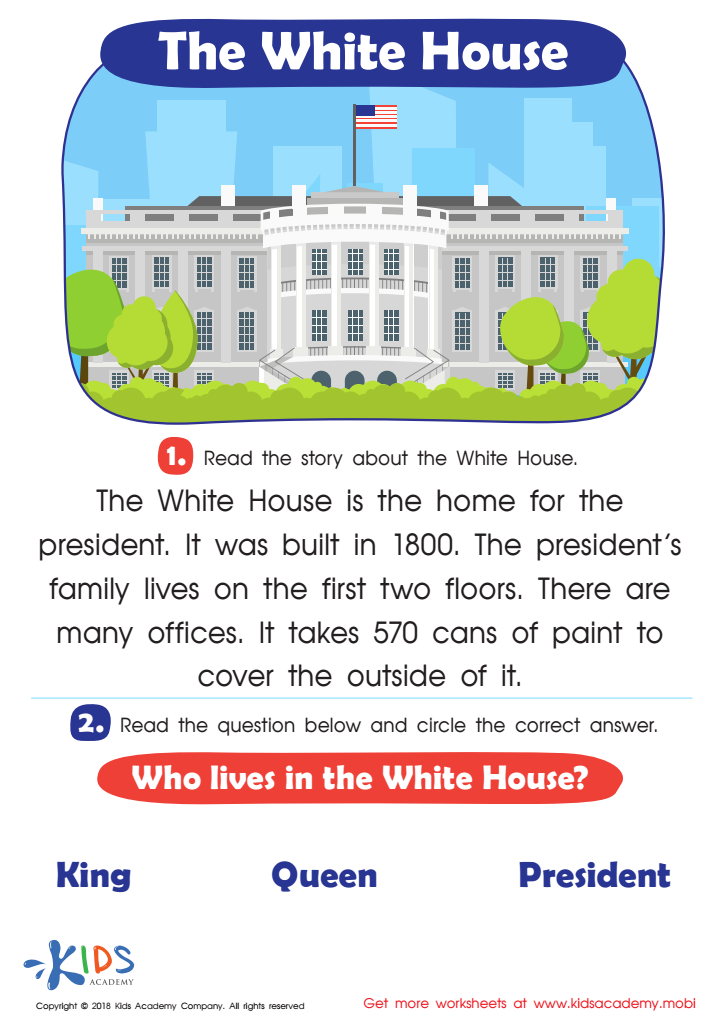
White House Worksheet
 Assign to My Students
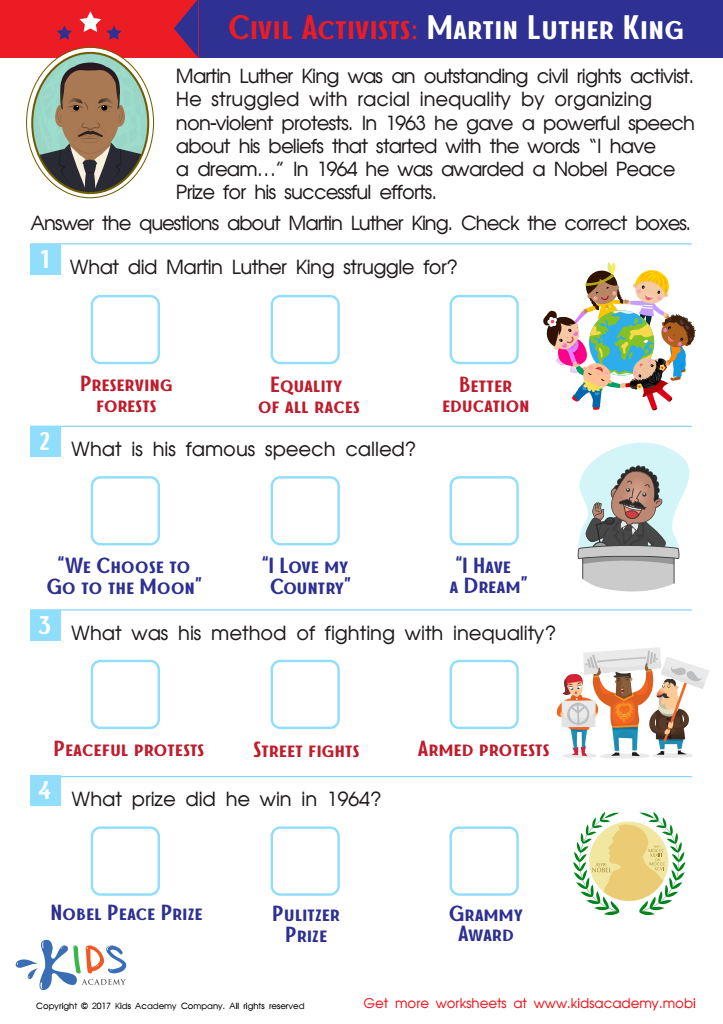
Martin Luther King Worksheet
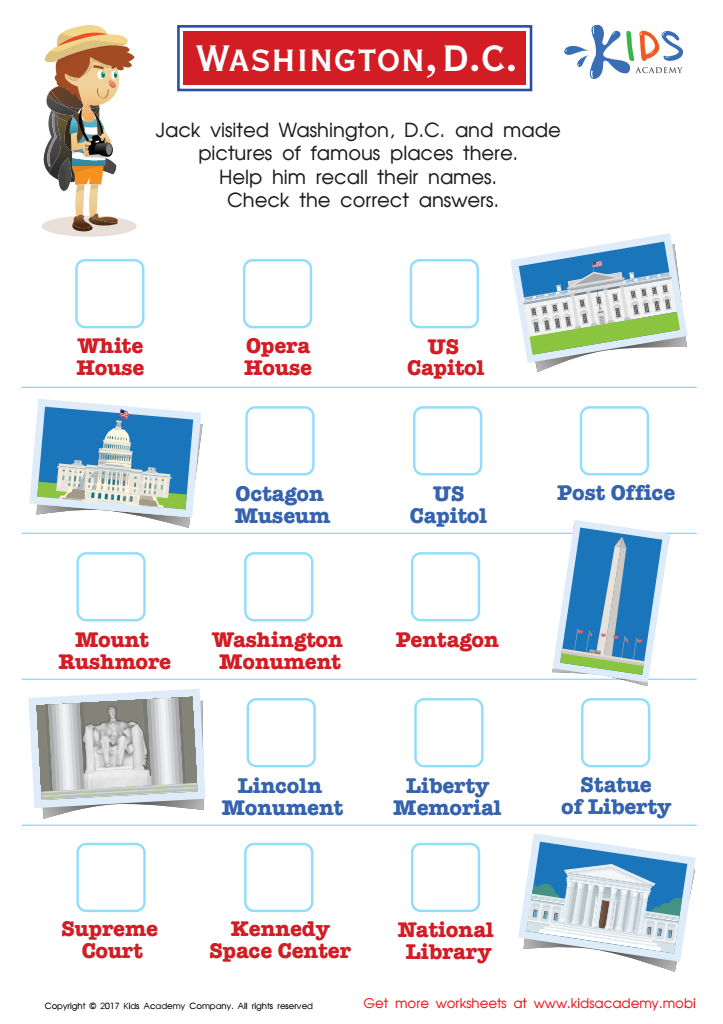
Washington D.C. Printable Worksheet
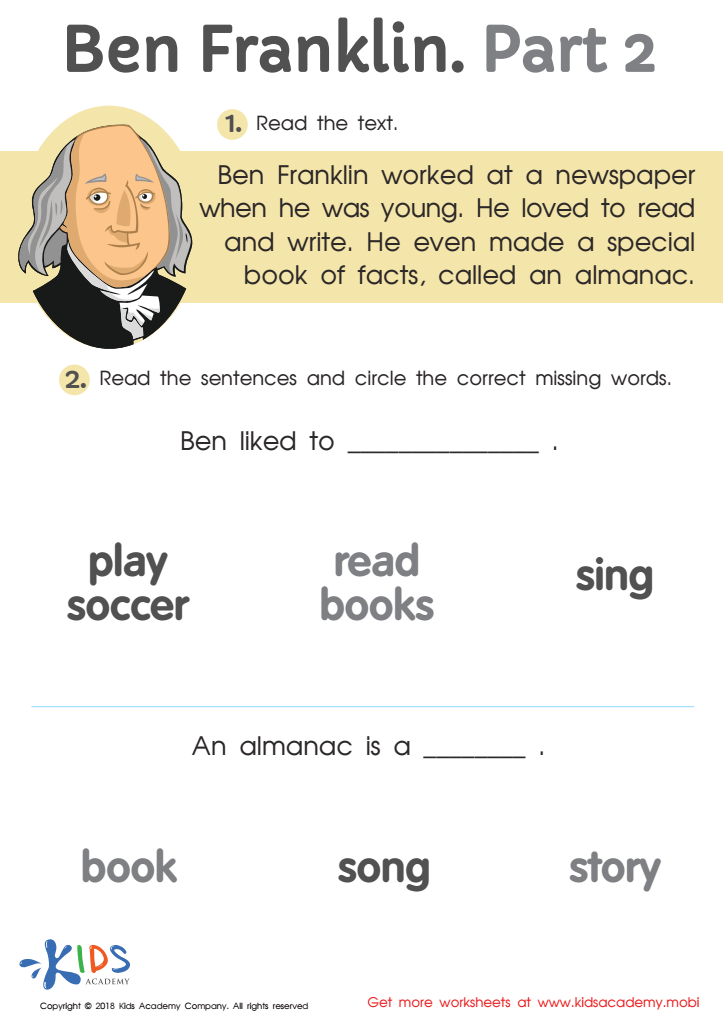
Ben Franklin Part 2 Worksheet


Parents and teachers play a crucial role in shaping the foundational understanding of young children between the ages of 6-9, and introducing them to historical knowledge, normal governance, and civics is essential for several reasons. At this developmental stage, children are highly impressionable and curious, making it an ideal time to instill values of citizenship, community, and historical awareness.
Historical knowledge provides children with a sense of identity and context. Learning about the past helps them understand present society and appreciate the complexities of different cultures and people. It can also foster a sense of belonging and appreciation for diversity.
Teaching basic concepts of governance and civics equips children with the understanding of how society functions. Simple notions, such as rules and fairness, evolve into more complex ideas like democracy, rights, and responsibilities. This knowledge helps children comprehend their role within a community and the importance of participation and cooperation.
Incorporating these subjects can cultivate critical thinking and engage children in discussions that build empathy and ethical understanding. By laying this educational groundwork, parents and teachers help develop informed, thoughtful, and active future citizens, which is paramount for a healthy, functioning society. Fostering an early interest in these areas encourages lifelong learning and responsible engagement in communal and civic life.