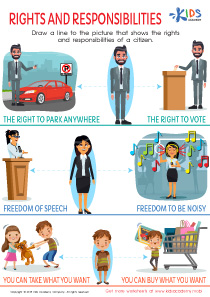
Problem-Solving Skills Normal Governance and Civics Worksheets for Ages 6-9
3 filtered results
Difficulty Level
Grade
Age
-
From - To
Subject
Activity
Standards
Enhance your child's critical thinking with our Problem-Solving Skills Governance and Civics Worksheets for ages 6-9. Created to support early learners, these engaging worksheets introduce key governance and civics concepts while honing problem-solving skills. Each activity is designed to challenge young minds, encouraging strategic thinking and decision-making through real-world scenarios and interactive exercises. Perfect for classroom use or at-home practice, our worksheets provide a solid foundation in social studies, fostering an understanding of community roles and responsibilities. Equip your child with the essential tools for academic and personal success with our expertly crafted problem-solving materials.
Favorites
With answer key
Interactive
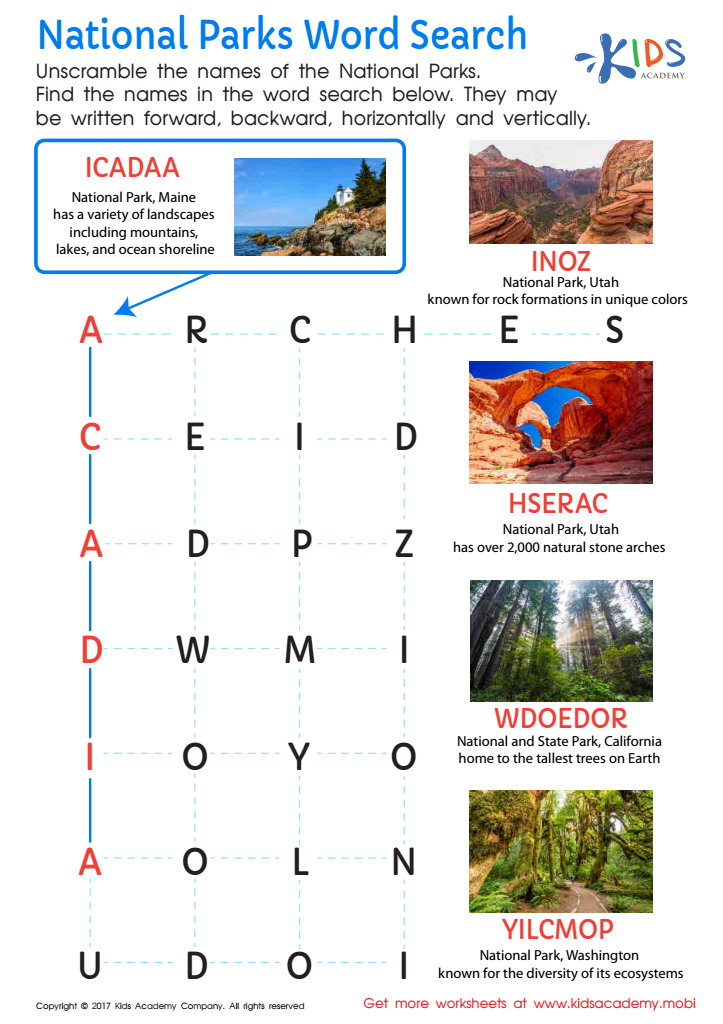
National Parks Word Search Worksheet
Explore the beauty of the USA’s national parks with this fun National Parks word search! Learn more about these majestic sites and boost your knowledge. Take a trip through the sights and sounds of our country with this motivating worksheet.
 Assign to My Students
National Parks Word Search Worksheet
Worksheet
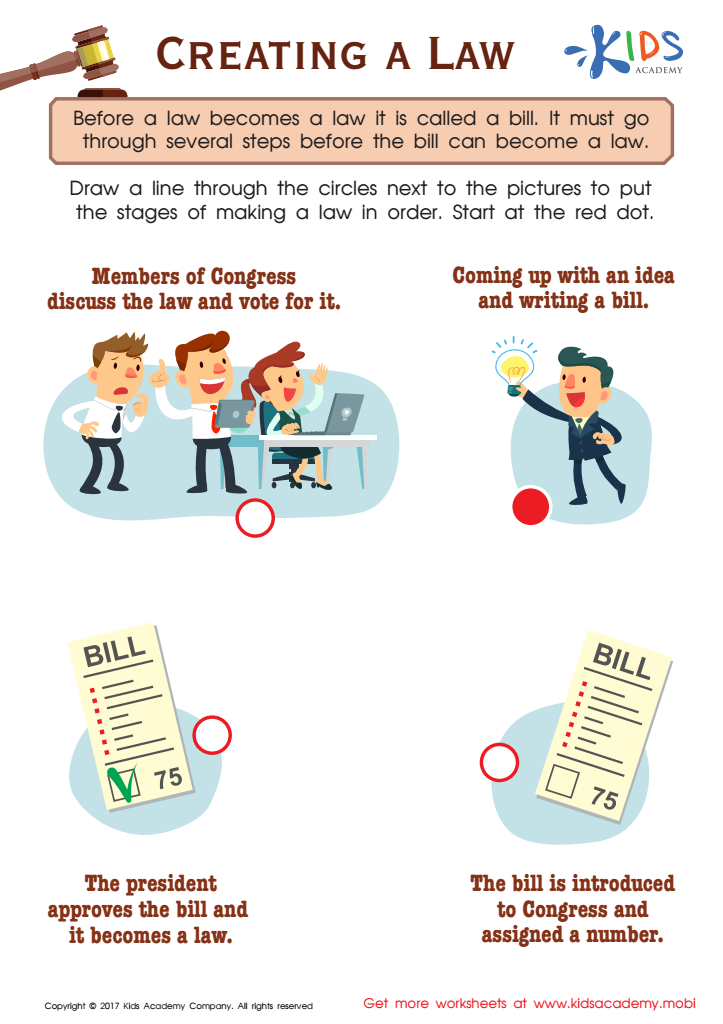
Creating a Law Worksheet
Help your child understand how laws are made with this Creating a Law Worksheet. Perfect for young learners, it covers the lawmaking process with fun pictures and simple language. Get an exciting insight into democracy and teach kids the importance of laws!
Creating a Law Worksheet
Worksheet
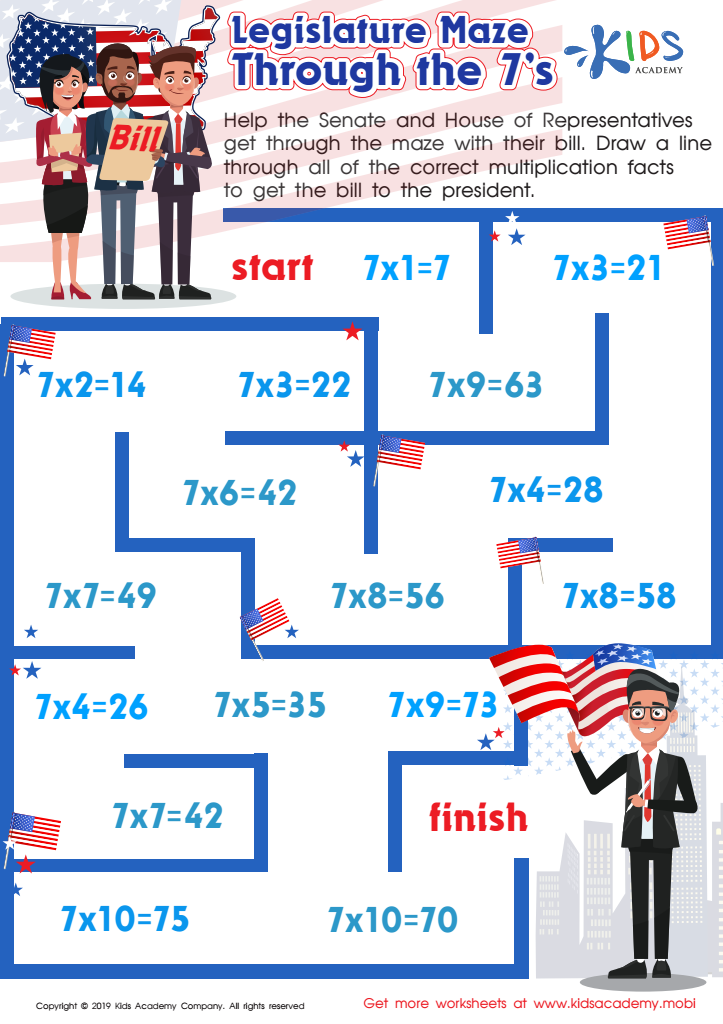
Legislature Maze Through the 7’s Worksheet
Students can review their math and social studies skills with this exciting worksheet. By drawing a line through only the correct multiplication facts in the 7x multiplication table maze, they can lead the members of Congress to the President to get the law signed and finish the puzzle.
Legislature Maze Through the 7’s Worksheet
Worksheet
Join Kids Academy for Free
Who is primarily going to use this learning content?


Problem-solving skills, normal governance, and civics are crucial components of a child's education, especially for those aged 6-9. At this formative stage, children develop habits, attitudes, and skills they will carry into adulthood.
Problem-Solving Skills: Fostering problem-solving abilities helps build critical thinking, resilience, and independence. These skills are essential for daily decision-making and adapting to new challenges. Encouraging creativity and persistence in finding solutions benefits not just academic performance but also personal growth.
Governance: Understanding structures like rules and authority helps children grasp the fundamentals of organizational functionality. Learning about governance teaches them the importance of fairness, leadership, and the common good. It promotes a sense of responsibility and participation, enabling them to comprehend how decisions impact their everyday lives.
Civics: Basic civics education fosters an early awareness of community, rights, and citizenship. Children learn about shared rules, civic duties, and empathy through acts like voting in mock elections or community participation. Such awareness encourages a more aligned and empathetic perspective towards others around them.
By embedding these subjects early, we lay the groundwork for informed, capable, and responsible future citizens who can navigate society effectively and contribute positively to their communities. Parents and teachers must invest time and effort to ensure these areas are comprehensively covered during this pivotal developmental stage.