Analytical thinking Normal History Worksheets for Ages 6-9
3 filtered results
-
From - To
Enhance your child's critical skills with our engaging Analytical Thinking History Worksheets, specifically designed for ages 6 to 9! These thoughtfully crafted activities encourage young learners to explore historical events and societies while developing essential analytical thinking abilities. Each worksheet features fun, age-appropriate exercises that promote skills such as comparison, interpretation, and problem-solving. By diving into history, children will gain a deeper understanding of the past and learn to evaluate information critically. Perfect for home schooling, remote learning, or supplemental practice, these worksheets will motivate kids to think independently and creatively, laying a solid foundation for their academic journey.
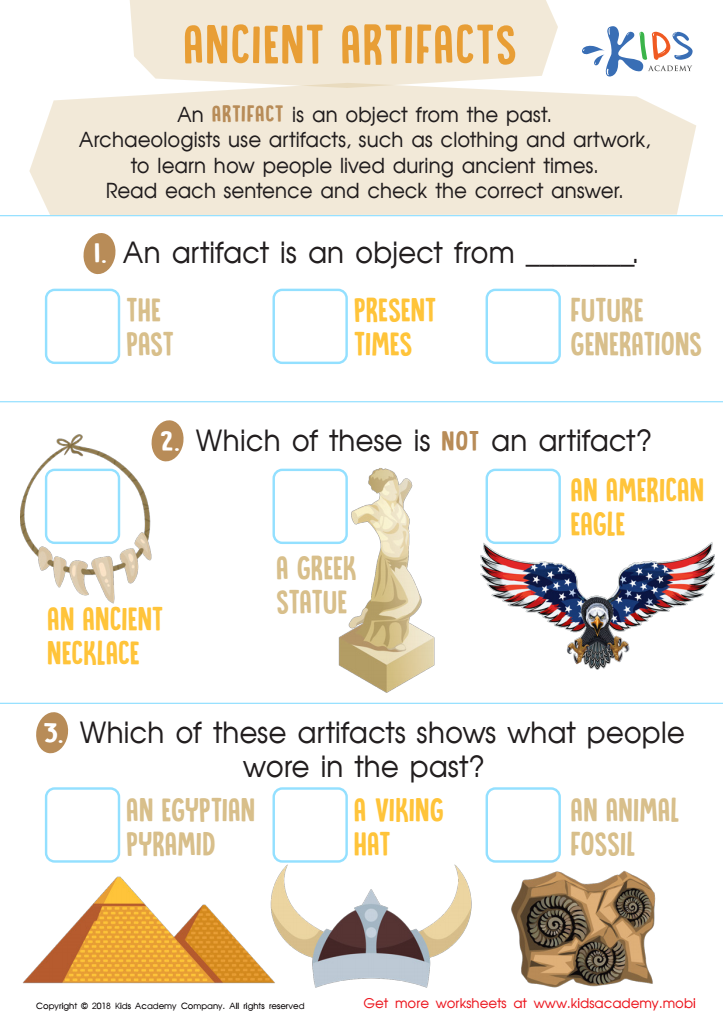
Ancient Artifacts Worksheet
 Assign to My Students
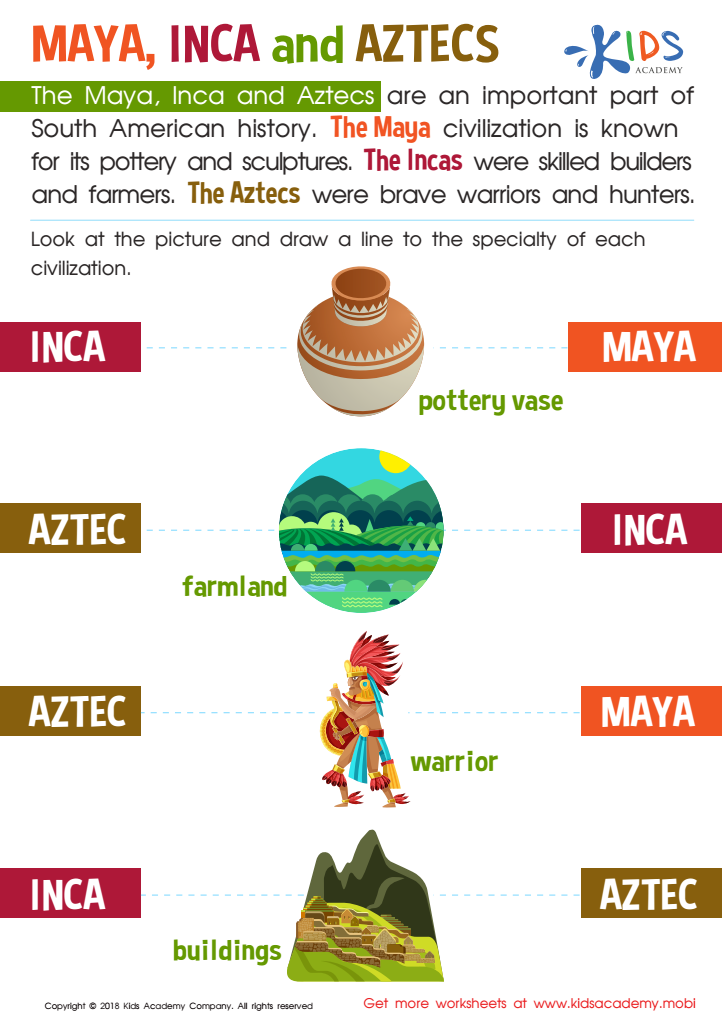
Maya, Inca and Aztecs Worksheet
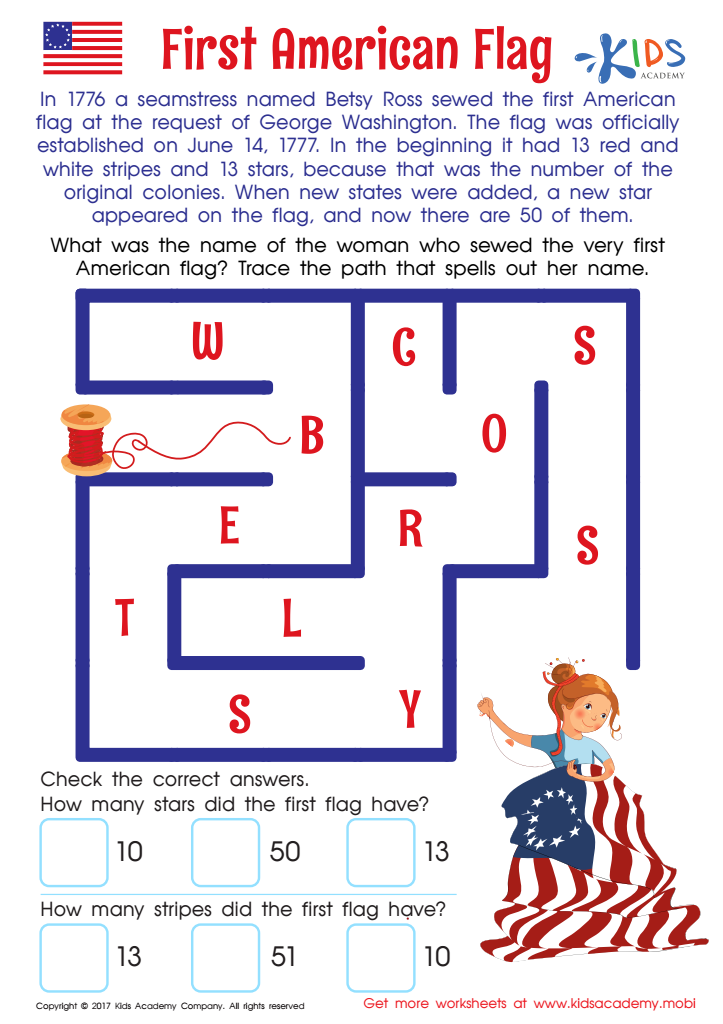
First American Flag Worksheet








Parents and teachers should care about Analytical Thinking Normal History for ages 6-9 because this developmental stage is critical for laying the foundation of children's cognitive skills. Analytical thinking allows children to evaluate information, spot patterns, and draw logical conclusions, which are essential skills for problem-solving in everyday life. By exploring concepts from history, children not only learn about the past but also engage in critical examination of events, causes, and effects.
Integrating historical context helps children to understand the complexities of human experience, promoting empathy and cultural awareness. Discussions around historical events can spark curiosity, encouraging children to ask questions and seek answers, which boosts their inquiry skills. Furthermore, teaching analytical thinking strategies—such as comparing and contrasting, evaluating sources, and recognizing biases—empowers children to think independently and become informed citizens.
Providing opportunities for kids to discuss, debate, and analyze historical narratives nurtures a mindset geared towards learning and reasoning. As they develop these analytical skills early on, they become better equipped to tackle academic challenges and real-world problems later in life, fostering lifelong learners who are well-prepared for the future.