Building vocabulary Normal Social Studies Worksheets for Ages 6-9
3 filtered results
-
From - To
Discover our engaging "Building Vocabulary Normal Social Studies Worksheets" designed specifically for children aged 6-9. These interactive worksheets harness the power of social studies to enhance vocabulary acquisition while making learning fun and enjoyable. Each worksheet promotes critical thinking through age-appropriate themes, including community, culture, and geography. With colorful illustrations and relatable scenarios, young learners will enthusiastically expand their word bank and strengthen language skills. Perfect for home or classroom use, our worksheets not only build vocabulary but also foster a love for social studies. Check out our collection today to enrich your child’s learning journey!
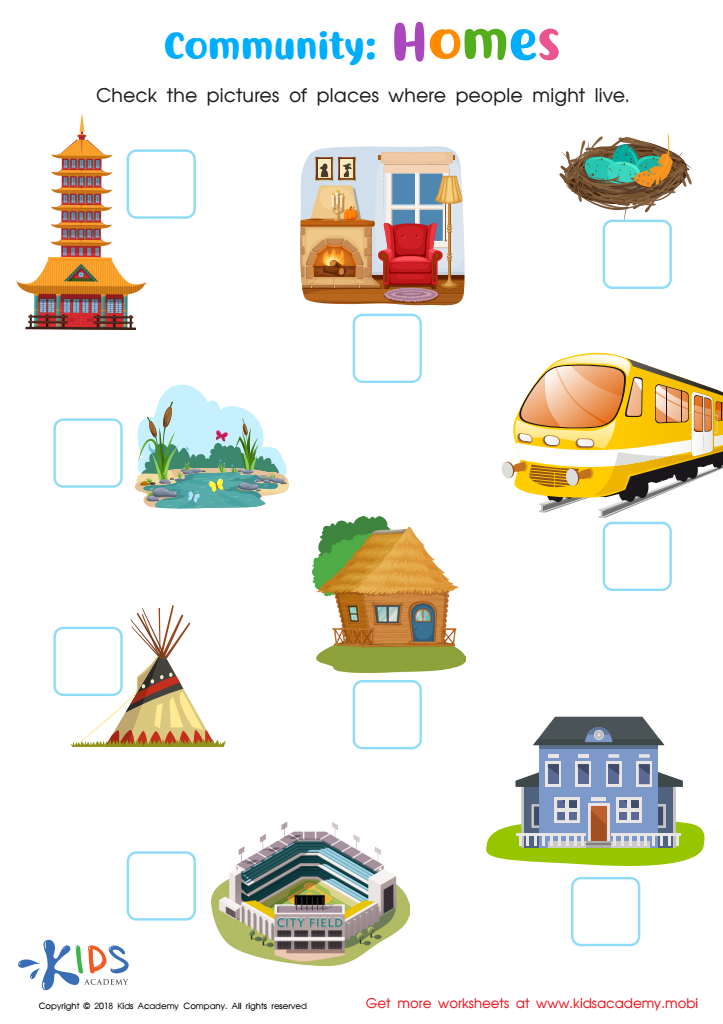
Community: Homes Worksheet
 Assign to My Students
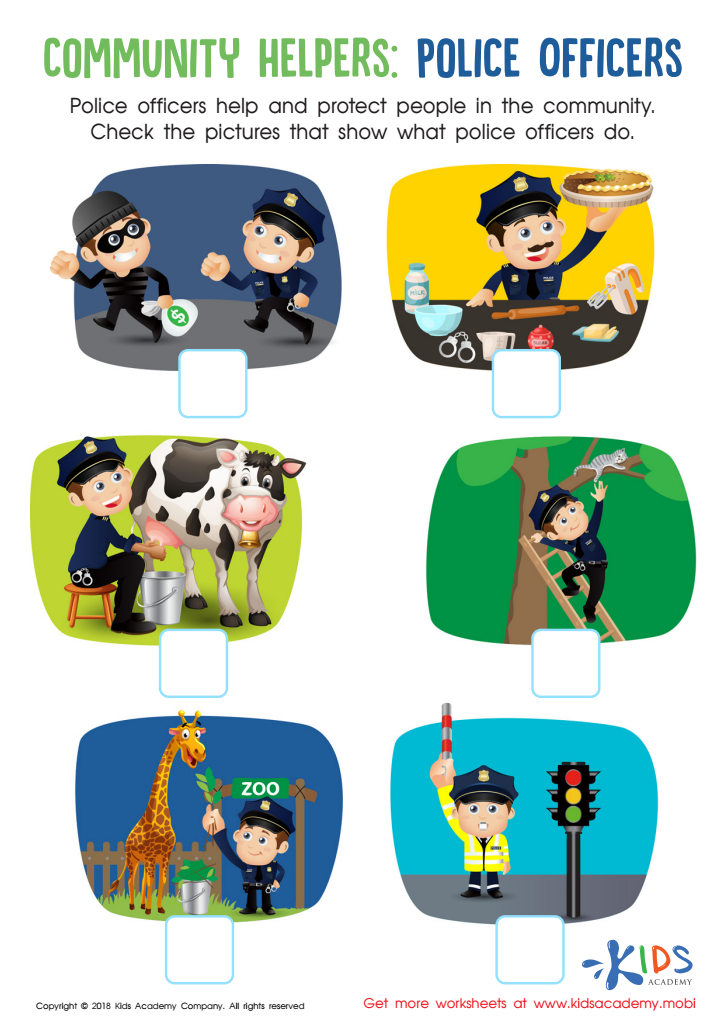
Police Officers Community Helpers Worksheet
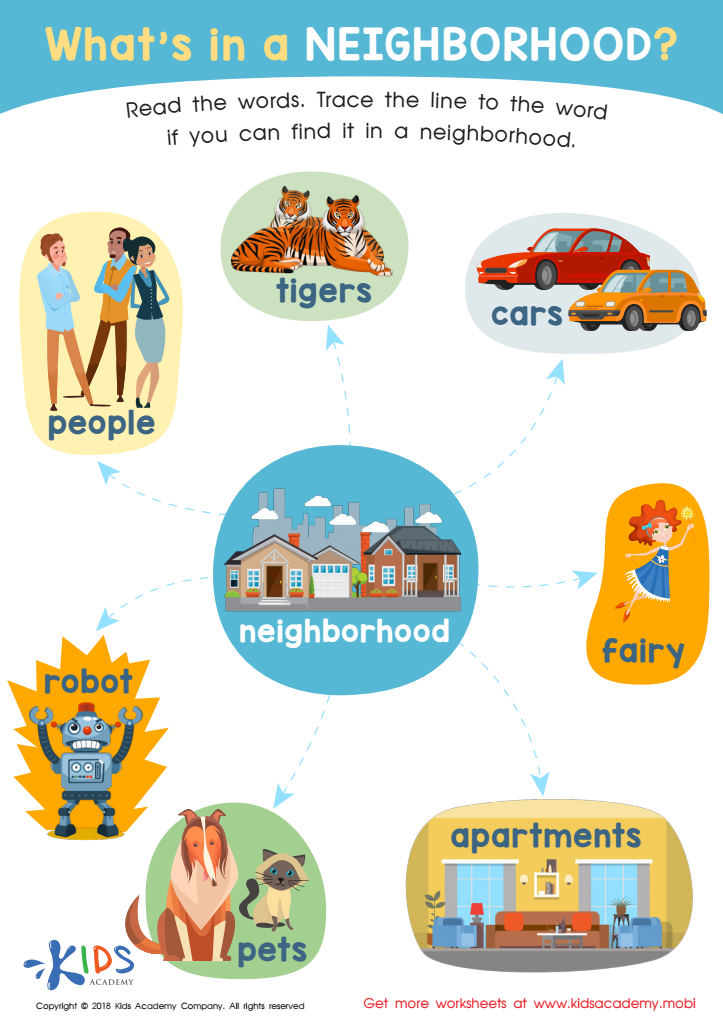
What's in a Neighborhood? Worksheet



.jpg)




Building vocabulary in Normal Social Studies for children ages 6-9 is essential for several reasons. Firstly, a rich vocabulary equips young learners with the language skills necessary to understand and engage with the world around them. Social studies introduces concepts related to society, culture, history, and geography, which often contain specialized terms and language. By enhancing vocabulary in this subject, children can better comprehend and express ideas, facilitating critical thinking and meaningful discussions.
Secondly, vocabulary development at this stage fosters effective communication. Children learn to articulate their thoughts clearly, share their perspectives, and engage with peers and adults on social studies topics. This sets the foundation for collaborative learning and active participation in civic life.
Moreover, a strong vocabulary enhances reading comprehension, crucial for their overall academic success. Many aspects of social studies rely on reading texts, recognizing terms, and interpreting charts or maps. If children build their vocabulary, they will likely find reading assignments more accessible, leading to increased confidence and enthusiasm for learning.
In summary, prioritizing vocabulary development in social studies not only enhances children's understanding of complex concepts, but also equips them with essential communication skills and improves their engagement in the broader world. Teachers and parents play a vital role in this developmental process.