Sentence comprehension Normal Grammar Worksheets for Ages 6-9
5 filtered results
Difficulty Level
Grade
Age
-
From - To
Subject
Activity
Standards
Explore our engaging "Sentence Comprehension Normal Grammar Worksheets" designed for children aged 6-9! Tailored to enhance reading and writing skills, these worksheets focus on building strong grammar foundations. Our resources provide fun exercises that help young learners decode sentences, identify parts of speech, and understand sentence structure through interactive activities. Perfect for reinforcing classroom learning or for home practice, these worksheets not only improve comprehension skills but also foster a love for language. Help your child master grammar concepts with our user-friendly worksheets, and watch their confidence blossom as they discover the joy of reading and writing! Visit us to get started today!
Favorites
With answer key
Interactive
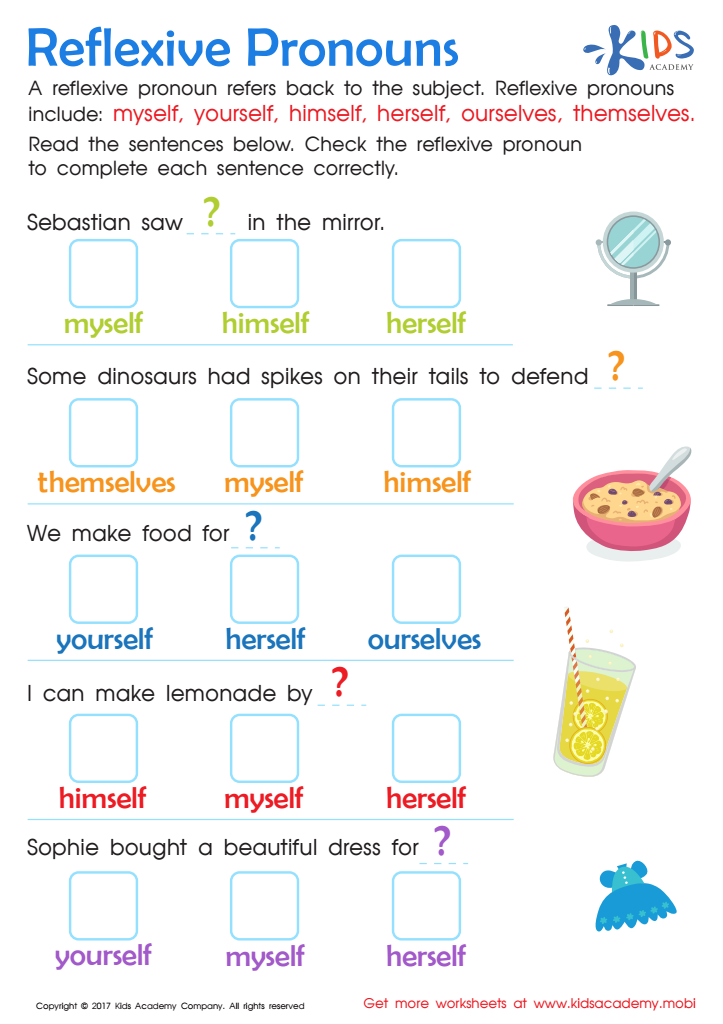
Reflexive Pronouns Worksheet
The 2nd grade reflexive pronouns worksheet by Kids Academy offers clear explanations and fun activities to help master reflexive pronouns.
Kids Academy's 2nd grade reflexive pronouns worksheet has everything you need to brush up on reflexive pronouns. It includes a brief explanation and fun activities with sentences and pictures to check your understanding. Master reflexive pronoun usage in no time!
 Assign to My Students
Reflexive Pronouns Worksheet
Worksheet
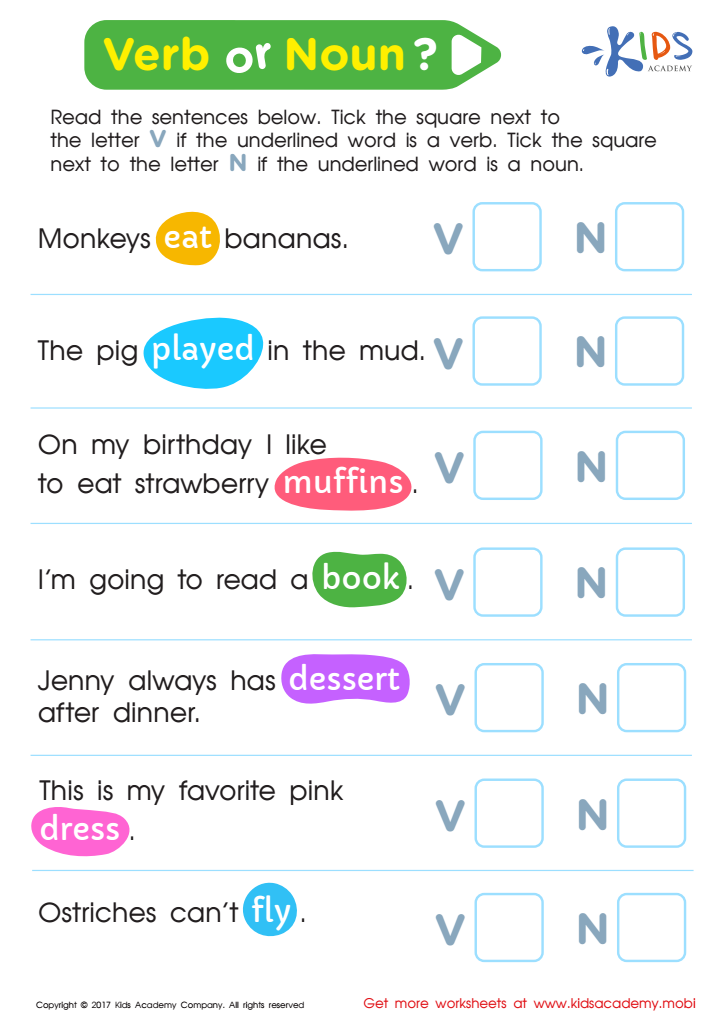
Verb or Noun Worksheet
This worksheet will help your child identify verbs and nouns quickly. With colorful highlights and simple sentences, they'll master parts of speech in no time! Get ahead of the game with this incredible worksheet.
Verb or Noun Worksheet
Worksheet
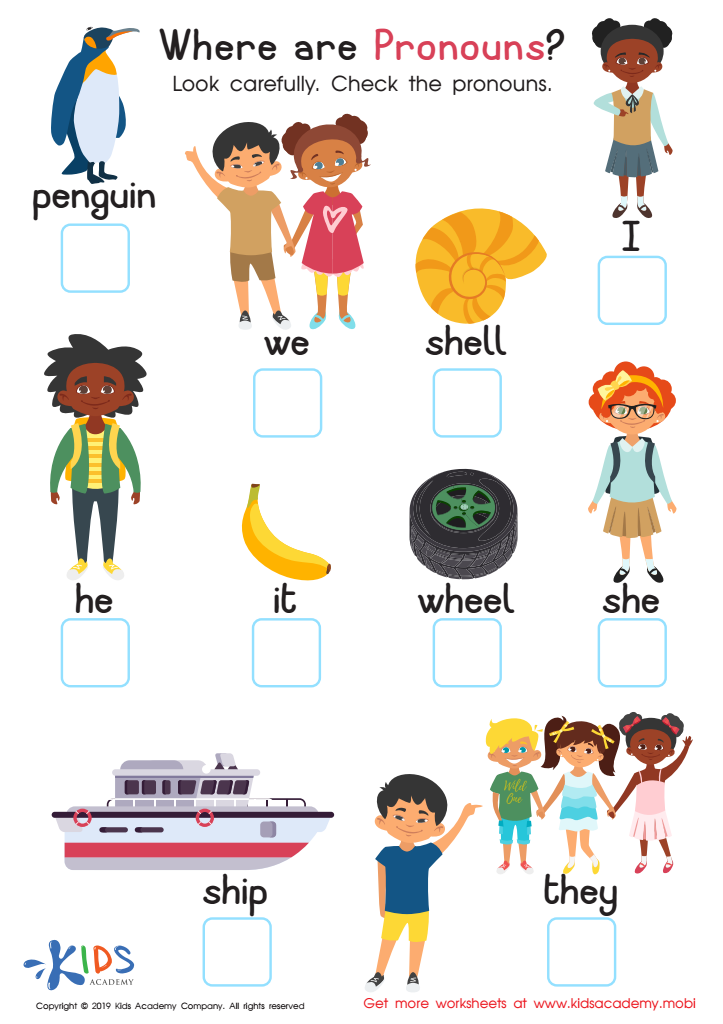
Where Are Pronouns? Worksheet
Pronouns make language flow, substituting "he" or "she" for names. Kids know and use them in their speech, but identifying pronouns in grammar helps build writing skills. This worksheet challenges kids to pick out pronouns from other nouns. Go through the worksheet, view the pictures and read the words. Ask kids to check boxes in front of pronouns to mark answers.
Where Are Pronouns? Worksheet
Worksheet
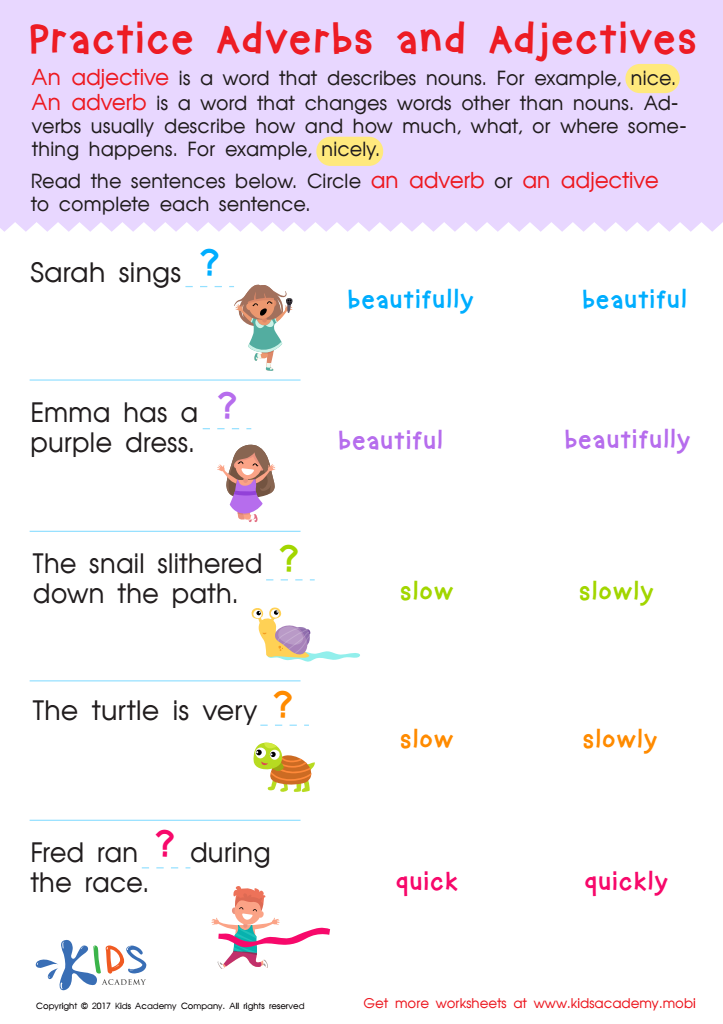
Adverbs and Adjectives Worksheet
Kids Academy's PDF worksheet on Adjectives and Adverbs explains how to use them and offers practice sentences. Children must circle the adjective or adverb to complete each sentence. Maximize their knowledge with this fun and informative exercise!
Adverbs and Adjectives Worksheet
Worksheet
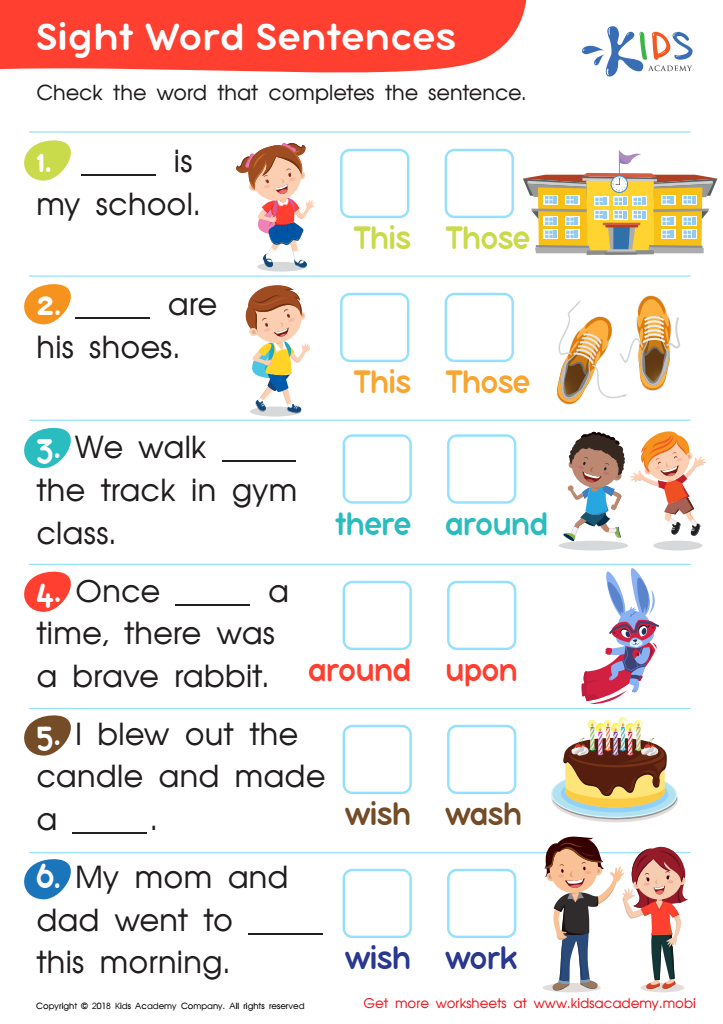
Sight Word Sentences Worksheet
Improve reading fluency! Have students fill in the blank with the correct sight word to complete sentences. Sight words are often tricky to decode - they don't follow phonics or spelling rules. To read smoothly, young learners must know them by memory. Use this printable and help kids master their sight words!
Sight Word Sentences Worksheet
Worksheet
Join Kids Academy for Free
Who is primarily going to use this learning content?



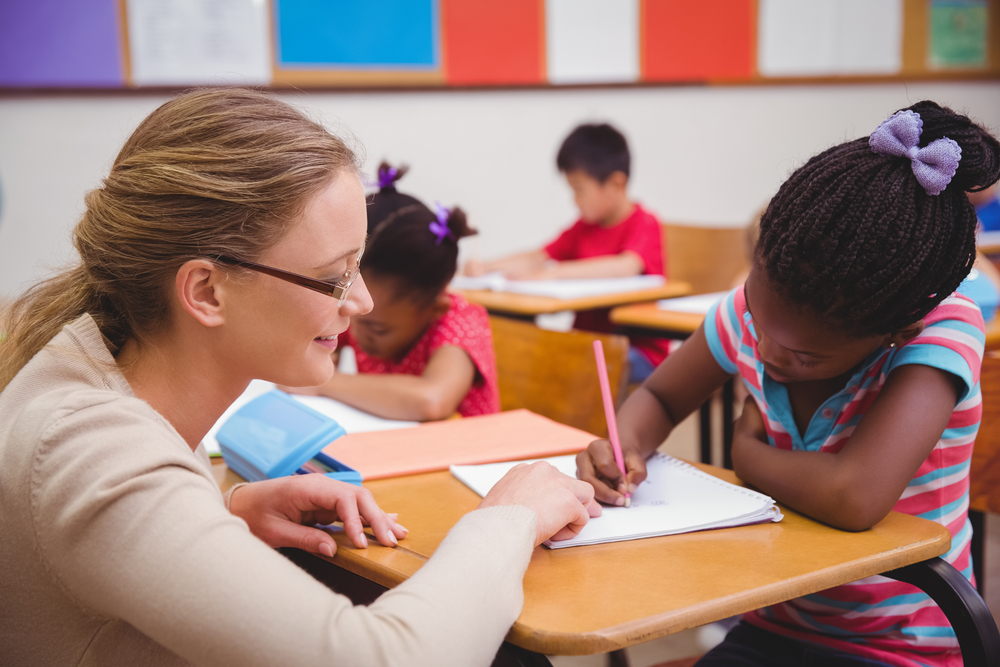

Sentence comprehension, particularly normal grammar, is crucial for children aged 6-9 as it lays the foundation for their overall language development and academic success. During these formative years, children expand their vocabulary and start to grasp complex concepts, making understanding grammar essential. Parents and teachers should care about this aspect of language development because children who struggle with sentence comprehension may face challenges in reading, writing, and even verbal communication, impacting their confidence and ability to express themselves effectively.
Additionally, a solid grasp of grammar supports critical thinking skills. When children understand how sentences are structured, they learn to decode meanings, infer ideas, and analyze the information presented to them. This understanding fosters better comprehension in subjects like math and science, which often require careful reading and interpretation of instructions.
Moreover, early exposure to good grammatical practices instills lifelong communication skills, which are invaluable in all areas of life. By prioritizing sentence comprehension, parents and teachers help ensure that children not only perform better academically but also develop the tools necessary for effective personal and social interactions. This holistic approach enhances overall learning and paves the way for children to thrive in future educational endeavors and beyond.