Syllable identification Normal Grammar Worksheets for Ages 6-9
5 filtered results
-
From - To
Empower young learners with our Syllable Identification Grammar Worksheets designed for ages 6-9. These engaging worksheets help children develop essential phonological awareness by breaking down words into syllables, improving reading fluency and comprehension. Perfect for classroom activities or at-home practice, our carefully crafted worksheets cater to various learning styles through interactive exercises and colorful visuals. By mastering syllable identification, kids will enhance their vocabulary, spelling, and overall language skills. Trusted by teachers and loved by students, our resources make learning fun and effective. Download today and lay a strong foundation for your child's literacy journey!
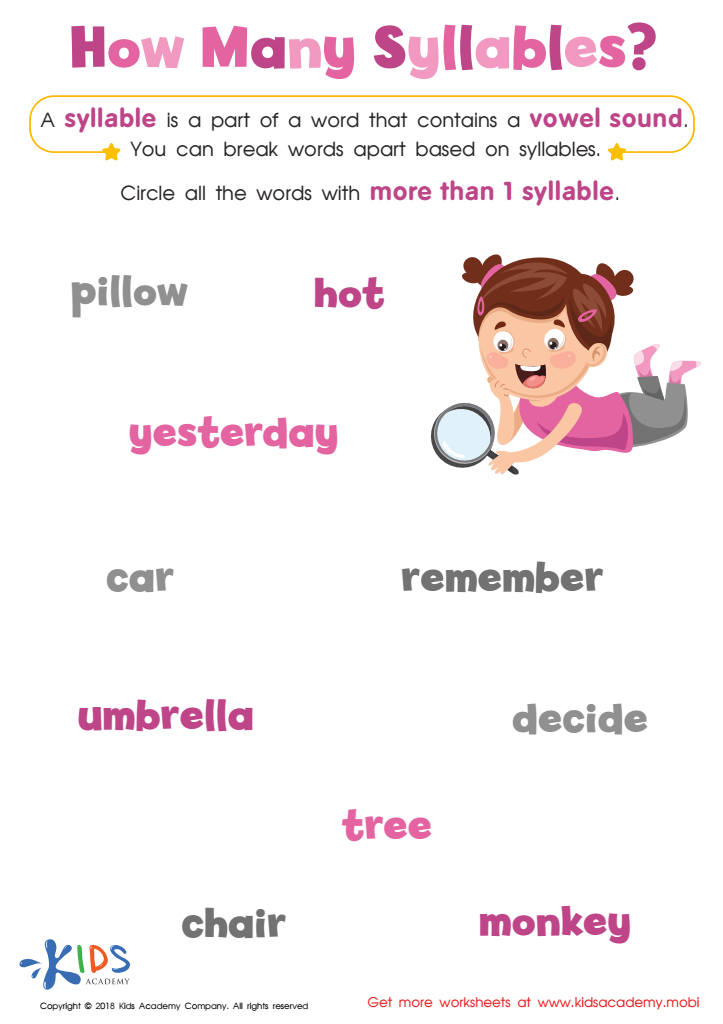
Reading: How Many Syllables Worksheet
 Assign to My Students
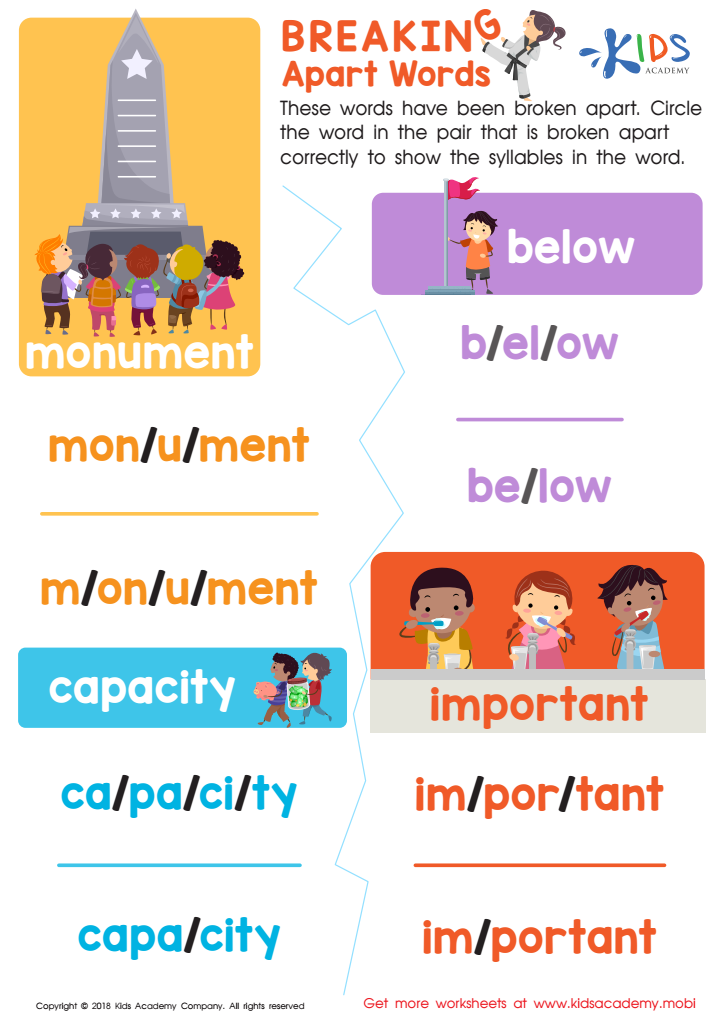
Breaking Apart Words Worksheet
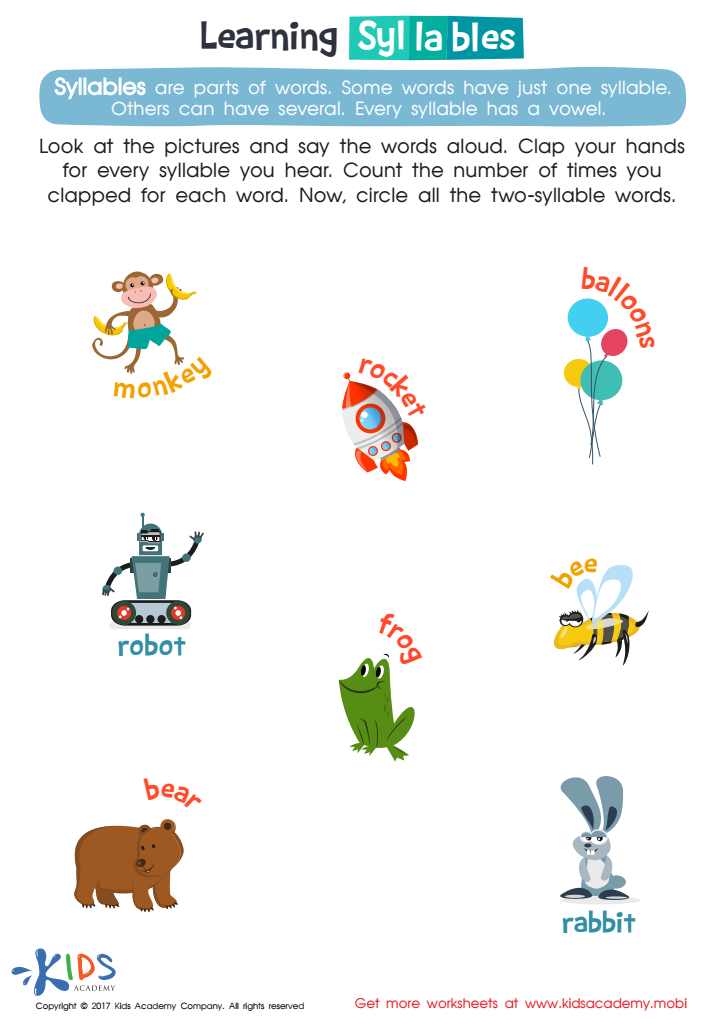
Learning Syllables Word Structure Worksheet
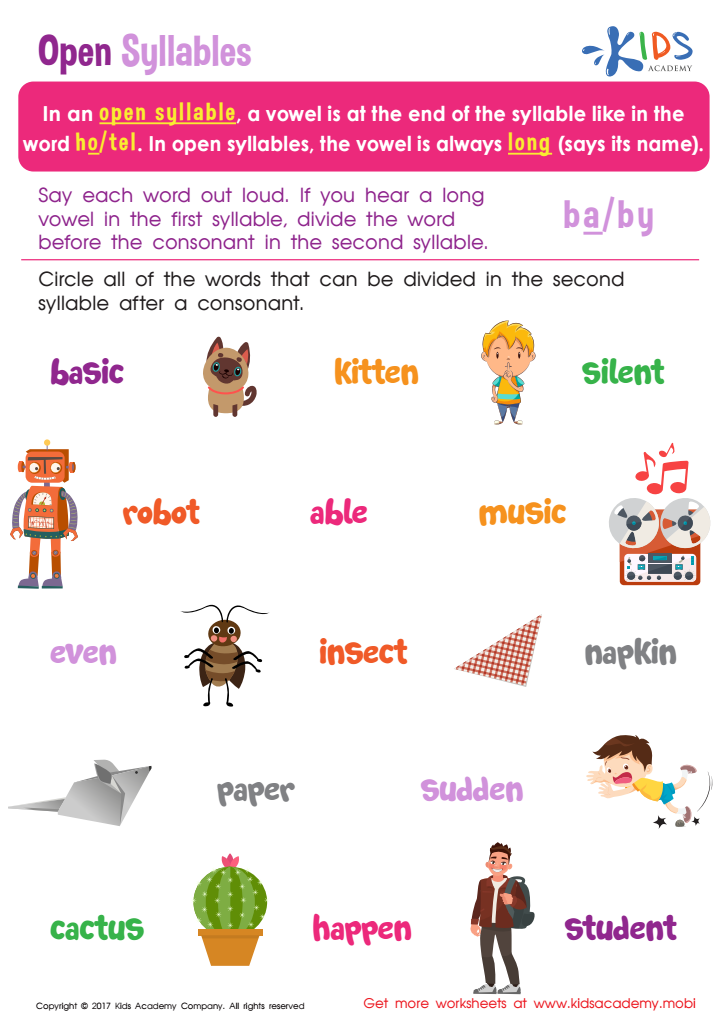
Open Syllable Printable Worksheet
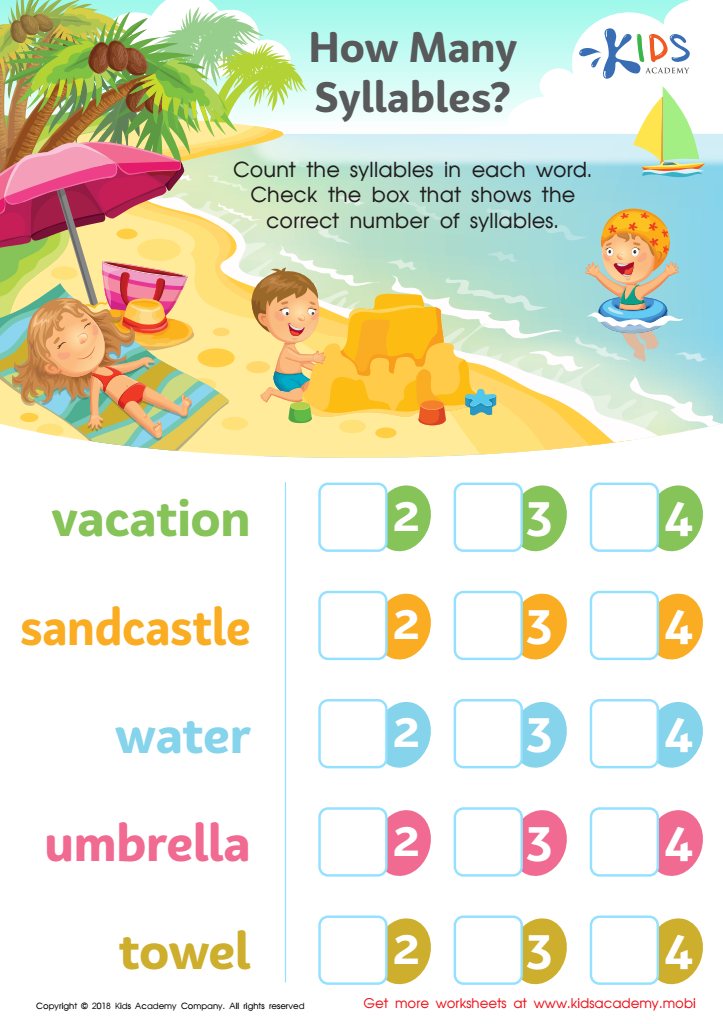
How Many Syllables Worksheet




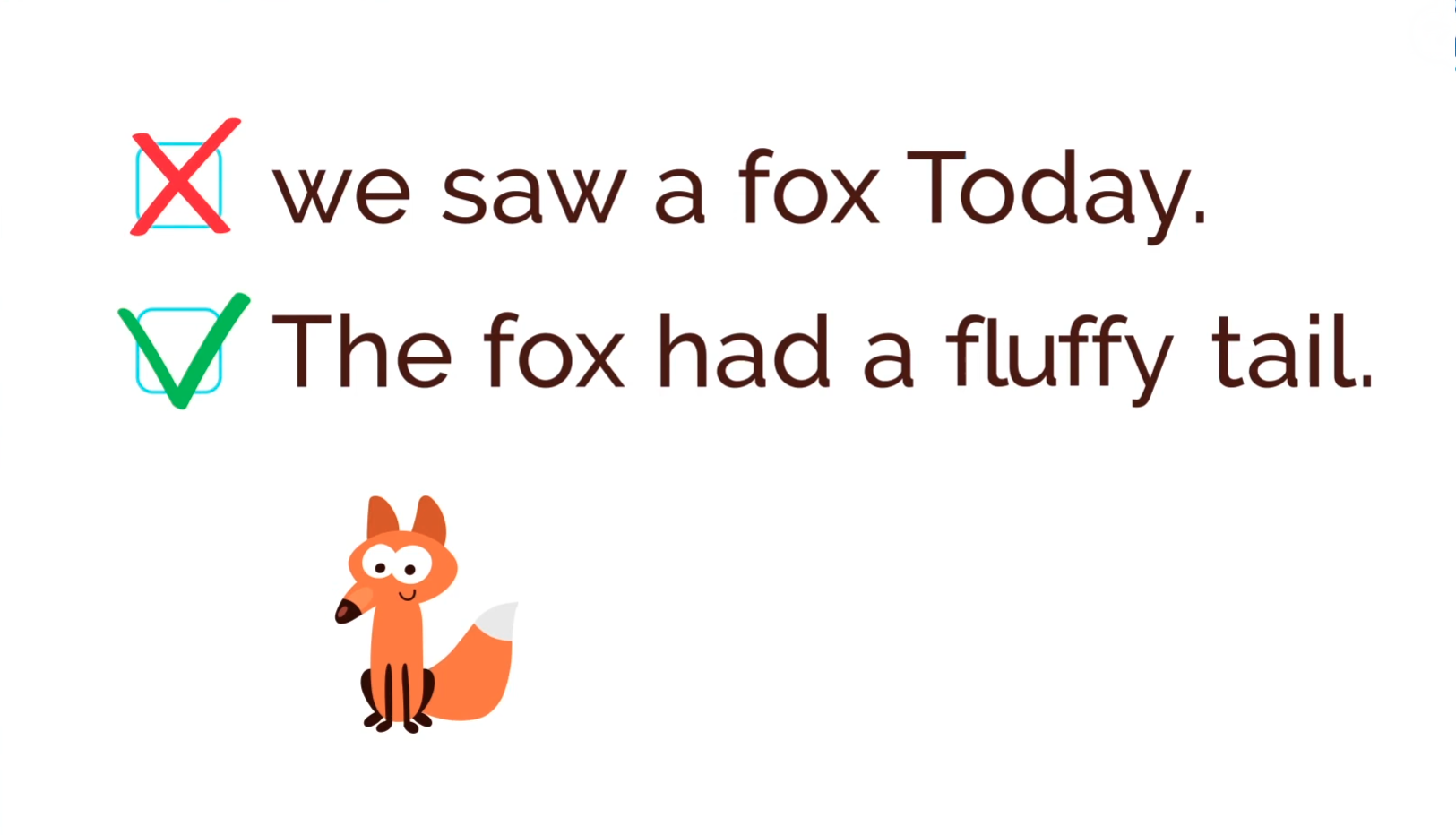



Syllable identification and normal grammar are foundational skills critical to effective language development for children aged 6-9. At this stage, children's brains are incredibly receptive to learning linguistic structures. Syllables are the building blocks of words, and understanding syllable segmentation helps children decode unfamiliar words while reading, enhancing their phonological awareness. This awareness is essential for improving both reading fluency and comprehension, as it enables children to recognize patterns in word formation and pronunciation.
Additionally, familiarity with normal grammar helps children construct sentences properly, conveying their thoughts and ideas clearly. An early grasp of grammar rules builds a strong foundation for advanced language skills, such as writing and oral communication. When children understand how words are organized and function within sentences, they can better express themselves, ask questions, and engage in more meaningful conversations.
Moreover, mastering these skills fosters confidence in young learners. Children who struggle with reading and grammar may become frustrated or disengaged. By ensuring they have strong syllable identification and grammatical knowledge, parents and teachers can provide the support necessary for academic success and a lifelong love of reading and learning. This investment in early literacy will benefit their cognitive development and overall educational journey.