Understanding adjectives Normal Grammar Worksheets for Ages 6-9
3 filtered results
-
From - To
Boost your child's grammar skills with our "Understanding Adjectives Normal Grammar Worksheets for Ages 6-9"! These engaging worksheets help young learners grasp the concept of adjectives, enhancing their descriptive writing and reading comprehension. Designed for kids aged 6-9, our fun and interactive resources make learning enjoyable, reinforcing key grammar lessons. Each worksheet includes colorful exercises, clear explanations, and practical examples to ensure your child masterfully incorporates adjectives into their vocabulary. With our expertly crafted worksheets, your child will develop the confidence and skills needed to excel in language arts. Unlock their potential today!
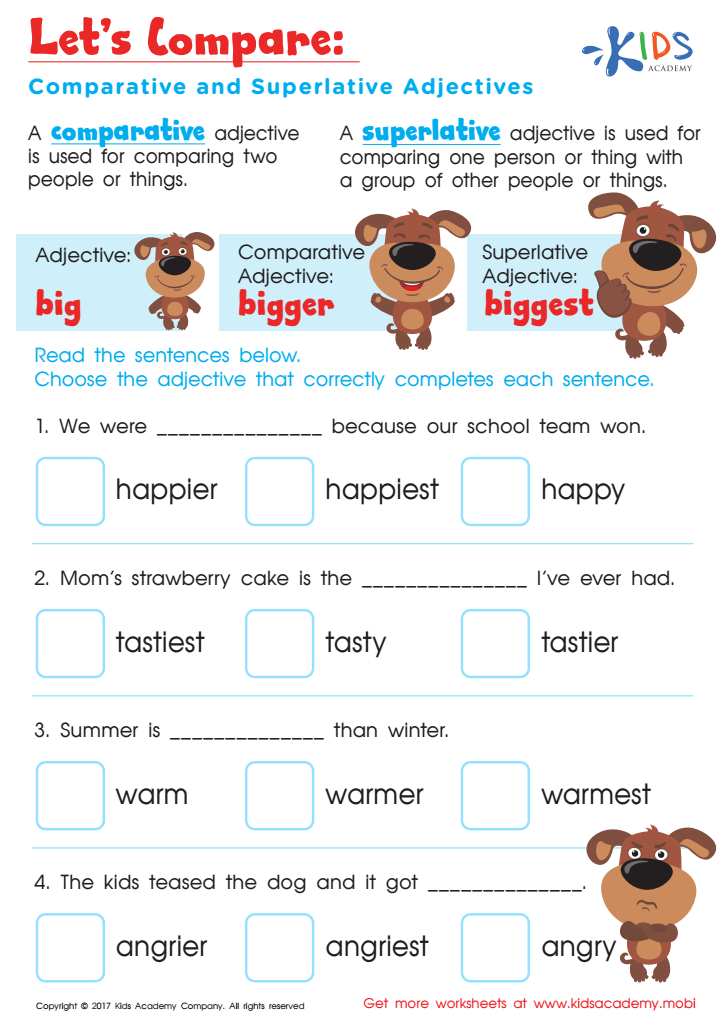
Comparative and Superlative Worksheet
 Assign to My Students
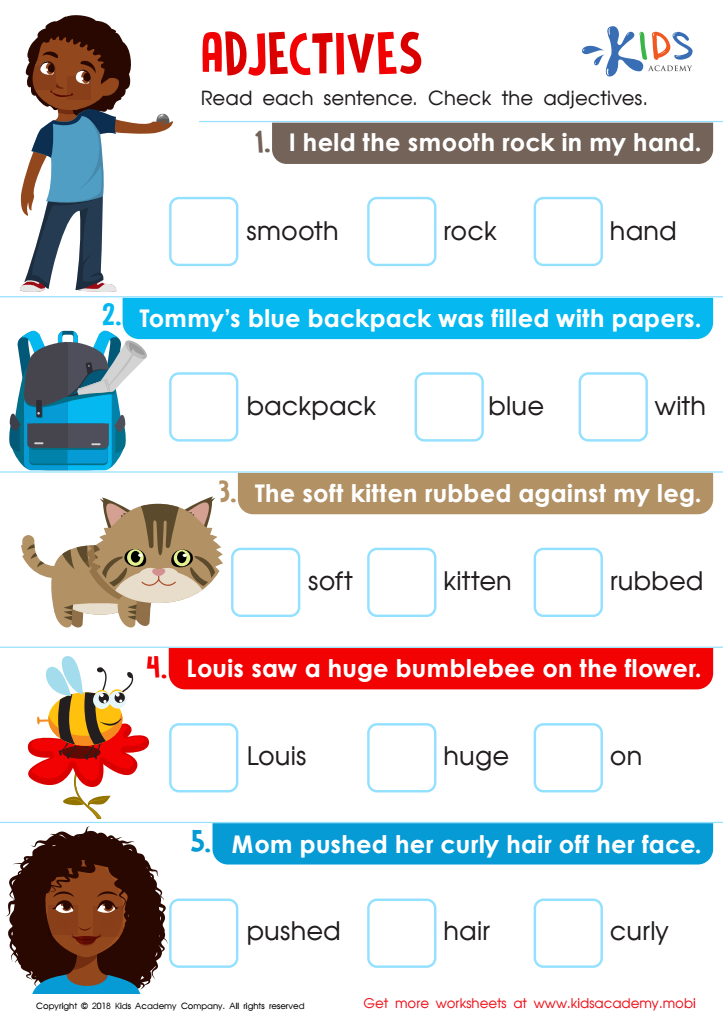
Adjectives Worksheet
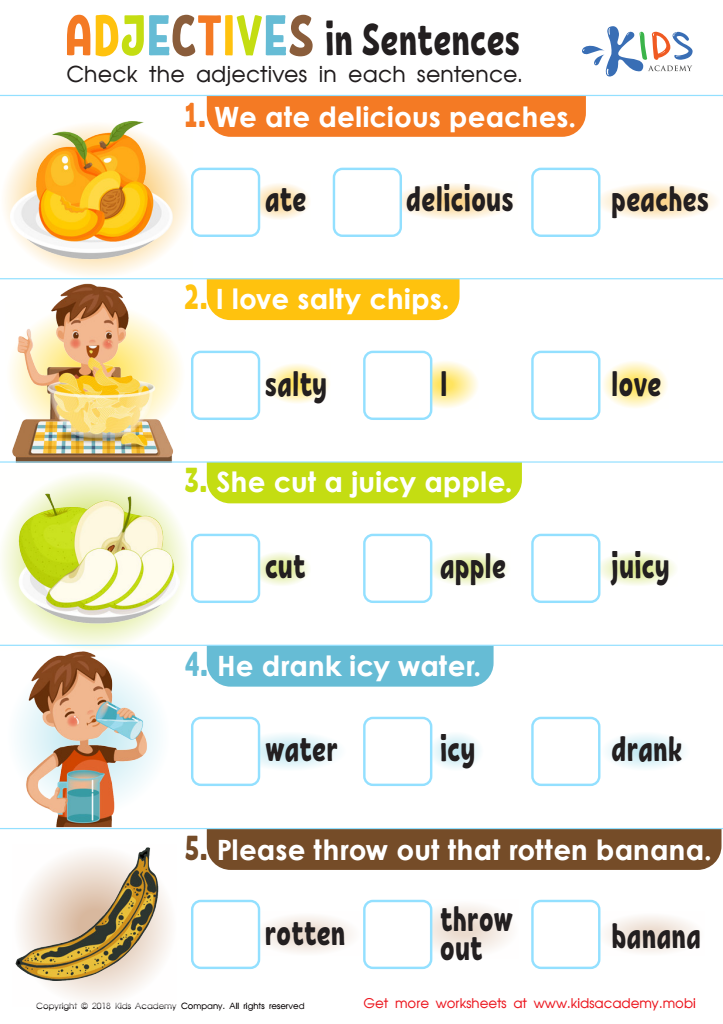
Adjectives in Sentences Worksheet







Understanding adjectives is crucial for children aged 6-9 because it significantly enhances their language and communication skills. Adjectives add detail and dimension to sentences, enabling children to communicate more clearly and expressively. For example, using adjectives allows them to describe objects, people, and experiences more vividly, transforming simple statements into detailed narratives.
For teachers, focusing on adjectives can enrich the language arts curriculum and promote a child's vocabulary development. Teachers can use engaging activities such as descriptive writing exercises, picture prompts, or interactive games to demonstrate the impact of adjectives in daily communication. This practice not only bolsters writing skills but also improves reading comprehension, as children learn to recognize and understand descriptive language in books and stories.
Parents can also play a pivotal role. By incorporating adjectives into everyday conversations and encouraging their use, parents can help children develop a love for expressive language. For instance, asking a child to describe their day, their favorite toy, or a family outing using adjectives can be a fun and educational exercise.
Ultimately, a strong grasp of adjectives enhances a child's ability to connect thoughts, convey emotions, and engage more deeply with the world around them, laying a foundation for effective communication and lifelong learning.