Vocabulary development Normal Grammar Worksheets for Ages 6-9
5 filtered results
Difficulty Level
Grade
Age
-
From - To
Subject
Activity
Standards
Welcome to our Vocabulary Development Normal Grammar Worksheets for Ages 6-9! Designed to enhance language skills in young learners, these engaging worksheets help children expand their vocabulary and understand essential grammar concepts. Each activity encourages creativity and reinforces the proper use of words in context, making learning fun and effective. Our carefully crafted exercises support early literacy and boost confidence in writing. Perfect for classrooms or at-home practice, these worksheets align with educational standards to foster a love for language. Explore our collection and watch your child flourish as they master vocabulary and grammar with ease!
Favorites
With answer key
Interactive
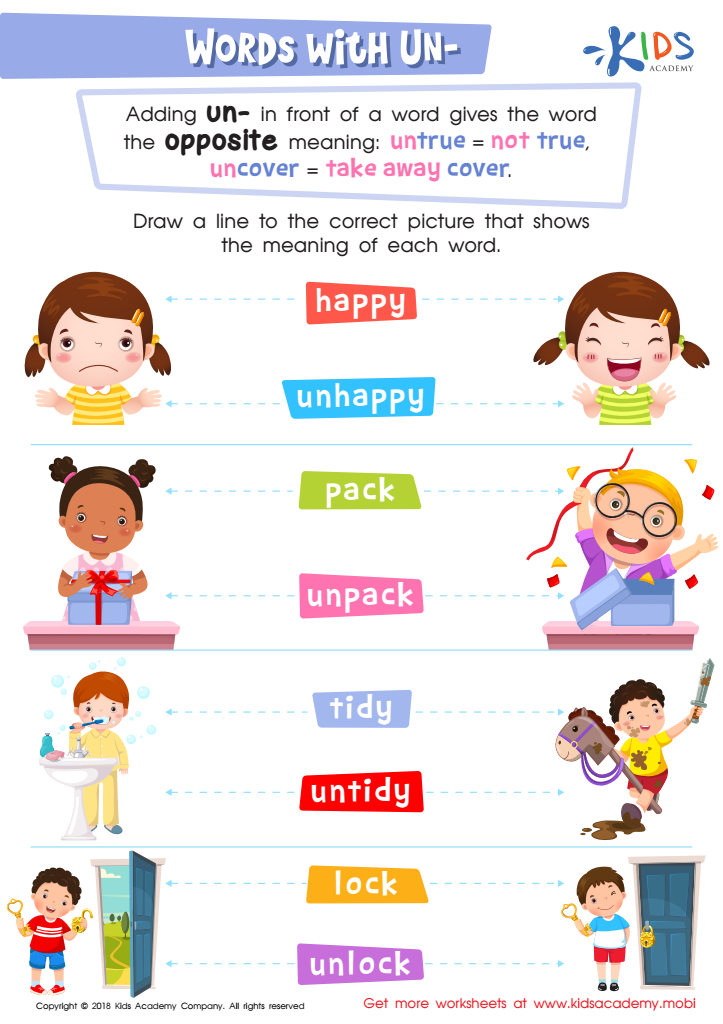
Words with Un– Worksheet
Prefixes can change the meaning of words. Adding "Un-" can give the opposite meaning, like Un-true, Un-happy, and Un-finish. Help your child learn with this worksheet. Draw a line to the picture that shows each word's meaning.
 Assign to My Students
Words with Un– Worksheet
Worksheet
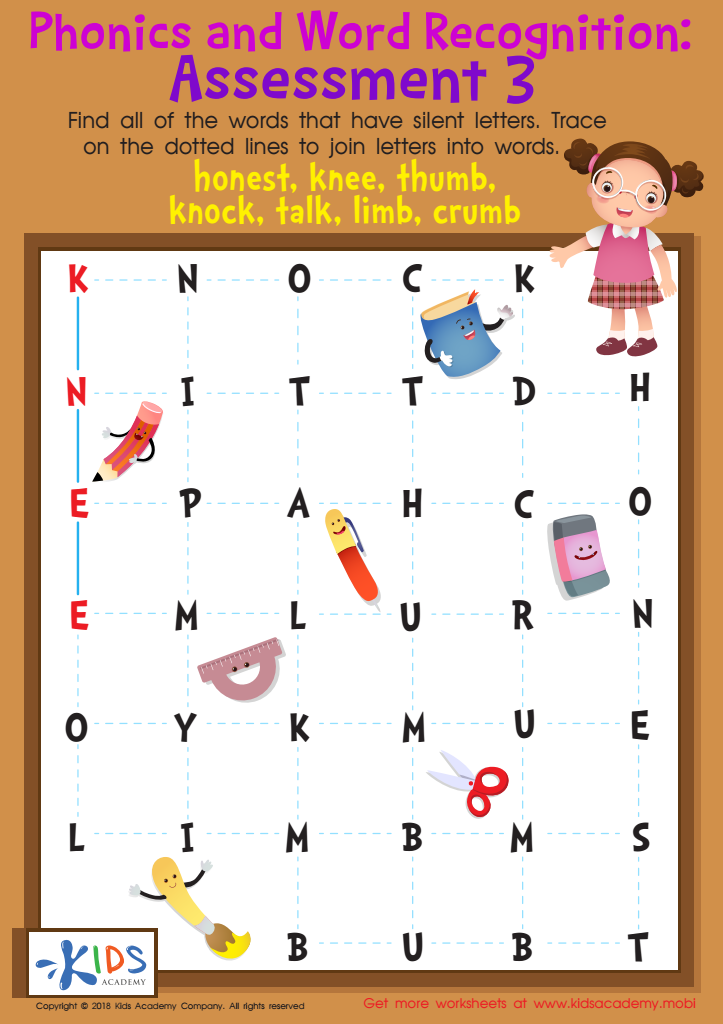
Phonics and Word Recognition: Assessment 3 Worksheet
Silent letters can be tricky for kids learning to read and write. Show them how they work with words like 'knee' and 'dumb'. Then, challenge them to come up with their own. Give them a worksheet with silent letters and trace the lines to join the letters into words.
Phonics and Word Recognition: Assessment 3 Worksheet
Worksheet
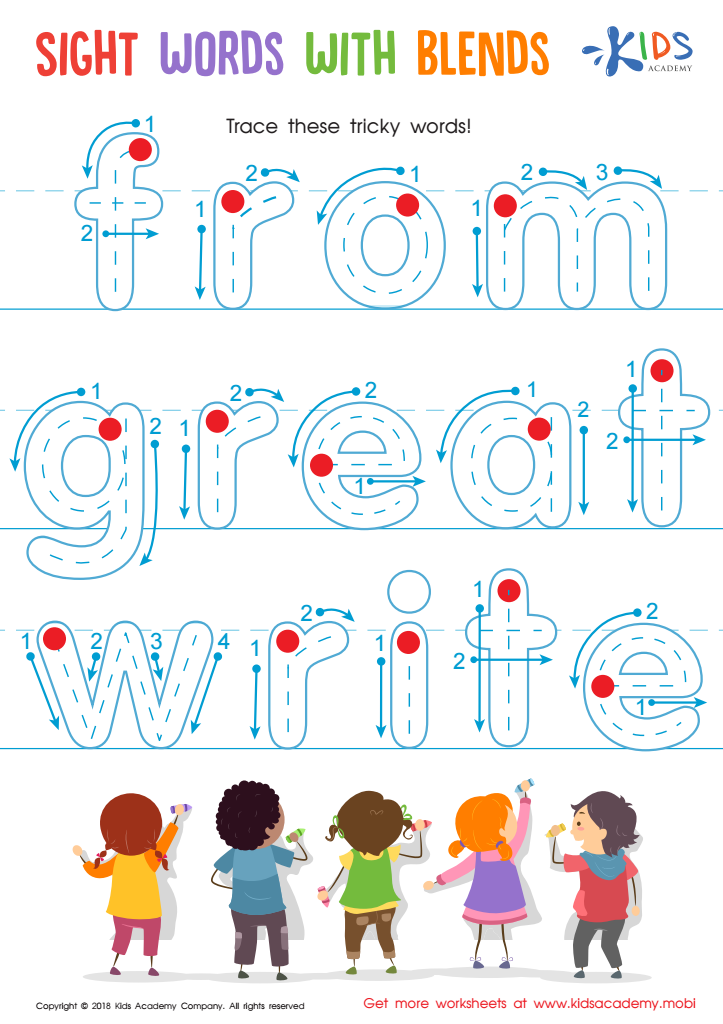
Sight Words with Blends Worksheet
This free PDF lets your children trace and write sight words with tricky blends. The guide numbers help them start from the top, building fine motor skills and enhancing sight word vocab. It's a great way to give your kids a solid foundation for reading!
Sight Words with Blends Worksheet
Worksheet
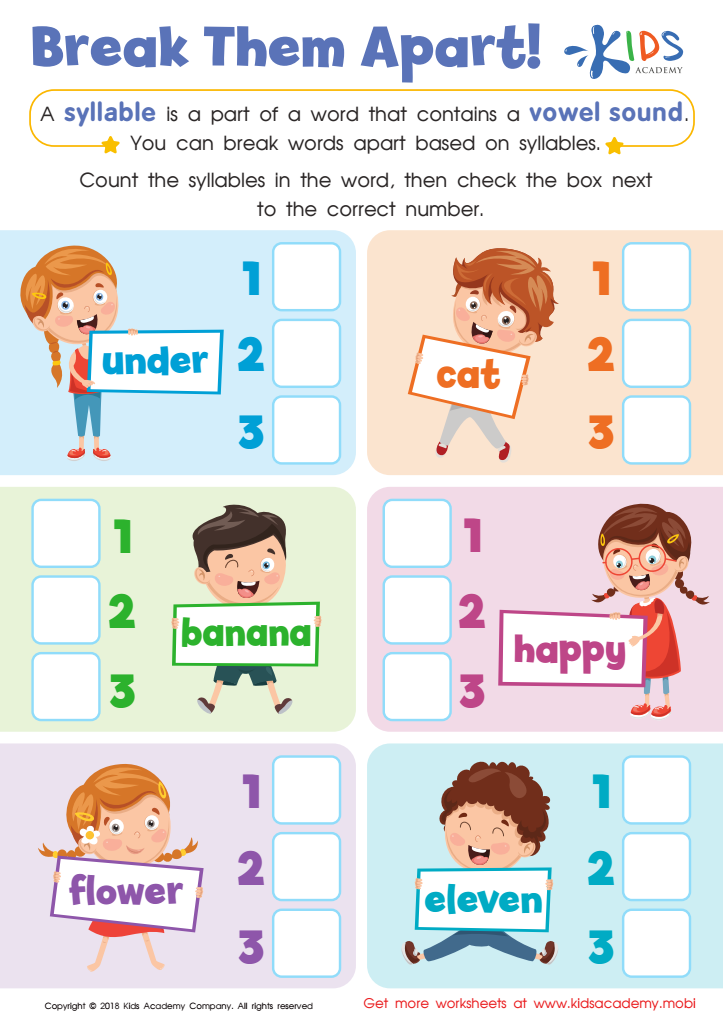
Reading: Break Them Apart Worksheet
See if students understand syllables with this fun worksheet. It teaches them that a syllable is a word part with a vowel sound. Kids read each word and choose how many parts it has. Doing this often helps them decode new words and gain confidence.
Reading: Break Them Apart Worksheet
Worksheet
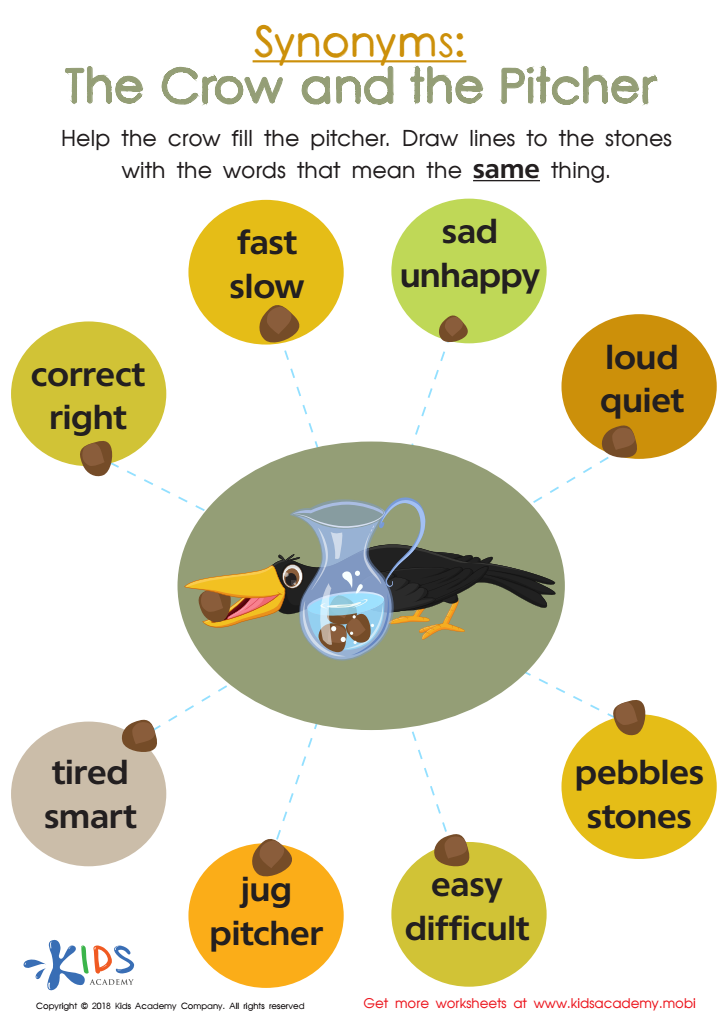
The Crow and the Pitcher Synonyms Worksheet
Give your child the building blocks for effective communication with an ELA lesson! Help the crow in this Kids Academy worksheet find the correct stones to fill the pitcher - only those next to synonym pairs! This is a fun way for kids to learn and expand their vocabulary and language skills.
The Crow and the Pitcher Synonyms Worksheet
Worksheet
Join Kids Academy for Free
Who is primarily going to use this learning content?








Parents and teachers should prioritize vocabulary development in children aged 6-9 because it is fundamental to their overall communication skills and academic success. At this age, children are rapidly expanding their understanding of language and how to express themselves effectively. A rich vocabulary enhances reading comprehension, enabling children to grasp the meaning of texts and engage more meaningfully with stories and information.
Moreover, vocabulary development supports social interactions. A strong vocabulary allows children to articulate their thoughts, feelings, and ideas clearly, fostering better relationships with peers and adults. This enhances their confidence and participation in discussions, helping them develop critical thinking skills.
Furthermore, vocabulary development is closely linked to other areas of learning, including writing, where the ability to choose the right words contributes to creating more vivid and engaging narratives.
Given that children often learn through play and exploration, integrating vocabulary-building activities into daily routines can be both enjoyable and beneficial. Whether through reading books together, engaging in conversations, or playing word games, parents and teachers can create an enriching environment that nurtures a love for language, ensuring that children are well-equipped for future educational endeavors. In this way, vocabulary development lays a strong foundation for lifelong learning.