
Alphabet familiarity Normal Alphabet Worksheets for 6-Year-Olds
7 filtered results
Difficulty Level
Grade
Age
-
From - To
Subject
Activity
Standards
Explore our engaging Alphabet Familiarity worksheets specifically designed for 6-year-olds! These interactive Normal Alphabet Worksheets help young learners develop a solid understanding of letters, improving their recognition and phonetic skills. Each worksheet features colorful illustrations and fun activities that not only reinforce letter knowledge but also spark creativity and enthusiasm for learning. Perfect for early education at home or in the classroom, our worksheets provide essential practice in letter tracing, matching, and identifying. Give your child a head start in reading and writing with these delightful, printable resources designed to foster a love for the alphabet and enhance their learning experience!
Favorites
With answer key
Interactive
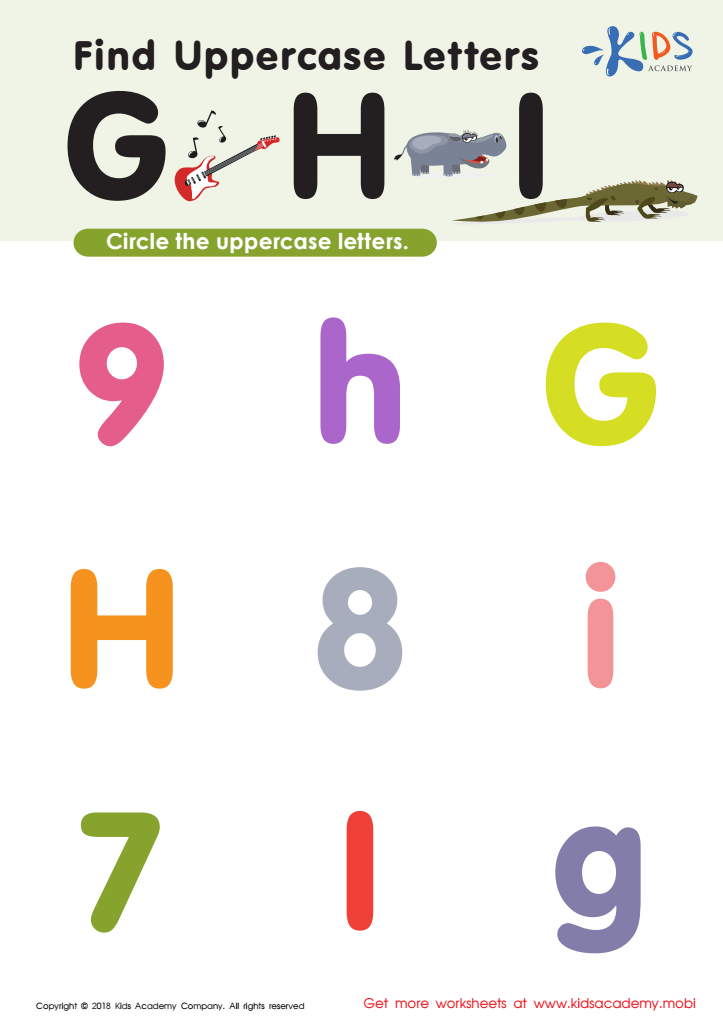
Find Uppercase Letters G, H, and I Worksheet
Find G, H, and I in uppercase with this downloadable worksheet! Numbers are included to challenge your kindergartener's letter recognition skills. Plus, practice G, H, and I sounds using the cute graphics. Perfect for learning letter case recognition!
 Assign to My Students
Find Uppercase Letters G, H, and I Worksheet
Worksheet
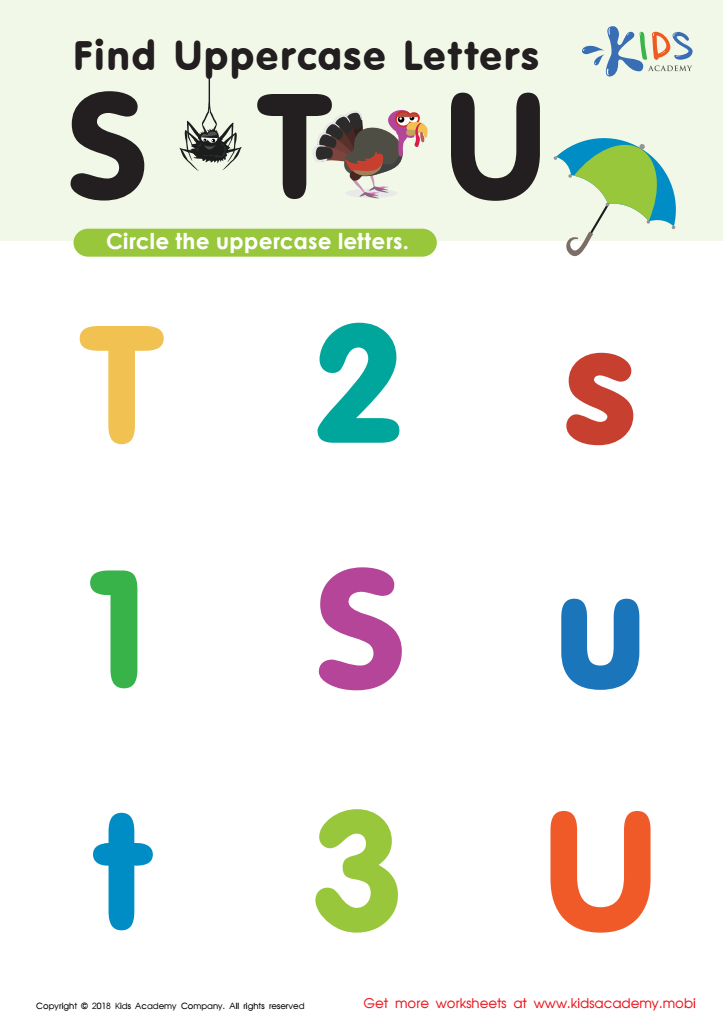
Find Uppercase Letters Worksheet
What level is your kid at now? Can they tell the difference between small and uppercase letters? Ask them to name words beginning with S, T and U, then help them find and circle the uppercase letters S, T and U in a mix of small letters, numbers and uppercase letters.
Find Uppercase Letters Worksheet
Worksheet
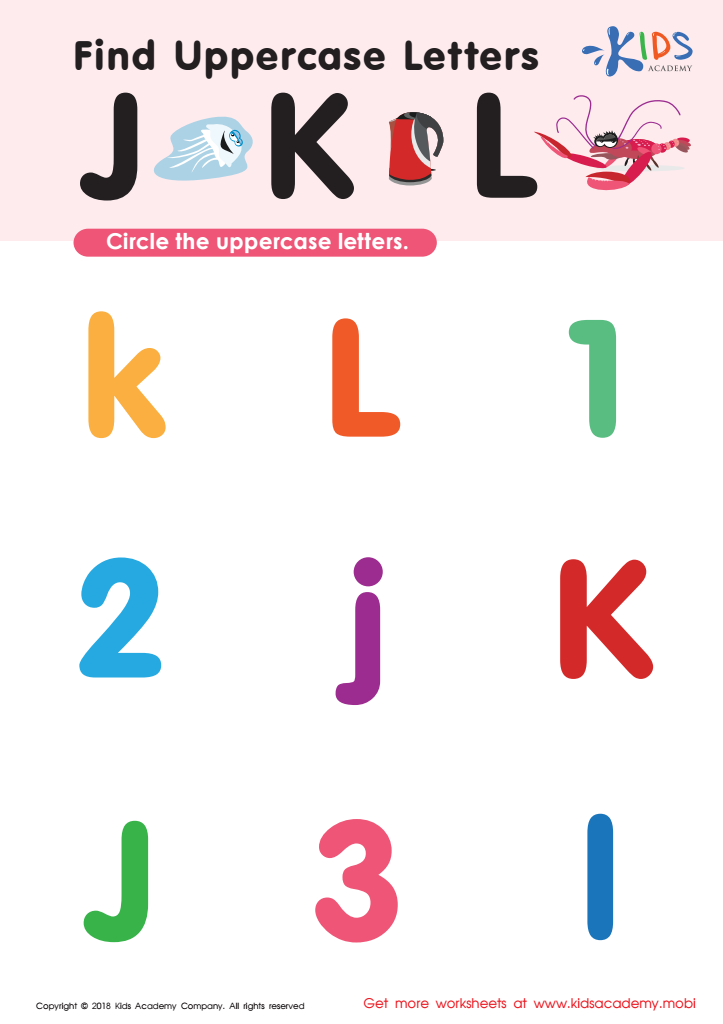
Find Uppercase Letters J, K, and L Worksheet
Search for the uppercase letters J, K, and L in this fun worksheet! Help your child identify the starting sound of each picture, then look for the letters. Keep an eye out for numbers that look like letters. Swim with the jellyfish and solve this delightful puzzle!
Find Uppercase Letters J, K, and L Worksheet
Worksheet
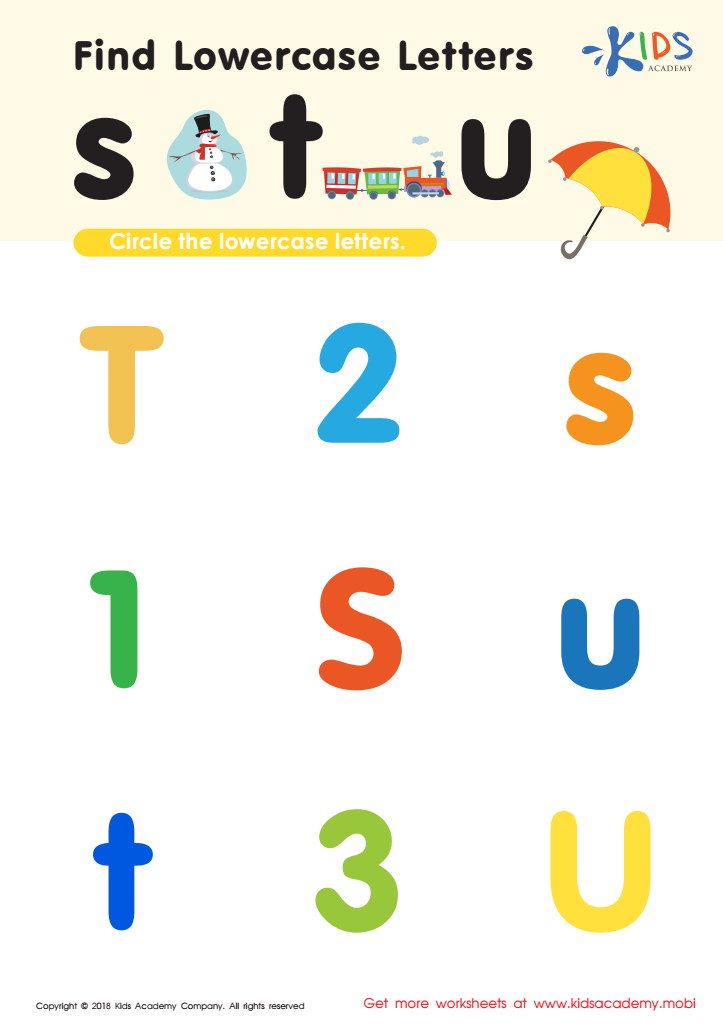
Find lowercase Letters s t u Worksheet
Puzzles are great for boosting your child's thinking skills. Can they identify lowercase letters s, t and u? This free printout contains the letters mixed in with uppercase letters and numbers, all presented in a fun, colorful format - sure to keep them entertained as they learn!
Find lowercase Letters s t u Worksheet
Worksheet
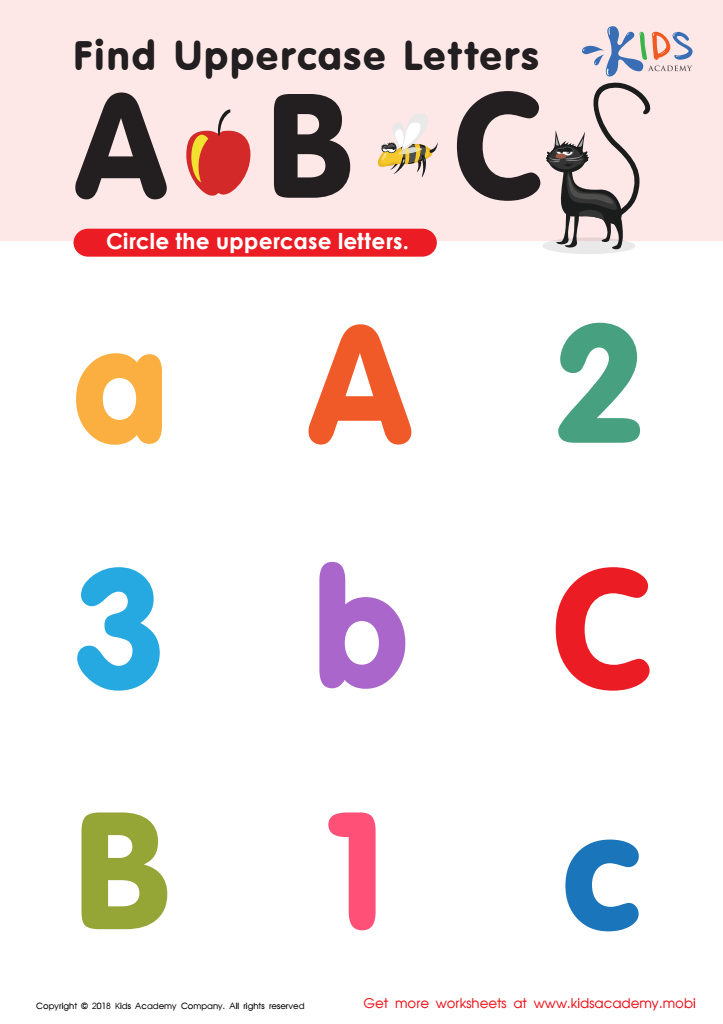
Find Uppercase Letters A, B, and C Worksheet
Check out this PDF worksheet and spot all the capital letters! Arranged as a puzzle, this exercise will test little learners to read and recognize uppercase letters and tell the difference between letters and numbers. To help them, use the pictures on top of the page to practice the sounds A, B and C make! 80 words.
Find Uppercase Letters A, B, and C Worksheet
Worksheet
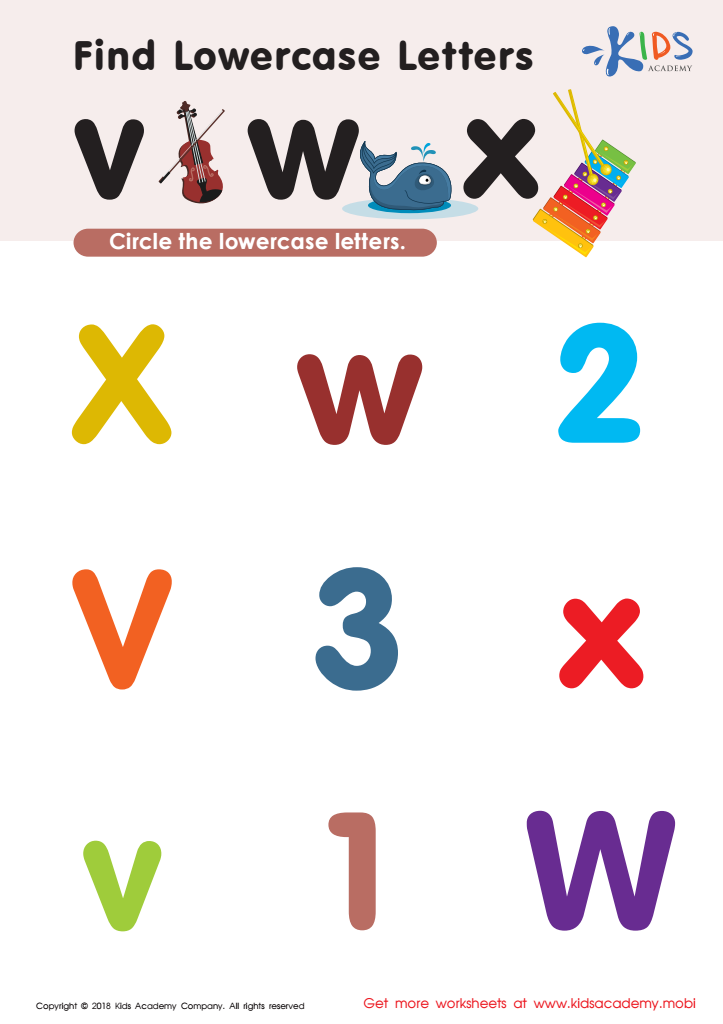
Find Lowercase Letters v w x Worksheet
If your child doesn't know the alphabet, get them this helpful worksheet. It's an easy exercise to build their understanding of the alphabet and lowercase letters. Find the letters v, w, and x among other uppercase letters and numbers in the downloadable PDF.
Find Lowercase Letters v w x Worksheet
Worksheet
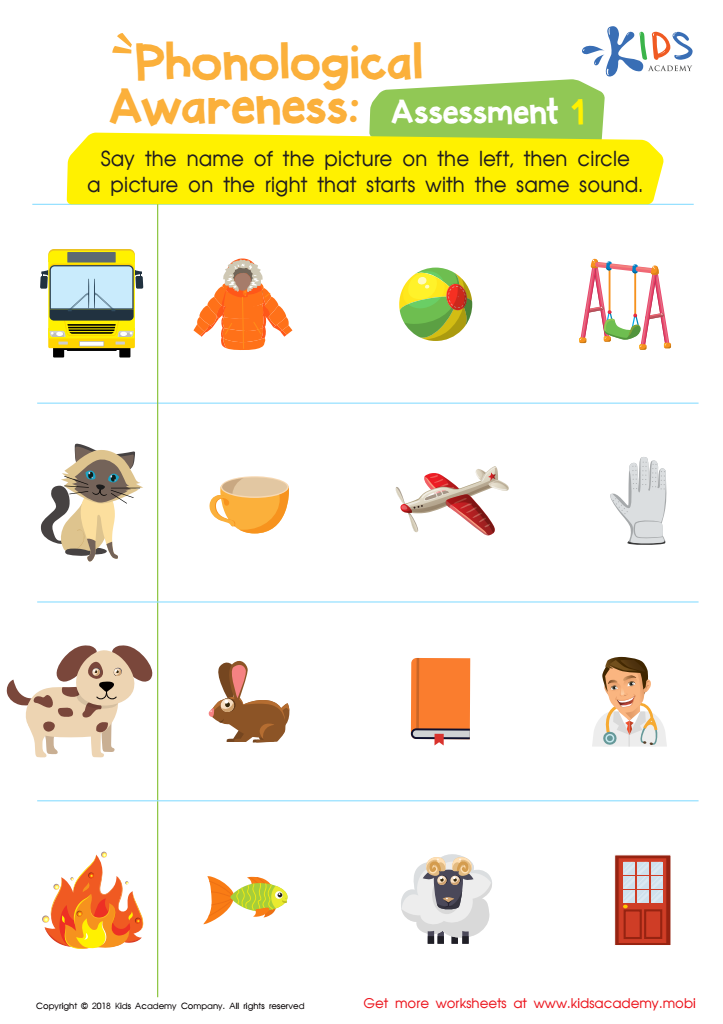
Phonological Awareness: Assessment 1 Worksheet
This worksheet helps kids build key phonics skills for pre-reading. They say each picture name aloud, focusing on the starting sound. Then, they match the sound with an image in the same row. Use as a checkpoint for kindergarten or grade 1 phonics readiness.
Phonological Awareness: Assessment 1 Worksheet
Worksheet
Join Kids Academy for Free
Who is primarily going to use this learning content?







Alphabet familiarity is critical for 6-year-olds as it serves as the foundation for literacy and communication skills. At this age, children are transitioning from recognizing letters to understanding their sounds and using them to form words. This knowledge promotes confidence in reading and writing, essential skills for academic success.
Understanding the alphabet not only enhances reading proficiency but also aids in cognitive development. It encourages pattern recognition, improves memory, and cultivates critical thinking as children learn to decode words and sentences. Moreover, familiarizing children with both uppercase and lowercase letters is essential for developing writing skills that are clear and legible.
For parents and teachers, fostering alphabet familiarity provides children with a sense of achievement, promoting a love for learning. Interactive activities, such as songs, games, and storytelling, can make this process enjoyable, increasing engagement and retention.
Establishing a strong alphabetic foundation can help prevent future learning difficulties, setting the stage for advanced literacy skills as children progress in their education. By prioritizing alphabet familiarity, parents and teachers not only enhance young learners' academic journeys but also lay the groundwork for effective communication in their personal and social lives.







