Lowercase identification Normal Lowercase/Small Letters Worksheets for 6-Year-Olds
4 filtered results
Difficulty Level
Grade
Age
-
From - To
Subject
Activity
Standards
Discover our engaging Lowercase Identification Worksheets designed specifically for 6-year-olds! These interactive worksheets make learning fun as young learners practice recognizing and distinguishing lowercase letters. With a variety of activities, children will enhance their letter identification skills, improve their handwriting, and boost their confidence in reading and writing. Each worksheet is thoughtfully crafted to provide an educational yet entertaining experience, tailored to meet the needs of early learners. These resources are perfect for classrooms, homeschooling, or supplementary practice at home. Help your child master normal lowercase letters and lay a strong foundation for their literacy journey today!
Favorites
With answer key
Interactive
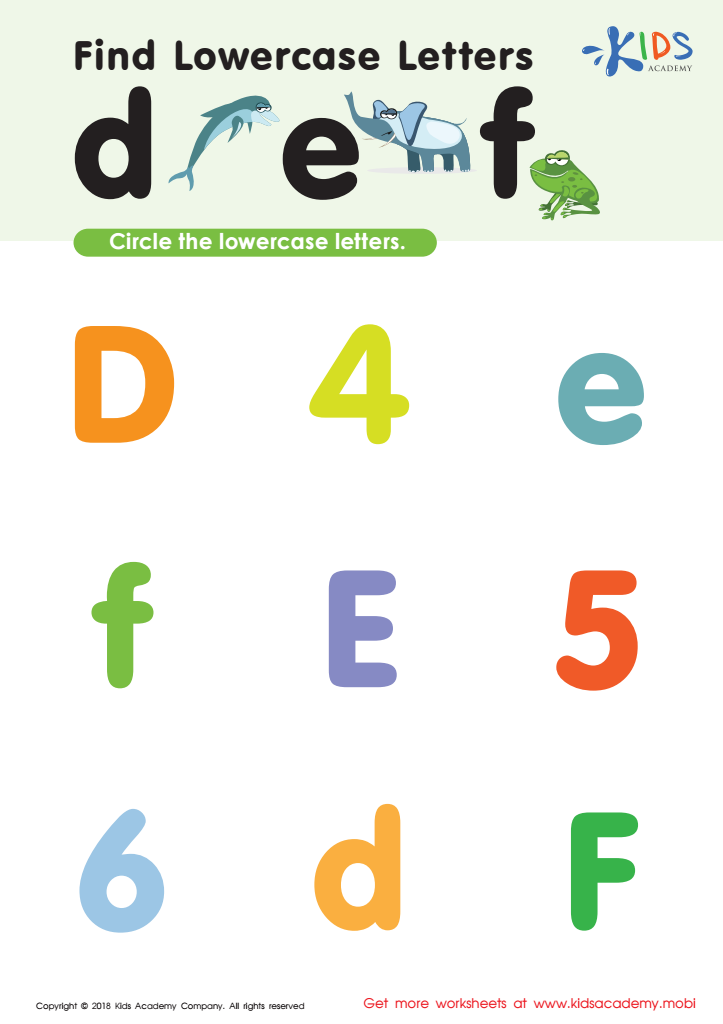
Find Lowercase Letters d e f Worksheet
Engage your child's brain with this fun, colorful worksheet. They'll identify and circle lowercase letters among other numbers and uppercase letters in bright colors. This will keep their attention as they learn, and can be downloaded in PDF form!
 Assign to My Students
Find Lowercase Letters d e f Worksheet
Worksheet
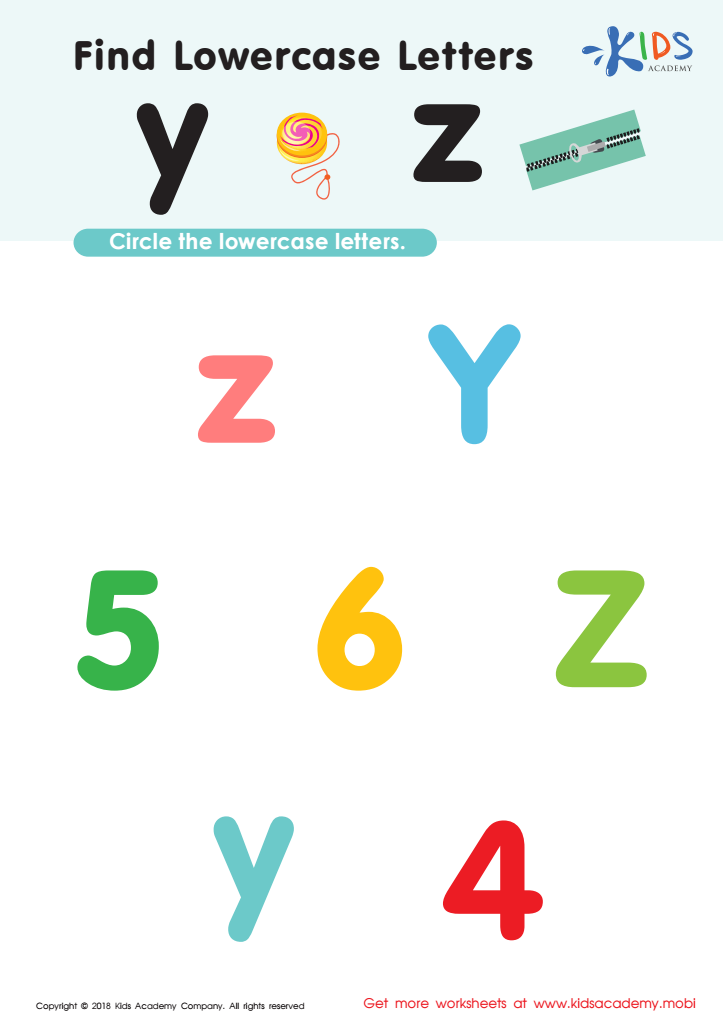
Find Lowercase Letters y z Worksheet
Help your kid learn the alphabet. Before they can move on to words and reading, they must first know the lower and uppercase letters. Show them how to find the letters y and z in this worksheet, which is filled with uppercase letters and numbers. Together, find and circle them.
Find Lowercase Letters y z Worksheet
Worksheet
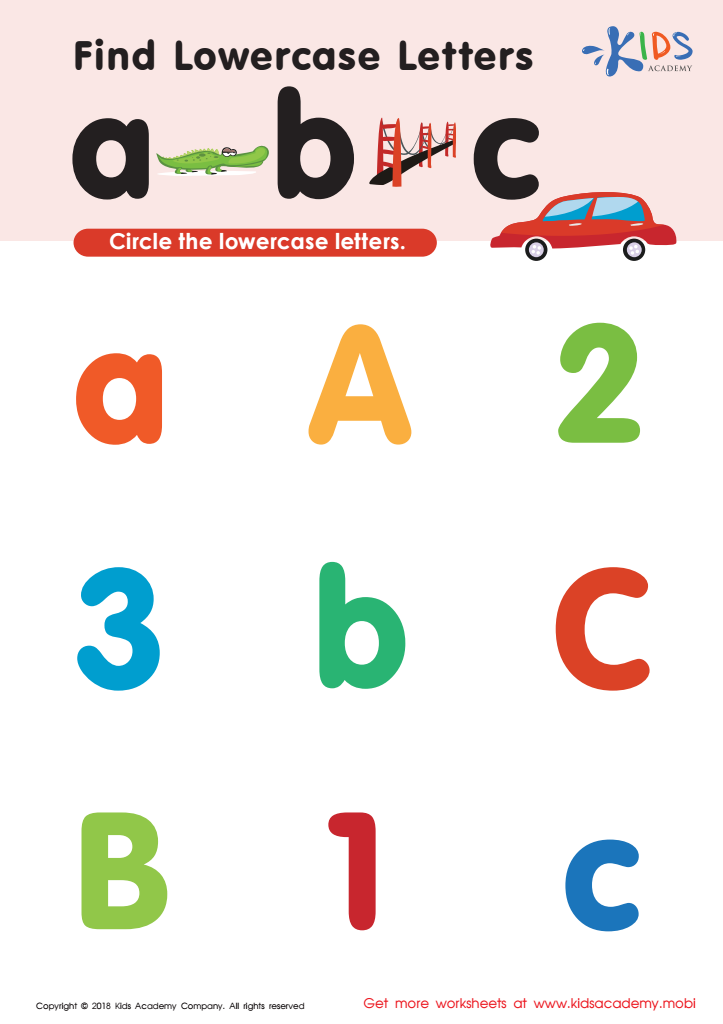
Find lowercase letters a b c Worksheet
Help your child identify lowercase letters with this worksheet. Carefully look at each letter and have your child circle the lowercase ones. This exercise is vital in helping them understand the alphabet and the difference between lower and uppercase letters.
Find lowercase letters a b c Worksheet
Worksheet
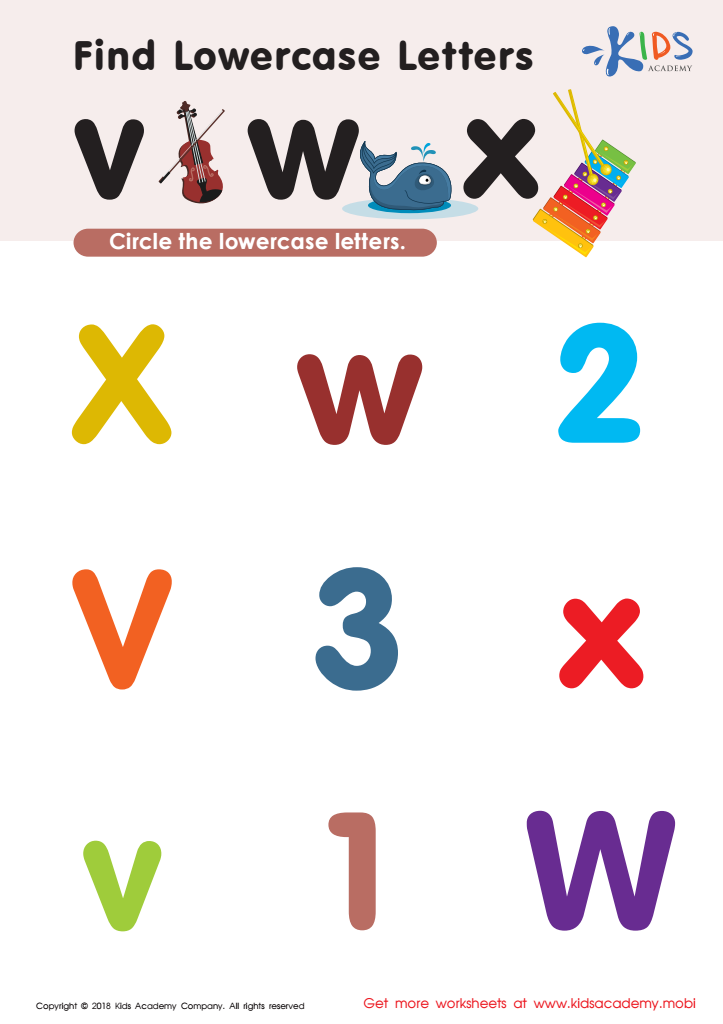
Find Lowercase Letters v w x Worksheet
If your child doesn't know the alphabet, get them this helpful worksheet. It's an easy exercise to build their understanding of the alphabet and lowercase letters. Find the letters v, w, and x among other uppercase letters and numbers in the downloadable PDF.
Find Lowercase Letters v w x Worksheet
Worksheet
Join Kids Academy for Free
Who is primarily going to use this learning content?


Understanding lowercase letters is crucial for 6-year-olds as they form the foundation of literacy skills. When children learn to identify and distinguish normal lowercase letters, they enhance their reading and writing abilities, which are essential for academic success.
Lowercase letters are primarily used in everyday writing, and familiarizing young learners with these characters helps them decode words effectively. This is vital for their reading development, as most texts they encounter will predominantly feature lowercase letters. Moreover, recognizing these letters promotes phonemic awareness, enabling children to associate sounds with their corresponding symbols, a key skill for reading comprehension.
Teachers and parents play a pivotal role in supporting this learning. Engaging children through fun activities, such as games, storytelling, or art projects involving lowercase letters, can foster a positive attitude toward literacy. Additionally, early identification of any difficulties in recognizing lowercase letters allows for timely intervention, helping prevent future challenges with reading and writing.
By prioritizing lowercase letter identification, educators and parents empower children with the fundamental skills needed to thrive in their educational journey, setting the stage for lifelong learning. Ultimately, the ability to recognize lowercase letters contributes not only to academic performance but also promotes confidence and a love for reading.