Filters

10 filtered results

Clear all filters
Favorites
With answer key
Interactive

10 filtered results

Difficulty Level

Grade


Welcome to our Alphabet Recognition Worksheets for 6-Year-Olds! Designed to make learning fun, these engaging activities focus on uppercase letters to help children develop essential literacy skills. Each worksheet offers interactive exercises that enhance letter recognition, improve fine motor skills, and build confidence in young learners. With a variety of colorful illustrations and interesting challenges, kids will enjoy practicing their alphabet while cultivating a love for reading and writing. Perfect for at-home learning or classroom use, our worksheets provide a structured yet enjoyable way for children to master uppercase letter recognition. Explore and watch your child's skills soar!

Check out this FREE Trial Lesson on Uppercase Letters for age 6!

Tracing Uppercase Letters A-I

Favorites
With answer key
Interactive
  • 6
  • Alphabet Recognition
  • Uppercase Letters
  • Normal
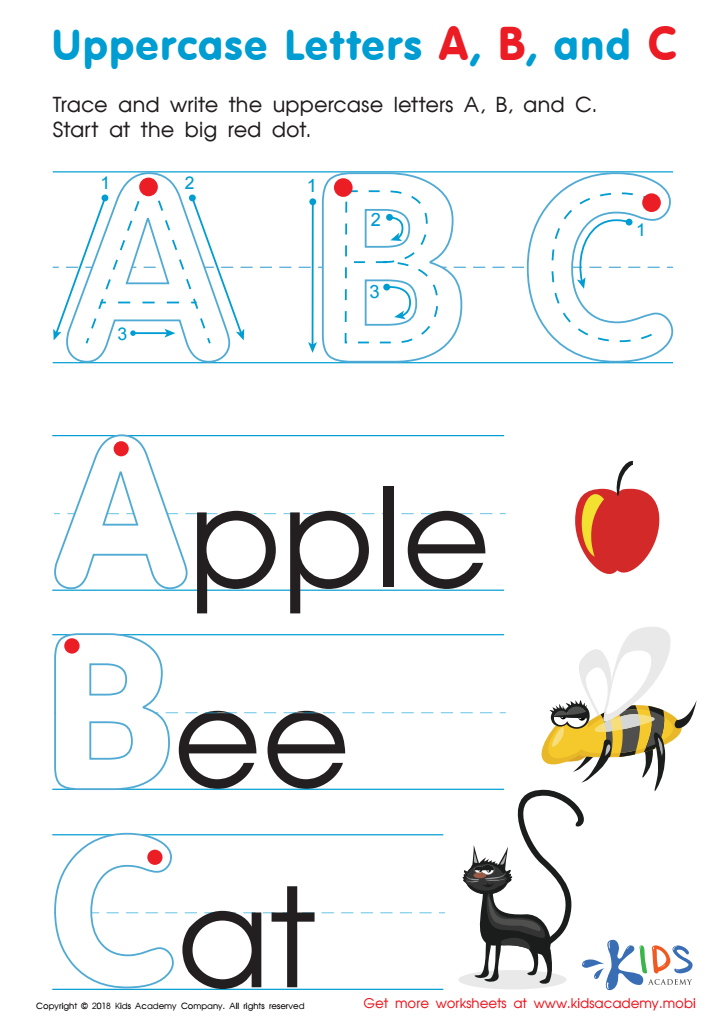
Uppercase Letters A, B, and C Worksheet Preview

Uppercase Letters A, B, and C Worksheet

See that big red dot? Have your child use it as a guide to trace A, B and C on this fun worksheet. It features lively pictures to help link letter sounds. Have them practice proper pencil strokes on the letters at the top, then write beside each graphic. Let the learning and fun begin! 80 words
Uppercase Letters A, B, and C Worksheet
Worksheet
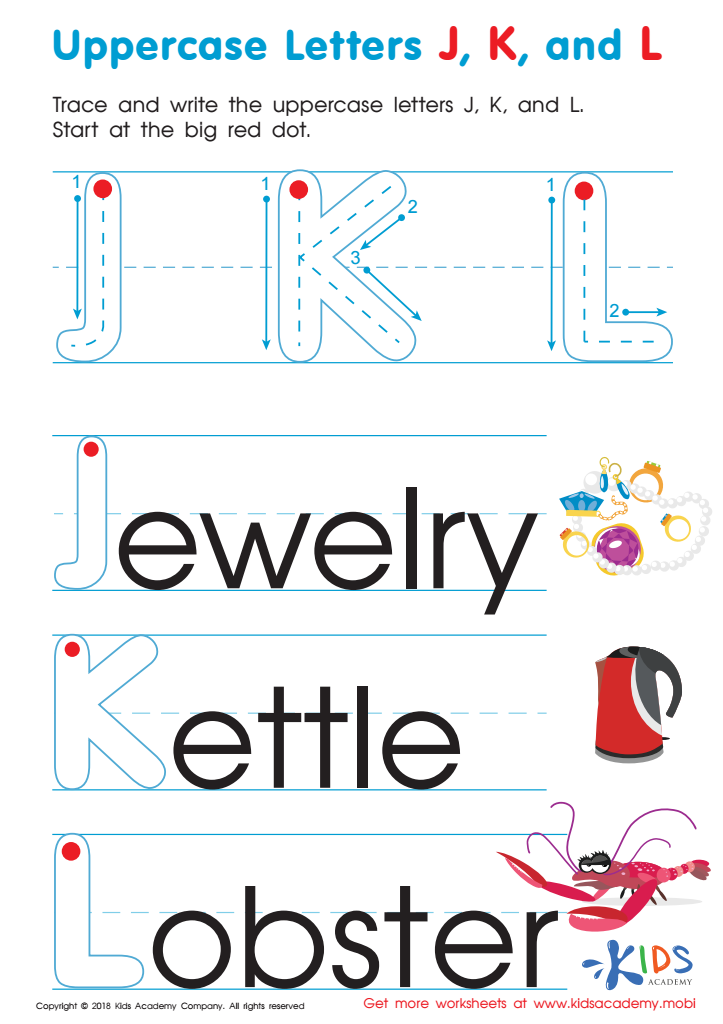
Uppercase Letters J, K, and L Worksheet Preview

Uppercase Letters J, K, and L Worksheet

Jewelry, kettle and lobster share a common trait: their names start with J, K and L, 3 letter neighbors found in the middle of the alphabet. This traceable worksheet helps kids learn letter sounds and practice writing. Arrows and tracing lines make it easy to form neat pencil strokes. Red dot shows where kids should start. Perfect for preschoolers and kindergarteners!
Uppercase Letters J, K, and L Worksheet
Worksheet
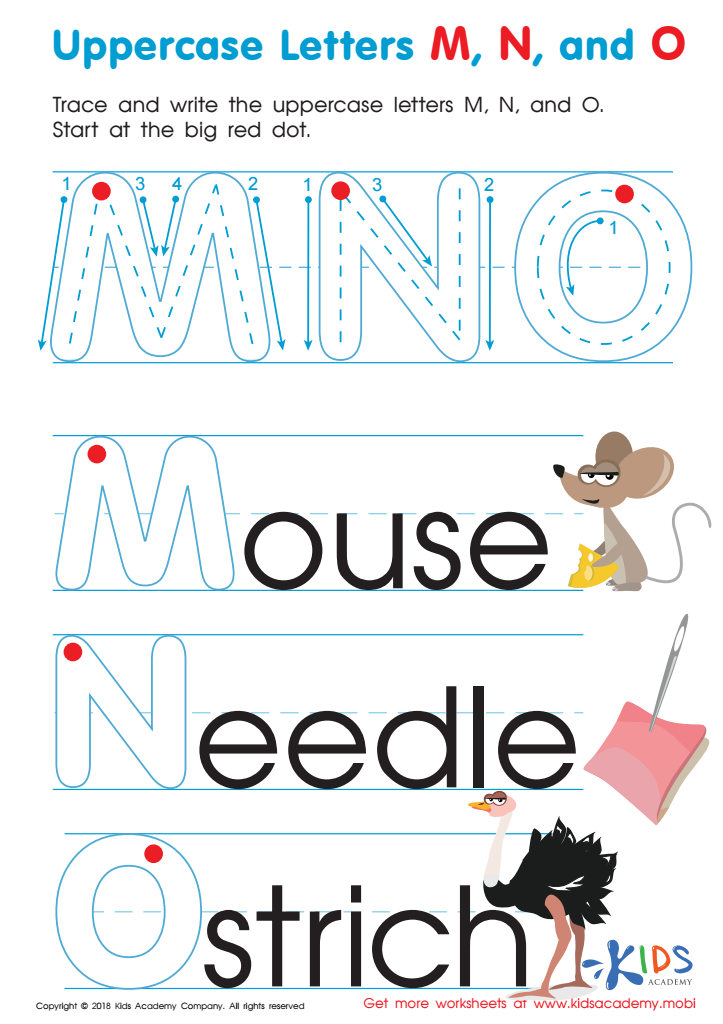
Uppercase Letters M, N, and O Worksheet Preview

Uppercase Letters M, N, and O Worksheet

Download our easy-to-understand worksheet to help kids write M and N with ease! They'll trace dotted lines and follow arrows as they fill in the letters using a big red dot as a guide. The cute graphics will help them remember sounds too! Get your child writing quickly and confidently with this fun activity.
Uppercase Letters M, N, and O Worksheet
Worksheet
Uppercase Letters G, H, and I Worksheet Preview

Uppercase Letters G, H, and I Worksheet

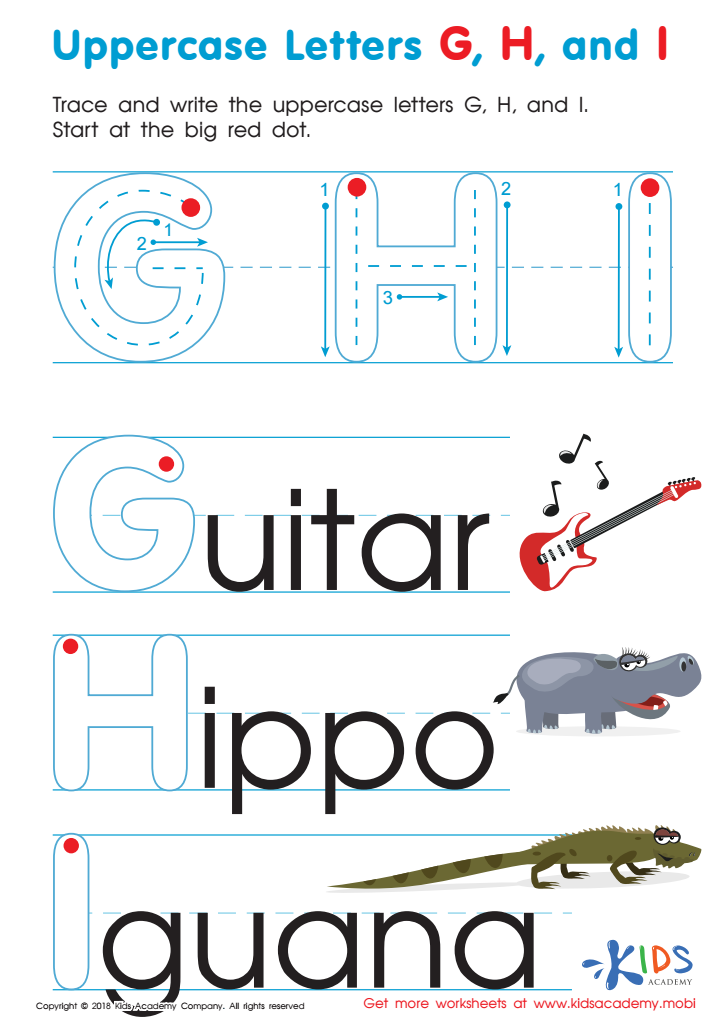
Trace each letter with the big red dot, connecting them to sounds as you go. Then write G to I. Congrats on a job well done! Rock on with a cute hippo and iguana while working on this delightful kindergarten worksheet!
Uppercase Letters G, H, and I Worksheet
Worksheet
Find Uppercase Letters P, Q, and R Worksheet Preview
Find Uppercase Letters P, Q, and R Worksheet

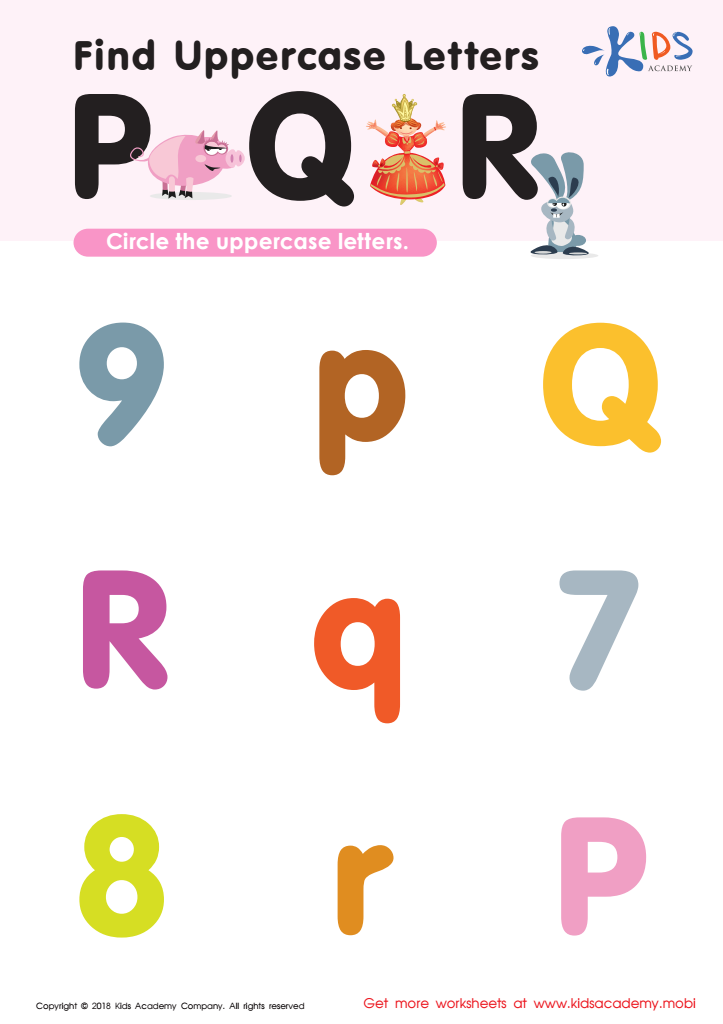
Kids learn best when they can make connections. This free printable worksheet guides kids to solve the puzzle using the example letters P, Q, and R, supported by graphics and colors. Point out the page is pink, like the pig (which starts with P!) and solve by finding and circling the uppercase letters – be careful of the numbers!
Find Uppercase Letters P, Q, and R Worksheet
Worksheet
Uppercase Letters P, Q, and R Worksheet Preview

Uppercase Letters P, Q, and R Worksheet

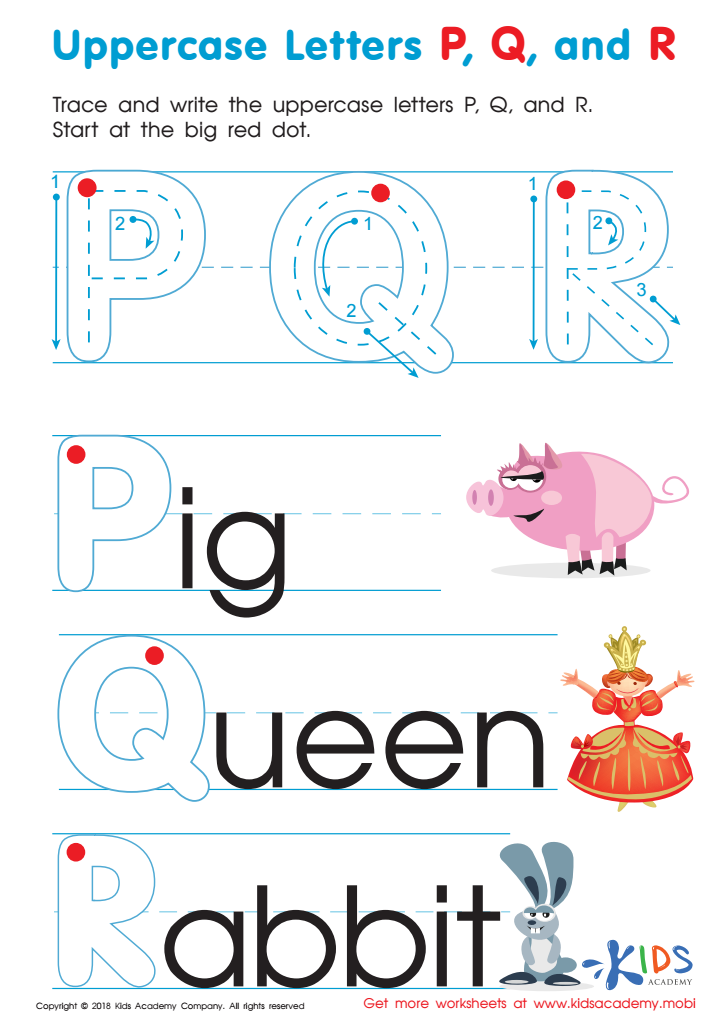
Cute images of a pig, queen and rabbit make it fun to learn letter sounds. Follow the arrows to learn the strokes, then trace each letter from the big red dot. Perfect for kids to learn how to read and write P, Q, and R!
Uppercase Letters P, Q, and R Worksheet
Worksheet
Identifying Uppercase Letters Worksheet Preview

Identifying Uppercase Letters Worksheet

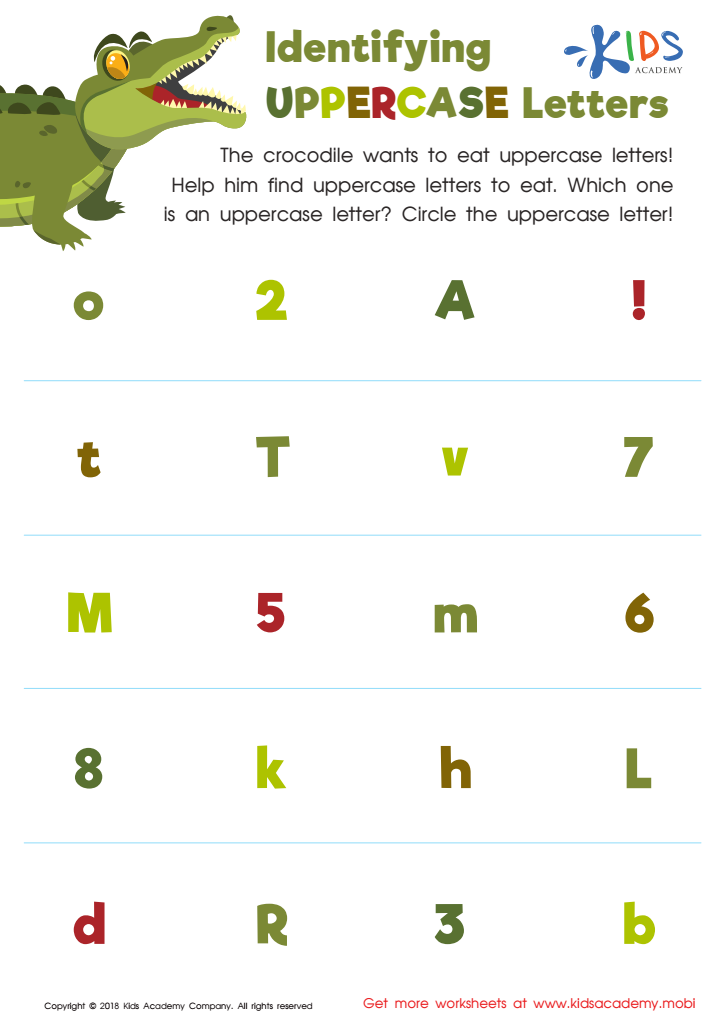
It's essential for kindergarteners to know the distinction between uppercase and lowercase letters. This skill will aid them when starting to write. They can practice by selecting the uppercase letters among a mix of lowercase, uppercase letters and numbers. Whatever their level of learning, give your child confidence with this PDF!
Identifying Uppercase Letters Worksheet
Worksheet
Uppercase Letters D, E, and F Worksheet Preview

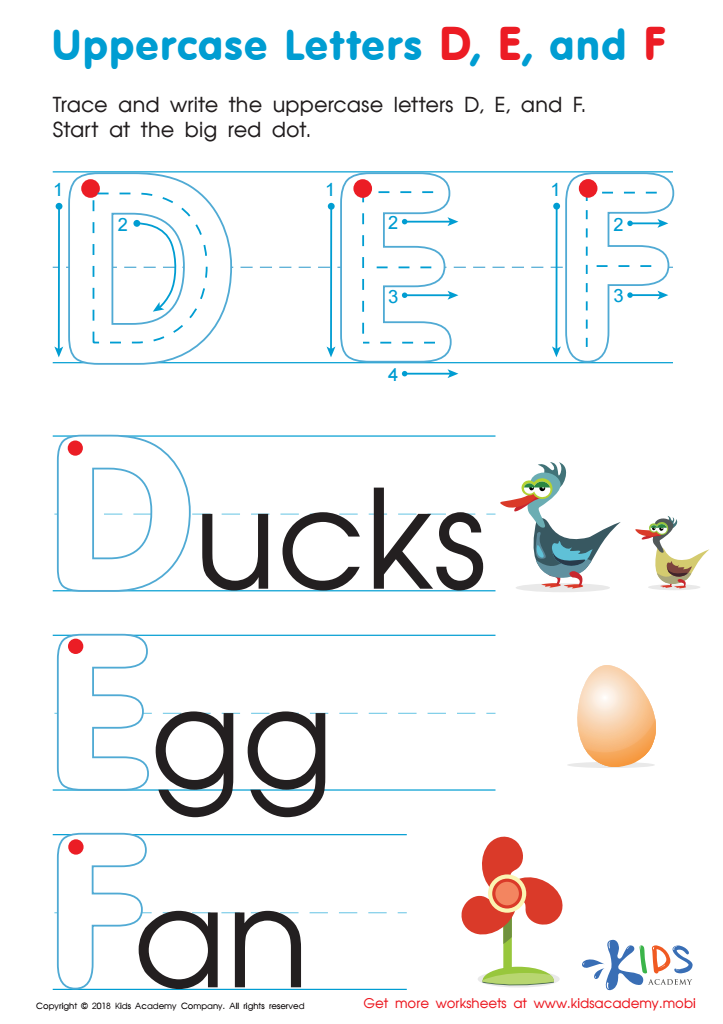
Uppercase Letters D, E, and F Worksheet

A-F are important letters! Get kids tracing with this free printable worksheet. Help them learn the right pencil strokes by following the tracing lines, starting at the big red dot. Reinforce letter sounds with the colorful pictures. 80 words.
Uppercase Letters D, E, and F Worksheet
Worksheet
Uppercase Letters Y Z Worksheet


Uppercase Letters Y Z Worksheet

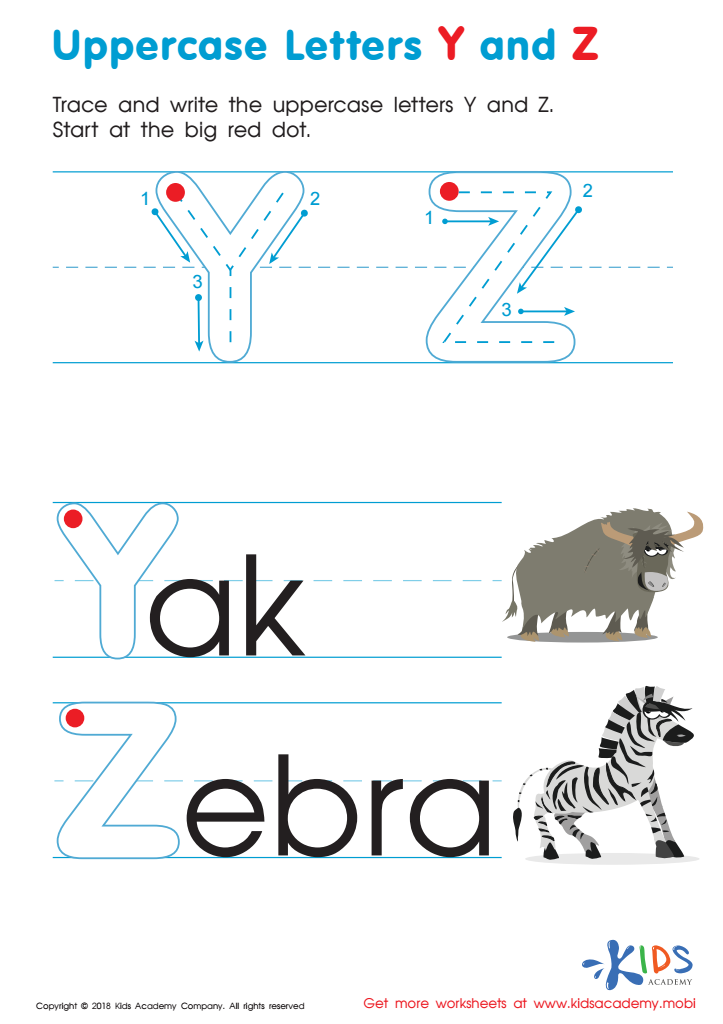
Help your child learn their ABCs with this fun tracing activity! They must trace and write Y and Z in uppercase form, starting from the red dot. Kids will love the fun images for extra engagement. Guiding their hand carefully will help them practice and perfect their writing skills.
Uppercase Letters Y Z Worksheet
Worksheet
Uppercase Letters V, W, and X Worksheet


Uppercase Letters V, W, and X Worksheet

This worksheet is perfect for kids struggling to write uppercase letters V, W, and X. Warm up their brains first by having them name words starting with these letters. Then, help them trace and write each letter from the big red dot. With your assistance, they will quickly sharpen their writing skills.
Uppercase Letters V, W, and X Worksheet

Worksheet


Alphabet recognition, particularly of uppercase letters, is a fundamental skill for 6-year-olds that significantly influences their literacy development. Parents and teachers should prioritize this area for several reasons.

Firstly, understanding uppercase letters serves as the foundation for reading and writing. Recognizing these letters helps children in decoding words, which is essential for reading fluency. This recognition translates to improved confidence when they encounter written text, fostering a love for reading.

Secondly, uppercase letters are often used in important contexts, such as at the beginning of sentences, for proper nouns, and in titles. Mastery of these letters enables children to not only read but also write effectively, ensuring clarity in their communication.

Additionally, the ability to recognize and differentiate between uppercase and lowercase letters promotes cognitive skills such as categorization and memory, supporting overall academic growth.

Finally, focusing on uppercase letter recognition offers a great opportunity for positive interaction between parents and children during learning, enhancing their bond. In summary, fostering alphabet recognition is a critical step in a child's educational journey and lays the groundwork for lifelong literacy skills.