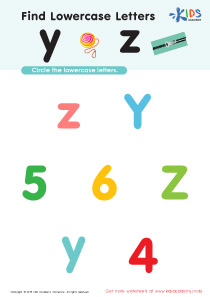
Letter tracing skills Normal Uppercase Letters Worksheets for 6-Year-Olds
3 filtered results
-
From - To
Enhance your child's handwriting skills with our engaging Uppercase Letter Tracing Worksheets designed for 6-year-olds. These expertly crafted worksheets provide a fun, interactive way for young learners to practice tracing and writing uppercase letters. Ideal for developing fine motor skills and letter recognition, our resources support early literacy. Each worksheet offers ample space for practicing letter formation, ensuring kids gain confidence in their handwriting. Perfect for home or classroom use, these worksheets integrate playful activities to make learning enjoyable. Set your child on the path to writing success with our comprehensive letter tracing exercises. Download now and start tracing today!
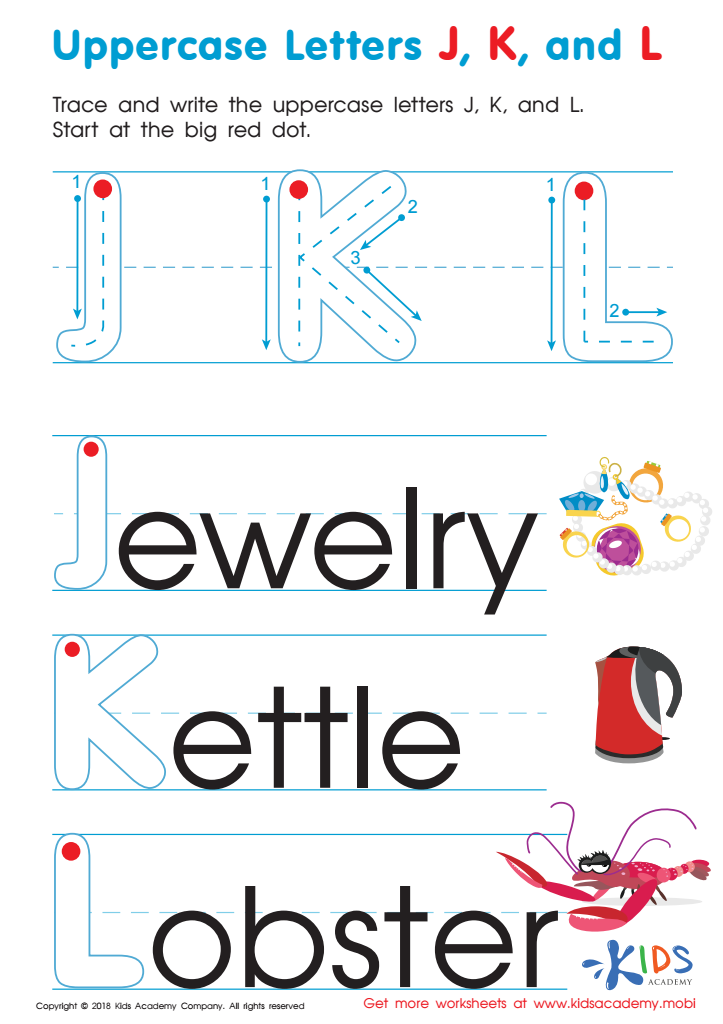
Uppercase Letters J, K, and L Worksheet
 Assign to My Students
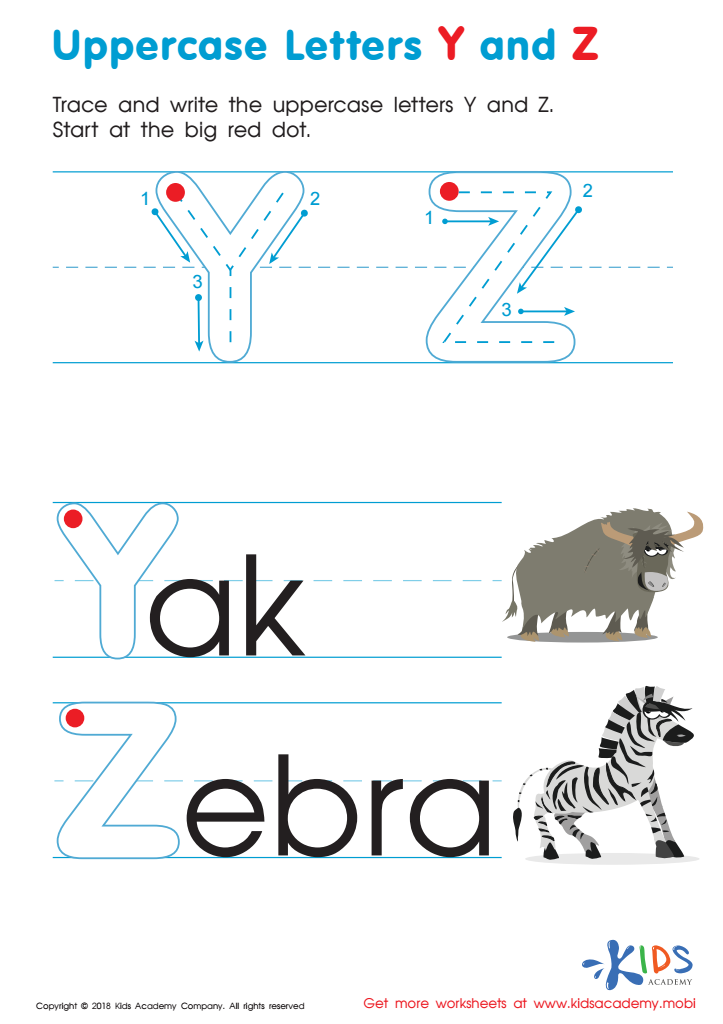
Uppercase Letters Y Z Worksheet
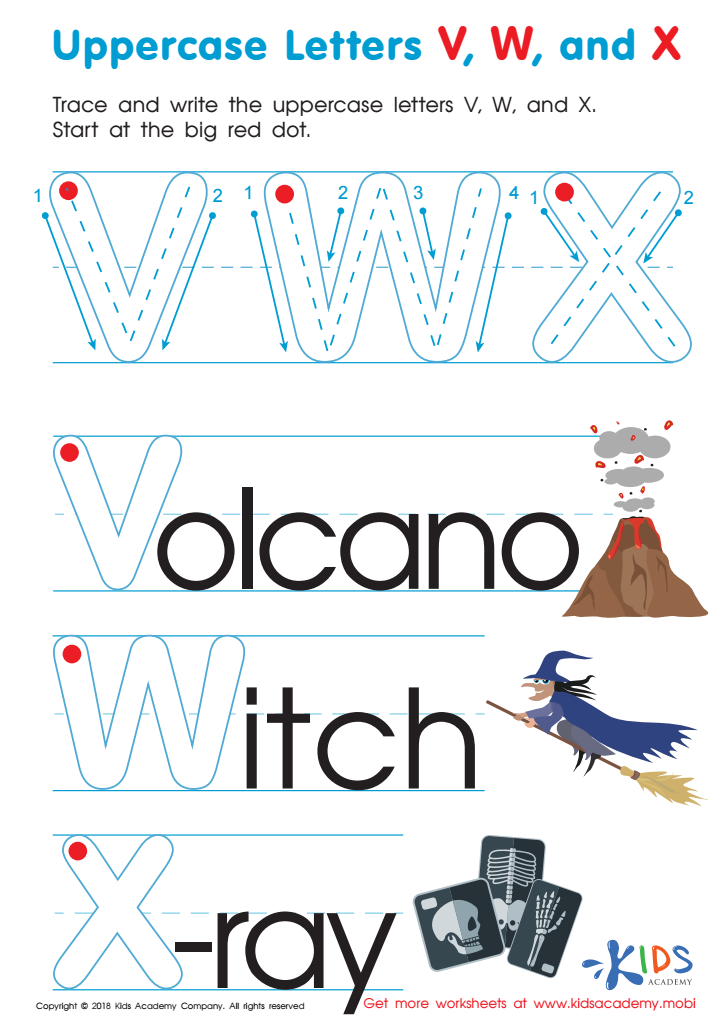
Uppercase Letters V, W, and X Worksheet








Letter tracing skills, particularly focusing on normal uppercase letters, are crucial for 6-year-olds and play a significant role in their early literacy and motor skills development. At this age, children's fine motor skills are still developing, and tracing helps refine these by improving hand-eye coordination, muscle memory, and overall dexterity necessary for writing.
Parents and teachers should pay close attention to letter tracing because it serves as a foundation for legible handwriting. Mastering uppercase letters sets a solid base for both reading and writing as these letters are often simpler in form and are frequently used at the beginning of sentences and proper nouns, making them integral to sentence structure and comprehension.
Additionally, letter tracing bolsters cognitive development by engaging children's visual, auditory, and kinesthetic learning modalities simultaneously. This multisensory approach enhances their ability to recognize and reproduce each letter, engraining alphabet familiarity which is pivotal for reading fluency.
Enabling children to trace letters offers emotional benefits too. Children experience a sense of accomplishment upon successfully tracing letters, which can boost their self-confidence and enthusiasm for learning. By prioritizing letter tracing skills, parents and teachers set the stage for future academic success, ensuring that children develop the essential skills needed for effective communication.