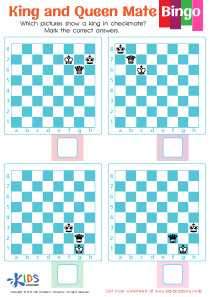
Chess strategy understanding Normal Chess Worksheets for 6-Year-Olds
3 filtered results
Difficulty Level
Grade
Age
-
From - To
Subject
Activity
Standards
Discover engaging Chess Strategy Understanding worksheets designed specifically for 6-year-olds! Our activities cultivate critical thinking and problem-solving skills while introducing young learners to the exciting world of chess. Each worksheet features fun, age-appropriate challenges that help children grasp fundamental strategies, improve their gameplay, and enhance their cognitive development. With colorful illustrations and clear instructions, these worksheets make learning chess enjoyable and accessible. Support your child's growth and encourage strategic thinking through interactive sessions that aim to foster a lifelong love for chess. Explore our comprehensive resources today and watch your child’s confidence on the chessboard flourish!
Favorites
With answer key
Interactive
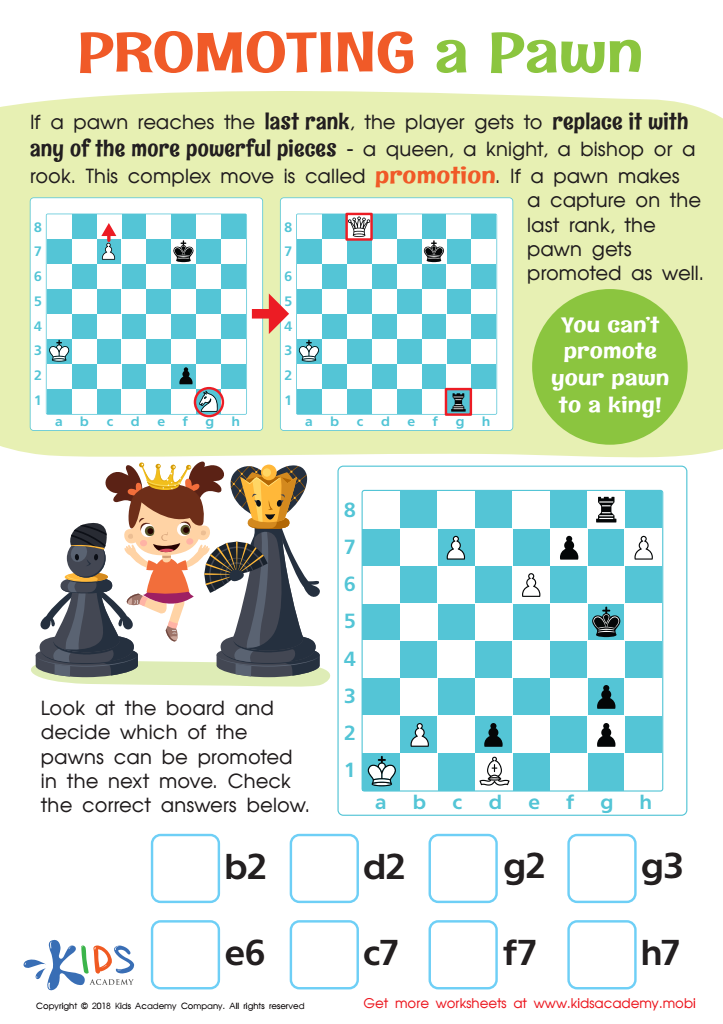
Promoting a Pawn Worksheet
Teach your kids all about pawns with this fun worksheet! Pawns may seem restricted, but experienced players can guide them across the board. If a pawn reaches the last rank, the player can upgrade it to a more powerful piece (e.g. queen, knight), or promote it if it captures an enemy piece. Give them the tools to master the game!
 Assign to My Students
Promoting a Pawn Worksheet
Worksheet
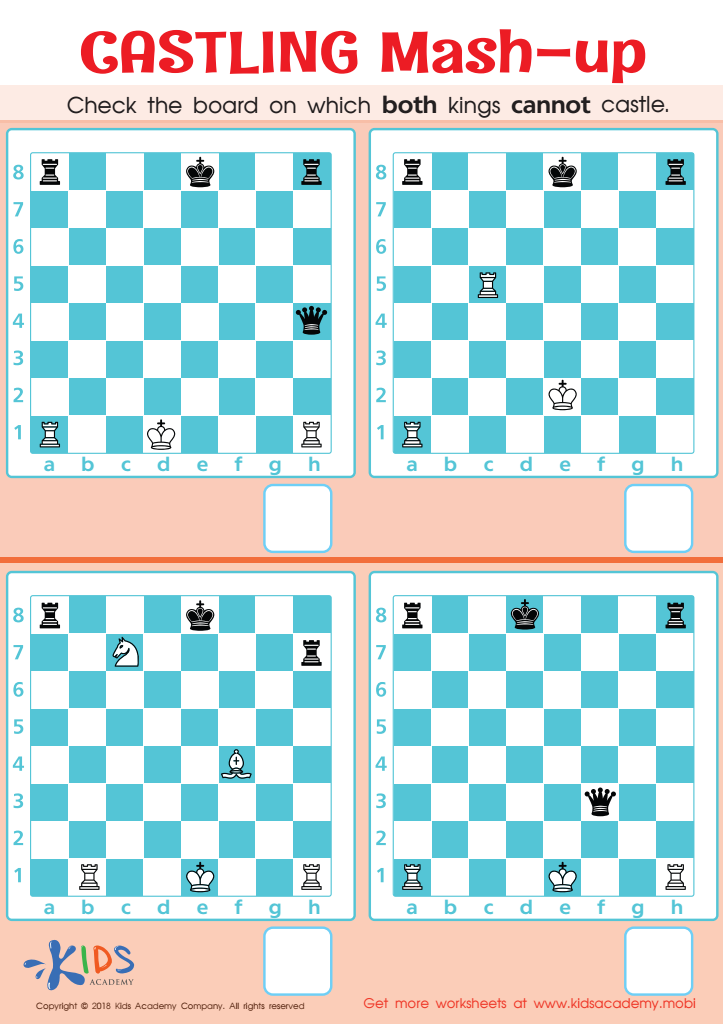
Castling Mash–up Worksheet
Before starting the worksheet, ensure your child understands castling in chess. If not, take time to explain it. Once they have a clear grasp of the rules, help them complete the exercise. Check the board to ensure that neither king can castle.
Castling Mash–up Worksheet
Worksheet
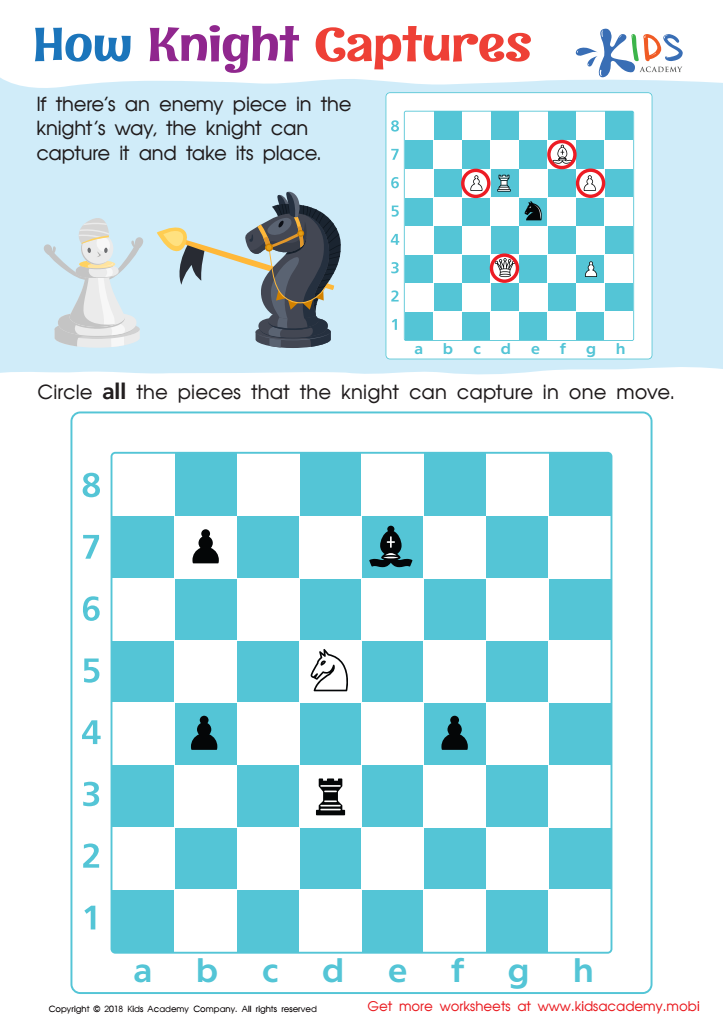
How Knight Captures Worksheet
Test your child's knowledge of chess pieces by asking them to identify the knight. It is shaped like a horse and its goal is to capture the enemy king in order to win the game. The knight has the advantage of being able to jump over other pieces, taking them out and taking their place. See how many pieces the knight can capture in one move with this worksheet.
How Knight Captures Worksheet
Worksheet
Join Kids Academy for Free
Who is primarily going to use this learning content?





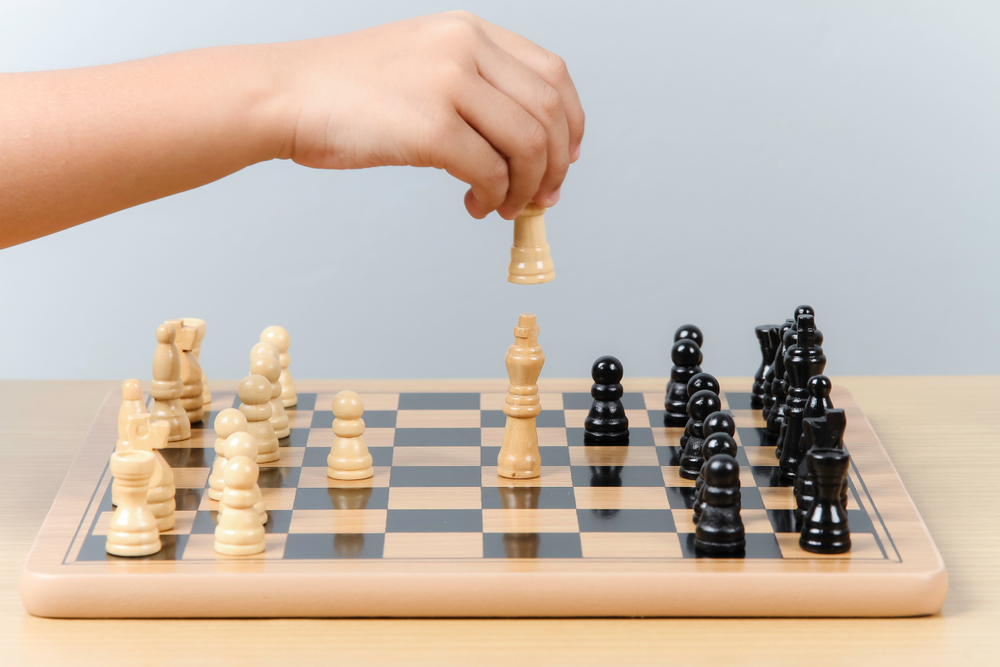

Parents and teachers should care about teaching chess strategy to 6-year-olds because it promotes critical thinking, problem-solving, and cognitive skills. Engaging in chess at a young age helps children develop focus and patience, essential qualities in both academic and personal growth. Chess requires players to think several moves ahead, fostering foresight and planning abilities, which can translate to better decision-making in real-life situations.
Furthermore, understanding chess strategies encourages creativity, as children learn to devise their own tactics and adapt to their opponent's moves. This strategic thinking also builds resilience; children learn to cope with losing and celebrating victories, instilling a sense of sportsmanship.
Additionally, playing chess can enhance memory skills. Remembering positions, recognizing patterns, and recalling previous games all contribute to improved cognitive functioning. Chess can also be a fantastic way for parents and teachers to bond with children, providing a shared activity that encourages communication and social interaction.
Lastly, introducing chess early lays the foundation for a lifelong connection to the game, which can offer ongoing mental challenges and enjoyment. In summary, teaching chess strategy to young learners is an investment in their intellectual and social development, equipping them with valuable life skills.