Alphabet familiarity Normal Worksheets for 6-Year-Olds
7 filtered results
-
From - To
Our Alphabet Familiarity Normal Worksheets for 6-Year-Olds are designed to make learning the alphabet fun and engaging. Through a variety of interactive exercises, children will become familiar with both uppercase and lowercase letters. These worksheets are tailored to reinforce letter recognition, phonics skills, and literacy development. Perfect for classroom or home use, they offer a blend of coloring, tracing, and matching activities that capture a child's interest while promoting foundational reading skills. Equip your child with the essential tools for early literacy success with our expertly crafted alphabet worksheets suitable for any educational setting.
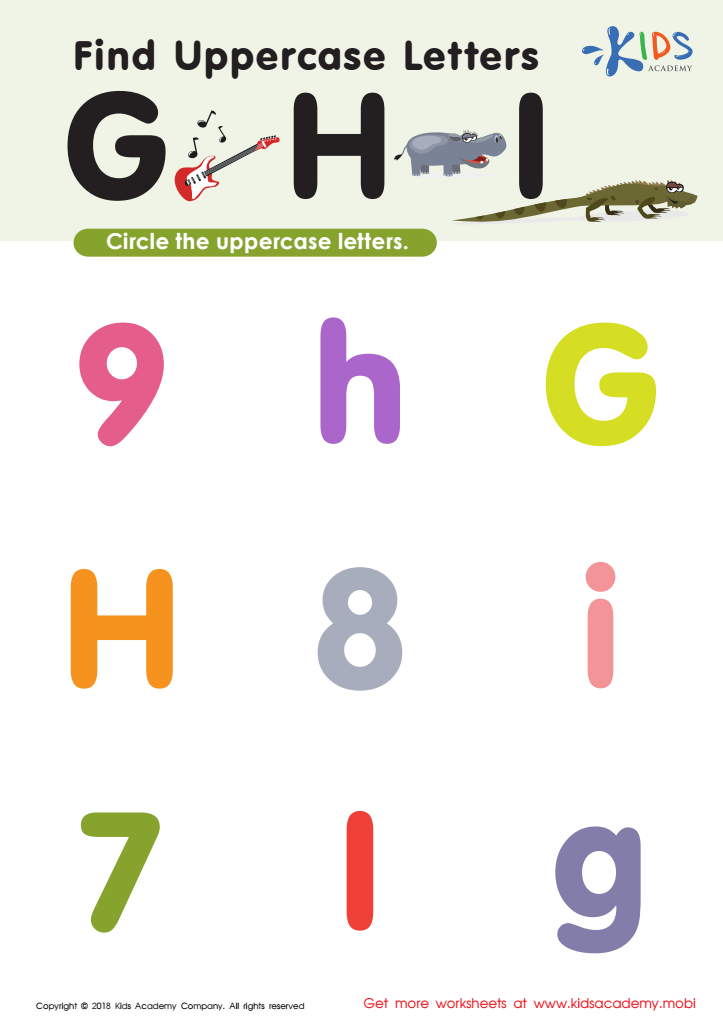
Find Uppercase Letters G, H, and I Worksheet
 Assign to My Students
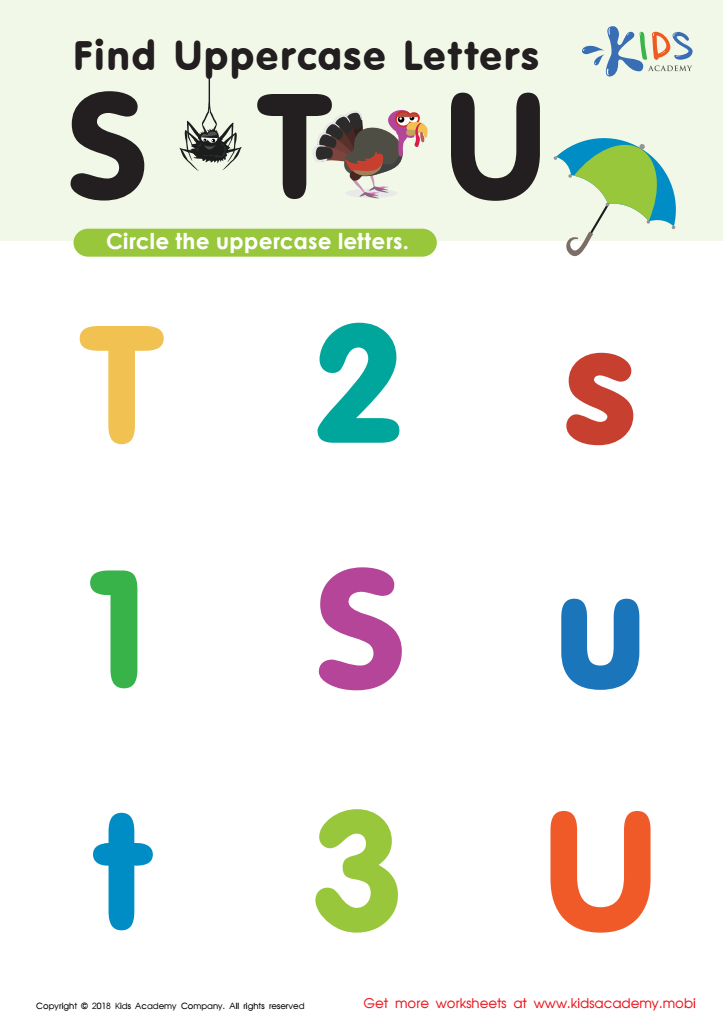
Find Uppercase Letters Worksheet
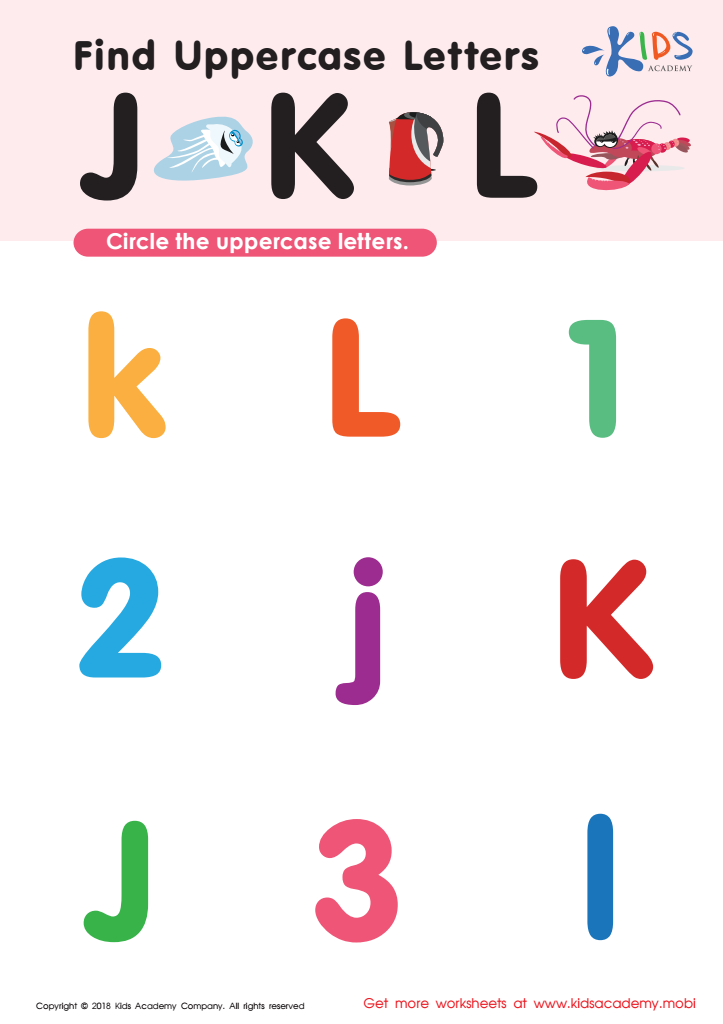
Find Uppercase Letters J, K, and L Worksheet
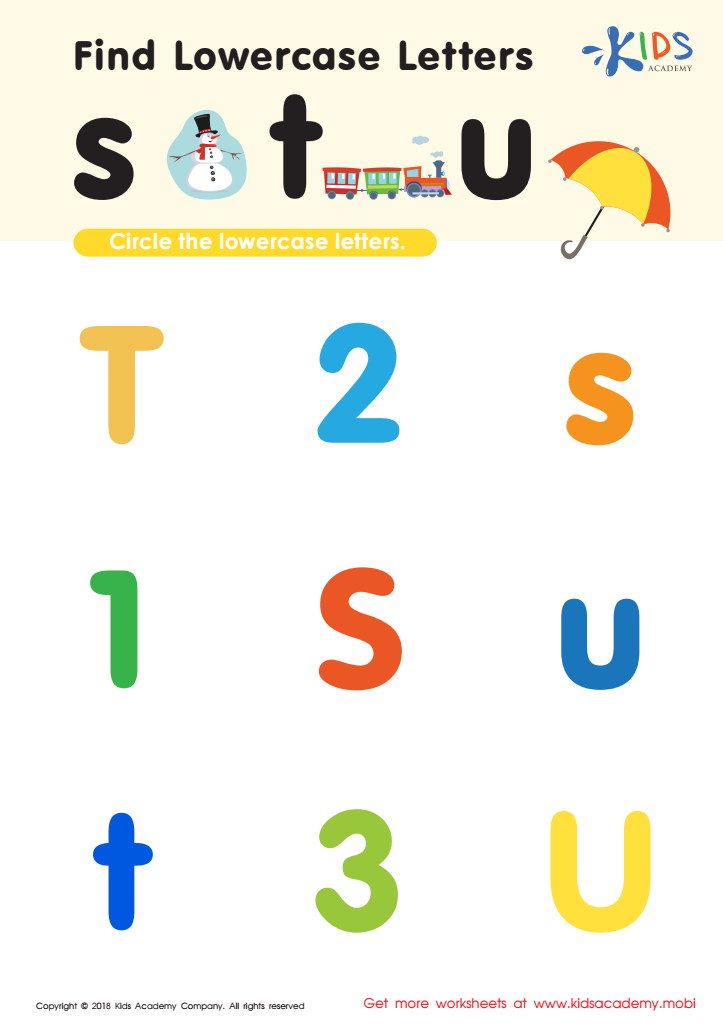
Find lowercase Letters s t u Worksheet
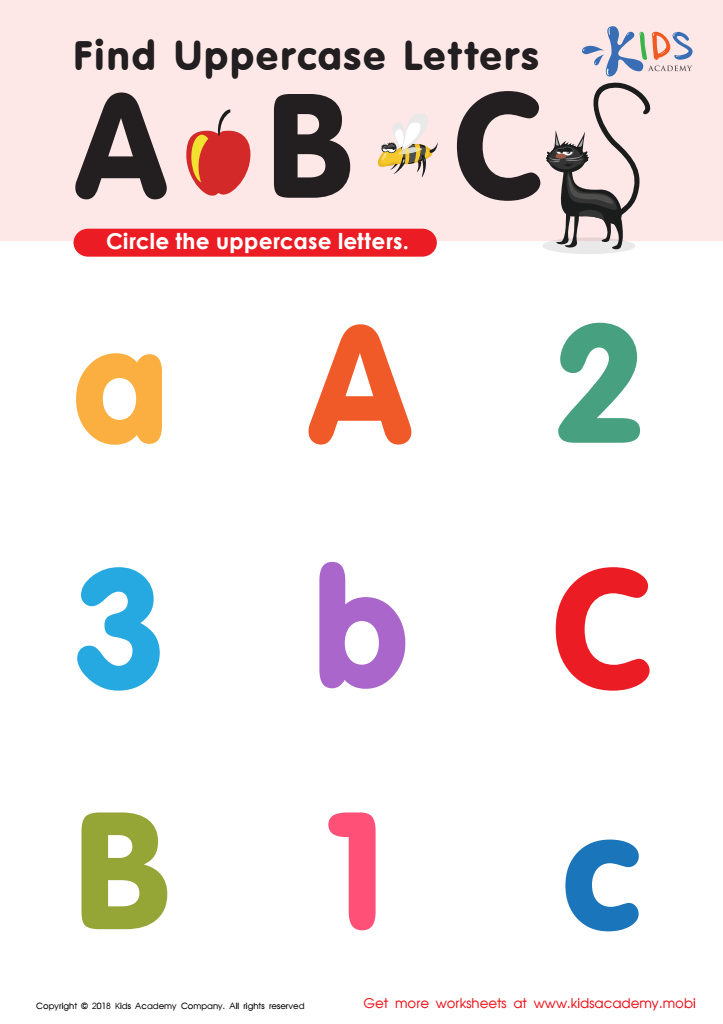
Find Uppercase Letters A, B, and C Worksheet
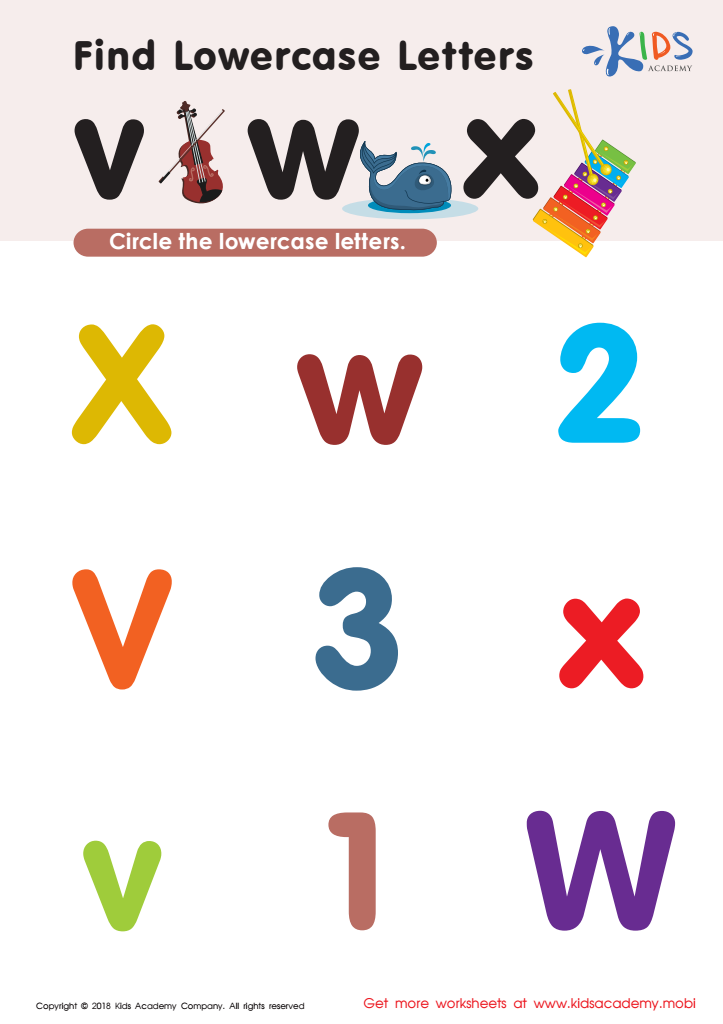
Find Lowercase Letters v w x Worksheet
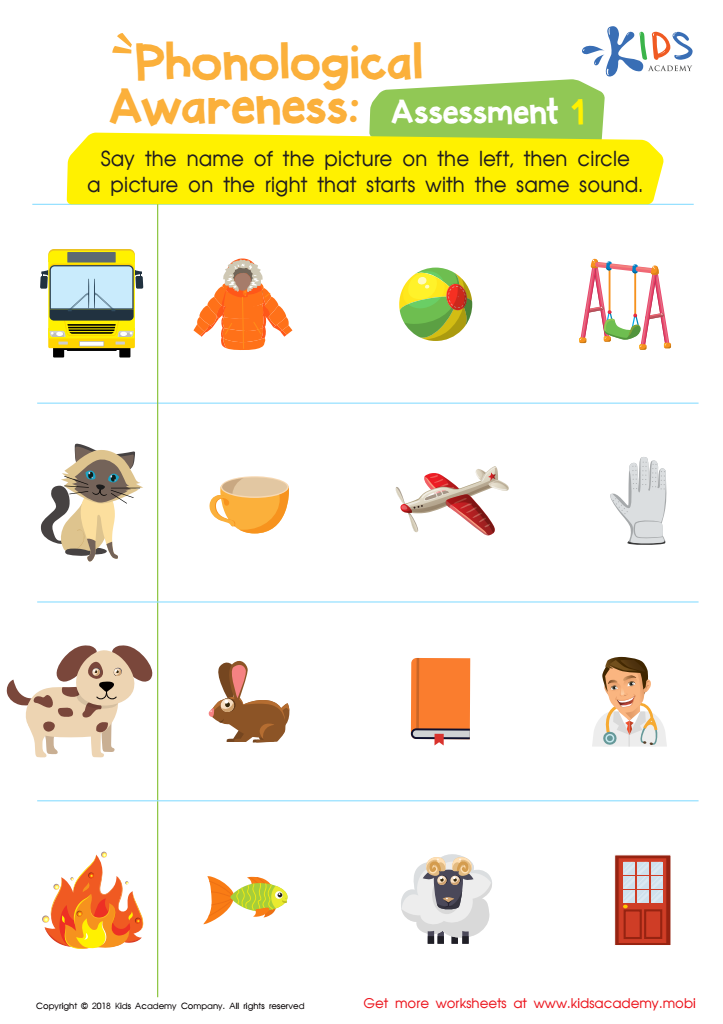
Phonological Awareness: Assessment 1 Worksheet







Alphabet familiarity is a foundational milestone in a child's early education and plays a pivotal role in their literacy development. For parents and teachers, ensuring that a 6-year-old is familiar with the alphabet equips them with essential skills needed for reading and writing—abilities critical to academic success. Children who recognize letters and their sounds can begin to decode words, fostering early reading skills that enhance comprehension and fluency.
Moreover, alphabet familiarity supports vocabulary growth as children start connecting letters to sounds and words to meanings. This awakening understanding of the language enables them to communicate more effectively and express their ideas with greater clarity. Early mastery of the alphabet also instills confidence and a love for learning, setting a positive tone for future educational endeavors.
For teachers, integrating alphabet games, songs, and interactive activities fosters an engaging learning environment that caters to varied learning styles, ensuring that each child can grasp this vital skill in a fun and meaningful way. For parents, consistent alphabet reinforcement at home complements school learning, providing a balanced approach that nurtures cognitive development.
Ensuring alphabet familiarity by age 6 lays a robust groundwork for a child's ongoing education, contributing significantly to their overall academic success and lifelong learning journey.








