Alphabet understanding Normal Worksheets for 6-Year-Olds
7 filtered results
-
From - To
Enhance your 6-year-old's alphabet comprehension with our thoughtfully designed Normal Worksheets. These engaging and age-appropriate activities foster letter recognition, phonemic awareness, and vocabulary development. Featuring interactive exercises including tracing, matching, and coloring, our worksheets make learning fun and effective. Parents and educators can easily download and print them for at-home or classroom use. Watch your child confidently explore the world of letters while building essential reading skills. Ideal for reinforcing classroom learning or supporting at-home studies, our Alphabet Understanding Worksheets lay a solid foundation for future literacy success. Start your child’s alphabet adventure today with these valuable resources!
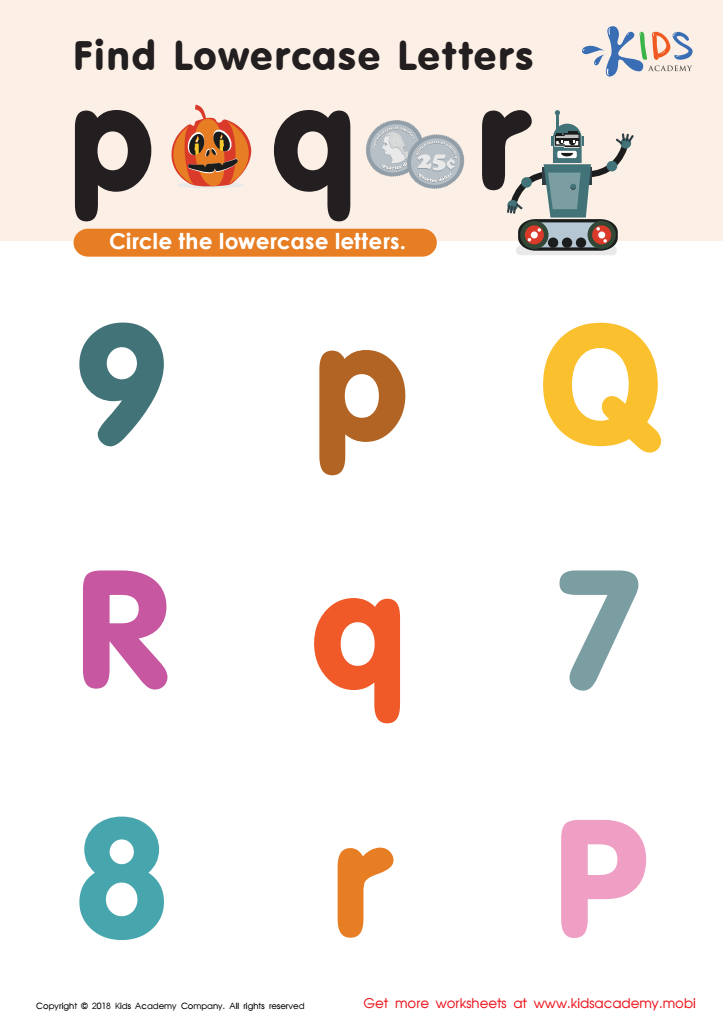
Find lowercase Letters p q r Worksheet
 Assign to My Students
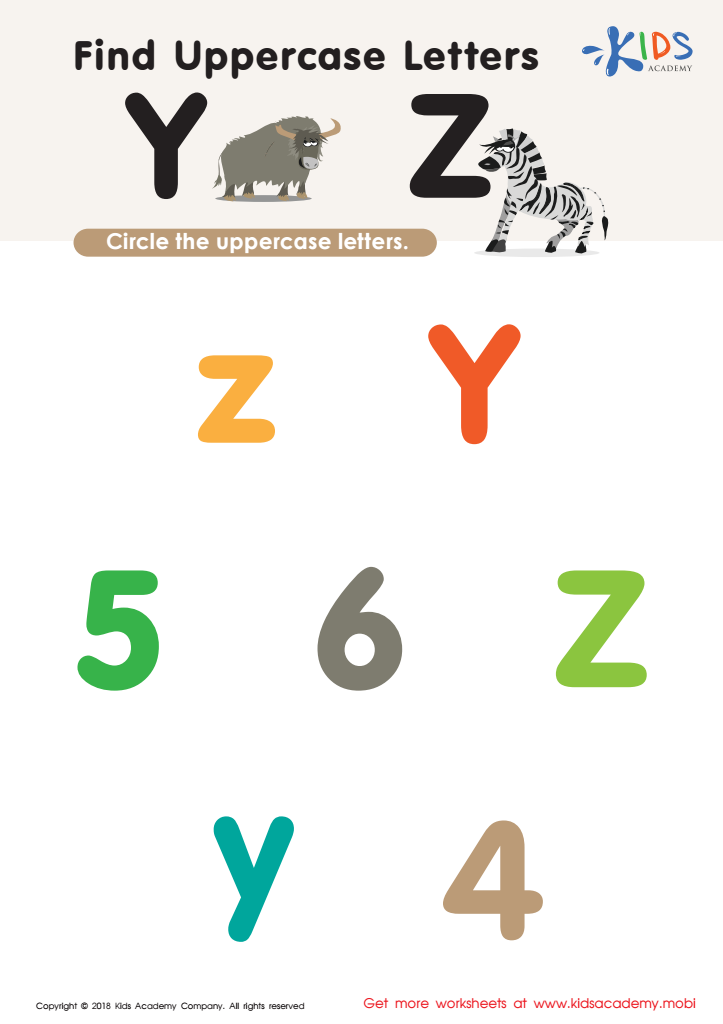
Find Uppercase Letters Y Z Worksheet
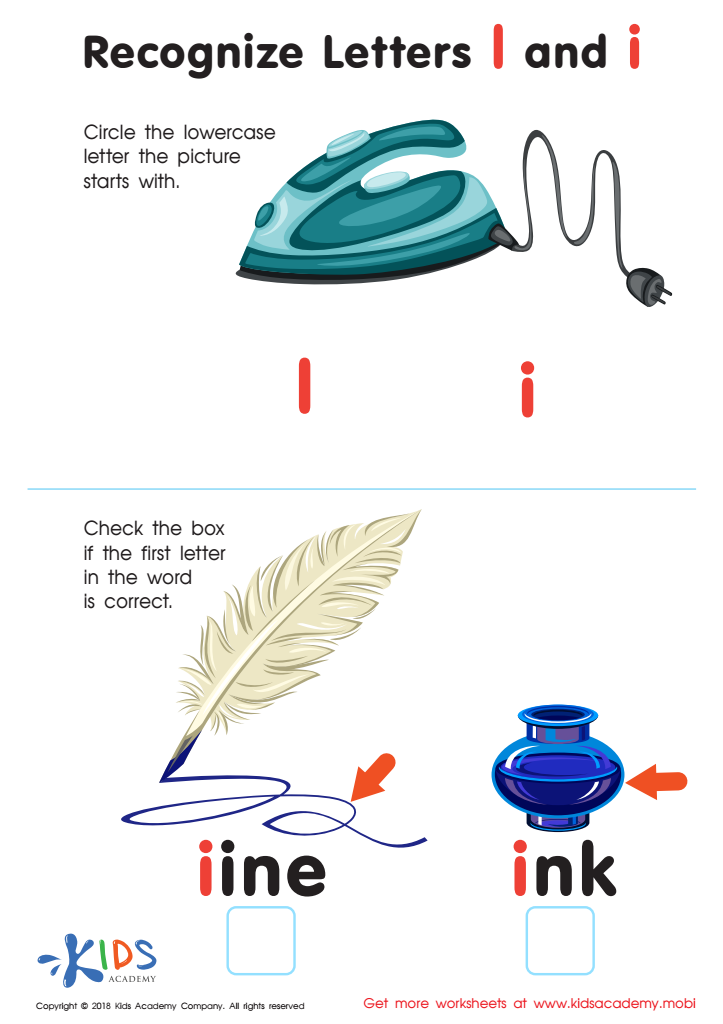
Recognize Letters l and i Worksheet
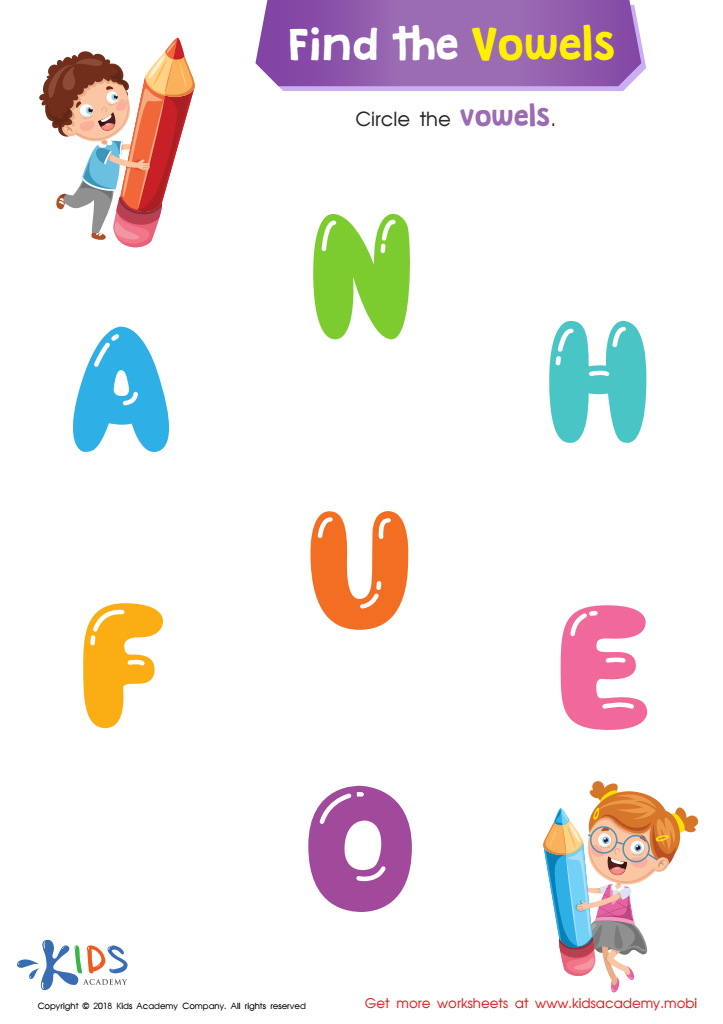
Find the Vowels Reading Worksheet
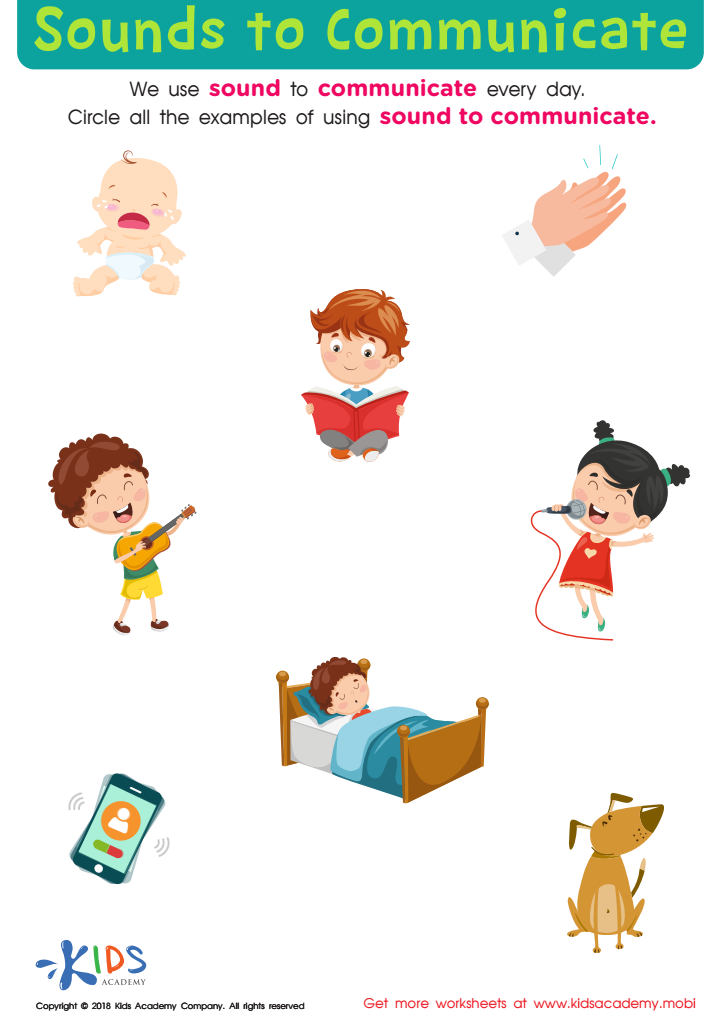
Sounds to Communicate Worksheet

Find lowercase letters a b c Worksheet
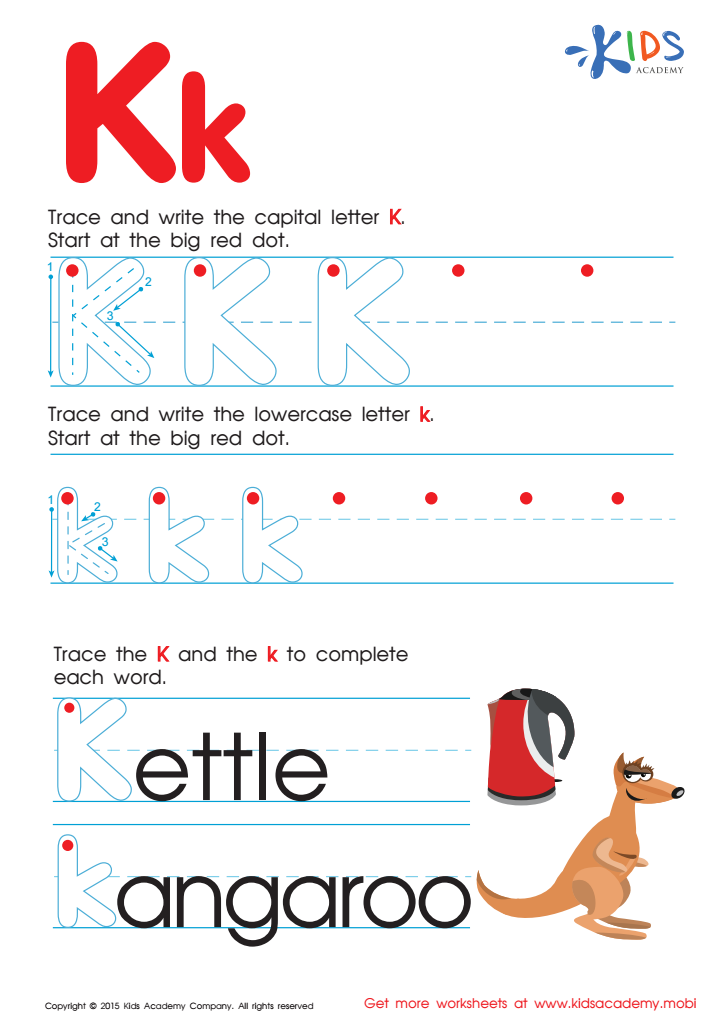
Letter K Tracing Page








Understanding the alphabet is a crucial milestone in a child's early literacy development, particularly for 6-year-olds who are typically in kindergarten or first grade. At this age, children are beginning to recognize letters, associate them with sounds, and understand their role in forming words. When parents or teachers prioritize alphabet understanding, they lay the foundation for proficient reading and writing skills.
First, knowing the alphabet enhances phonemic awareness, enabling children to sound out words and improve their decoding skills. This skill is vital for reading fluency and comprehension, which are essential for academic success across various subjects.
Secondly, a solid grasp of the alphabet boosts children's confidence in their ability to communicate. They become eager to express their thoughts through writing, fostering creativity and self-expression.
Moreover, engaging with the alphabet can spark a child's love for reading, setting them on a lifelong journey of learning. Parents and teachers can facilitate this by using fun and interactive methods like songs, games, and storytelling.
Ultimately, promoting alphabet understanding is not just about literacy; it impacts a child’s overall cognitive development, social skills, and emotional well-being, making it a fundamental area of focus in early childhood education.








