Differentiating shapes Normal Worksheets for 6-Year-Olds
3 filtered results
-
From - To
Engage your 6-year-old in the exciting world of geometry with our "Differentiating Shapes" worksheets! These expertly designed, visually appealing worksheets help young learners identify and differentiate between various shapes. They can practice essential skills in recognizing and naming shapes, enhancing their spatial awareness and foundational math abilities. Perfect for classroom use or at-home learning, these activities provide a fun and interactive approach to early geometry education. Encourage your child's curiosity and support their development with worksheets tailored to make learning about shapes, both normal and complex, an enjoyable adventure!
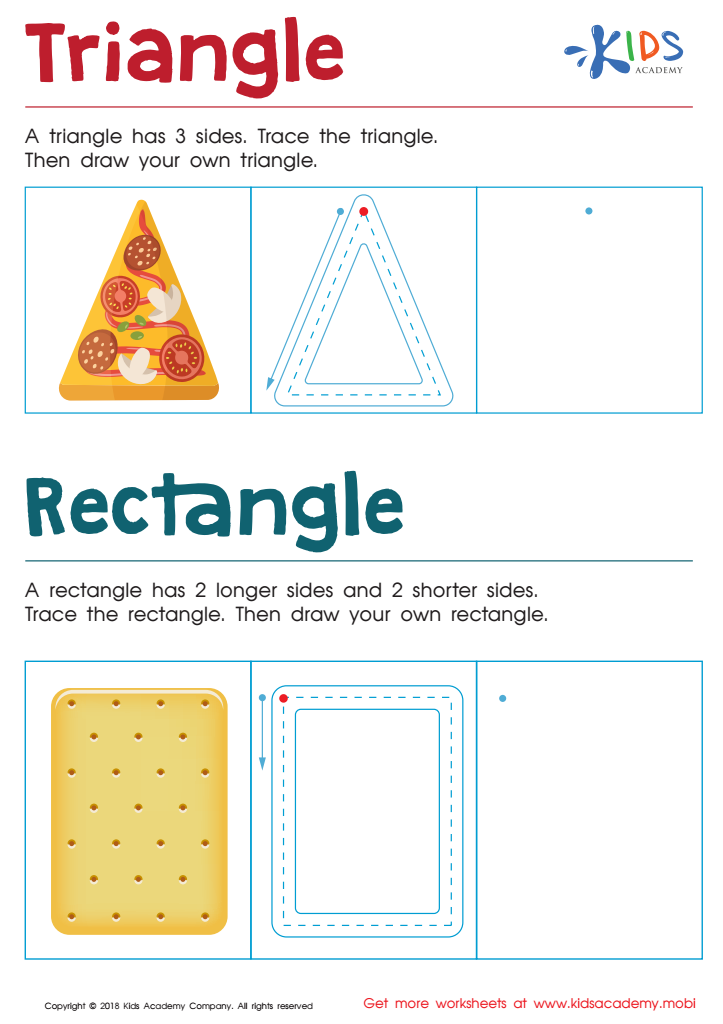
Triangle Rectangle Worksheet
 Assign to My Students
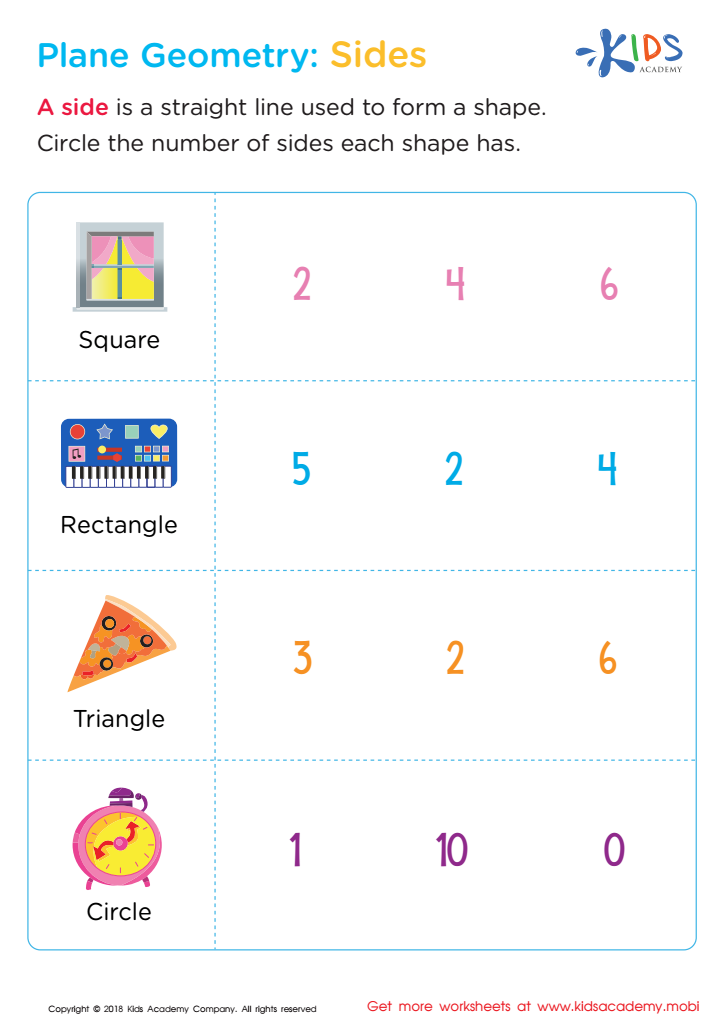
Plane Geometry: Sides Worksheet
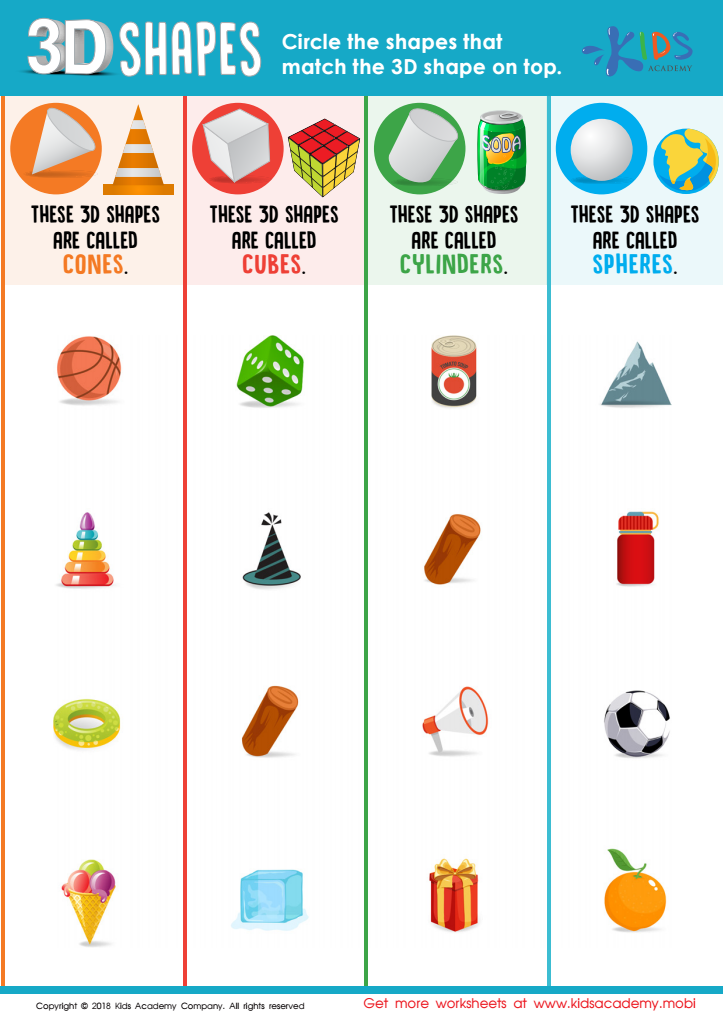
3D Shapes Worksheet







Understanding and differentiating shapes is essential for 6-year-olds as it lays the foundation for their cognitive and spatial development. At this age, children are at a crucial stage where their minds are highly receptive to visual learning and pattern recognition.
Shapes are more than just mathematical concepts; they are integral to how children interpret the world around them. By learning to differentiate shapes, children enhance their problem-solving and critical thinking skills. They begin to notice and categorize objects based on their attributes, fostering an early aptitude for science, technology, engineering, and mathematics (STEM) subjects.
Furthermore, recognizing shapes contributes to fine motor skills as children trace, draw, and build shapes using different materials. Activities like puzzle-solving and playing with blocks also aid in the development of their hand-eye coordination and spatial awareness.
Additionally, understanding shapes helps in vocabulary building and language development. As children learn the names and properties of different shapes, they expand their descriptive abilities and better understand directives involving spatial terms, cultivating better communication skills.
In fostering an environment where differentiating shapes is prioritized, parents and teachers contribute significantly to a child's holistic growth, equipping them with the foundational skills necessary for academic and everyday success.








