Spatial Orientation Normal Worksheets for 6-Year-Olds
3 filtered results
-
From - To
Enhance your child's spatial awareness with our specially designed Spatial Orientation Normal Worksheets for 6-year-olds! These engaging activities help young learners develop essential skills in understanding and navigating space through fun and interactive exercises. Our worksheets cover concepts such as direction, position, and distance, making it easier for children to visualize relationships between objects. Perfect for at-home learning or classroom reinforcement, these resources will keep your little ones engaged while fostering their cognitive development. Download our dynamic worksheets to support your child's journey toward mastering spatial orientation skills today! Explore, learn, and grow together with Kids Academy's trusted educational materials.
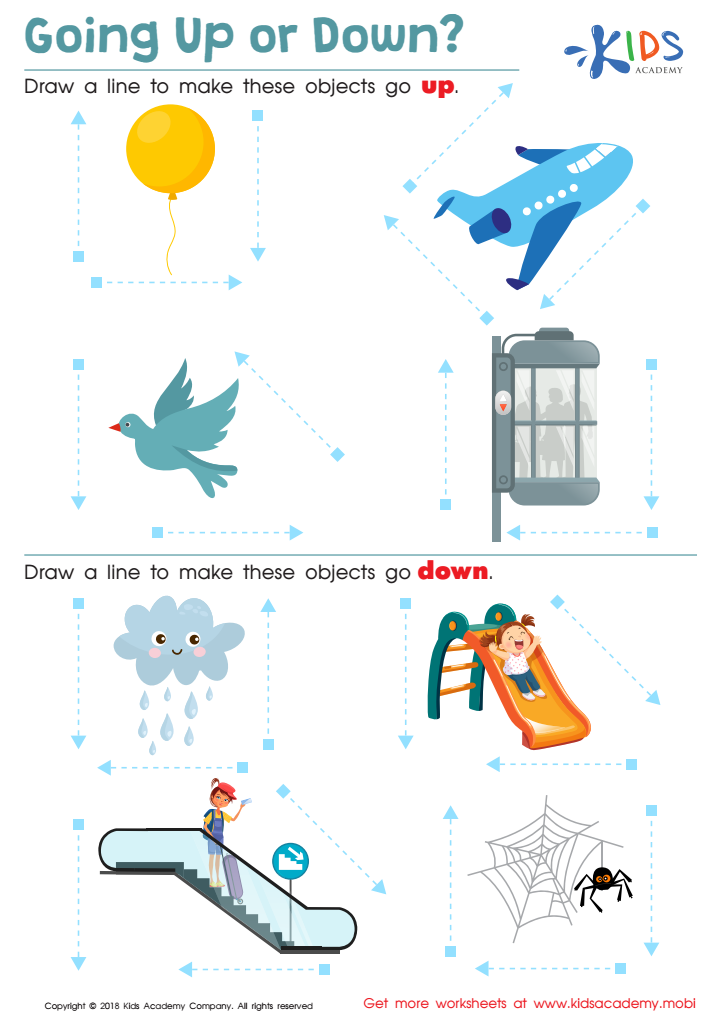
Going up or Down? Worksheet
 Assign to My Students
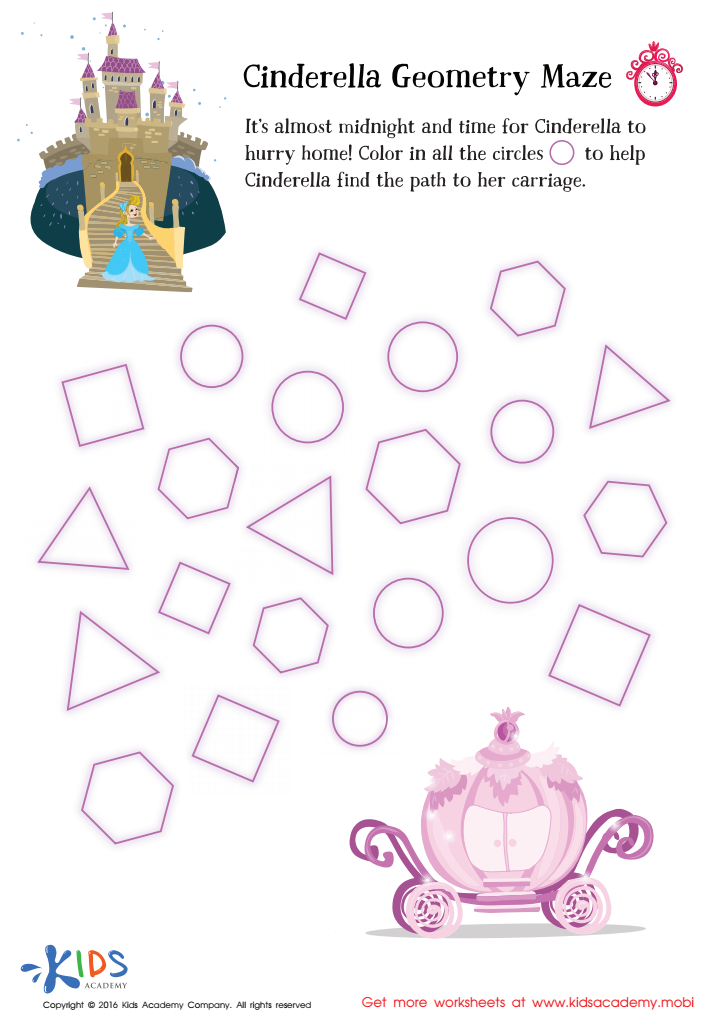
Cinderella Geometry Maze Worksheet
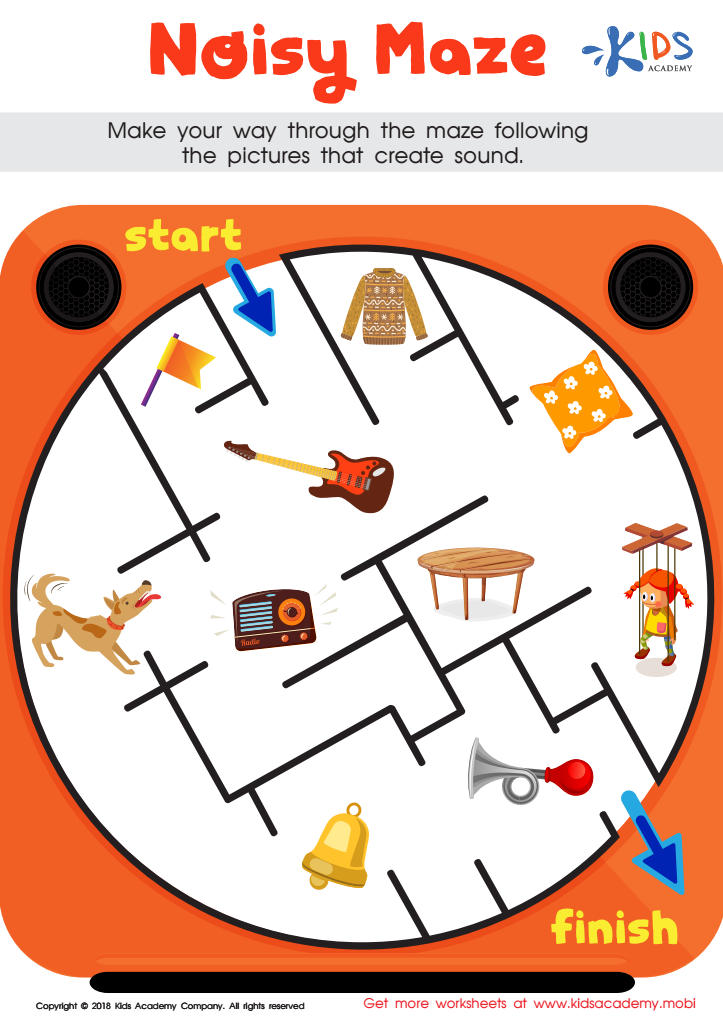
Noisy Maze Worksheet





Spatial orientation is a crucial cognitive skill that helps children understand their relationship with the space around them. For 6-year-olds, developing spatial orientation is vital for several reasons. First, it serves as a foundation for mathematics, particularly in understanding concepts like geometry, measurements, and spatial reasoning. Children who can spatially orient themselves are often better equipped to tackle problems related to shapes, directions, and sizes.
Moreover, spatial orientation enhances children's ability to navigate their environment safely. It plays a critical role in their motor development, influencing skills like coordination, balance, and navigating through spaces. Effectively promoting spatial awareness can assist in developing essential life skills, including reading maps, following directions, and even participating in recreational activities and sports.
Socially, spatial orientation skills can help children interact better with peers during play and group activities, leading to improved collaboration and communication. As they learn to describe positions, movements, and relationships of objects, they also enrich their vocabulary and expressive language skills.
Parents and teachers should care about spatial orientation because it is intertwined with children's overall cognitive development, academic success, and social-emotional growth, thereby laying the groundwork for lifelong learning and skills. Encouraging play and activities that foster spatial awareness can significantly benefit young children.








