Understanding chess rules Normal Worksheets for 6-Year-Olds
5 filtered results
-
From - To
Discover the exciting world of chess with our "Understanding Chess Rules Normal Worksheets" tailored for 6-year-olds! These engaging worksheets introduce young learners to the fundamental rules and concepts of chess, fostering critical thinking and strategic planning skills. Each activity is designed to be interactive and fun, ensuring that kids grasp the basics of the game while enhancing their problem-solving abilities. Whether they're learning how different pieces move or understanding the objective of the game, our worksheets make grasping chess rules accessible and enjoyable. Ideal for classroom use or at home, this resource opens the door to a lifelong passion for chess!
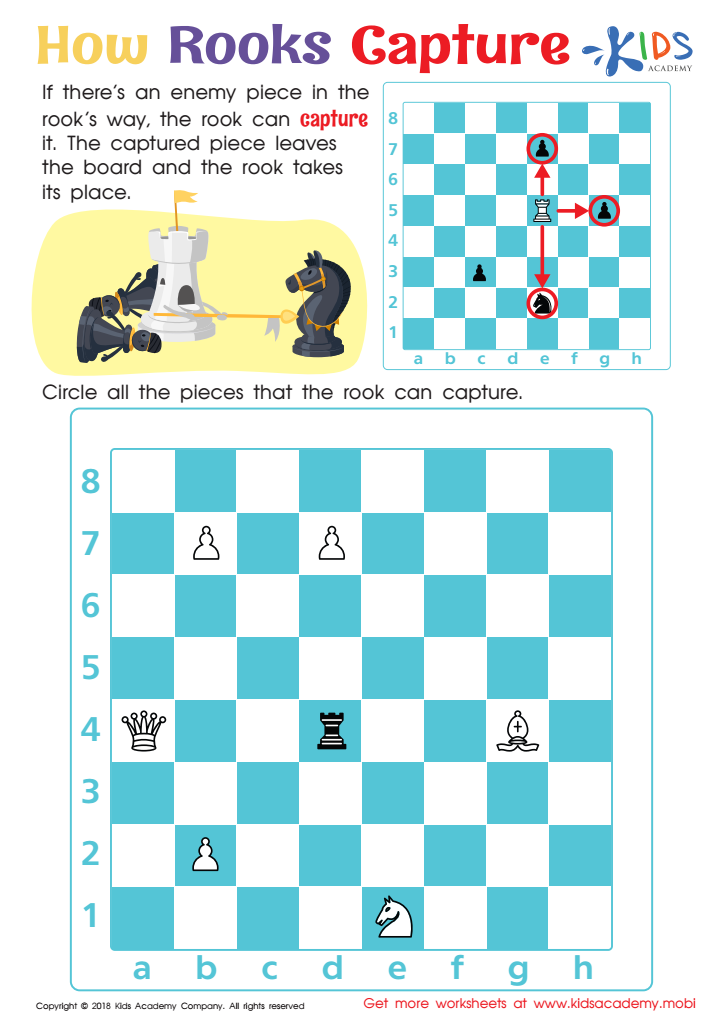
How Rooks Capture Worksheet
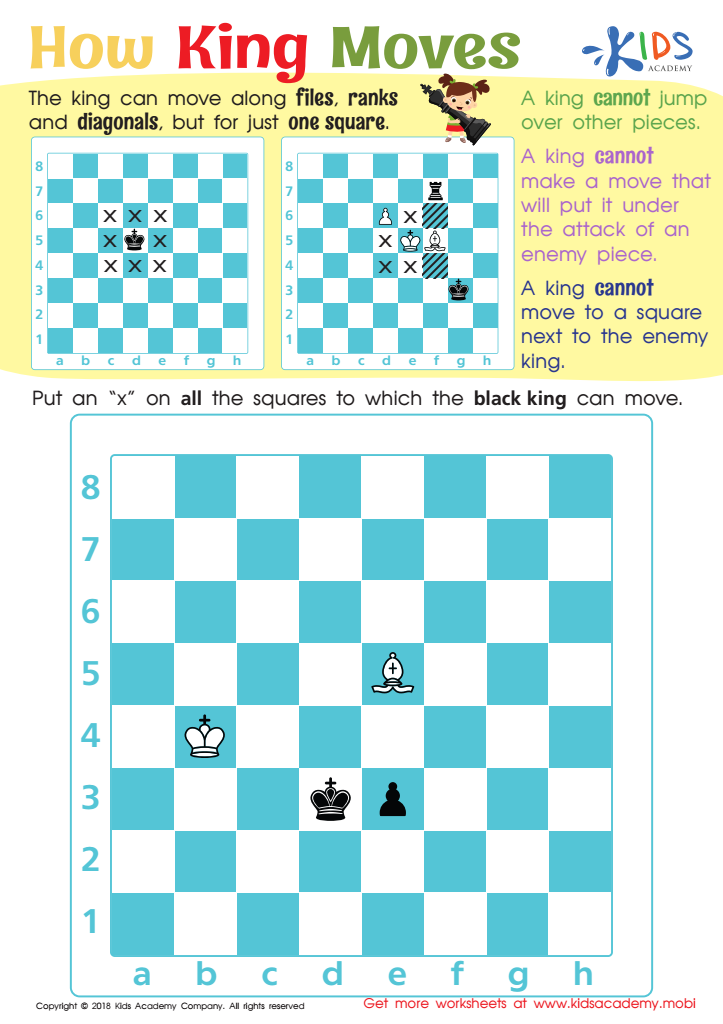
How King Moves Worksheet
 Assign to My Students
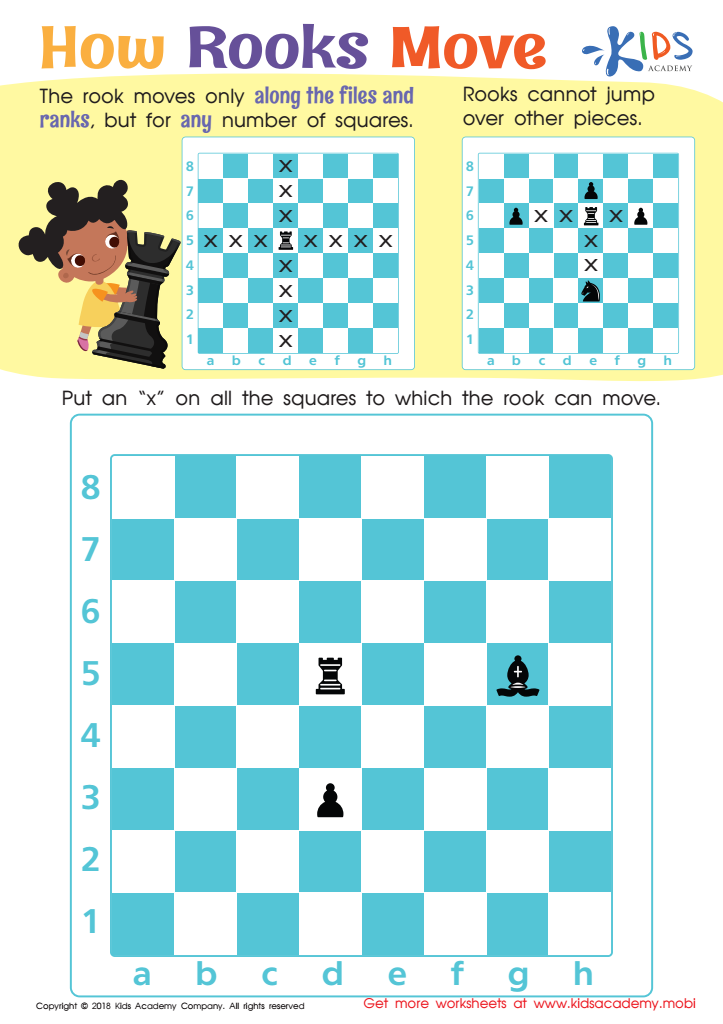
How Rooks Move Worksheet
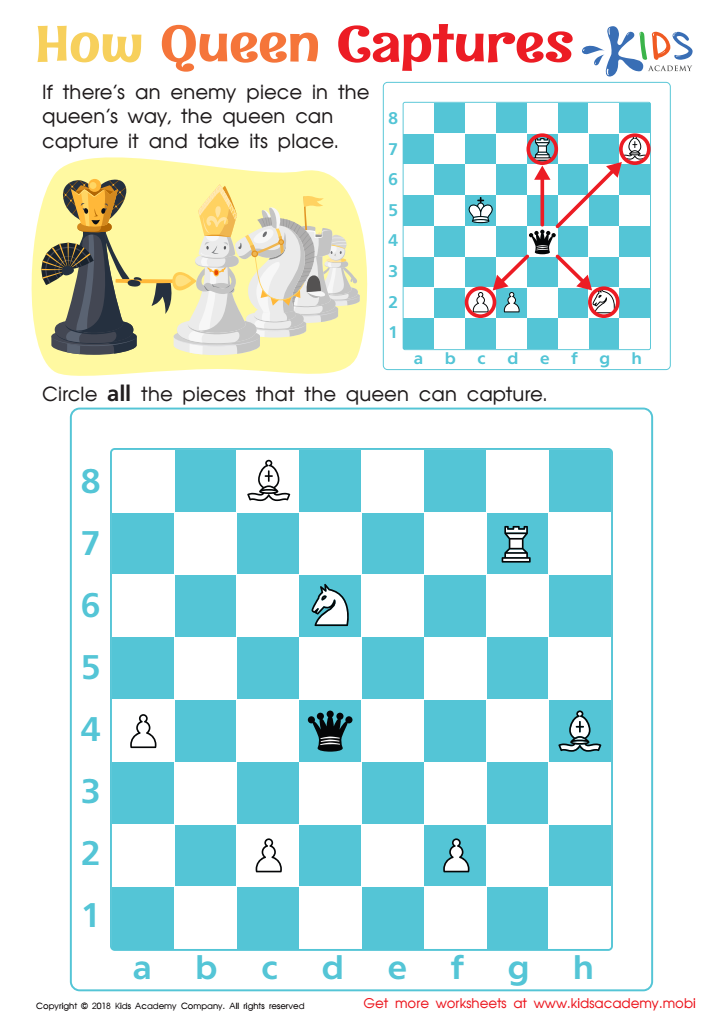
How Queen Captures Worksheet
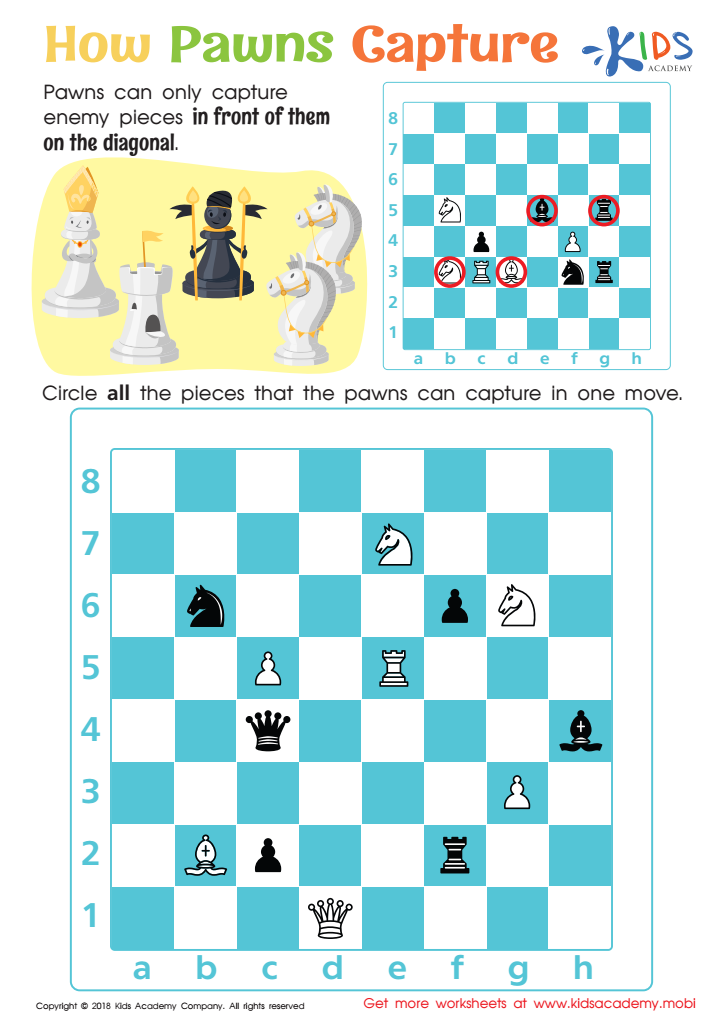
How Pawns Capture Worksheet






Understanding chess rules is crucial for both parents and teachers when introducing the game to 6-year-olds. Chess promotes critical thinking, problem-solving, and patience—all essential skills for young learners. By grasping the fundamental rules, children learn to strategize and anticipate their opponent's moves, fostering cognitive development.
Moreover, chess enhances concentration and focus, encouraging kids to extend their attention span during learning activities. For parents, teaching children the rules of chess can be an enjoyable bonding experience, allowing them to share quality time and develop mutual respect for strategic gameplay.
For teachers, integrating chess into the curriculum can enrich the educational experience, providing a fun yet academically stimulating environment. This engagement may lead to improved performance in various subjects, as the game encourages logical reasoning and enhances memory skills.
Additionally, understanding chess rules helps instill sportsmanship in children; they learn to accept defeat graciously and celebrate victories without arrogance. As parents and teachers instill these values, they equip children with necessary social skills that extend beyond the chessboard. In fostering a healthy appreciation for chess, we essentially contribute to the overall growth and development of young minds, creating well-rounded individuals ready to tackle future challenges.








