Fine Motor Skills Normal Addition Worksheets for 6-Year-Olds
3 filtered results
-
From - To
Enhance your child's fine motor skills while learning addition with our engaging "Fine Motor Skills Normal Addition Worksheets for 6-Year-Olds." Designed with vibrant illustrations and interactive activities, these worksheets not only make math fun but also help develop essential hand-eye coordination and grip strength. Perfect for young learners, each worksheet provides opportunities to practice number recognition, counting, and addition through tracing, coloring, and cutting activities. Foster your child's confidence in math while improving their dexterity and motor skills. Explore our collection today to support your child's foundational learning in a creative and enjoyable way!

18 Candles Worksheet
 Assign to My Students
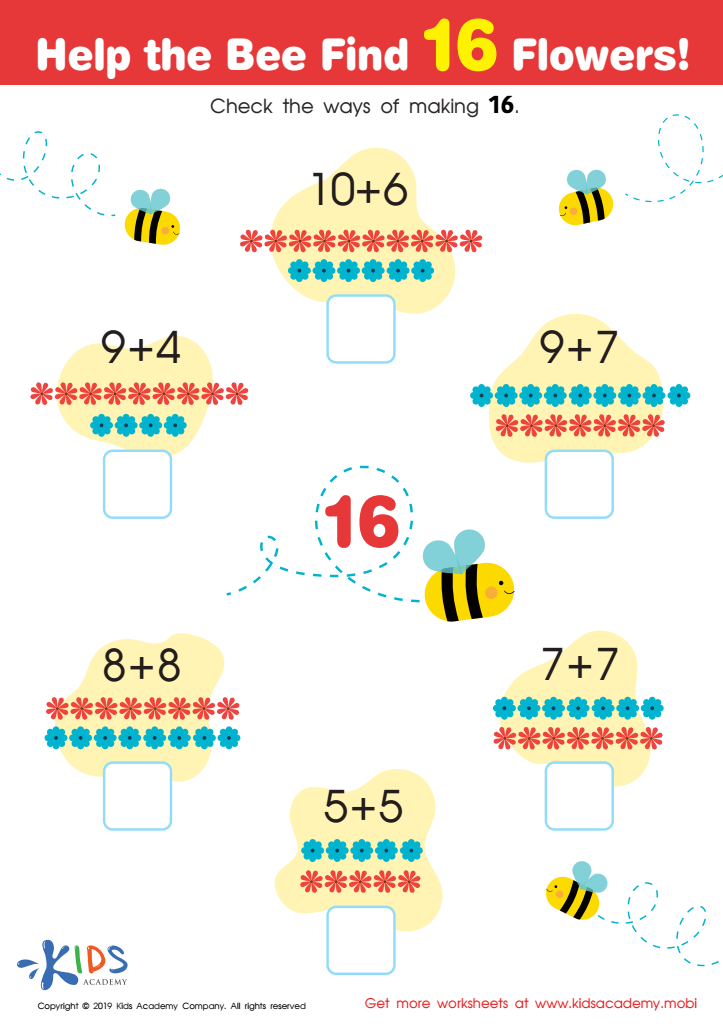
Help the Bee Find 16 Flowers Worksheet
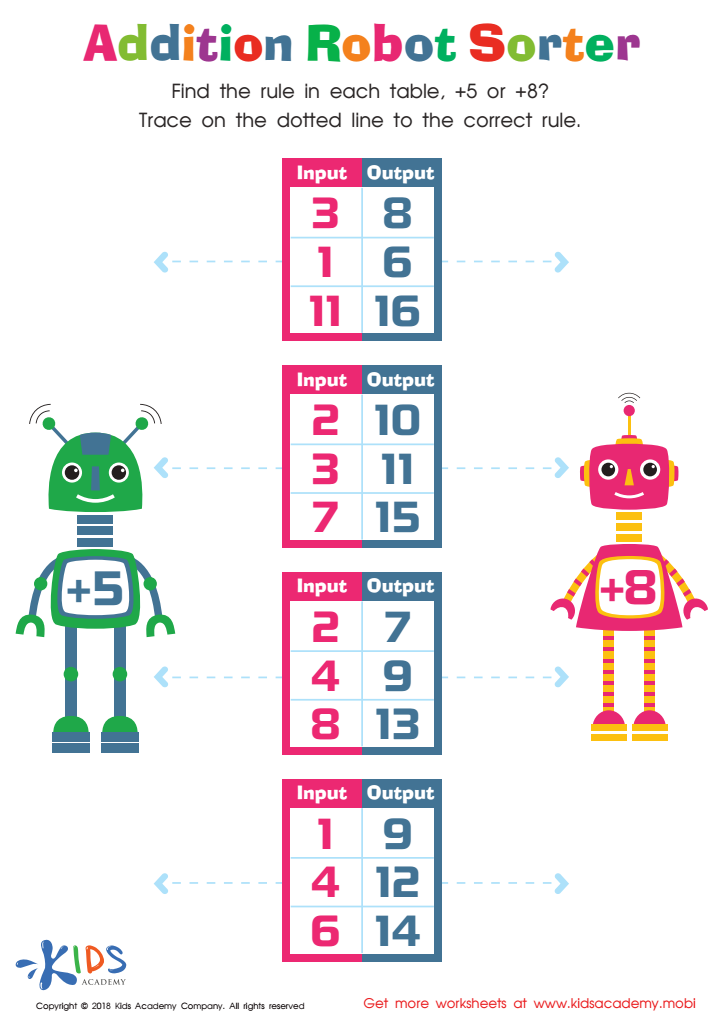
Addition Robot Sorter Worksheet








Fine motor skills are crucial for a child's overall development, particularly by age six, when they transition from preschool to more structured learning environments. These skills involve the coordinated movements of small muscles, such as those in the hands and fingers, and are essential for various everyday tasks. Parents and teachers should prioritize honing fine motor skills, as they play a significant role in tasks like writing, coloring, and buttoning clothes—skills that directly impact a child's independence and self-esteem.
Normal addition activities, which often require precise hand movements, provide excellent opportunities for improving fine motor skills. When children use materials like counters or manipulatives to visualize addition, they enhance their understanding of math concepts while simultaneously developing hand-eye coordination and dexterity. This dual benefit increases engagement and sets the foundation for more complex skills needed in later academic tasks.
Additionally, fine motor skills are closely linked to cognitive development. As children master these skills, they build concentration, focus, and confidence, which are essential for academic success. Therefore, investing time and resources into enhancing fine motor skills during this critical developmental stage fosters a solid foundation for both academic and personal growth, which will serve children well throughout their educational journey and beyond.