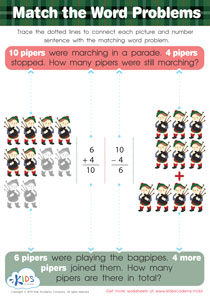
Mathematical reasoning Normal Addition Worksheets for 6-Year-Olds
3 filtered results
-
From - To
Discover our engaging Mathematical Reasoning Normal Addition Worksheets designed specifically for 6-year-olds. These printable worksheets from Kids Academy help young learners build a solid foundation in basic addition while honing their mathematical reasoning skills. Through fun, interactive activities, children will develop critical thinking abilities and boost their confidence in problem-solving. Each worksheet is crafted to provide age-appropriate challenges that make learning addition enjoyable and accessible. Perfect for both classroom use and home practice, our worksheets ensure that children grasp essential concepts, setting them on the path to academic success. Encourage your child's mathematical journey today with our expertly designed addition worksheets.
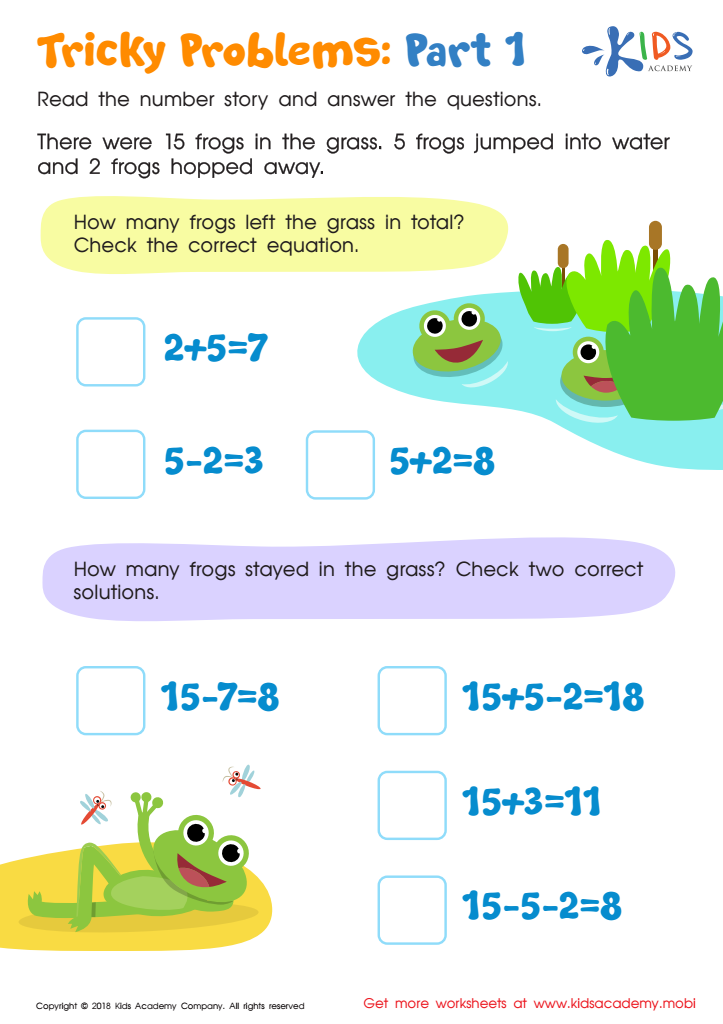
Tricky Problems Worksheet: Part 1
 Assign to My Students
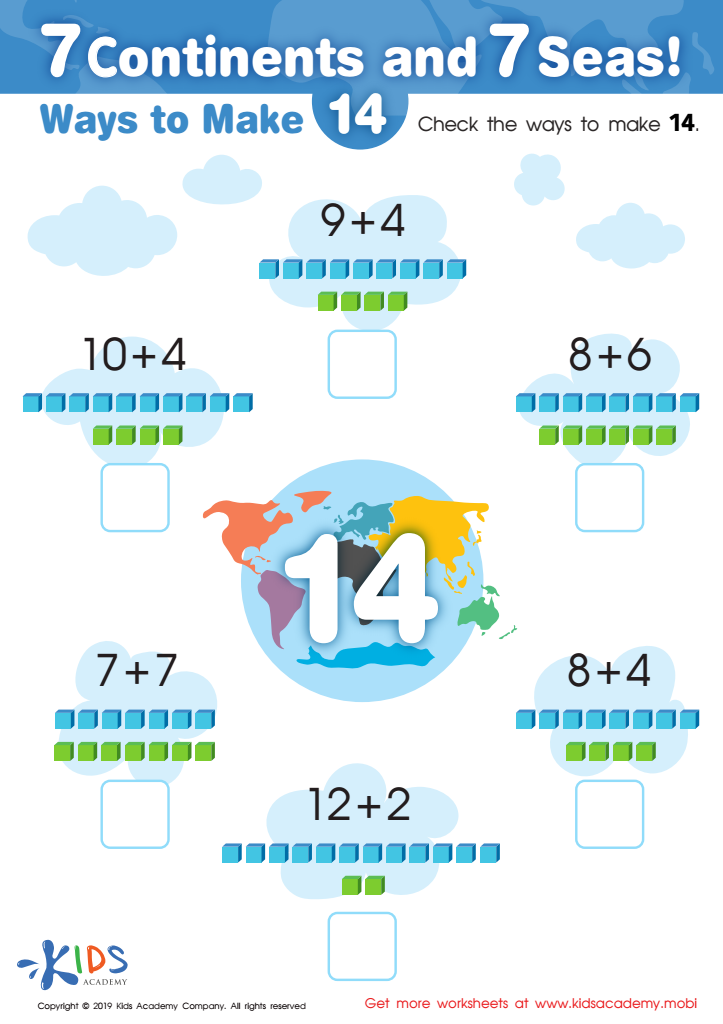
7 Continents and 7 Seas Worksheet
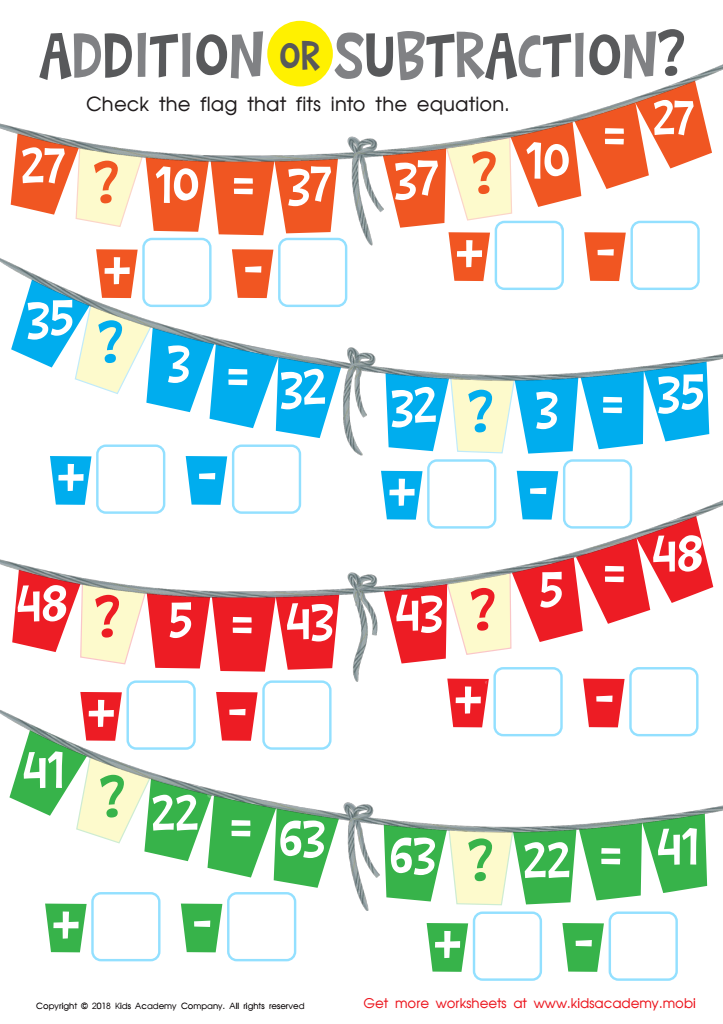
Addition or Subtraction? Worksheet








Mathematical reasoning and understanding basic addition play crucial roles in the cognitive development of 6-year-olds. At this age, children's brains are exceptionally receptive to new information, making it an optimal time to lay the foundational skills they will use throughout their education. Focused attention on normal addition helps develop crucial problem-solving abilities, fostering logical thinking and basic numeracy skills. Proficiency in addition is not merely about memorizing number combinations but about grasping the relationships between numbers, which is essential for more complex mathematical concepts later on.
Moreover, teaching addition fosters confidence. When children understand that they can solve problems on their own, it boosts self-esteem and encourages a positive attitude toward learning. Math, often seen as a challenging subject, becomes approachable and enjoyable, establishing a growth mindset.
Parental and teacher involvement are crucial in this process. They can tailor learning experiences to each child's needs, making math relatable and fun through real-life contexts like counting objects, money exchange, or even games. This supportive environment encourages curiosity and willingness to try, making future educational experiences more enjoyable and less intimidating. Their role is foundational in developing not just the skill but also the willingness and enthusiasm to engage with math as a whole.