
Color recognition Normal Numbers Worksheets for 6-Year-Olds
4 filtered results
Difficulty Level
Grade
Age
-
From - To
Subject
Activity
Standards
Boost your child's learning with our engaging "Color Recognition Normal Numbers Worksheets for 6-Year-Olds." These innovative resources combine fun and education, helping young learners explore numbers while recognizing colors. Perfect for developing essential cognitive skills, our worksheets feature vibrant illustrations and activities that captivate children's attention. Designed for at-home or classroom use, these printable worksheets encourage creativity and enhance fine motor skills through tracing and coloring exercises. As children complete each activity, they gain confidence in their number recognition and color identification. Start their educational journey today and watch them thrive in a colorful, interactive learning environment!
Favorites
With answer key
Interactive
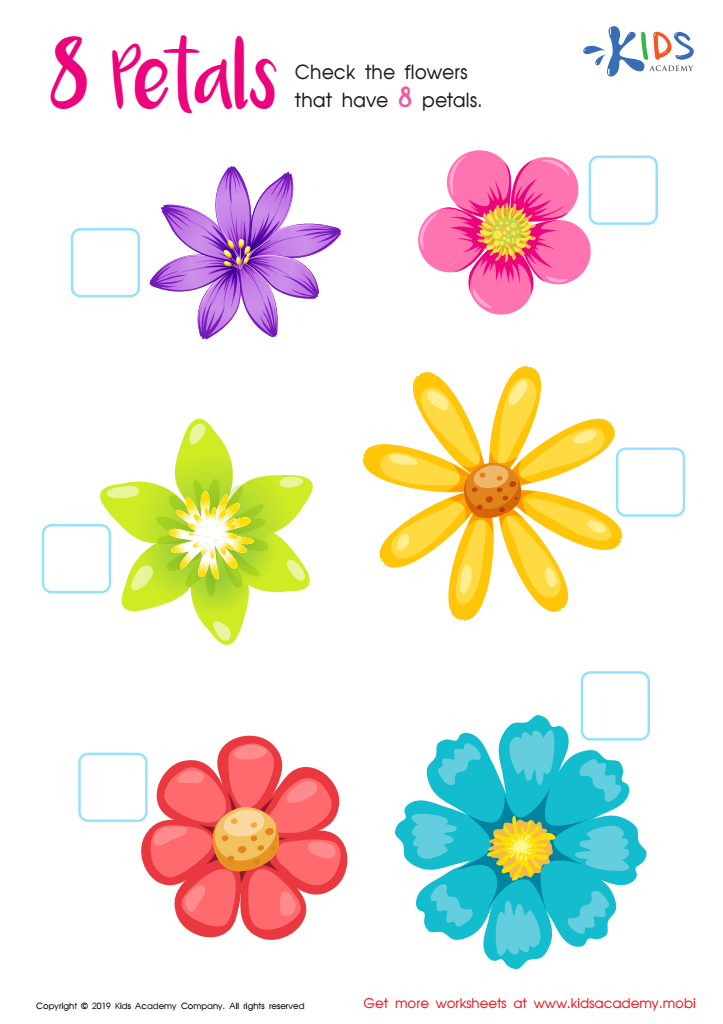
8 Petals Worksheet
Help your children master counting with this fun worksheet. It's filled with colorful flowers and they must count the petals and check the flowers with 8 petals. It's a great way to practice their counting skills and have some fun too!
 Assign to My Students
8 Petals Worksheet
Worksheet
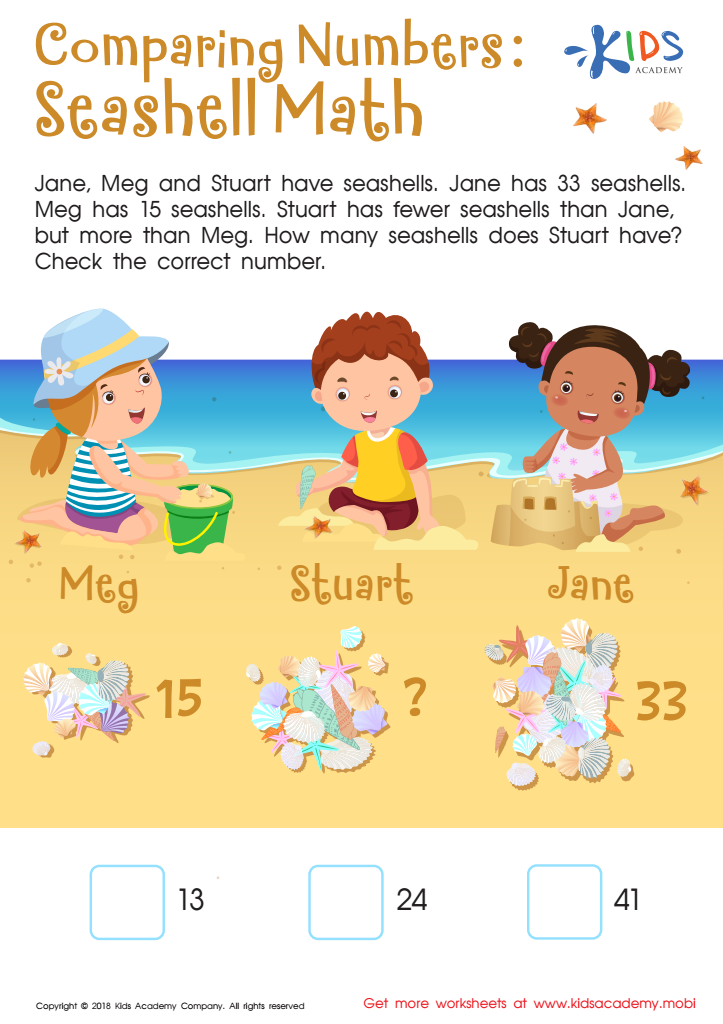
Seashell Collectors Worksheet
Bring beach fun into math with this printable worksheet! Carefully read the text with your child and figure out how many seashells Stuart has - more than Meg's, less than Jane's. Forget boring indoor math; your child won't want to miss out on this fun activity!
Seashell Collectors Worksheet
Worksheet
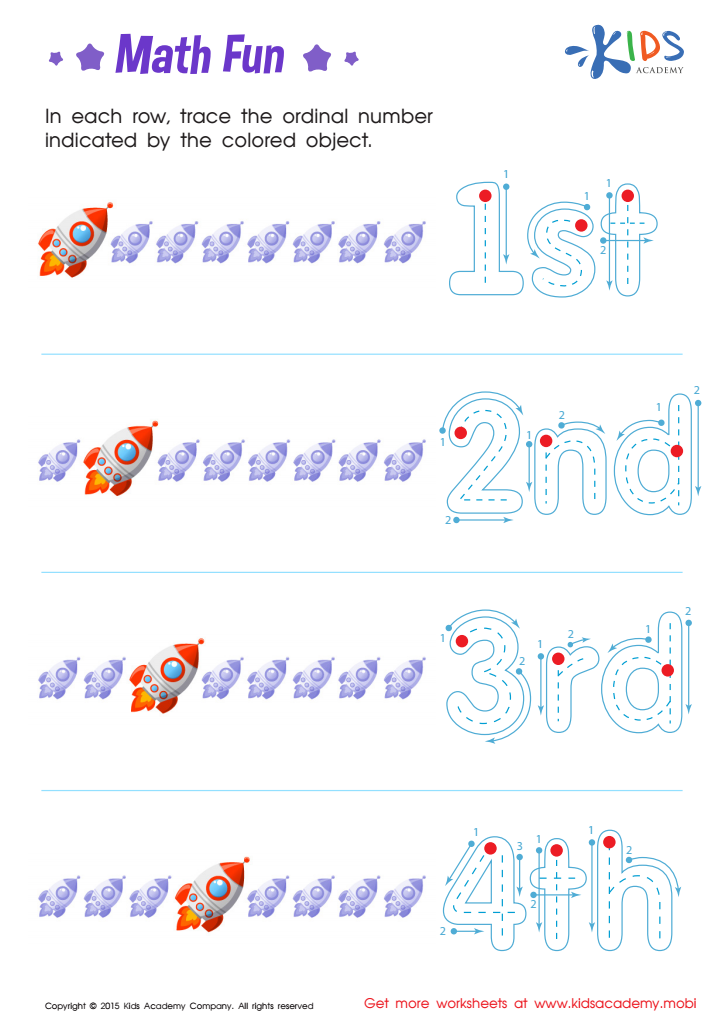
Ordinal Numbers: Math Fun Worksheet
Have fun learning ordinal numbers with our spaceship worksheet! Kids learn best while having fun and with repetition. Featuring vibrant spaceships, your child will understand placement, recognize and write ordinal numbers, and make connections. Understanding ordinal numbers leads to more advanced math concepts. Get your math whiz ready for preschool with our addition/subtraction worksheets! Have fun learning ordinal numbers and master them in no time!
Ordinal Numbers: Math Fun Worksheet
Worksheet
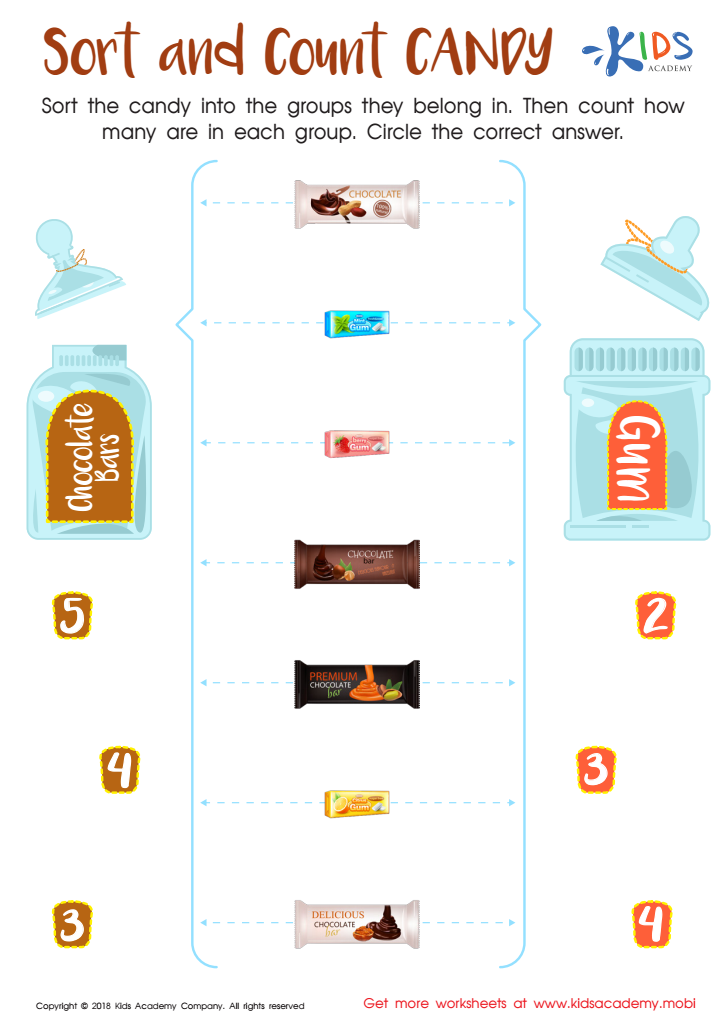
Sort and Count Candy Worksheet
Sort chocolate and candy with your kids! Help them use recognizable items and pictures to sort, practice counting with one-to-one representation, and develop their fine motor skills with the traceable lines. Download this free worksheet to get started. Yum!
Sort and Count Candy Worksheet
Worksheet
Join Kids Academy for Free
Who is primarily going to use this learning content?







Color recognition and understanding normal numbers are fundamental skills for 6-year-olds that significantly enhance their cognitive and academic development. Recognizing colors helps children in several ways; it aids in their ability to classify and categorize objects, fostering critical thinking and problem-solving skills. This skill also encourages creativity, as children begin to connect colors with emotions and themes in art and nature.
On the other hand, normal numbers—specifically counting and number recognition—lay the groundwork for essential mathematical concepts. At age six, children typically start developing their numerical sense, which is crucial for later mathematical operations like addition, subtraction, and even pattern recognition. Engaging in activities that promote number fluency builds their confidence and preparing them for structured learning in science, math, and other subjects.
Moreover, both color and number recognition promote language development. Parents and teachers can utilize everyday situations to incorporate playful learning—asking children to identify colors in their surroundings or count objects during playtime. Emphasizing these skills not only enhances their early learning experience but also fulfills foundational knowledge necessary for their educational journey, ultimately contributing to their overall success in school and beyond.








