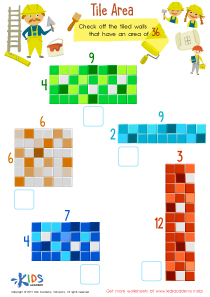
Hand-eye Coordination Normal Numbers Worksheets for 6-Year-Olds
3 filtered results
-
From - To
Enhance hand-eye coordination in your 6-year-old with our expertly crafted number worksheets! Designed to engage young minds, these fun activities help kids recognize and write numbers while improving their fine motor skills. Each worksheet combines playful exercises with essential learning objectives, ensuring children stay focused and entertained. Used by educators and parents alike, these printable resources are perfect for complementing classroom learning or adding to your at-home education toolkit. Strengthen your child's ability to connect what they see with what they do, setting a strong foundation for future academic success. Visit our page for captivating and effective hand-eye coordination worksheets!
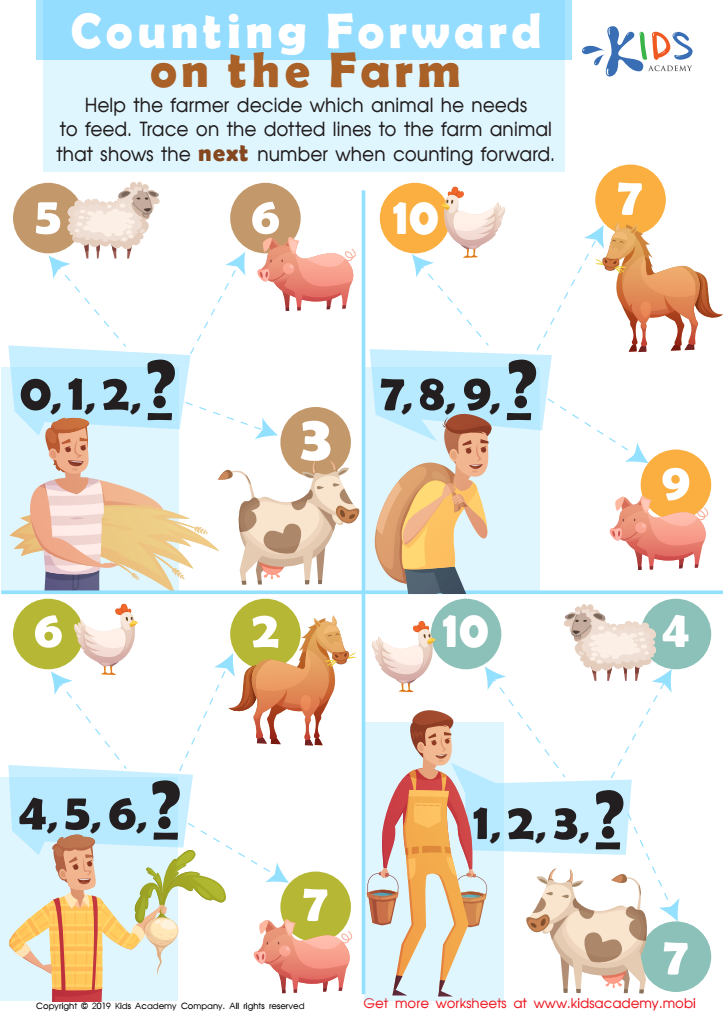
Counting Forward On the Farm Worksheet
 Assign to My Students
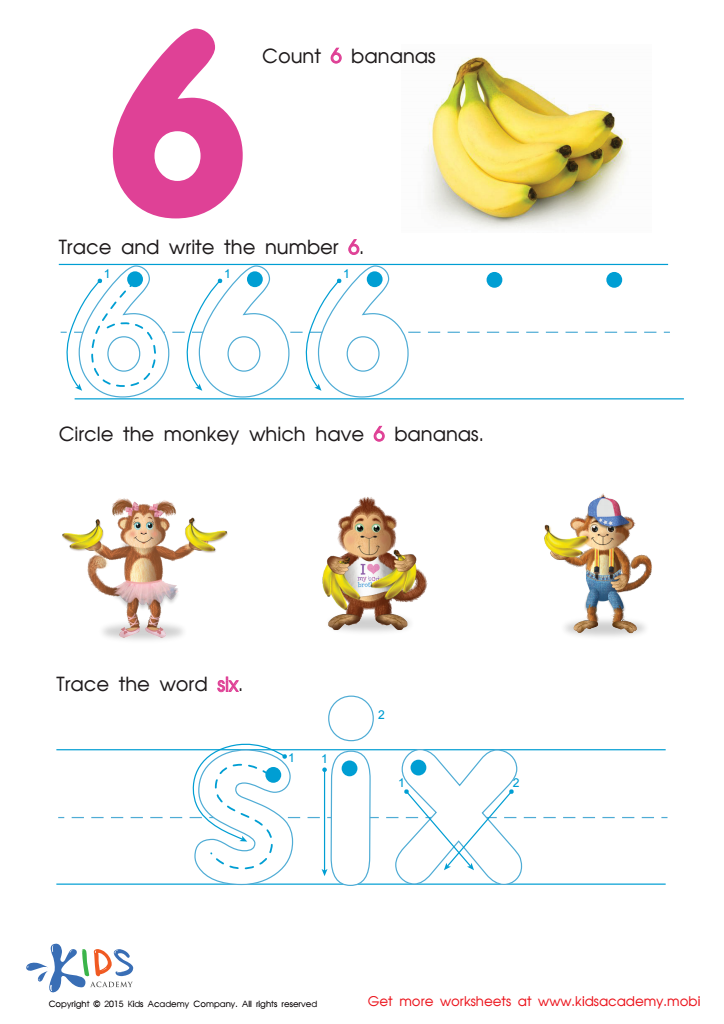
Tracing And Writing Number 6 Worksheet
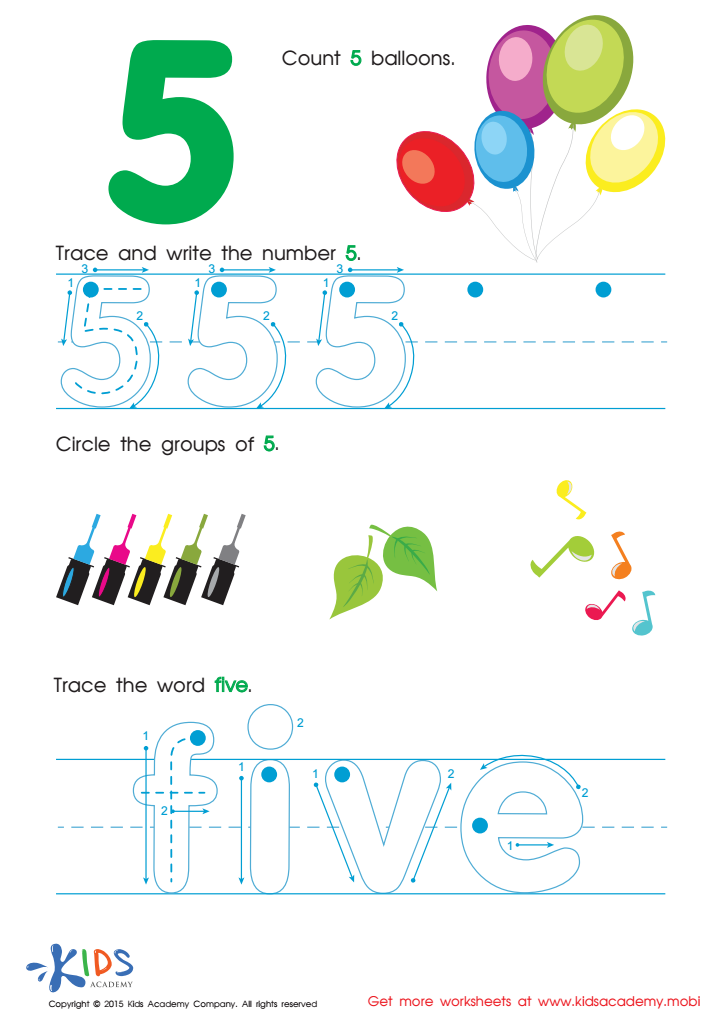
Practice Writing Number 5 Worksheet








Hand-eye coordination is crucial for a child’s overall development, particularly in early childhood. For six-year-olds, mastering hand-eye coordination underpins a variety of essential skills. Parents and teachers should be especially attuned to the normal developmental milestones in this area to ensure the child is on track.
First, strong hand-eye coordination is foundational for academic success. At this age, children begin to write and engage in more complex drawing activities. Effective hand-eye coordination allows them to guide their pencils, form letters, and manage classroom tasks confidently.
Second, it impacts physical activities crucial for a child’s health and social development. Catching, throwing, and kicking a ball require these coordinated skills. Without appropriate development in this area, children might struggle, potentially leading to diminished confidence and reluctance to participate in physical play, which is key in social interactions.
Moreover, hand-eye coordination is crucial for self-care skills such as dressing, eating with utensils, and handling personal hygiene, contributing significantly to their independence.
Being aware of what is typically expected for a six-year-old helps adults identify any delays or issues early on. Early detection leads to timely intervention, such as occupational therapy, which can greatly improve the child’s abilities and set a strong foundation for future tasks. Recognizing and supporting the normal developmental benchmarks in hand-eye coordination, therefore, supports a child’s overall well-being and development trajectory.