Understanding place value Normal Math Worksheets for 6-Year-Olds
6 filtered results
-
From - To
Explore our engaging "Understanding Place Value Normal Math Worksheets" designed specifically for 6-year-olds. This collection of interactive and colorful worksheets promotes a solid grasp of place value concepts, essential for building foundational math skills. Through fun activities and relatable examples, children will learn to identify the value of digits in two-digit numbers, reinforcing their understanding of tens and ones. Our worksheets foster problem-solving abilities while making learning feel like play! Ideal for classroom use or at-home practice, these resources support young learners on their mathematical journey with a focus on clarity and comprehension. Start cultivating confidence in math today!
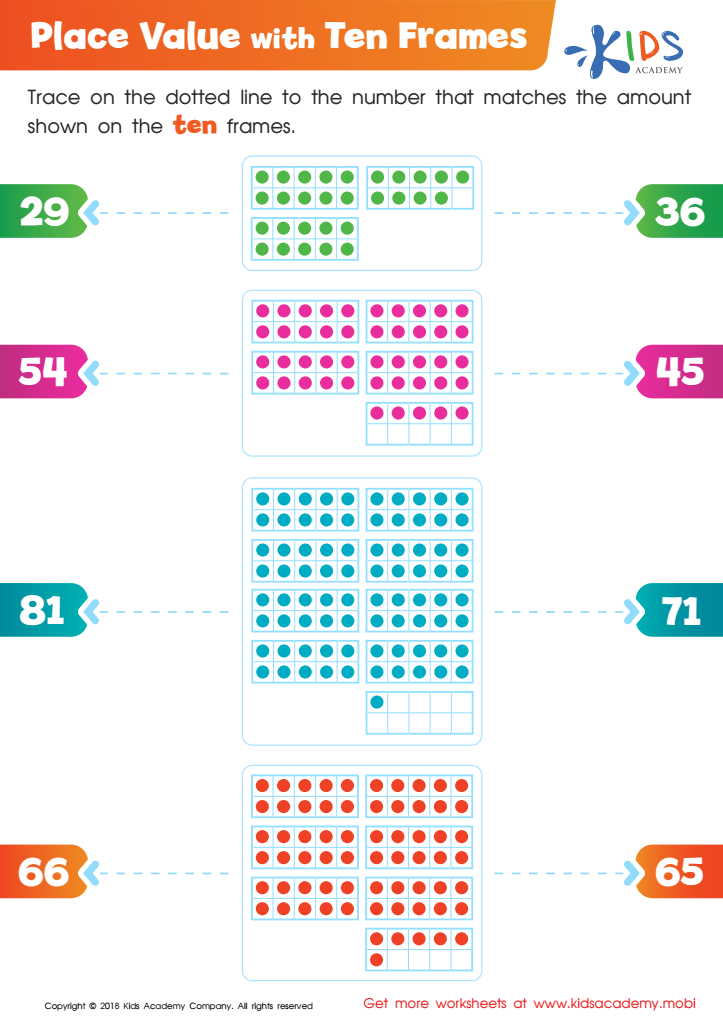
Place Values with Ten Frames Worksheet
 Assign to My Students
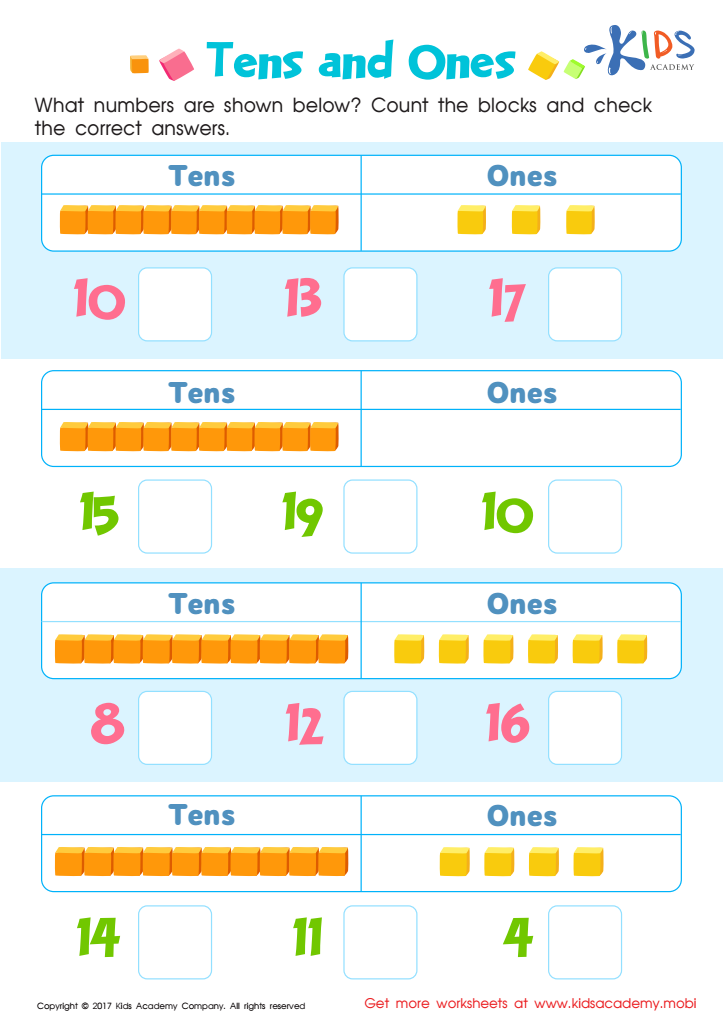
Tens and Ones Worksheet
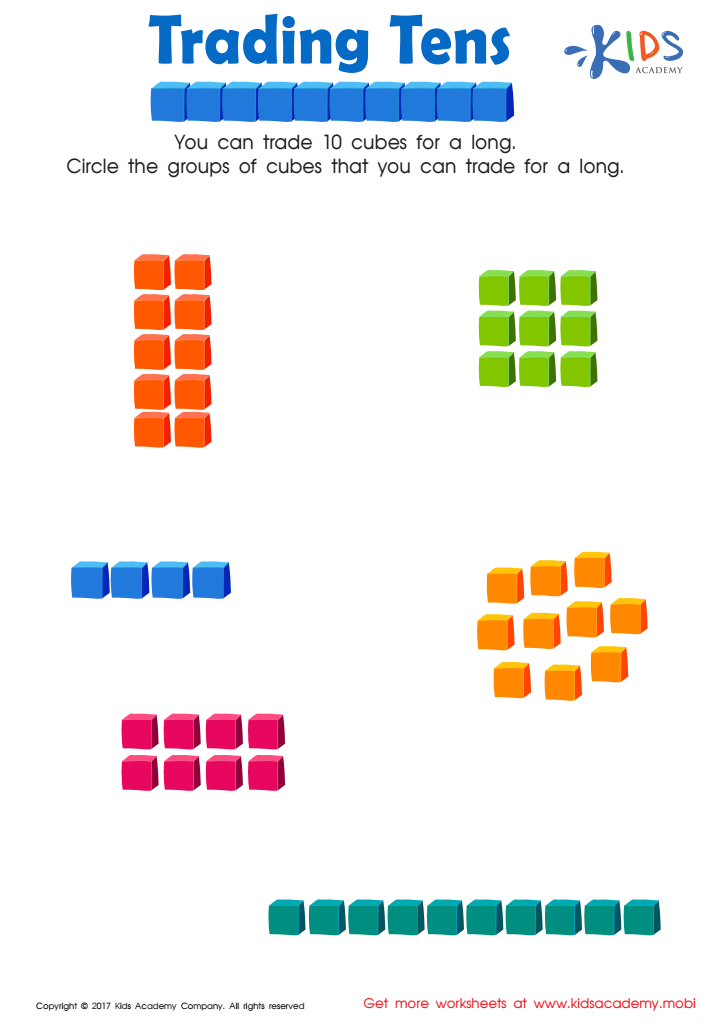
Trading Tens Worksheet
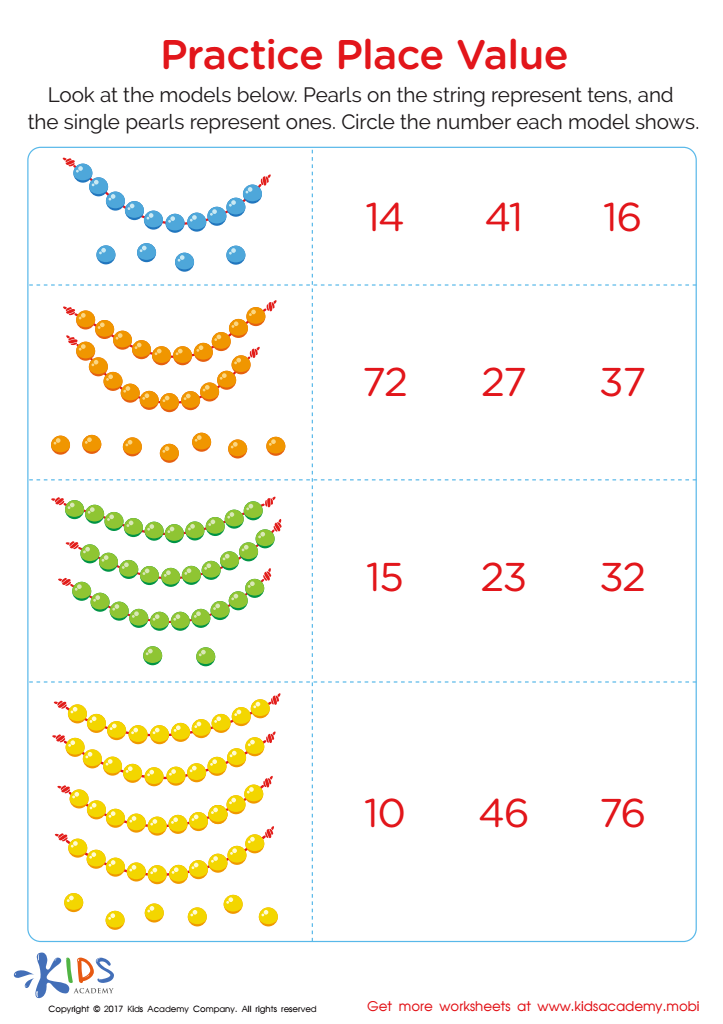
Practice Place Value Printable
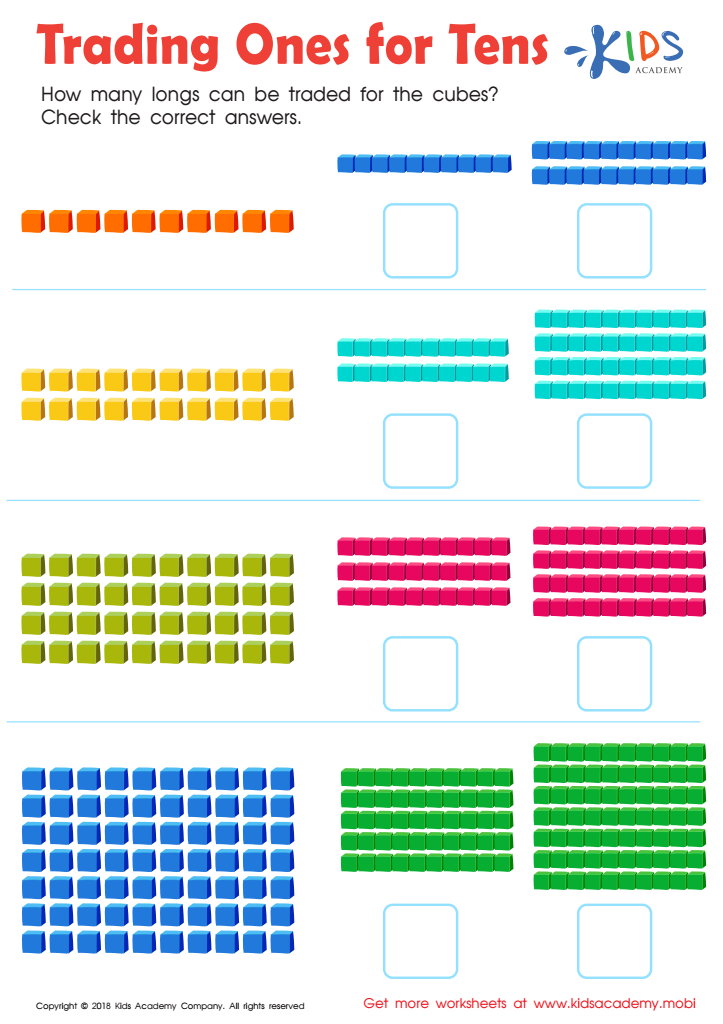
Trading Ones for Tens Worksheet: Part 2
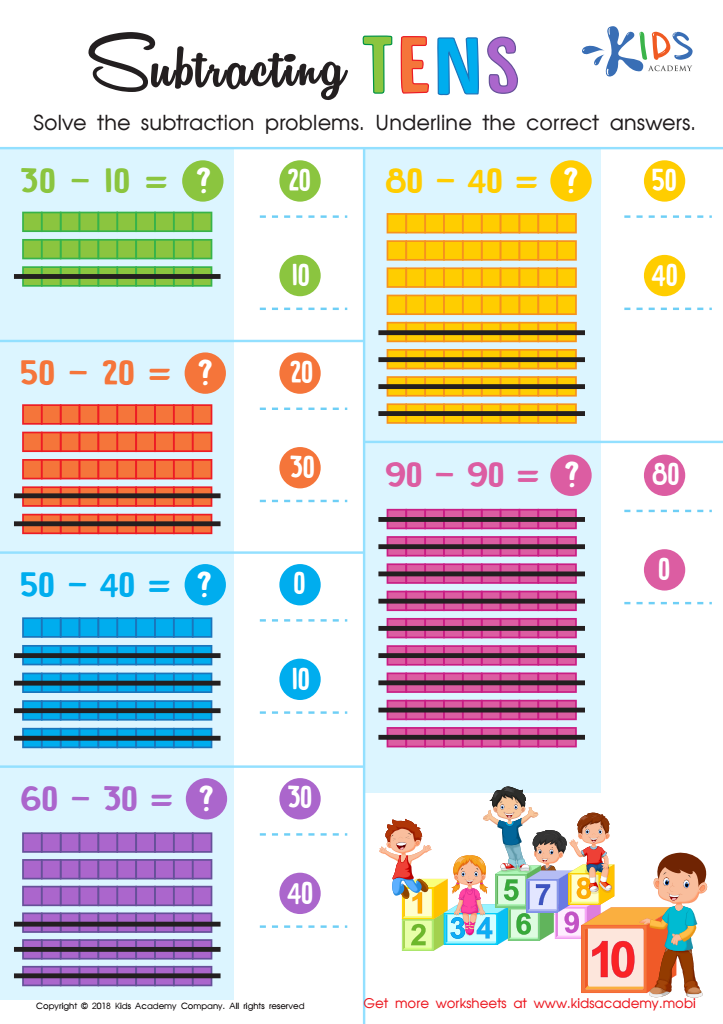
Subtracting Tens Worksheet


.jpg)





Understanding place value is crucial for 6-year-olds, as it lays the foundation for their future success in math. At this age, children begin to make sense of numbers beyond just counting. Place value helps them grasp how numbers are structured, illustrating that the value of a digit changes depending on its position. For instance, in the number 23, the '2' represents 20, while the '3' represents 3.
Parents and teachers should care because a solid grasp of place value builds number sense, enabling children to understand larger numbers, develop addition and subtraction skills, and solve real-world problems. Additionally, recognizing patterns in place value supports better comprehension in advanced topics, such as multiplication and division, as students progress.
Moreover, this understanding fosters confidence in math, reducing anxiety as children undertake more complex mathematical concepts later on. Engaging activities, such as counting with physical objects, using base ten blocks, or interactive games, make learning place value enjoyable and effective. By emphasizing the importance of place value early on, parents and teachers empower children with the essential tools needed for mathematical fluency, ultimately contributing to their academic success.








