Logical Reasoning Normal Word Problems Worksheets for 6-Year-Olds
4 filtered results
-
From - To
Enhance your 6-year-olds' logical reasoning skills with our engaging Normal Word Problems Worksheets! Designed to spark curiosity and critical thinking, these worksheets challenge young learners to solve real-life scenarios, improving their ability to analyze information and draw conclusions. Each problem encourages children to think carefully about various situations, enhancing their mathematical foundations while promoting problem-solving abilities. Ideal for home or classroom use, these worksheets are a fantastic resource for developing logical reasoning in a fun and educational way. Explore a variety of topics and exercises that help little ones gain confidence and proficiency in tackling word problems with ease!
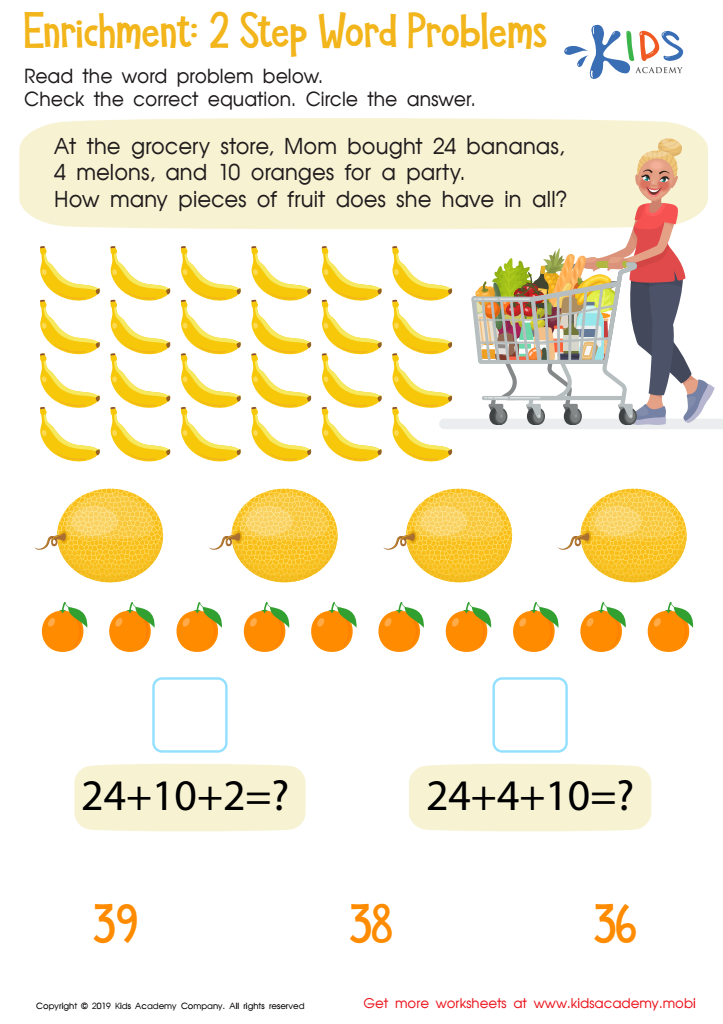
Enrichment -2 Step Word Problems Worksheet
 Assign to My Students
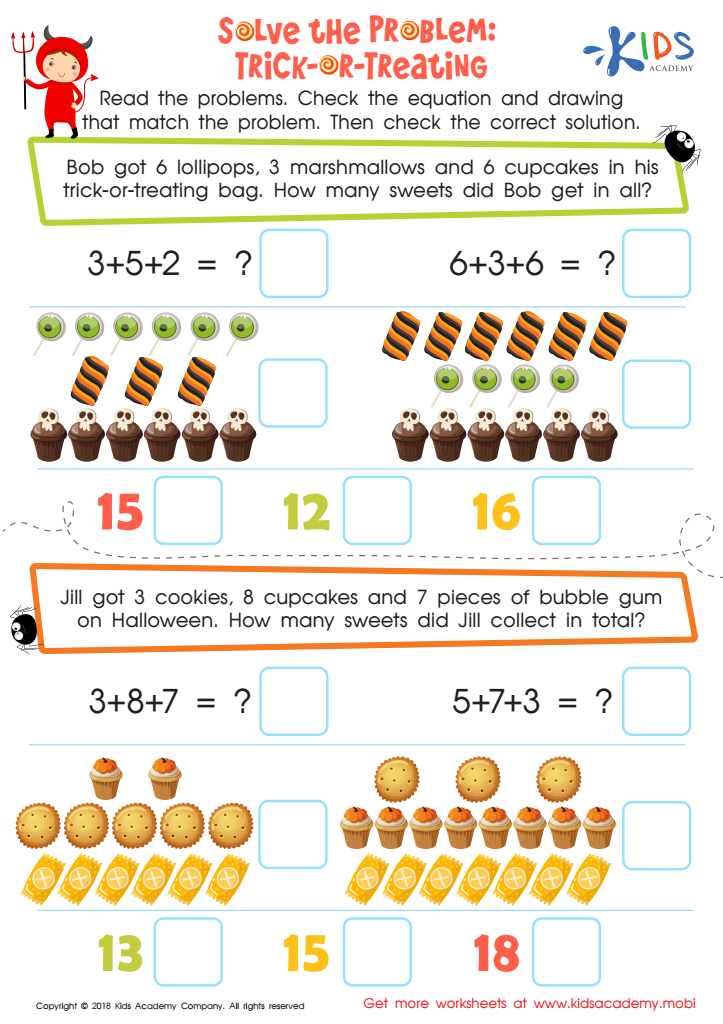
Solve the Problem: Trick–or–treating Worksheet
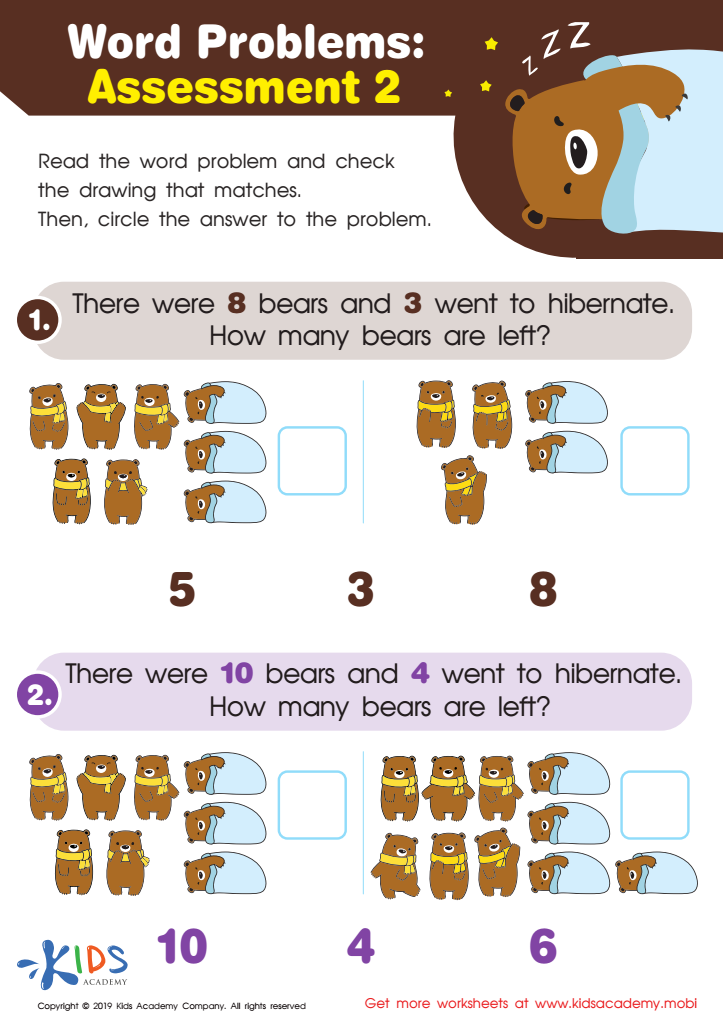
Word Problems: Assessment 2 Worksheet
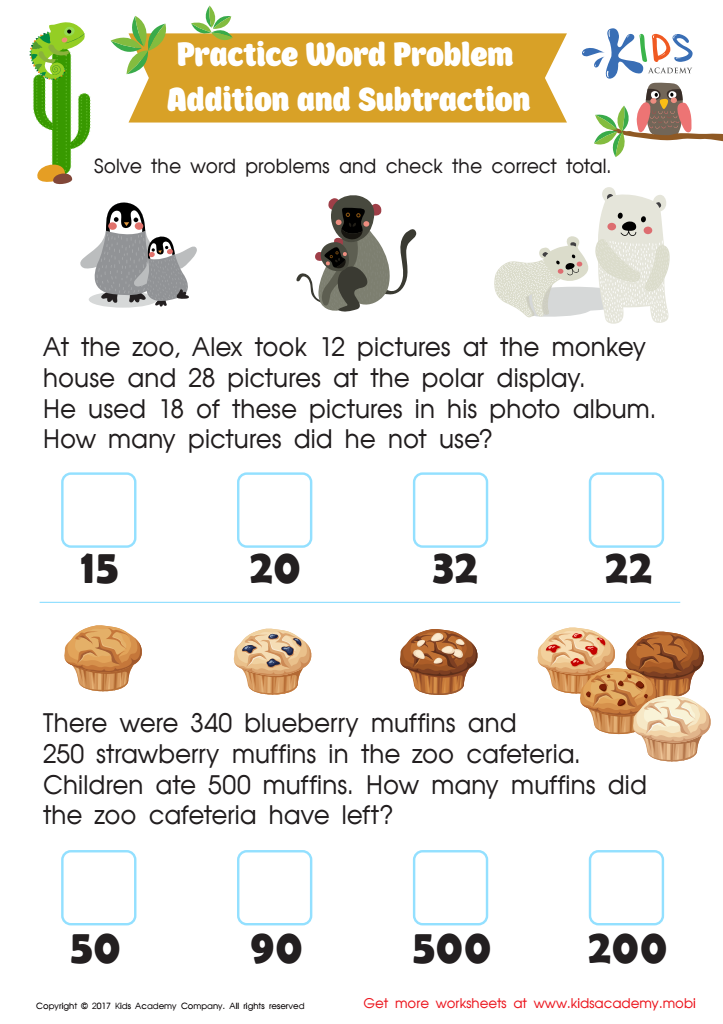
Addition and Subtraction: Word Problems Worksheet






.jpg)

Logical reasoning normal word problems are crucial for 6-year-olds as they lay the foundation for critical thinking and problem-solving skills. At this age, children are developing their cognitive abilities and enhancing their understanding of the world around them. Engaging with word problems allows them to learn how to decode language, identify information, and explore relationships between various elements.
Parents and teachers should care about these problems because they encourage children to think beyond rote memorization, fostering analytical thinking. Solving word problems requires kids to translate everyday situations into mathematical terms, promoting adaptability and creativity in their thinking. Furthermore, developing these skills can instill perseverance and resilience, traits essential for lifelong learning.
Additionally, these problems cater to various learning styles, making math more relatable and enjoyable for children. By integrating logical reasoning in a playful manner, educators and parents can enhance comprehension and retention of mathematical concepts.
Overall, investing time in logical reasoning normal word problems equips young learners with essential tools for academic success not only in mathematics but across all subject areas. Emphasizing these skills early can lead to a more holistic educational experience, ultimately shaping confident and competent problem-solvers.








