Categorizing objects Normal Science Worksheets for 6-Year-Olds
4 filtered results
-
From - To
Explore our engaging and educational "Categorizing Objects Normal Science Worksheets for 6-Year-Olds"! Specially designed for young minds, these worksheets help children sort and classify objects based on different attributes like color, shape, size, and function. Enhancing critical thinking and observational skills, our worksheets make learning science fun and interactive. Perfect for classroom and at-home learning, they reinforce foundational scientific concepts with age-appropriate activities. Download now to inspire curiosity and academic growth in your child, laying the groundwork for a lifelong love of learning. Start the journey of discovery with our incredible categorizing worksheets!
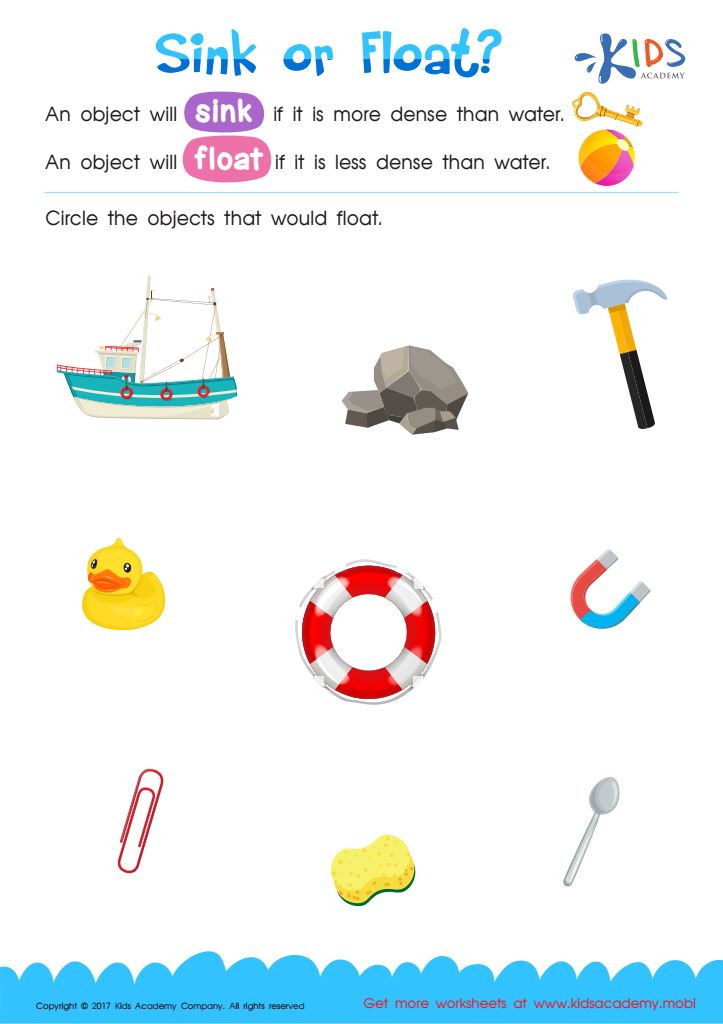
Sink or Float Printable
 Assign to My Students
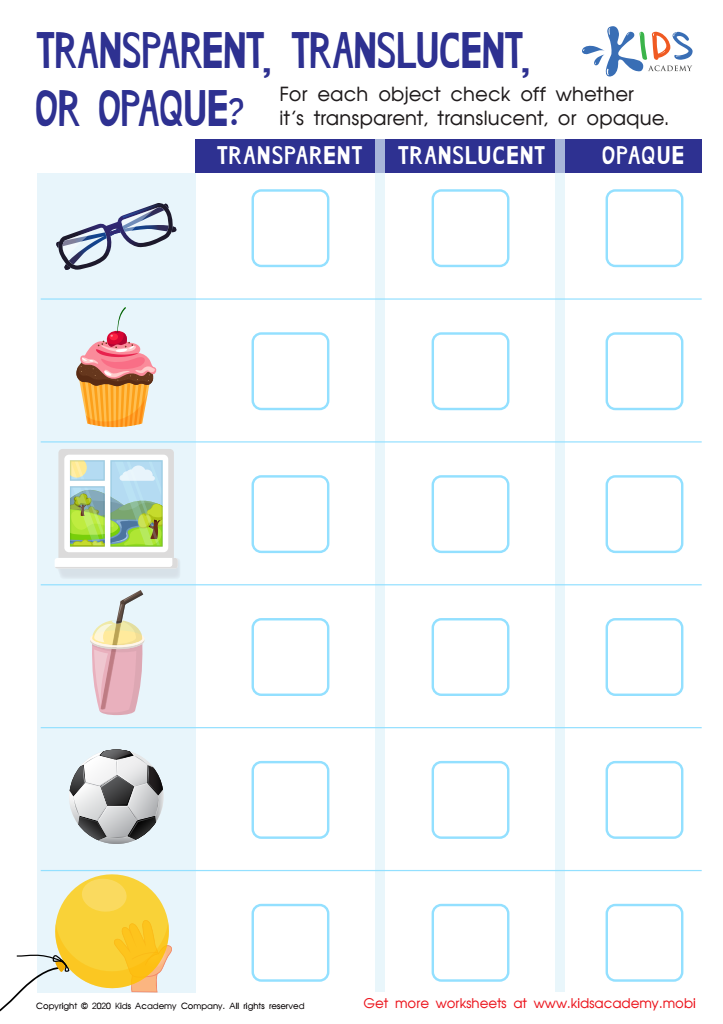
Transparent, Translucent, or Opaque Worksheet
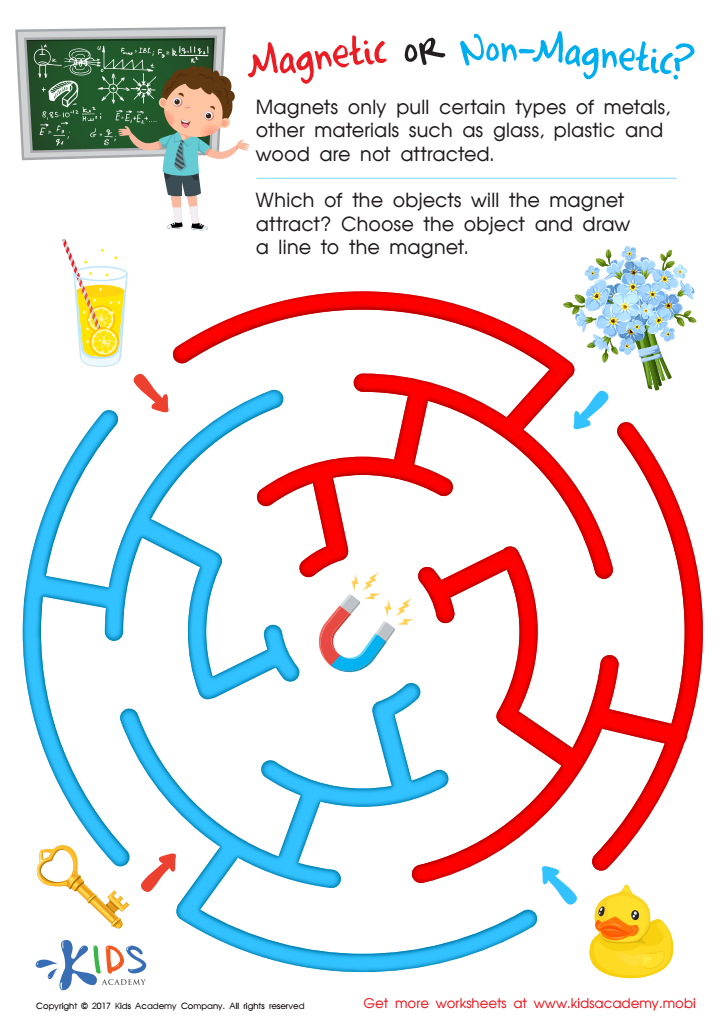
Magnetic or Non–Magnetic Worksheet
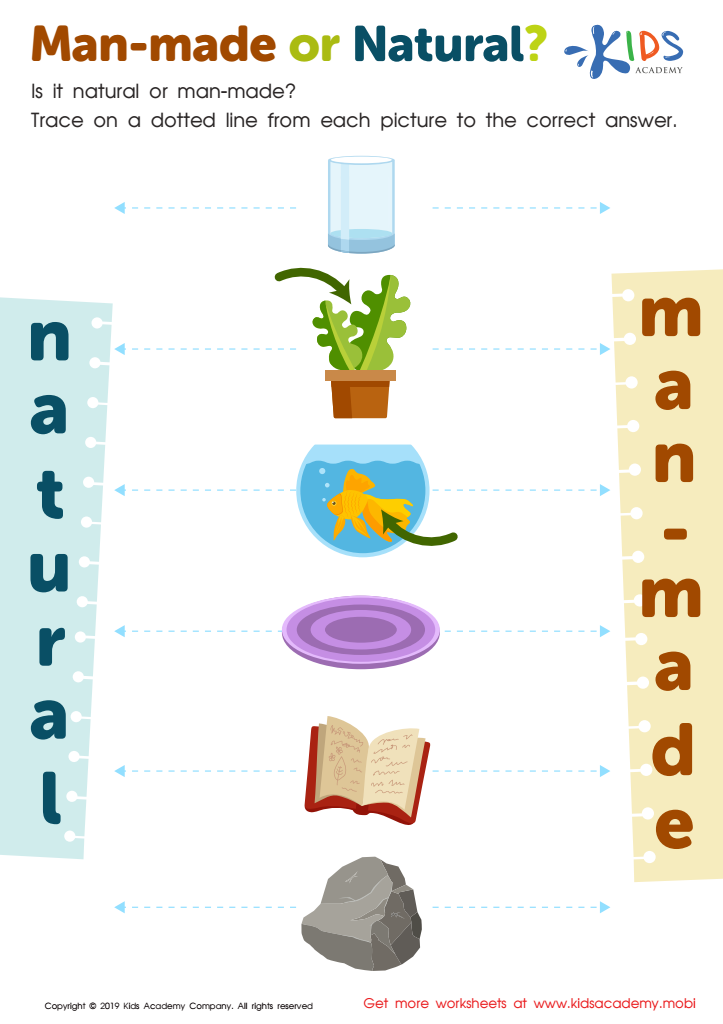
Man-Made or Natural? Worksheet






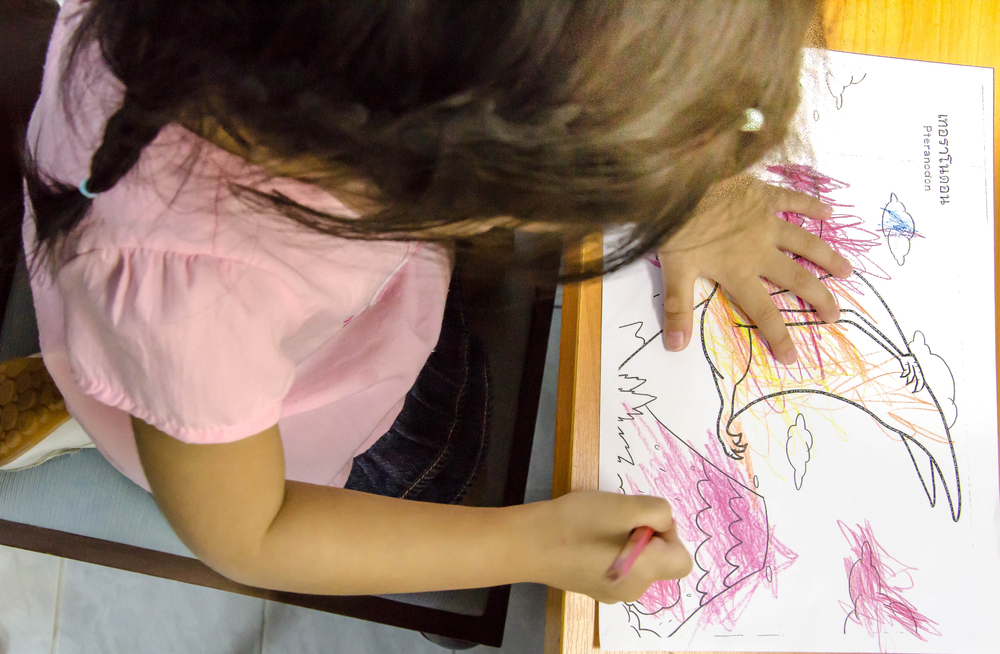

Parents and teachers should care about categorizing objects in normal science education for 6-year-olds because it lays the foundation for essential cognitive and academic skills. At this young age, children are naturally curious and have developmental needs that must be nurtured. Categorizing objects helps children develop critical thinking and problem-solving abilities, as it encourages them to observe, differentiate, and make connections between different items based on shared characteristics.
When children learn to categorize objects, they also improve their ability to process information systematically and logically. This is crucial for academic success in various subjects, as it helps them understand and organize information more effectively. Categorization activities can enhance vocabulary development as children learn and use descriptive language to explain their groupings, supporting language and literacy skills.
Moreover, categorizing objects fosters a sense of order and clarity which is important for their personal growth and development. This skill translates into their ability to organize and declutter their environments, manage their belongings, and even develop sequence-following skills necessary for daily routines and future academic tasks. Encouraging children to practice categorization enriches their understanding of the world, builds a strong foundation for scientific thinking, and promotes overall cognitive, linguistic, and social development.







