Space knowledge Normal Science Worksheets for 6-Year-Olds
3 filtered results
-
From - To
Explore the final frontier with our "Space Knowledge Normal Science Worksheets for 6-Year-Olds." These engaging printables introduce young learners to the wonders of space, including planets, stars, and the solar system. Designed to spark curiosity and build foundational science skills, each worksheet combines fun activities with educational content, perfect for classroom use or at-home enrichment. Foster a love of astronomy and inspire future space explorers with age-appropriate, captivating exercises that make learning an adventure. Set your child on a path of discovery today with our well-crafted space-themed worksheets.
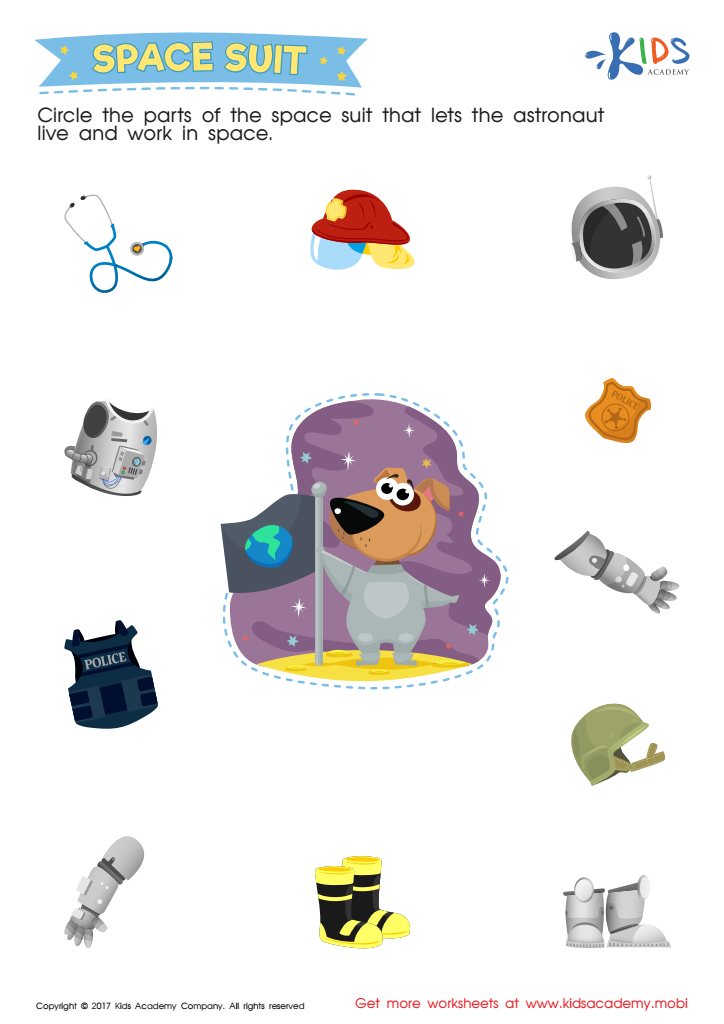
 Assign to My Students
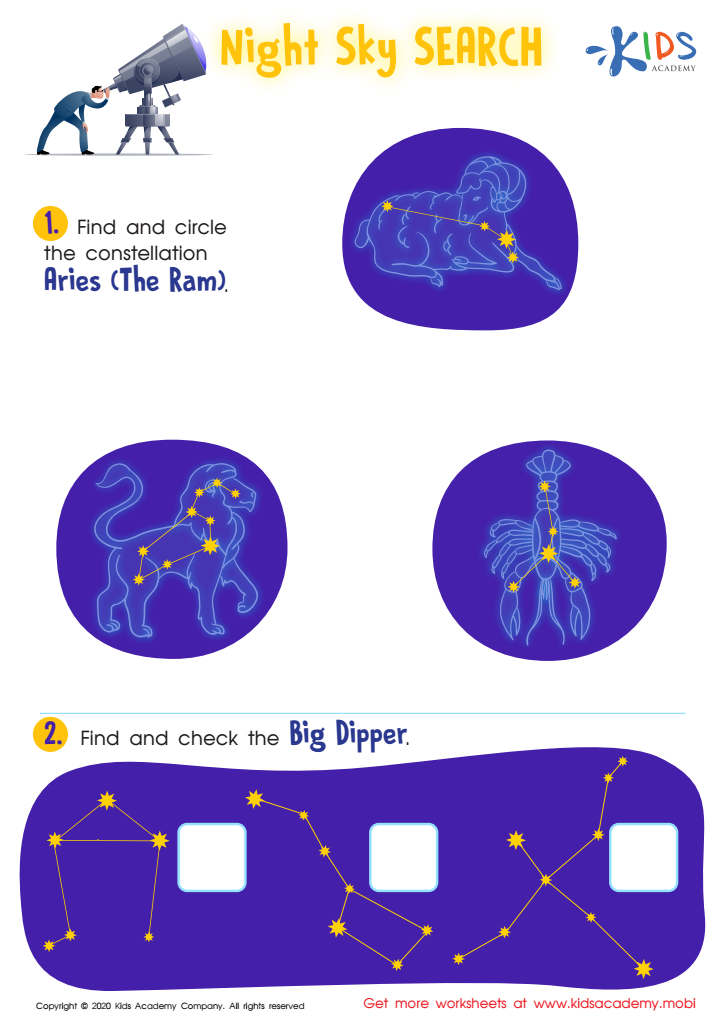
Night Sky Search Worksheet
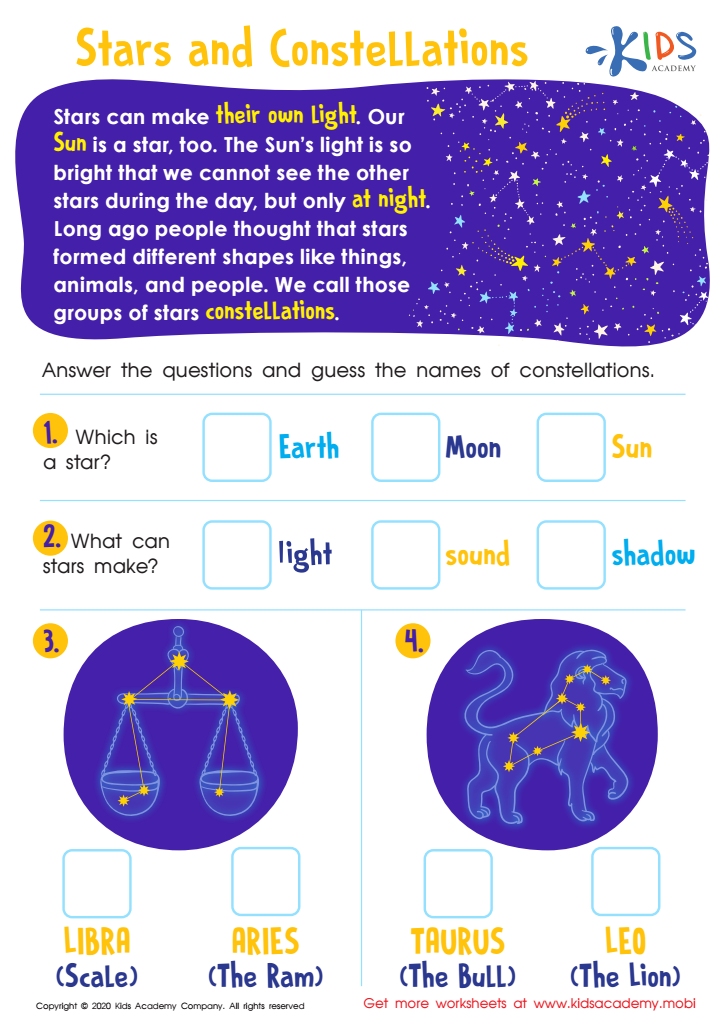
Stars and Constellations Worksheet







Space knowledge and normal science concepts are crucial building blocks in a child's early education, even for a 6-year-old. At this formative age, children are innately curious, eager to explore the world around them. Introducing them to basic space knowledge — such as the Earth, Moon, Sun, planets, and stars — helps cultivate a sense of wonder and curiosity. This learning isn't just limited to facts; it ignites imaginative thinking and nurtures an inquisitive mindset that is fundamental for all areas of education.
Additionally, grasping basic science concepts sets the foundational skills for problem-solving and critical thinking. Understanding the reasons why the sky is blue or how rockets work can foster a sense of discovery and experimentation. These critical thinking skills are universally applicable, beyond just science. Furthermore, familiarizing children with science and space can also help build their science literacy, paving the way for more complex topics in later years.
Parents and teachers play a pivotal role in facilitating these learning opportunities. Their engagement conveys the importance of education and intellectual exploration. Encouraging space knowledge and normal science prepares children for future academic endeavors while also making learning enjoyable and exciting. Early exposure to science can thus shape a lifelong love for learning and curiosity.







